
Kumamoto Earthquake Death Toll Climbs to 34 as Rescuers Race Against Heat and Time
The 2026 Kumamoto earthquake, a magnitude 7.1 shock that struck southern Japan on July 28, has killed 34 people as of July 31. Rescue operations continue amid heat and aftershocks after the Aeon Mall collapse, a factory chimney disaster, and widespread infrastructure damage.
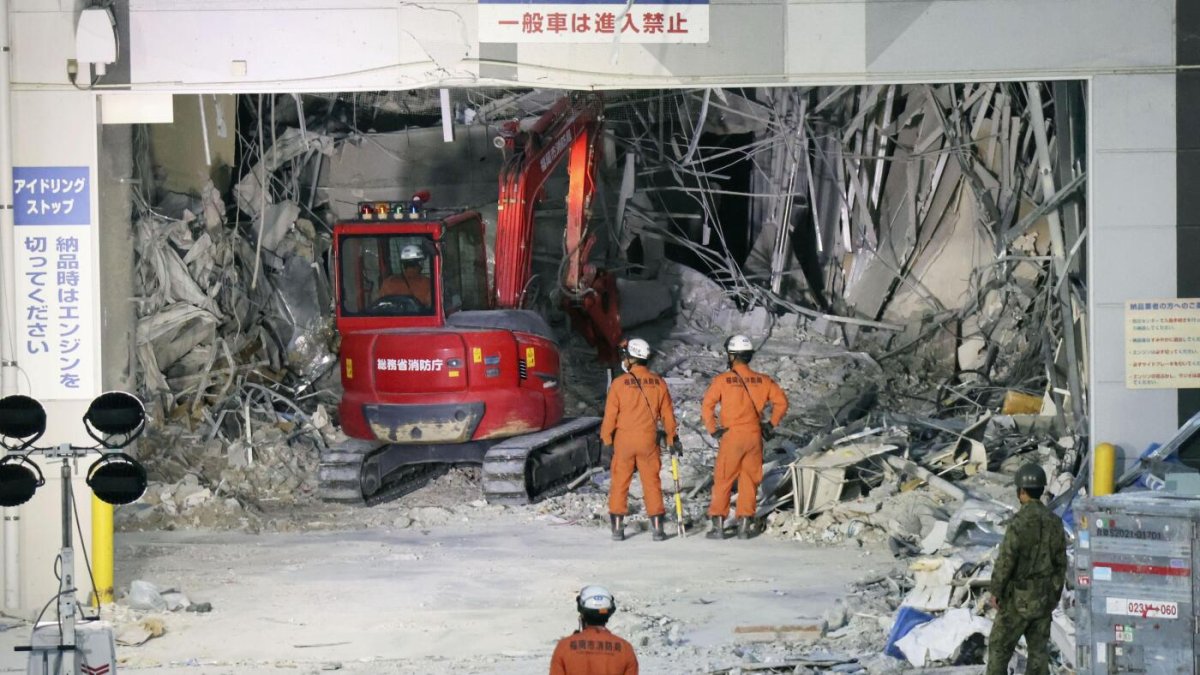
A City Under Strain: The Human Toll of a 7.1-Magnitude Shock
The confirmed death toll from Tuesday's earthquake in Kumamoto Prefecture has risen to 34, according to the Kumamoto prefectural government on Friday, July 31, 2026 — up from 25 a day earlier and expected to climb as crews work through collapsed buildings. The quake struck at approximately 4:27 p.m. JST on July 28, leaving at least 62 people injured, six of them seriously, according to local officials. The Guardian has reported the total injured count may exceed 100.
The Japan Meteorological Agency (JMA) measured the main shock at magnitude 7.1, while the US Geological Survey recorded it as Mww 6.8. The epicenter sat about 20 kilometers (12 miles) south of Kumamoto City at a shallow depth of 10 kilometers (6.2 miles). Parts of Kumamoto registered a maximum 7 on Japan's shindo intensity scale, a level at which unreinforced buildings can collapse. Two strong earthquakes struck within the first hour, followed by dozens of aftershocks that have hampered rescue efforts.
Kumamoto City, the prefectural capital with roughly 700,000 residents, is now a landscape of fractured roads, toppled chimneys, and damaged heritage sites. The confirmed victims include at least one foreign national, according to the Associated Press. The death toll has more than doubled from the initial count of 13 reported Wednesday, and officials warn the final number could rise further.
Collapse and Explosion: The Aeon Mall Tragedy
One of the deadliest incidents occurred at the Aeon Mall Kumamoto in Kashima Town, where the second floor collapsed and a suspected gas-related explosion ripped through the building. The blast, captured on dashcam footage, came after customers and staff had been evacuated — yet two women were confirmed dead. Witnesses described debris falling "like volcanic ash falling," according to Al Jazeera. The Fire and Disaster Management Agency said many people could be trapped; rescue teams worked for days removing concrete and steel.
The explosion highlights a secondary hazard of major earthquakes: ruptured gas lines. Responders, including Self-Defense Forces soldiers, used specialized equipment to listen for signs of life beneath the rubble, pushing past the 72-hour mark rescue experts treat as critical for survival.
Kashima Town, near the epicenter, has borne a disproportionate share of the tragedy. The mall was a regional hub, and its collapse has become a focal point of the national response. Local officials have not yet provided a final count of those unaccounted for at the site.
Industrial Casualties: Nippon Paper Factory Chimney Collapse
At the Nippon Paper Industries factory in Yatsushiro City, a massive chimney toppled during the quake, killing five people and trapping others in the debris. Seven employees were rescued from the wreckage, but between 20 and 30 workers were initially unaccounted for, according to company and local officials. The factory became the scene of frantic rescue operations as teams worked to locate those missing.
Yatsushiro also suffered a bridge collapse and severe road damage, cutting off neighborhoods and delaying emergency response. The Kyushu Expressway, a critical artery, was damaged and closed in sections. The disruption has complicated food, water, and medical supply deliveries to communities without power or reliable water service.
The factory's location near residential areas has raised questions about the safety of tall, heavy industrial structures during seismic events. Japan's strict building codes have historically protected residents, but industrial facilities, with their unique structural loads, remain a vulnerable point in the nation's disaster preparedness.
Infrastructure in Ruins: Power, Water, and Transport
The quake knocked out power to 45,000 households, and power and water outages have affected tens of thousands of buildings across the region, according to Malay Mail. More than 150,000 people were ordered to evacuate, and between 8,700 and 10,000 residents took refuge in more than 400 evacuation centers across Kumamoto Prefecture. Many centers could not operate fully because they too lacked power and water, forcing families into cars or the open — where they faced a new threat: extreme heat.
Temperatures reached at least 35 degrees Celsius (95 degrees Fahrenheit) on Thursday. At least one Kumamoto hospital reported being full, with patients arriving with fractures from fallen furniture. Medical teams are working around the clock, and the heat is hitting the elderly and young children hardest.
JR Kyushu suspended rail services, including the Kyushu Shinkansen bullet train, stranding commuters and tourists. Road and rail damage has also hindered heavy rescue equipment, forcing some teams to proceed on foot. Full restoration is expected to take weeks, if not months.
Government Response: Takaichi's Emergency Headquarters
Prime Minister Sanae Takaichi convened the Emergency Headquarters for the 2026 Kumamoto Earthquake at the Prime Minister's Office on July 28, within hours of the main shock. She held a second meeting on July 29 at 1:30 p.m., confirmed the death toll of 13, and ordered urgent rescue operations. The government has mobilized thousands of responders, including Self-Defense Forces soldiers.
Chief Cabinet Secretary Minoru Kihara told reporters the quake caused the collapse of homes and roads, with multiple fires and blackouts reported. Kumamoto Governor Takashi Kimura echoed the urgency: "Arduous rescue operations are still underway. As the situation remains unpredictable, we intend to take all possible measures."
The government has also been monitoring the region's nuclear infrastructure. The Sendai Nuclear Power Plant in neighboring Kagoshima Prefecture, which has two reactors and supplies power to the Kyushu region, reported no abnormalities — some relief for a nation scarred by the 2011 Fukushima disaster. Foreign Minister Motegi Toshimitsu issued a statement on July 30 expressing gratitude for international support.
International Solidarity: Offers of Aid and Condolences
The international community has responded swiftly. European Commission President Ursula von der Leyen offered the European Union's solidarity, and Saudi King Salman sent condolences to Japan's Emperor Naruhito. Numerous countries and organizations have offered assistance, from search-and-rescue teams to financial aid, though Japan has not yet specified which offers it will accept.
The outpouring is a reminder of Japan's central role in global disaster response. Japan has often been a donor nation, sending teams to earthquakes in Haiti, Nepal, and Turkey, and it now finds itself on the receiving end. The 2011 Tohoku earthquake — a magnitude 9.0 quake that killed nearly 18,000 people — looms large over the current crisis.
Motegi's statement was carefully worded, acknowledging international support while emphasizing Japan's capacity to manage the immediate response. The coming days will reveal which offers are accepted. For now, the focus remains on saving lives and stabilizing the region.
Aftershocks and the Shadow of 2016
Residents are bracing for the possibility of another major quake, a fear rooted in recent history. Ten years ago, in April 2016, a magnitude 7.0 mainshock struck the same region, killing 276 people and heavily damaging Kumamoto Castle. The current event has already caused severe damage to the castle, with aerial footage showing collapsed walls and stonework — a painful echo of the 2016 destruction that took years to repair.
The JMA recorded dozens of aftershocks in the first hours, and the region's seismic history suggests more shaking is likely in the days ahead. The area sits on the Pacific Ring of Fire, where about 20 percent of the world's magnitude 6 or stronger earthquakes occur. Japan's early-warning systems and strict building codes have historically mitigated the worst effects; this quake has tested them to their limits.
For the people of Kumamoto, the psychological toll is as significant as the physical damage. Many are sleeping in cars or evacuation centers, unable to return to homes that may be unsound. The heat, the dust, and the constant shaking are wearing down even the most resilient, and local officials are urging residents to heed evacuation orders.
What to Watch Next: Recovery, Rebuilding, and Resilience
In the coming days, the focus will shift from rescue to recovery, but finding any survivors still trapped remains the immediate priority. The 72-hour window has passed, yet rescue teams have defied odds before, and the search will continue until every structure has been cleared. The death toll of 34 is likely to rise, and officials are preparing the public for that grim reality.
The economic impact will be substantial. Damage to the Nippon Paper factory, the Aeon Mall, the Kyushu Expressway, and the Shinkansen will disrupt supply chains across the region, and reconstruction will require significant government funding. Prime Minister Takaichi has already established the emergency framework for disaster response; details of long-term recovery planning are expected in the weeks ahead.
For now, the people of Kumamoto are focused on survival. The heat, the shortages, and the aftershocks are daily challenges, but the community has shown remarkable resilience — and the dedication of rescue workers and the determination of local officials point to a recovery that, while painful, will be thorough. Japan has faced earthquakes before and has rebuilt stronger each time. The 2026 Kumamoto earthquake will test that resolve once again.
By Jessica Ali, Staff Writer
This article was produced with AI-assisted research and editorial support. Reporting is based on sources cited in the article.
What's Your Reaction?
 Like
0
Like
0
 Dislike
0
Dislike
0
 Love
0
Love
0
 Funny
0
Funny
0
 Wow
0
Wow
0
 Sad
0
Sad
0
 Angry
0
Angry
0

Editor-in-Chief at Global1.News. Atlanta-based journalist who cuts through the BS and tells it like it is. Lead anchor, host, and the voice you hear when the spin stops and the truth starts.














Comments (0)