
Kazakhstan to Refine Russian Crude as Fuel Crisis Deepens
Kazakhstan is in talks to refine Russian crude oil and ship fuel back to Russia as Moscow fuel crisis deepens, with gasoline prices up 19% and export bans extended through January 2027 amid Ukrainian drone strikes on refineries.
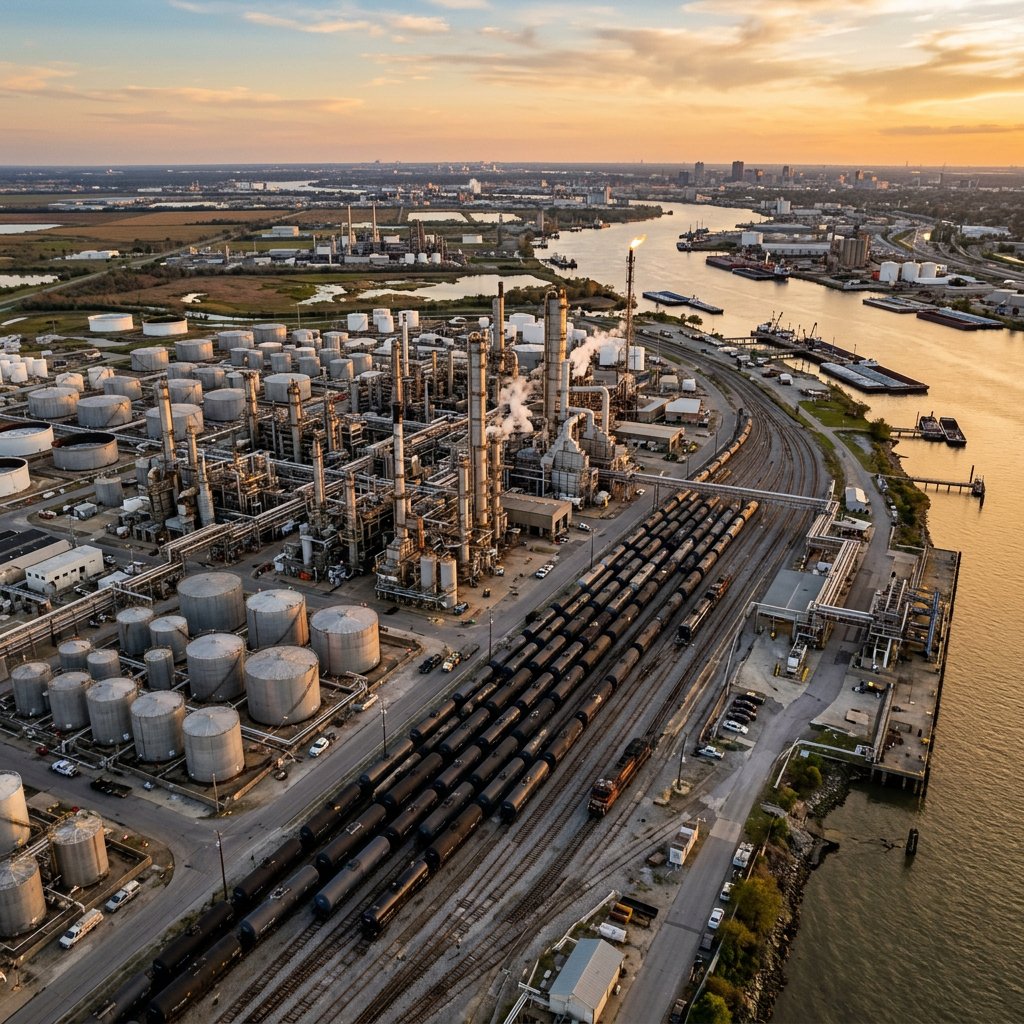
Russia is quietly negotiating with Kazakhstan to refine Russian crude oil abroad and ship a portion of the finished fuel back home — a striking measure of how deeply the Kremlin's fuel crisis has cut into domestic refining capacity. The talks, reported by Reuters on Thursday, come as Moscow extends its ban on gasoline and diesel exports through January 2027 and pump prices climb at their fastest pace in years.
Kazakhstan to Refine Russian Crude as Moscow's Fuel Crisis Deepens
Moscow, Russia – July 31 — Kazakhstan's Energy Ministry confirmed it is in negotiations with the Russian government over a proposed arrangement under which Kazakh refineries would process Russian crude oil to cover local market needs, while returning a portion of the refined gasoline and diesel to Russia. The ministry did not specify production volumes, delivery timelines, or which refineries would take part, noting only that commercial traders would handle shipments under Kazakh law.
Moscow Turns to Astana for Refining Capacity
Under the proposed arrangement, Kazakh facilities would process Russian oil to keep their own operations running at full capacity, with the priority placed squarely on satisfying Kazakhstan's domestic market first. "A top priority in the negotiations is fully meeting the needs of Kazakhstan's domestic market," the Energy Ministry was quoted as saying. Whatever surplus emerges would then flow north across the border — a reversal of the energy relationship that has defined the post-Soviet space for three decades.
For Moscow, the arrangement represents an uncomfortable admission. A country that ranks among the world's largest crude exporters is now negotiating to import refined petroleum products from a smaller neighbor, because its own refineries cannot keep pace with demand.
A Fuel Crisis Forged by Drone Strikes
The immediate cause is well documented. Ukrainian drone attacks on Russian oil refineries and storage hubs have swept across the country in a campaign that has now stretched for months, forcing repeated emergency measures in the fuel market. The scale of the damage became clear in June, when Russia's average daily oil refining fell by between 25% and 28%, according to estimates by Reuters analysts and Sergei Vakulenko, a senior fellow at the Carnegie Russia Eurasia Center — dropping from roughly 5.3 million barrels per day to 3.9 million barrels per day.
That collapse in processing capacity quickly translated into shortages at the pump. Reuters reported on June 24 that Russia had petitioned Kazakhstan to supply 50,000 metric tons of AI-92 gasoline to alleviate domestic shortages. The new refining negotiations go further, effectively outsourcing part of Russia's fuel production to a neighbor whose own refineries have historically depended on Russian crude.
Export Bans Extended Through January 2027
The talks unfolded against a backdrop of renewed export restrictions. Russia's government announced on Thursday that it would extend its ban on gasoline and diesel exports through January 31, 2027, having previously allowed the restrictions to lapse at the end of July. Deputy Prime Minister Alexander Novak had signaled over the weekend that the government would extend the gasoline ban, though he indicated at the time that it would run until the end of the year rather than through January.
The renewed decree carves out carefully calibrated exceptions: refineries, rather than retailers, will be allowed to export diesel and ship fuel and gasoil starting in September. Intergovernmental agreements and humanitarian shipments also remain exempt. A separate ban on jet fuel exports, introduced earlier this year, expires in November.
Pump Prices Climb as Consumers Feel the Pinch
For ordinary Russians, the crisis is measurable in rubles. The average price of gasoline has climbed 19% since the start of the year, with a single-week increase pushing the national average to 77.89 rubles per liter — roughly $3.69 per gallon — as of Monday, July 27. Shortages have been reported in parts of the country since the strikes began, and the export bans themselves are a tacit acknowledgment that domestic supply cannot keep pace with demand.
The government has responded with a patchwork of administrative measures rather than market-based fixes. One decree establishes direct agreements between oil companies and regional authorities to prioritize fuel deliveries to farmers through November 1. Another temporarily suspends price caps on public fuel procurement contracts through 2026, allowing public service providers to buy fuel under standard market rules. Analysts suggest these measures treat the symptoms of the crisis — shortages and price spikes — while the underlying refining deficit remains unresolved.
Kazakhstan's Careful Calculus
For Kazakhstan, the negotiations carry both opportunity and risk. Processing Russian crude keeps its refineries running at stable rates and adds fuel to its own domestic market, a genuine benefit for a country that has faced its own fuel-supply challenges. The infrastructure for such cooperation already exists: the Kondensat refinery has processed Russian crude since at least mid-2024, and it exported gasoline to Russia for the first time earlier this month.
But Astana is clearly maneuvering to avoid being drawn into Moscow's crisis on unfavorable terms. By insisting that domestic needs come first and by routing shipments through commercial traders under Kazakh law, the government of President Kassym-Jomart Tokayev has signaled that Kazakhstan will help its northern neighbor only on its own conditions. Kazakhstan accounts for roughly 2% of global daily oil supply, according to Reuters — a modest share, but one that now carries outsize significance for the Russian fuel market.
Farmers and the Harvest Season
The agricultural dimension adds urgency to the talks. Russia's harvest season is underway, and diesel shortages threaten the machinery that brings in the crop. The government's decree establishing direct agreements between oil companies and regional authorities is designed to shield farmers from the worst of the disruption, prioritizing fuel deliveries through November 1. Agricultural analysts note that any interruption in diesel supply during the harvest could ripple through food prices well into winter.
The fuel crisis has also exposed frictions inside the Kremlin's economic management. Energy officials have repeatedly blamed Ukrainian strikes for the shortages, while analysts note that years of underinvestment in refinery maintenance and a shortage of specialized equipment — compounded by sanctions — left the sector with little buffer when the strikes began.
A Post-Soviet Irony
There is a deeper irony in the arrangement that analysts are quick to point out. Russia, which built its economic power on exporting energy to the former Soviet republics, now finds itself dependent on one of those republics for refined fuel. For decades, the flow went the other way: Russian crude into Kazakh, Belarusian, and Ukrainian refineries, with Moscow setting the terms. The reversal, however partial, signals how the war and the sanctions regime have reshaped the region's energy hierarchy.
This could also carry diplomatic weight. Kazakhstan has maintained a carefully balanced position since the start of the war, refusing to endorse Moscow's actions while avoiding open confrontation. The refining talks give Astana leverage — and a public demonstration that Russia needs Kazakhstan more than the reverse, at least in this corner of the energy market.
Analysis and Implications
The negotiations are unlikely to resolve Russia's fuel crisis on their own. Kazakh refining capacity is finite, and Astana's insistence on prioritizing its own market limits how much product can flow north. The export ban through January 2027 suggests the Kremlin itself expects the refining deficit to persist well into next year, and the drone-strike campaign shows no sign of abating.
For the region, the episode is a reminder that energy interdependence cuts both ways. Moscow's wartime strategy has been built on the assumption that its energy exports give it leverage over Europe and the post-Soviet states. The fuel crisis tests that assumption from within — as Russia, the world's energy superpower, quietly asks its neighbor to keep its cars moving. How far Astana is willing to go, and on what terms, will be one of the more telling subplots of the coming months.
By Irina Volkov, Staff Writer
This article was produced with AI-assisted research and editorial support. Reporting is based on sources cited in the article.
What's Your Reaction?
 Like
0
Like
0
 Dislike
0
Dislike
0
 Love
0
Love
0
 Funny
0
Funny
0
 Wow
0
Wow
0
 Sad
0
Sad
0
 Angry
0
Angry
0

Russia/Eastern Europe Correspondent at Global1.News. Covering Russian politics, energy, security, and the shifting dynamics of the post-Soviet space. Provides clear-eyed analysis on one of the world's most opaque regions.










Comments (0)