
A Raid on a Gay Bar Risks Taiwan’s LGBTQ-Friendly Reputation
The incident, occurring merely four weeks before the island’s flagship Pride parade, offers a case study for scholars of Asian governance and human rights, illustrating how procedural missteps can undermine hard‑won social progress.
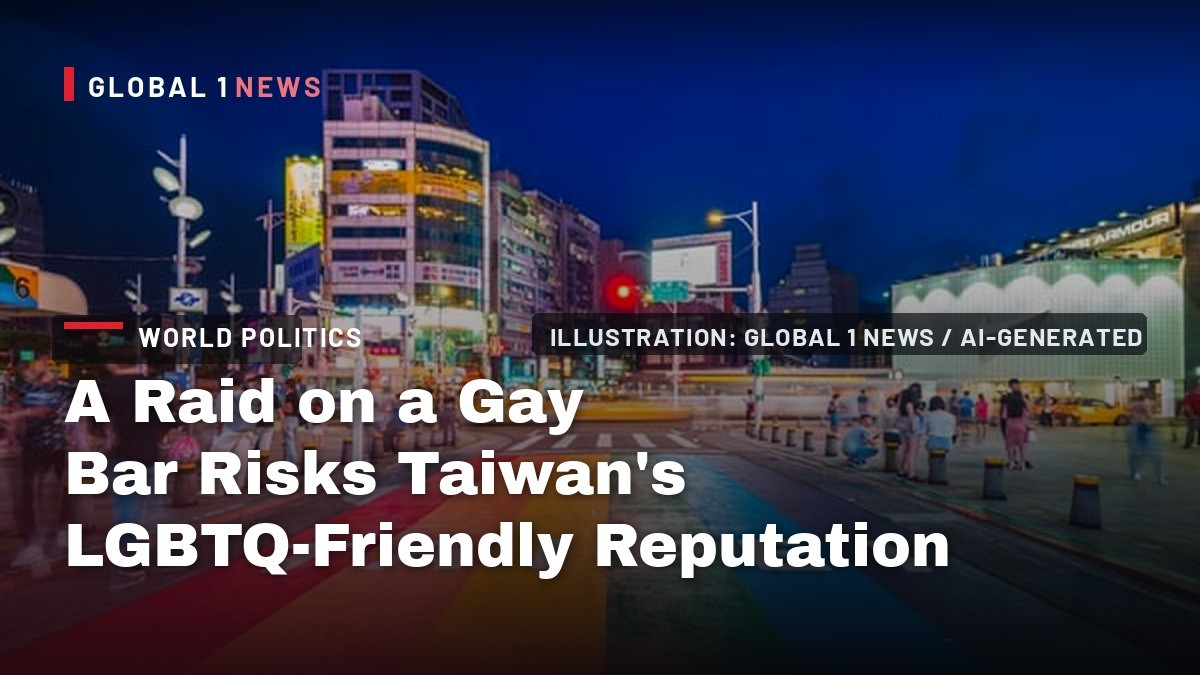
On 3 October 2026, a coordinated police operation at the Commander D club in Taipei’s Ximending district sparked a controversy that reverberates beyond a single night’s raid, touching on Taiwan’s legal framework, its reputation as an LGBTQ‑friendly society, and the broader challenges of policing minority spaces in a democratic context. The incident, occurring merely four weeks before the island’s flagship Pride parade, offers a case study for scholars of Asian governance and human rights, illustrating how procedural missteps can undermine hard‑won social progress.
Legal Context of the Raid
The Taipei District Court issued a search warrant that authorized officers to enter Commander D, yet the subsequent actions exceeded the warrant’s scope, according to legal analysts. As Lingwei Li of Zenkuan Law Firm explained, a warrant permits the search of premises but does not automatically grant authority to search every individual’s personal effects without separate justification or consent. The police’s decision to detain 58 patrons, subject many to urine drug tests, and confiscate phones therefore raised questions of legality under Taiwan’s criminal procedure statutes.
Furthermore, the Social Order Maintenance Act—cited by Li—requires conduct that “offends public decency” and persists despite a warning to constitute an offense. The officers’ directive that shirtless patrons remove clothing to preserve evidence, without evidence of a public decency violation, appears to contravene this statutory threshold. The legal ambiguities highlighted by the raid underscore the need for clearer procedural guidelines when law enforcement engages with venues that serve sexual minorities.
Procedural Missteps and Police Conduct
Witness accounts describe a forceful entry by more than 30 uniformed and plain‑clothes officers at approximately 4:30 p.m., during which music was halted, lights were switched on, and patrons were ordered to squat and surrender their phones. The officers did not initially display the warrant, a breach of transparency norms. Subsequent actions—including mockery of a wheelchair‑bound patron and the handcuffing of a manager who defended him—were characterized by observers as humiliating and indicative of an “abuse of police authority.”
Four officers were later reprimanded for inappropriate language, receiving two reprimands each, while the precinct chief was issued two reprimands after voluntarily requesting disciplinary action. The precinct’s statement pledged a “thorough review of officers’ on‑site enforcement procedures” and a strengthening of training to respect “the cultures of a diverse society.” These disciplinary measures, while notable, address individual misconduct rather than the systemic procedural gaps identified by legal experts.
Impact on Taiwan’s LGBTQ Reputation
Since the end of martial‑law era crackdowns in 1987, Taiwan has cultivated an image as one of Asia’s most tolerant societies, a reputation reinforced by the 2019 legalization of same‑sex marriage—first in the region. Taipei’s annual Pride parade, attracting roughly 150,000 participants last year, serves as a visible affirmation of this stance. However, the Commander D raid exposed a disjunction between public celebration and institutional practice, as articulated by Sean Du, secretary‑general of the Taiwan Tongzhi Hotline Association, who warned that “a city can celebrate LGBTQ+ communities publicly but still not ensure everyone is treated equally by institutions like the police.”
For queer travelers from neighboring countries where same‑sex relations remain criminalized, Taipei’s perceived safety is a critical factor. Incidents that suggest selective enforcement risk eroding this perception, potentially diminishing Taiwan’s role as a regional haven for sexual minorities. The protest that followed—approximately 100 demonstrators marching on precinct headquarters—demonstrated civil society’s readiness to defend hard‑won rights against institutional overreach.
Societal Reactions and Civil Mobilization
The immediate public response combined shock, as recounted by a patron who described being “extremely shocked and confused,” with organized dissent. Video footage of the raid circulated widely on social media, prompting a protest the next day. Activists framed the incident not merely as a policing error but as a symptom of deeper structural biases. The Taiwan Nonbinary Queer Sluts, a support group for nonbinary individuals founded by Li, leveraged the episode to call for broader reforms, emphasizing that “ordering people who were already dressed to undress is not preserving evidence. It’s humiliation.”
These civil actions align with a pattern of community‑driven advocacy in Taiwan, where NGOs and advocacy groups frequently engage with governmental bodies to shape policy. The rapid mobilization following the raid illustrates the strength of Taiwan’s civil society networks, which have historically played a pivotal role in advancing LGBTQ rights, from the de‑criminalization of same‑sex activity to the 2019 marriage legislation.
Political Dimensions and Institutional Accountability
Politically, the raid intersected with ongoing debates about public decency and youth protection. Earlier, Councilor Hung Chien‑yi had raised concerns at a Taipei City Council session, alleging that minors were entering bars and presenting photographs of Commander D. While the club denied these claims, the councilor’s intervention reflects a broader political discourse that sometimes frames LGBTQ venues within moralistic narratives. Such framing can influence law‑making and law‑enforcement priorities, potentially prompting pre‑emptive actions like the raid.
The precinct’s decision to refer the club’s owner, identified only as Zhong, 44, to the Taipei District Prosecutors’ Office on suspicion of violating public decency indicates an escalation from administrative enforcement to criminal investigation. This move, however, remains pending, with no charges filed at the time of reporting. The outcome of this prosecutorial review will be a key indicator of how Taiwan balances public order concerns with the protection of minority rights.
Implications for Future Policing and Policy Reform
From a policy perspective, the Commander D incident underscores the necessity for law‑enforcement agencies to develop clear protocols when operating in venues that serve marginalized communities. The Ministry of the Interior, which oversees police training, may need to incorporate sensitivity modules that address LGBTQ cultural contexts, ensuring that officers can distinguish between legitimate public‑order concerns and discriminatory practices.
Think‑tank analyses, such as those from the Asan Institute for Policy Studies, often highlight the importance of procedural safeguards in democratic societies. Applying such frameworks to Taiwan suggests that reforms should include mandatory warrant display, explicit limits on the scope of searches, and clear criteria for detaining witnesses versus suspects. Institutionalizing these safeguards could mitigate future incidents that jeopardize Taiwan’s international standing as a progressive democracy in East Asia.
Forward‑Looking Assessment
In the months leading up to the October Pride parade, the Commander D raid will likely remain a focal point for both domestic and international observers assessing Taiwan’s commitment to LGBTQ equality. The legal challenges raised by Li and the broader civil‑society backlash illustrate a dynamic tension between entrenched procedural norms and evolving social expectations. Should the prosecutorial process result in substantive penalties for the club’s owner without addressing the procedural violations experienced by patrons, critics may argue that accountability is being shifted onto the venue rather than the state apparatus.
Conversely, if the Ministry of the Interior implements the pledged training reforms and the judiciary clarifies the limits of search warrants in nightlife contexts, Taiwan could reinforce its reputation as a regional exemplar of rights‑respecting governance. The incident thus serves as a litmus test: the island’s ability to translate its legal milestones—most notably the 2019 same‑sex marriage law—into consistent, on‑the‑ground protection for sexual minorities will determine whether its “LGBTQ‑friendly” label endures or becomes a contested narrative in the evolving geopolitics of Northeast Asia.
This article was produced with AI-assisted research and editorial support. Reporting is based on the source material cited below. Sources: The Diplomat; thediplomat.com; Global1.News (10 October 2026).
By Prof. David Park, Staff Writer
What's Your Reaction?
 Like
0
Like
0
 Dislike
0
Dislike
0
 Love
0
Love
0
 Funny
0
Funny
0
 Wow
0
Wow
0
 Sad
0
Sad
0
 Angry
0
Angry
0

East Asia/Technology Correspondent at Global1.News. Seoul-based voice covering Korean politics, technology, business, and culture. Analyzes how technology and geopolitics intersect across East Asia.














Comments (0)