
Joshua Wong Pleads Guilty to Foreign Collusion Charge in Second Hong Kong National Security Case
Hong Kong's High Court on Wednesday accepted the guilty plea of Joshua Wong, the 29-year-old pro-democracy activist, to a charge of conspiracy to collude with a foreign country or with external elements to endanger national security, a violation of the Hong Kong National Security Law (NSL) that carries a maximum penalty of life imprisonment.
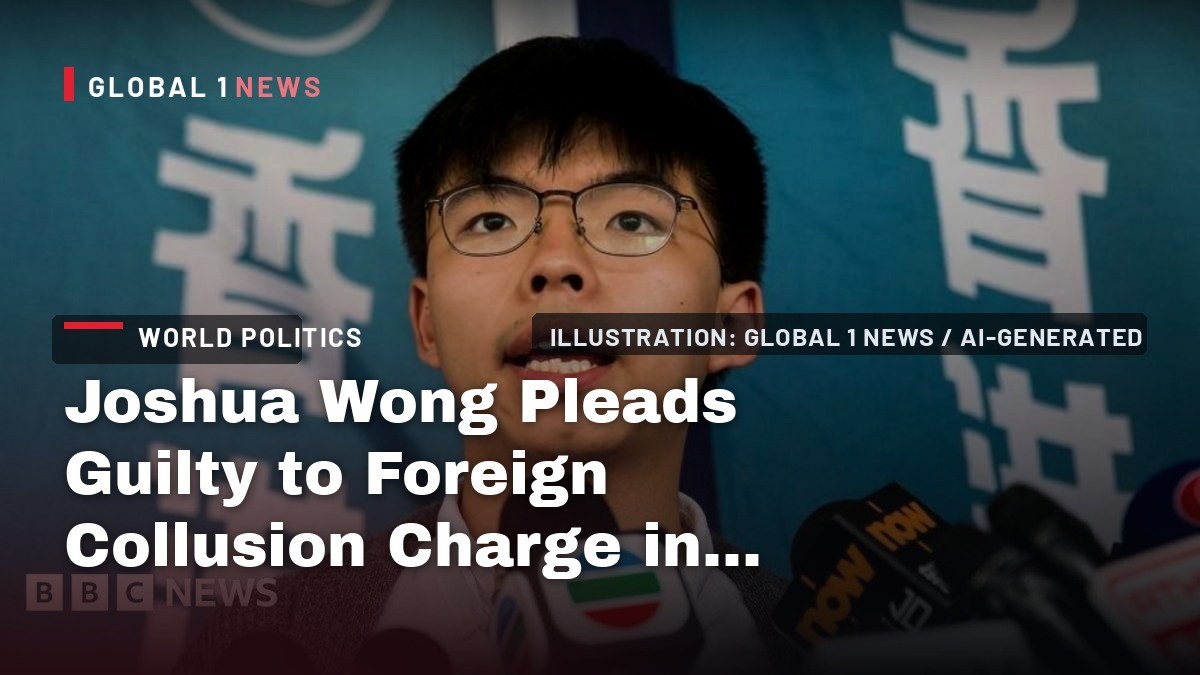
Joshua Wong Pleads Guilty to Foreign Collusion Charge in Second Hong Kong National Security Case
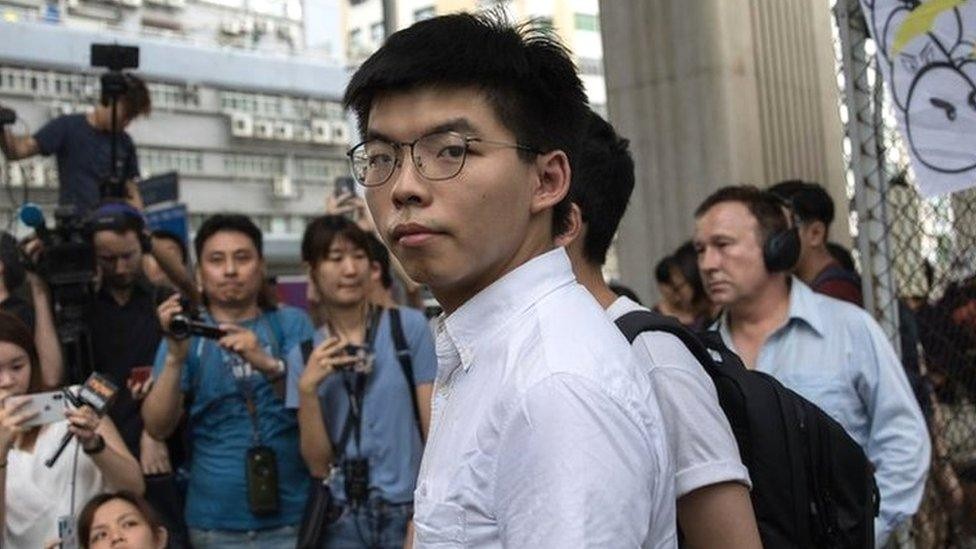
Hong Kong's High Court on Wednesday accepted the guilty plea of Joshua Wong, the 29-year-old pro-democracy activist, to a charge of conspiracy to collude with a foreign country or with external elements to endanger national security, a violation of the Hong Kong National Security Law (NSL) that carries a maximum penalty of life imprisonment. The plea marks the second NSL prosecution against Wong, who is already serving a four-year and eight-month sentence for subversion, and signals a deliberate escalation in how authorities are applying the security legislation to high-profile figures. Wong, dressed in a dark blue shirt and dark-rimmed glasses, did not dispute the allegations as roughly 40 supporters, including fellow activists and close friends, gathered in the courtroom, some shouting "Hang in there, Joshua!" to which he smiled and nodded from the dock.
The charge concerns activities between July 1 and November 23, 2020, a period that followed the NSL's introduction in June of that year, and prosecutors allege Wong conspired with other campaigners, including exiled activist Nathan Law, to solicit foreign governments, institutions, and individuals to impose sanctions, blockades, or other hostile actions against Beijing, Hong Kong, or China. The court has adjourned the case for sentencing at a later date, and legal observers note that a guilty plea could typically result in a reduced sentence, though the gravity of the offence leaves the final outcome uncertain. Wong's current sentence runs until January 2027, and he was arrested in June 2025 on the collusion-related offence, a move that upended expectations he would be freed next January, deepening the sense among his supporters that authorities are pursuing a strategy of sustained legal pressure.
A Second Prosecution While Serving Time
The decision to bring a fresh NSL charge against Wong while he was already incarcerated represents a notable departure from standard enforcement practice, where multiple charges are typically consolidated into a single proceeding. Wong was convicted of subversion, another NSL violation, in late 2024, and his arrest in June 2025 on the collusion charge came just months before his anticipated release in January 2027. Prosecutors have framed the new case as addressing distinct conduct, specifically the alleged conspiracy to seek foreign sanctions and hostile measures, which they argue occurred in a separate timeframe and involved different objectives than the subversion conviction. The strategic calculus appears to be one of legal layering, ensuring that a figure of Wong's symbolic weight remains under the jurisdiction of the NSL framework even as his original sentence approaches its end, a point that critics argue reflects an intent to neutralise opposition leaders over the long term.The Alleged Conspiracy and International Lobbying
The prosecution's case centres on a purported agreement reached in 2016 between Wong and Nathan Law to achieve political goals through "international lobbying," a strategy that allegedly involved visits to the United States, Germany, and Italy on numerous occasions. According to court submissions, after the NSL took effect in 2020, Law and others who left Hong Kong continued their work abroad, meeting foreign politicians and launching petition drives, while Wong supported the effort from Hong Kong through foreign media and social media, including sharing Law's posts to draw foreign attention and "bolster the request for sanctions, blockade or other hostile measures." Prosecutors also accused Wong of promoting the Hong Kong Human Rights and Democracy Act, a US federal law that came into force in November 2019 during Donald Trump's first administration, which compels the US government to impose sanctions against mainland Chinese and Hong Kong officials deemed responsible for human rights abuses in the territory. Wong further admitted to urging foreign firms not to invest in mainland China and to stop providing technology to Hong Kong police, with the prosecution citing a work report in which he claimed to have helped end a company's forensic-software supply to police and had written to foreign companies warning them about collaboration with the Chinese government.Legal Parameters and Sentencing Uncertainty
Under the NSL, the offence of collusion with a foreign country or external elements is punishable by three to ten years in prison, or up to life imprisonment if deemed to be of a grave nature, and the court has yet to set a sentencing date. The prosecution's characterisation of the alleged conduct as involving sustained international lobbying, promotion of foreign sanctions legislation, and efforts to disrupt commercial ties with mainland China and Hong Kong police could be argued to elevate the case into the "grave" category, though the guilty plea may weigh in Wong's favour. Legal analysts note that the adjournment for sentencing allows the court to consider the full scope of evidence, including the extent to which Wong's actions were coordinated with Law and other exiled figures, and whether his role was one of primary instigator or supporting actor. The outcome will be closely watched as a benchmark for how the NSL's sentencing provisions are applied to cases involving external interference, particularly given the relatively short track record of such prosecutions since the law's enactment.Supporters and the Human Cost of Prolonged Detention
The courtroom scene on Wednesday underscored the personal toll of Wong's extended legal battles, with supporters noting that he has now spent more than 2,000 days in prison. Tsang Kin-shing, a former member of the now-dissolved League of Social Democrats, expressed hope that the court would impose a lenient sentence, highlighting the duration of Wong's detention as a mitigating factor. Fellow activist Louis Lee said Wong and his supporters were disheartened that he was handed another NSL charge while already serving time, though he noted that Wong has continued learning guitar and working out in prison, suggesting a resilience that has defined his years of confinement. The emotional weight of the proceedings was evident, yet Wong's composed demeanour in the dock, smiling and nodding to supporters, reflected a figure who has long navigated the intersection of activism and legal jeopardy, from his leadership in the Umbrella Movement of 2014 to the massive pro-democracy protests of 2019.Beijing's Strategic Interests and the NSL Framework
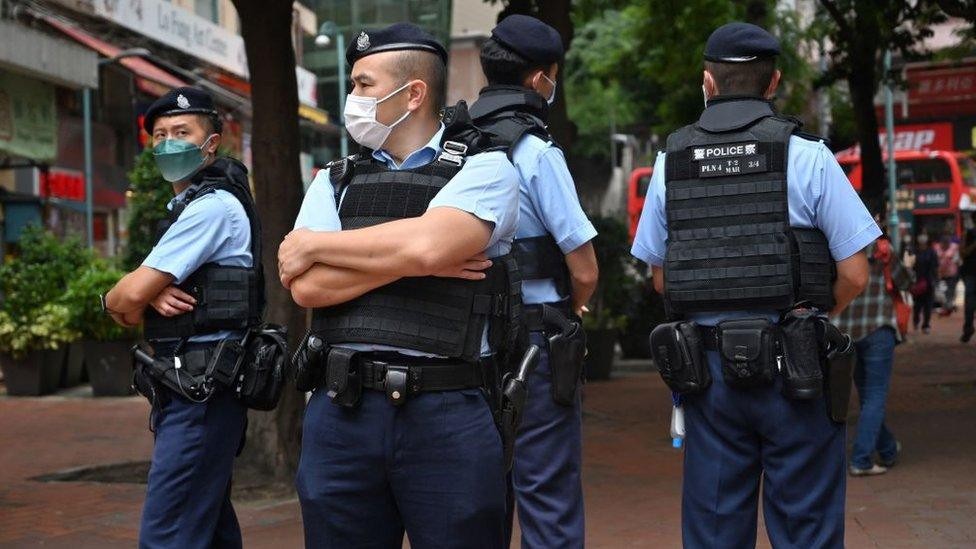
The case must be understood within the broader context of Beijing's approach to Hong Kong, where the NSL, introduced in June 2020 after months of anti-government protests, serves as the cornerstone of efforts to reassert central control over the territory. Authorities argue the law is necessary to maintain stability and deny that it has weakened Hong Kong's autonomy, framing prosecutions like Wong's as legitimate enforcement against those who sought to undermine national security through external alliances. Critics, however, contend that the law has created a climate of fear and quashed dissent, and the pursuit of a second case against Wong while he was already imprisoned reinforces their claim that the legal system is being used to systematically dismantle the pro-democracy movement. For Beijing, the message is clear: even those who have already been convicted and are serving sentences remain subject to scrutiny for any conduct that could be construed as colluding with foreign powers, a stance that signals an uncompromising enforcement posture.
Implications for Exiled Activists and the Diaspora
The plea carries significant implications for exiled activists such as Nathan Law, who remains outside Hong Kong and was named in the prosecution's case as a co-conspirator. While Law is beyond the immediate reach of Hong Kong courts, the detailed allegations against him, including the 2016 agreement and subsequent international lobbying efforts, serve as a warning that authorities are building comprehensive cases that could be activated should he ever return or should extradition arrangements change. The prosecution's emphasis on Law's continued activities abroad, meeting foreign politicians and launching petition drives, also highlights the challenges Beijing faces in countering a diaspora that remains politically active, and the NSL's extraterritorial provisions may be invoked to signal that exile does not confer immunity. For activists still in Hong Kong, the case reinforces the risks of maintaining any connection to exiled figures, particularly through social media sharing or public statements that could be interpreted as supporting foreign sanctions.Geopolitical Friction and the US Factor
The case unfolds against a backdrop of heightened Washington-Beijing friction over Hong Kong, with the Hong Kong Human Rights and Democracy Act serving as a recurring point of contention. The prosecution's specific focus on Wong's promotion of the Act, which was signed into US law in November 2019, underscores how Hong Kong has become a proxy for broader Sino-American competition, with each side accusing the other of interfering in its internal affairs. Washington has used the Act to impose sanctions on Chinese and Hong Kong officials, drawing sharp rebukes from Beijing, which views such measures as violations of sovereignty and has responded with its own counter-sanctions. Wong's guilty plea, and the prosecution's detailed accounting of his alleged efforts to solicit foreign pressure, provides Beijing with a domestic legal narrative to counter US criticism, framing sanctions advocacy as a criminal act rather than legitimate political expression. The second-order effects on Hong Kong's international standing are likely to be profound, as foreign governments and businesses weigh the risks of engagement against the territory's diminished political freedoms.Civil Society and the Future of Dissent in Hong Kong
The broader impact on Hong Kong civil society is a matter of intense debate, with the Wong case serving as a touchstone for how far the NSL's reach extends into the realm of political advocacy. The dissolution of Demosistō, the party Wong co-founded with Law and others in April 2016, after the NSL's imposition in 2020, marked the end of an era of organised pro-democracy politics, and subsequent prosecutions have further narrowed the space for opposition activity. Critics argue that the cumulative effect of these cases is to criminalise dissent itself, particularly any form of engagement with foreign actors, while authorities maintain that the law targets only those who threaten national security, not legitimate political expression. The sentencing of Wong, when it comes, will be a defining moment for this debate, offering a measure of how the judiciary balances the NSL's severe penalties against mitigating factors such as a guilty plea and the substantial time already served.Analysis: What the Plea Signals About Enforcement Strategy
The decision to pursue a second NSL prosecution against Wong, and his subsequent guilty plea, reveals a layered enforcement strategy that extends beyond individual punishment to broader deterrence and narrative control. By bringing charges for conduct that occurred in 2020, after the NSL's enactment, authorities are demonstrating that the law has retrospective reach over actions taken during the transition period, and that no statute of limitations shields activists from accountability. The plea also serves a practical function, allowing the prosecution to secure a conviction without the uncertainties of a contested trial, while the detailed allegations against Law and other exiled figures create a legal record that can be referenced in future proceedings. For Hong Kong's international critics, the case is likely to reinforce perceptions of a judicial system subordinated to political objectives, while for Beijing, it represents a successful assertion of legal sovereignty over a figure who once symbolised the city's pro-democracy aspirations. The sentencing decision will ultimately reveal whether the court views Wong's conduct as warranting the maximum penalty or whether the mitigating circumstances of his prolonged detention and guilty plea will temper the outcome, a judgment that will resonate far beyond the courtroom. By Prof. Marcus Chen, Staff Writer This article was produced with AI-assisted research and editorial support. Sources: BBC News; Reuters; The Associated Press; RTHK; South China Morning Post.What's Your Reaction?
 Like
0
Like
0
 Dislike
0
Dislike
0
 Love
0
Love
0
 Funny
0
Funny
0
 Wow
0
Wow
0
 Sad
0
Sad
0
 Angry
0
Angry
0

Marcus Chen
World Politics Analyst at Global1.News. Based in Beijing, covering US-China relations, global trade, and geopolitical strategy. Brings deep analytical perspective to the power dynamics shaping international affairs.













Comments (0)