
VP Sara to visit Hong Kong ahead of impeachment trial resumption
Vice President Sara Duterte’s upcoming trip to Hong Kong has sparked a wave of discussion across barangays and city halls alike, as it comes just a day before the Senate is set to reconvene the impeachment trial that has gripped the nation.
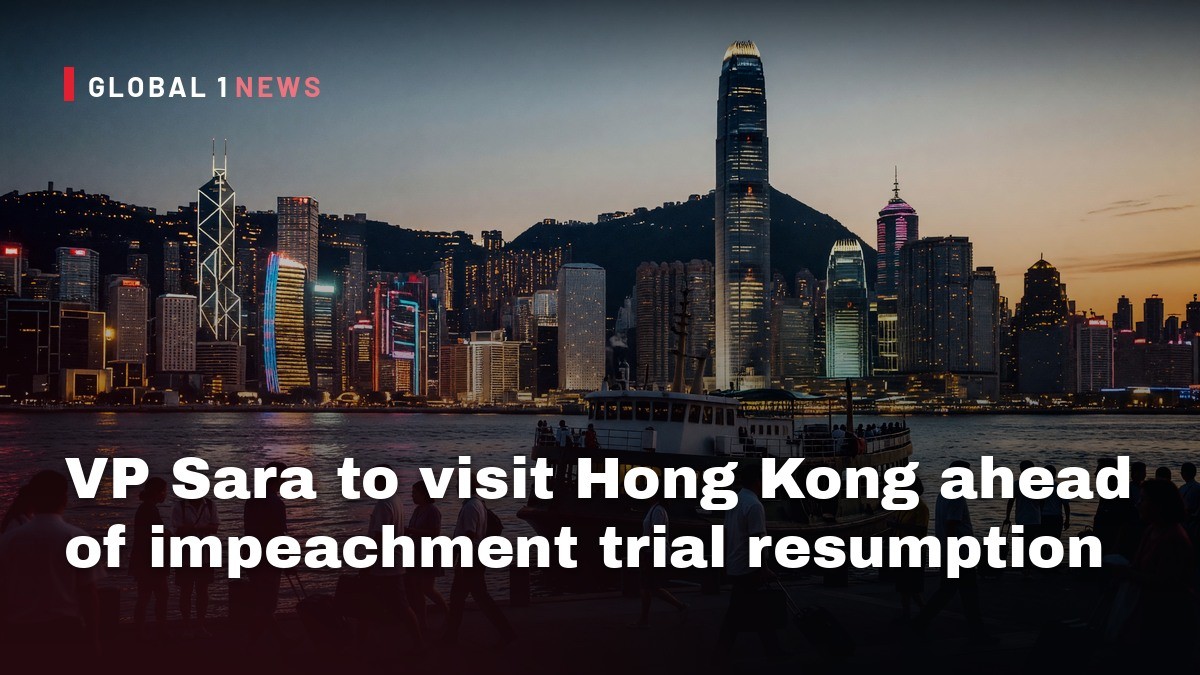
Vice President Sara Duterte’s upcoming trip to Hong Kong has sparked a wave of discussion across barangays and city halls alike, as it comes just a day before the Senate is set to reconvene the impeachment trial that has gripped the nation. The Office of the Vice President confirmed on Friday, November 6, that the vice president will remain in Hong Kong until November 8, emphasizing that the journey is being financed entirely from her personal resources. No public funds, government facilities or official staff will be employed for the travel, a point the OVP highlighted to preempt any allegations of misuse of state money.
Legal backdrop: the arrest warrant and its implications
The trip is framed against a backdrop of ongoing legal battles. In September, the Quezon City Regional Trial Court Branch 98 issued an arrest warrant for Vice President Duterte, a move that underscores the seriousness of the charges she faces. The warrant stems from alleged grave threats made against President Ferdinand Marcos Jr., First Lady Liza Araneta‑Marcos, and former House Speaker Martin Romualdez. These threats are among the accusations embedded in the four original articles of impeachment that the Senate is now sifting through.
While the warrant remains in effect, the court granted Duterte permission to travel abroad, a decision that reflects the court’s discretion in balancing the seriousness of the allegations with the practicalities of legal process. For many Filipinos, especially those in the provinces who watch the proceedings through local radios and sari‑sari stores, this development raises questions about how the justice system navigates high‑profile cases without appearing to grant undue privilege.
Impeachment trial timeline and pending Supreme Court challenge
The Senate is slated to resume the impeachment trial on Monday, November 9. However, the trial does not proceed unimpeded. A pending petition before the Supreme Court challenges the voting threshold required to convict a sitting vice president. This legal question—whether a simple majority or a higher super‑majority is needed—has become a focal point of debate among constitutional scholars and ordinary citizens alike.
For the Filipino electorate, the outcome of this Supreme Court challenge could set a precedent for future accountability measures against top officials. The uncertainty adds a layer of tension to the trial, as lawmakers must prepare to vote under a cloud of legal ambiguity, while the public watches from their homes and barangay halls, hoping for a transparent process.
The narrowed focus of the defense’s case
In a strategic shift, the defense team has narrowed its focus to Article II of the impeachment complaint, which alleges that Vice President Duterte amassed unexplained wealth. By concentrating on a single article, the defense aims to streamline its arguments and avoid the broader, more politically charged accusations tied to the alleged threats.
This narrowing reflects a common legal tactic: concentrating on the most defensible charge when faced with a multifaceted indictment. For ordinary Filipinos, the emphasis on unexplained wealth resonates with everyday concerns about corruption and the equitable distribution of resources, especially in a country where many still rely on jeepney fares and small‑scale farming for their livelihood.
Witness lineup and the first scheduled testimony
The defense has submitted a 25‑person witness list for the hearings scheduled from November 9 to 13. Among the names is Ralph Sarmiento, a former law dean at the University of St. La Salle in Bacolod City. Sarmiento was slated to be the defense’s first witness, but he has declined to take the stand.
The withdrawal of Sarmiento’s testimony may affect the defense’s ability to present expert legal analysis or character testimony that could sway the Senate’s perception. Observers note that the composition of the witness list—ranging from legal scholars to possibly business associates—will shape the narrative presented to the public, influencing how the case is understood in the broader context of governance and accountability.
Public reaction and the role of community discourse
Across the archipelago, from the bustling streets of Manila to the quiet barangays of Mindanao, citizens are engaging in conversations about the implications of the vice president’s travel and the looming trial. Social media threads, local radio talk shows, and community gatherings serve as platforms where Filipinos debate whether the travel is a strategic move to seek diplomatic support or simply a personal matter unrelated to the impeachment.
Many express concern that the timing of the trip—concluding just a day before the trial resumes—could be perceived as an attempt to distance herself from the proceedings. Others argue that the personal financing of the trip demonstrates a respect for public resources, aligning with the cultural value of bayanihan where individuals shoulder responsibilities without imposing on communal assets.
Potential diplomatic dimensions of the Hong Kong visit
While the OVP has not disclosed the purpose of Vice President Duterte’s visit to Hong Kong, the location holds significance for many OFWs who work in the city’s bustling economy. The timing may suggest an effort to engage with the Filipino diaspora, a community that often serves as an informal bridge between the Philippines and foreign governments.
If diplomatic outreach is part of the itinerary, it could have implications for the Philippines’ foreign policy, especially in the context of ongoing regional tensions in the South China Sea. However, without official statements detailing the agenda, any speculation remains just that—speculation. The Vice President’s team has emphasized the personal nature of the trip, underscoring that no official resources are being utilized.
Looking ahead: what the trial could mean for governance
The resumption of the impeachment trial on November 9 will be a pivotal moment for the Senate, the Supreme Court, and the broader democratic fabric of the Philippines. A conviction could set a powerful precedent for holding high‑ranking officials accountable, reinforcing the principle that no one is above the law—a cornerstone of the country’s democratic aspirations.
Conversely, an acquittal, especially if perceived as influenced by procedural technicalities rather than substantive exoneration, could fuel public disillusionment with political institutions. For the average Filipino, the outcome will reverberate beyond the marble halls of the Senate, affecting trust in public offices, the perceived fairness of the justice system, and the everyday hope that elected leaders will serve with integrity.
This article was produced with AI-assisted research and editorial support. Reporting is based on the source material cited below. Sources: Philstar.com; Global1.News (06 November 2026).
By Bella Reyes, Staff Writer
What's Your Reaction?
 Like
0
 Dislike
0
 Love
0
 Funny
0
 Wow
0
 Sad
0
 Angry
0

Philippines/Southeast Asia Correspondent at Global1.News. Manila-based journalist covering Philippine politics, environment, maritime security, and social issues. Passionate about marine conservation and the communities protecting the Philippines' natural heritage.













Comments (0)