
A nation confronts its deepest divisions: Who belongs in France?
France stands at a crossroads where socioeconomic strain, political fragmentation and a contested sense of national identity intersect, creating a volatile mix that threatens the cohesion of its republican model.
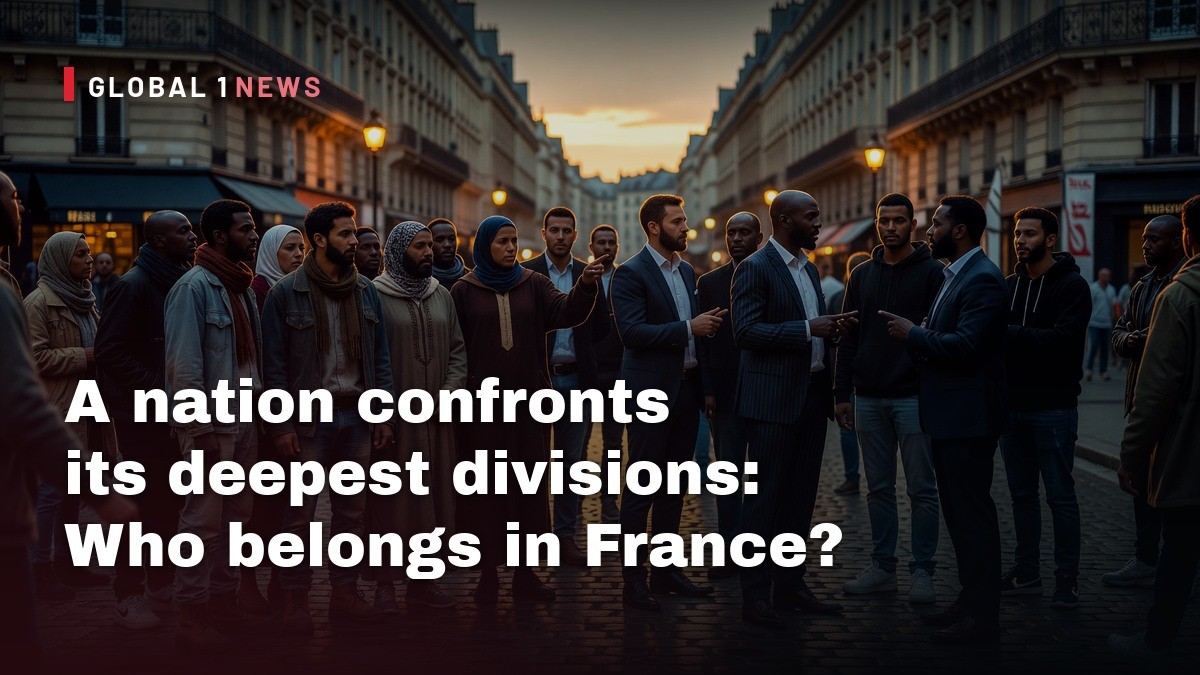
France stands at a crossroads where socioeconomic strain, political fragmentation and a contested sense of national identity intersect, creating a volatile mix that threatens the cohesion of its republican model. The recent surge of street unrest, from the violent episode in Trappes on 23 October to the broader wave of student‑led protests over the past two months, underscores a deepening rift between ordinary citizens and the political establishment. As the country approaches the 2027 presidential election, the stakes of this internal discord are amplified by the growing influence of far‑right narratives that link immigration and Muslim identity to crime and cultural decline, while left‑wing forces also mobilise around anti‑austerity grievances. This article examines the layers of tension that now define French public life, tracing their origins, current manifestations and possible trajectories.
Historical roots of French discontent
The pattern of protest that now resurfaces in France is not new. The Yellow Vests movement of 2018‑2019, which drew heavily from rural and working‑class communities, highlighted a perception that the cost of living was rising faster than wages and that political elites were detached from everyday hardships. This sentiment resurfaced in early 2023 when mass demonstrations erupted against the government's decision to raise the statutory retirement age from 62 to 64, a policy seen as deepening economic inequality.
These episodes share a common thread: a feeling that economic reforms are being imposed without adequate consultation or compensation for those most affected. The continuity of these grievances suggests that the underlying structural issues—stagnant wages, deteriorating public services and a sense of marginalisation—remain insufficiently addressed by successive administrations, including President Emmanuel Macron’s.
The latest wave of unrest
Over the past two months, a new surge of student‑led protests has swept across the country, gradually aligning with renewed Yellow Vest mobilisation, trade unions and other disaffected social groups. Demonstrators have rallied around a bundle of concerns: rising living costs, the perceived decline of public services, educational inequalities and opposition to the government's broader economic and political agenda. While the participants differ in age and occupational background, they converge on a shared perception that the state is failing to protect their material wellbeing.
The unrest reached a tragic climax on 23 October in Trappes, a western suburb of Paris with a sizable African and Muslim population. A racially motivated attack left one person dead and five injured, according to an editorial in Le Monde. The suspect, allegedly motivated by revenge for looting during the 17 October unrest, deliberately targeted Black and Arab individuals, turning a criminal act into a stark illustration of the racial hostility that can accompany economic frustration.
Immigration, identity and the far‑right narrative
Parallel to the socioeconomic protests, the political discourse around immigration and national identity has intensified. An investigative report by Mediapart documented that, in the weeks leading up to the Trappes attack, far‑right leaders and commentators on French television repeatedly linked immigration and Muslim identity to crime, insecurity and cultural decline. Some invoked the “Great Replacement” theory, which posits that native populations are being deliberately displaced by immigrant communities.
These narratives have been normalised over the past two decades, dating back to former President Nicolas Sarkozy’s 2007 public debate on national identity. The repeated association of immigration with threat has seeped into mainstream conversation, shaping public perceptions and deepening the divide between majority and minority communities.
Media’s amplifying role
Media outlets, both traditional television programmes and online platforms, play a decisive role in framing the public’s understanding of these issues. While they can illuminate complex policy debates, they also have the capacity to amplify misinformation and inflammatory rhetoric when claims are presented without verification or context. The Mediapart findings point to a pattern where far‑right media normalise anti‑Muslim sentiment, repeatedly portraying multiculturalism as a danger to a supposedly homogeneous, white France.
This amplification risks reinforcing stereotypes and deepening societal fissures. When political programmes repeatedly associate immigration with violence, they contribute to a climate where ordinary citizens may conflate economic hardship with ethnic blame, as seen in the Trappes incident where a personal grievance was expressed through racial targeting.
Political fragmentation and the 2027 election outlook
The current political landscape is marked by fragmentation. Opinion polls ahead of the April 2027 presidential election indicate that far‑right leader Marine Le Pen of the National Rally (RN) is poised to qualify for the second round on 2 May 2027. Simultaneously, hard‑left France Unbowed (LFI) leader Jean‑Luc Mélenchon consistently polls ahead of several mainstream candidates. This split suggests a plausible second‑round contest between Le Pen and Mélenchon, a scenario that would pit far‑right nationalist rhetoric against hard‑left anti‑austerity platforms.
Both camps have capitalised on public discontent: the RN by foregrounding immigration and security concerns, and LFI by championing economic justice and opposition to neoliberal reforms. The mainstream centre‑right and centre‑left parties risk being squeezed out, further polarising the electorate and potentially legitimising more extreme positions on both ends of the spectrum.
State response and the challenge of cohesion
Amid the escalating tensions, the French government faces a delicate balancing act. On one hand, it must address genuine economic grievances—rising living costs, deteriorating public services and educational disparities—that fuel protest movements. On the other, it must confront the rise of hostile narratives that target minority communities, ensuring that security measures do not become a pretext for broader discrimination.
Political leaders and media executives bear a responsibility to articulate security concerns without exploiting fear or encouraging hostility toward specific groups. Failure to do so risks legitimising the very rhetoric that fuels racialised violence, as exemplified by the Trappes attack. A comprehensive approach that couples socioeconomic reforms with a measured, inclusive discourse on immigration and identity could mitigate the spiral of division.
Prospects for the future
Looking ahead, France’s ability to reconcile these intersecting crises will hinge on whether policymakers can decouple economic discontent from ethnic scapegoating. If reforms that improve living standards and restore confidence in public institutions are paired with a clear repudiation of racialised narratives, the country may stem the tide of division.
Conversely, if political competition continues to weaponise immigration and identity, and media platforms persist in amplifying unverified claims, the risk of further violent outbursts and deepened societal cleavage will remain high. The upcoming presidential campaign will be a critical test: the extent to which candidates choose inclusive rhetoric over polarising slogans could determine whether France navigates this period of upheaval or slides into a more entrenched, fragmented state.
This article was produced with AI-assisted research and editorial support. Reporting is based on the source material cited below. Sources: Daily Sabah Middle East; dailysabah.com; Global1.News (05 November 2026).
By Malik Hassan, Staff Writer
What's Your Reaction?
 Like
0
 Dislike
0
 Love
0
 Funny
0
 Wow
0
 Sad
0
 Angry
0
Middle East Correspondent at Global1.News. Based in Beirut, covering politics, conflict, energy, and society across the Middle East. Brings context and depth to a region often reduced to headlines.










Comments (0)