
Abdul El-Sayed backs Trump’s call to cut Israel aid, says he is willing to work with president
Senator‑elect Abdul El‑Sayed, the United States’ first Muslim American senator, publicly endorsed President Donald Trump’s call to halt American military assistance to Israel, arguing that U.S.
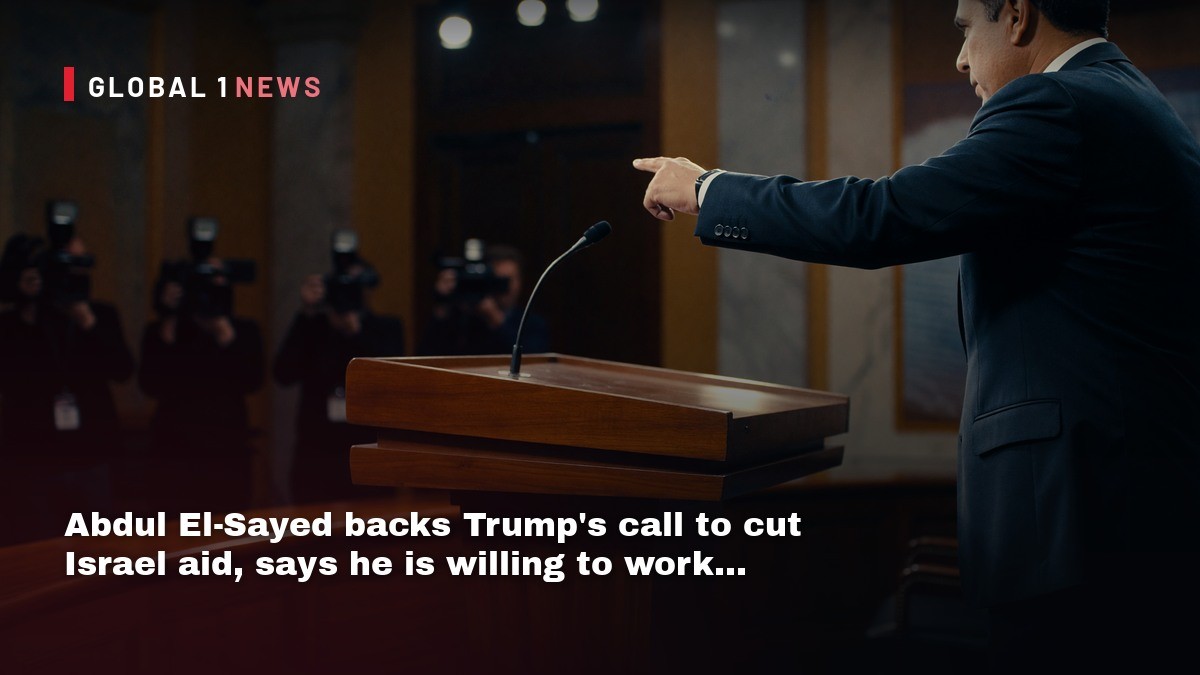
Senator‑elect Abdul El‑Sayed, the United States’ first Muslim American senator, publicly endorsed President Donald Trump’s call to halt American military assistance to Israel, arguing that U.S. funds are being used to support a force accused of committing atrocities. Speaking in Detroit on November 4, 2026, El‑Sayed framed his position as a matter of law, human rights and the moral responsibility of a nation that supplies weapons used in what he described as a genocide in the occupied Palestinian territories.
El‑Sayed’s public endorsement of the aid cut
During an interview with MS NOW, El‑Sayed said, “I agree with him on that. I don’t think we should be continuing to subsidize a foreign military that had done the worst things with our money.” He added that he would “love to work with” President Trump to end U.S. military assistance to Israel. The senator‑elect’s remarks echo Trump’s own statements that American aid should be withdrawn until Israel changes its policies toward the Palestinians.
El‑Sayed’s support for the aid cut is rooted in his view that the United States is financially enabling “a military accused of committing atrocities with American weapons.” By linking U.S. funding directly to alleged war crimes, he positions the aid debate within the broader framework of international humanitarian law and the responsibility to prevent complicity in violations of that law.
Distinguishing criticism of Israel from antisemitism
El‑Sayed emphasized the need to separate criticism of Israeli policies from prejudice against Jewish people. He warned against “portraying criticism of Israel as hatred of Jews,” insisting that legitimate concern for Palestinian rights does not equate to antisemitism. This distinction, he argued, is essential for a constructive public discourse that can address the humanitarian crisis without inflaming communal tensions.
He also highlighted his personal stake as a Muslim parent, stating that his commitment to protecting Jewish children and families in the United States is consistent with his broader concern for the safety of all children, regardless of faith. By framing his stance as one of “equal love for those Palestinian children,” El‑Sayed seeks to bridge communal divides while maintaining a firm stance on human‑rights violations.
Human‑rights framing of the conflict
El‑Sayed described Israel’s actions in the occupied West Bank and the Gaza Strip as “the worst things” done with U.S. money, and he characterized the war as genocide. He pointed to restrictions on basic resources in Gaza and the broader pattern of violence against civilians as evidence of systematic oppression. By invoking the term “genocide,” he aligns his critique with international legal definitions that require intent to destroy, in whole or in part, a protected group.
His language underscores a growing narrative among some U.S. lawmakers that the United States must reassess its strategic partnerships when they appear to contravene fundamental human‑rights standards. This perspective challenges the long‑standing bipartisan consensus that has traditionally shielded Israel from substantive congressional scrutiny.
Political motivations and the rule of law
When asked about his willingness to work with President Trump, El‑Sayed stressed that politics should be guided by “enforcing the rule of law” rather than “political retribution.” He argued that policy decisions should prioritize the American public’s interests and the principles of justice, rather than partisan battles. This framing suggests that his support for the aid cut is not merely a partisan maneuver but a principled stance rooted in legal and ethical considerations.
El‑Sayed’s appeal to the rule of law resonates with broader calls for accountability in the Israeli‑Palestinian conflict. By positioning U.S. aid as a lever that could compel compliance with international humanitarian norms, he signals a shift toward using diplomatic and financial tools to enforce legal standards, rather than relying solely on military or strategic calculations.
Potential impact on U.S. foreign policy
If El‑Sayed’s advocacy gains traction within the Senate, it could reshape the congressional debate over foreign aid to Israel. Historically, aid packages have been passed with overwhelming bipartisan support, often insulated from criticism by the “pro‑Israel” lobby and longstanding strategic arguments. However, El‑Sayed’s public endorsement of a major policy shift may embolden other legislators who share his concerns about human‑rights violations.
The senator‑elect’s stance also intersects with ongoing discussions in the House, where the minority leader has signaled opposition to continued aid. Together, these signals could lead to a more robust examination of the conditions attached to U.S. assistance, potentially prompting legislative proposals that tie aid to compliance with international law.
Domestic reactions and community implications
El‑Sayed’s comments have already sparked debate among both Muslim and Jewish communities in the United States. By asserting that criticism of Israel is not synonymous with antisemitism, he invites a nuanced conversation about how to address legitimate human‑rights concerns while safeguarding the safety and dignity of Jewish Americans. His emphasis on protecting Jewish children in the U.S. seeks to reassure those who fear that anti‑Israel sentiment may translate into broader hostility.
At the same time, his call to cut aid may be perceived as a challenge to the long‑standing alliance between the United States and Israel, raising concerns among pro‑Israel groups about the potential erosion of strategic ties. The discourse surrounding his remarks illustrates the delicate balance policymakers must navigate between upholding human‑rights principles and maintaining diplomatic relationships.
Looking ahead: what El‑Sayed’s position means for the Palestinian cause
El‑Sayed’s willingness to work with the president on ending U.S. military assistance signals a potential new avenue for Palestinian advocacy. By targeting the financial lifeline that enables Israel’s military operations, Palestinian leaders may find a new lever to press for changes on the ground. The senator‑elect’s framing of the conflict as a genocide and his call for “equal love” for Palestinian children underscore a moral imperative that could resonate with international audiences.
In the coming months, El‑Sayed’s influence will be tested as he transitions from senator‑elect to a voting member of the Senate. His ability to shape legislation, build coalitions, and sustain public attention on the humanitarian crisis will determine whether his early statements translate into concrete policy shifts. For Palestinians, his emergence as a high‑profile Muslim American voice in Washington offers a rare opportunity to bring their plight directly into the corridors of U.S. power.
This article was produced with AI-assisted research and editorial support. Reporting is based on the source material cited below. Sources: Middle East Monitor; middleeastmonitor.com; Global1.News (06 November 2026).
By Fatima Al-Rashid, Staff Writer
What's Your Reaction?
 Like
0
 Dislike
0
 Love
0
 Funny
0
 Wow
0
 Sad
0
 Angry
0
Gulf/MENA Correspondent at Global1.News. Based in Doha, covering Gulf politics, energy markets, diplomacy, and development across the Middle East and North Africa. Tracks the economic transformation of the Gulf states.











Comments (0)