
UN urges Israel to end harassment, intimidation, detention of civilians in Syria
The United Nations’ human‑rights office has issued a stark warning to Israeli authorities, urging an immediate halt to a pattern of raids, movement restrictions, detentions and crop destruction that is suffocating civilian life in southern Syria.
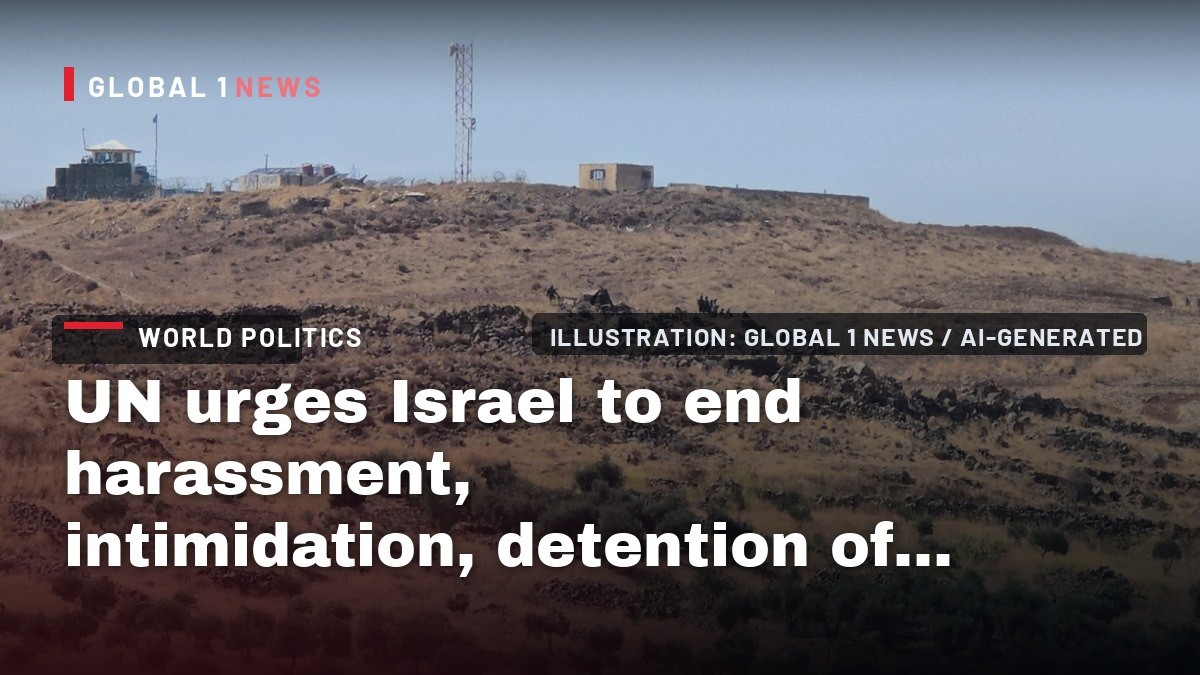
The United Nations’ human‑rights office has issued a stark warning to Israeli authorities, urging an immediate halt to a pattern of raids, movement restrictions, detentions and crop destruction that is suffocating civilian life in southern Syria. The appeal comes amid a surge in armed incursions recorded by open‑source monitors, highlighting a troubling escalation that places ordinary Syrians at heightened risk of violence, displacement and abuse. As the UN emphasizes the need for compliance with international humanitarian and human‑rights law, the human cost of the operations—injuries, intimidation and the specter of torture—continues to mount, underscoring the urgent need for accountability and protection of civilian dignity.
Escalating incursions and the UN’s call for restraint
In September 2026, open‑source monitoring documented roughly 280 separate incidents of armed Israeli incursions into Syrian territory, the highest monthly total recorded since the start of the year. This spike in activity has prompted the UN human‑rights office to publicly demand that Israeli forces cease actions that “harass or intimidate civilians in Syrian villages,” including raids, restrictions on freedom of movement, detentions and the destruction of crops. The statement, delivered by spokesperson Shabia Mantoo in Geneva, reflects growing concern that the intensity and frequency of these operations are eroding the basic protections owed to civilians under international law.
Volker Turk, the UN human‑rights chief, reiterated this concern, noting the “continuing impact of Israeli military operations on civilians in southern Syria.” The UN’s appeal is rooted in the principle that any use of force must be proportionate, discriminate and directed solely at legitimate military targets, a standard that appears increasingly strained by the breadth of recent incursions.
Human impact: raids, intimidation and the destruction of livelihoods
Beyond the sheer number of incursions, the lived experience of residents in Quneitra and surrounding villages reveals a climate of fear and disruption. Israeli forces have been reported patrolling villages, conducting raids in residential areas and firing harassment shots into open countryside. Such actions not only threaten lives directly but also undermine the ability of civilians to tend to their fields and sustain their families. The destruction of crops, a tactic highlighted in the UN’s statement, strikes at the heart of food security for a population already grappling with the aftereffects of years of conflict.
For farmers like the disabled individual shot and temporarily detained in Quneitra, the trauma is compounded by physical injury and the psychological terror of being targeted while performing essential work. Even after being released, the farmer required emergency medical care at Al‑Golan Hospital, illustrating how a single encounter can cascade into a broader humanitarian need.
Detentions and allegations of ill‑treatment
The UN office reports that, according to information received, 49 Syrians remain in Israeli custody. While the office could not independently verify the exact number of detainees, the figure signals a growing pool of individuals held without clear legal justification. Former detainees and other sources have alleged a range of abusive practices, including beatings, prolonged forced standing and threats directed at detainees and their families. These allegations raise serious concerns under both the International Covenant on Civil and Political Rights and the Geneva Conventions, which prohibit torture, cruel treatment and intimidation of protected persons.
Shabia Mantoo stressed that “all detainees must be treated consistent with their dignity and human rights,” underscoring the UN’s insistence that any deprivation of liberty must be grounded in a legitimate basis under international law, accompanied by procedural safeguards. The lack of transparent legal processes for those held raises doubts about the adherence to these standards.
The death of a young Syrian man and calls for investigation
On a Monday in early October, a 22‑year‑old Syrian man was killed by Israeli forces near Al‑Hamidiyah. The UN’s response was immediate, with Volker Turk demanding a prompt and impartial investigation into the circumstances of his death. The spokesperson for the UN, Mantoo, noted that no warning shots were known to have been fired, suggesting that the fatal encounter may have occurred without the customary precautions intended to minimize civilian casualties.
This incident amplifies the urgency of the UN’s broader appeal. When lethal force is employed in populated areas without clear warning or proportional justification, the risk of unlawful killings escalates, contravening the principle of distinction that obliges parties to a conflict to differentiate between combatants and civilians.
Legal obligations and procedural guarantees under international law
The UN’s statements repeatedly reference the need for compliance with both international human‑rights law and international humanitarian law. Under the Fourth Geneva Convention, civilians in occupied territories are protected from collective punishment, arbitrary detention and forced displacement. Moreover, the International Covenant on Civil and Political Rights requires that any deprivation of liberty be subject to prompt judicial review and that detainees be treated humanely.
By urging Israeli authorities to respect “the important procedural guarantees under applicable international human rights and humanitarian law,” the UN underscores that any detention must be based on a clear legal basis, accompanied by access to counsel, the right to challenge the detention before a competent authority and protection from torture or degrading treatment. The reported allegations of beatings and forced standing, if substantiated, would constitute violations of these obligations.
Humanitarian response and the broader regional context
The ongoing pattern of raids and detentions in southern Syria occurs against a backdrop of a fragile humanitarian situation. The destruction of crops threatens food availability for communities already dependent on limited agricultural output. Injured civilians, such as the disabled farmer, rely on emergency medical services that are often overstretched. The UN’s call for an end to intimidation tactics is therefore intertwined with the need to preserve the basic means of survival for civilians caught in the crossfire of a protracted conflict.
International actors, including humanitarian NGOs and UN agencies, have been documenting these incidents and providing assistance where possible. However, the scale of the incursions—280 recorded incidents in a single month—poses a logistical challenge for aid delivery, as movement restrictions and the threat of sudden raids impede safe access to affected villages.
Path forward: accountability, monitoring and protection
To translate the UN’s urgent appeal into tangible change, several steps are essential. First, a transparent accounting of all detainees held by Israeli forces is needed, enabling families and legal representatives to ascertain the status of their loved ones and to pursue legal remedies where rights have been breached. Second, independent investigations into alleged abuses, including the killing of the 22‑year‑old man and reports of torture, must be conducted in accordance with international standards, with findings made public and perpetrators held accountable.
Third, sustained monitoring by international bodies and civil‑society groups can help document patterns of harassment, providing evidence that may inform diplomatic engagement and potential legal action before international tribunals. Finally, the international community must reaffirm the principle that civilian protection is non‑negotiable, urging all parties to respect the rules of war and to prioritize the dignity and safety of civilians above tactical considerations.
This article was produced with AI-assisted research and editorial support. Reporting is based on the source material cited below. Sources: Middle East Monitor; middleeastmonitor.com; Global1.News (11 October 2026).
By Fatima Al-Rashid, Staff Writer
What's Your Reaction?
 Like
0
Like
0
 Dislike
0
Dislike
0
 Love
0
Love
0
 Funny
0
Funny
0
 Wow
0
Wow
0
 Sad
0
Sad
0
 Angry
0
Angry
0
Gulf/MENA Correspondent at Global1.News. Based in Doha, covering Gulf politics, energy markets, diplomacy, and development across the Middle East and North Africa. Tracks the economic transformation of the Gulf states.












Comments (0)