
Israeli Strikes Kill Nine in Southern Lebanon as Ceasefire Framework Falters
Israeli airstrikes kill at least nine people in southern Lebanon, including children in Ansar, in the deadliest episode since the June ceasefire framework as talks stall and Hezbollah refuses to disarm.
The Middle East is testing the limits of its most ambitious de-escalation in years. As Washington and Tehran manage the fragile memorandum of understanding that ended the US-Israeli war on Iran, the Israel-Hezbollah front in southern Lebanon is bleeding again — and on Saturday it produced the deadliest single episode since the June ceasefire framework took hold.
Israeli Strikes Kill Nine in Southern Lebanon as Ceasefire Framework Falters
Beirut, Lebanon - August 15, 2026 — Israeli warplanes struck a house on the outskirts of Ansar village in the Nabatieh district early on Saturday, killing seven people including three children and two women. A second strike on Deir al-Zahrani killed at least two more, bringing the day's toll to at least nine dead and eleven wounded, according to Lebanon's National News Agency and the Health Ministry.
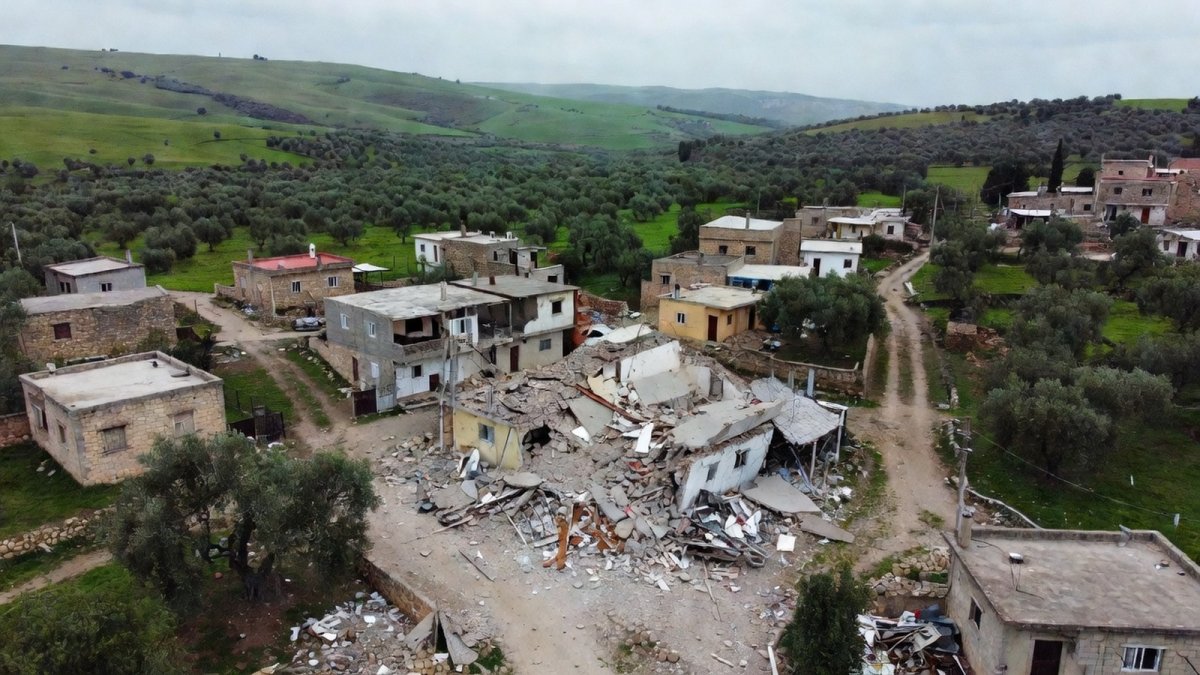
A Deadly Morning in Ansar
The building was flattened. Rescue services spent hours searching through the rubble for survivors and bodies. The final toll from that single strike: seven people killed, including three children and two women, with three wounded. Hours later, a second Israeli airstrike on a home in Deir al-Zahrani, roughly 18 kilometres from Ansar, killed at least two more people and wounded nine. The overall death toll for the day reached at least nine killed and eleven wounded, with streets covered in rubble and smoke. An Israeli drone also targeted a motorcycle in nearby Nabatieh city; it remains unclear if the driver was killed.
The strikes were not confined to these villages. Lebanon's National News Agency (NNA) reported a series of Israeli attacks on the Ali al-Taher Ridge near Nabatieh al-Fawqa, including near a teachers' training centre and the Husseini club. The valley between Ansar and Zarariyeh was also struck — the first time that geographical depth has been hit since the ceasefire two months ago. Israeli forces additionally detonated homes in Bint Jbeil near the border and opened heavy machine-gun fire towards houses along the Kounine-Saf al-Hawa road. An air attack hit the al-Mashaa neighbourhood in al-Mansouri shortly before midnight. Roads out of Nabatieh were choked with traffic as residents fled north.
Beyond the Declared Security Zone
The geography of these strikes is strategically significant. Neither Ansar nor Deir al-Zahrani lies inside Israel's self-declared "security zone" in southern Lebanon, an area of roughly 600 square kilometres (231 square miles) occupied by Israeli forces. Israeli Defence Minister Israel Katz, visiting the south on Thursday, claimed Israeli forces control about 700 square kilometres of Lebanese territory — roughly seven percent of the country — and stated Israel would not withdraw unless Hezbollah is disarmed and the threat it poses is removed. This expansion of operations beyond the declared zone signals a deliberate broadening of Israel's military footprint, even as diplomatic talks continue.
The Israeli military (IDF) said it struck "Hezbollah infrastructure" in the Ansar and Nabatieh areas in response to an action by Hezbollah fighters against Israeli soldiers at the Ali al-Taher Ridge. IDF spokesperson Ella Waweya confirmed the attacks targeted Hezbollah infrastructure. The Ali al-Taher Ridge is a hilltop where Israel says large underground Hezbollah command-and-control centres are located; it has been shelled for months. The ridge's strategic value lies in its elevation, offering observation over the surrounding valleys and routes toward the Litani River. For Israel, controlling this terrain is seen as essential to preventing Hezbollah from re-establishing forward positions near the border.
Lebanese Leadership Responds
Lebanese Prime Minister Nawaf Salam condemned the escalation as "extremely dangerous" and said it undermined efforts to consolidate stability in the south. His words were pointed: "The seven martyrs of the Israeli strike on the town of Ansar were not 'military infrastructure' and the children and women killed were not military targets." Salam asserted that responsibility for dealing with any military infrastructure on Lebanese territory, if it exists, rests exclusively with the Lebanese state, through the army and other state institutions. He added that its presence does not give Israel the right to violate Lebanese territory or put civilians at risk, and called on Israel to halt the escalation.
President Joseph Aoun condemned the continuing attacks as repeated violations of the framework agreement, the work of the military coordination group, and international laws protecting civilians. He noted the attacks killed an entire family in Ansar and described the violations as "a clear message" to the negotiating process and US efforts to implement the agreement. The use of the phrase "clear message" is telling — Aoun appears to interpret these strikes not merely as military operations but as deliberate signals to the Lebanese state and its international backers about the limits of the current arrangement.
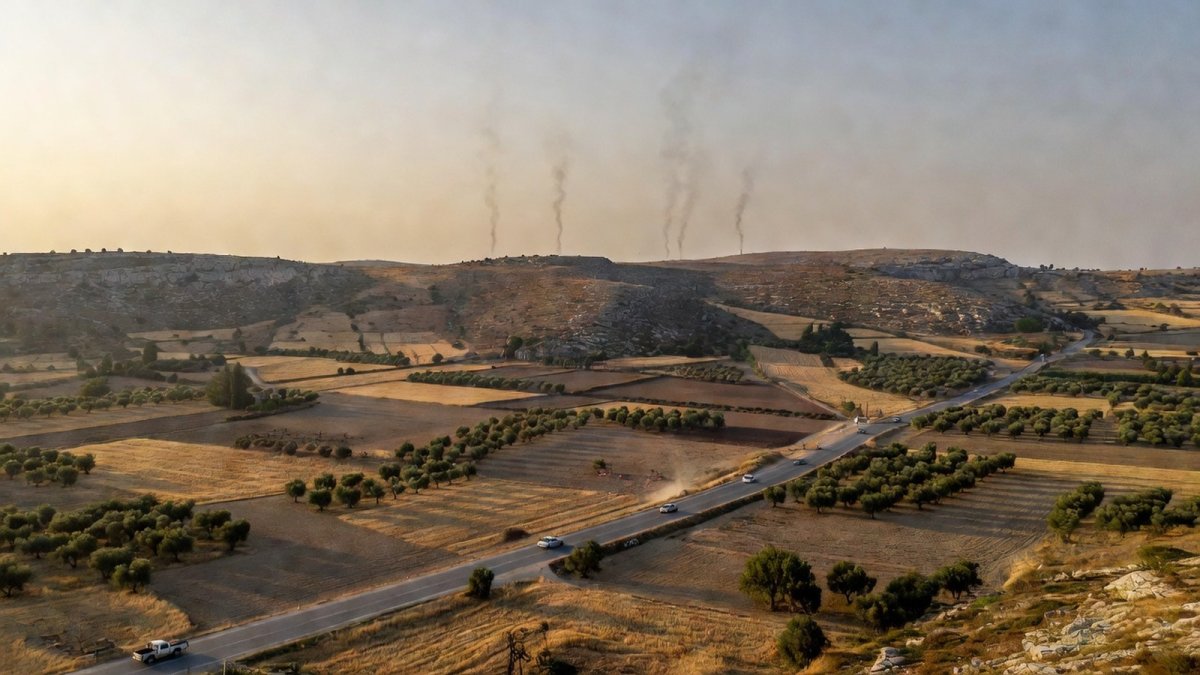
Hezbollah's Defiant Stance
Hezbollah leader Naim Qassem, in a speech on Friday, accused Lebanese authorities of subjecting the army to undue pressure in implementing the framework. "How can you accept this ongoing humiliation of the Lebanese army, exposing it to bombardment and Israeli pressures, instead of acting as its protectors?" he asked. Qassem went further, calling the framework agreement "an Israeli order written in Israeli ink that the Lebanese authorities have signed onto." Hezbollah has refused to disarm and rejects the terms as surrender. This rhetoric reflects a deeper strategic calculation: Hezbollah seeks to position itself as the defender of Lebanese sovereignty against both Israeli military pressure and a Lebanese state it portrays as subservient to Washington and Tel Aviv.
The tension between Hezbollah and the Lebanese state is not new, but the framework agreement has sharpened it. The deal calls for Hezbollah's disarmament, a gradual withdrawal of Israeli forces from southern Lebanon, and the deployment of the Lebanese army to the region, starting in "pilot zones." For Hezbollah, disarmament is existential — it would strip the group of its primary leverage in Lebanese politics and its deterrent capability against Israel. For the Lebanese state, the agreement offers a path to reassert sovereignty over the south, but at the cost of confronting a heavily armed faction that has historically resisted state control. The result is a paralysis that Israel appears willing to exploit.
The Regional Chessboard
The current escalation must be understood within the broader regional context. The latest round of fighting in Lebanon began after Hezbollah struck Israel with rockets on 2 March, two days into the US-Israeli war on Iran that followed the killing of Iran's supreme leader. Israel responded with an aerial campaign and ground invasion that killed more than 4,300 people in Lebanon and occupied about 6 percent of the country's territory. Violence has significantly decreased since the signing of a US-Iran memorandum of understanding in June on the broader Middle East war, and a US-sponsored framework agreement between Lebanon and Israel agreed later that month. But the underlying dynamics remain unresolved.
For Iran, Hezbollah remains the crown jewel of its "axis of resistance" — a forward-deployed deterrent on Israel's northern border that cannot be sacrificed without significant strategic loss. The US-Iran memorandum may have de-escalated the direct military confrontation, but it did not resolve the question of Hezbollah's arsenal. For Israel, the framework agreement offers a mechanism to achieve what decades of military operations have not: the permanent disarmament of Hezbollah and the removal of the threat it poses. Israeli Defence Minister Katz's insistence on controlling 700 square kilometres of Lebanese territory suggests Israel intends to use its military position as leverage in the talks, not as a temporary measure.
Talks Stalled, Violence Continues
Lebanon and Israel have held seven rounds of talks; the most recent round ended in Rome on August 6 without an agreement, with the two sides divided over Israel's withdrawal from southern Lebanon. The US State Department has stated that a permanent Israeli military presence in Lebanon is not consistent with commitments set out in the deal with Lebanon's government. Yet despite this, Israel has continued intermittent strikes and broad demolitions of civilian buildings in southern villages and towns, including damage to graveyards and historic sites. Al Jazeera's Ali Hashem reported that residents saw the Ansar area as safe before the attack, and that fear is spreading as strikes and demolitions continue. "This is escalating day by day," he said, adding that diplomatic efforts have yet to produce results on the ground.
The gap between the diplomatic track and the military reality on the ground is widening. Each round of talks produces statements of intent but no concrete progress on the core issue: the timeline and conditions for Israeli withdrawal. Israel's position is that it will not leave until Hezbollah is disarmed, a condition Hezbollah rejects outright. The Lebanese state, caught between these two positions, lacks the military capacity to disarm Hezbollah by force and the political legitimacy to do so by agreement. The framework's "pilot zones" were meant to break this deadlock by demonstrating that the Lebanese army could maintain security in limited areas, but the continued Israeli strikes in those very areas undermine the army's credibility and the agreement's viability.
The Human Cost and the Path Forward
The human cost of this stalemate is borne by civilians. Human Rights Watch this week urged the UN to keep an international peacekeeping force in Lebanon after the peacekeepers' mandate ends this year, saying "peacekeepers are a crucial deterrent against attacks on civilians and human rights abuses." The UNIFIL force, deployed since 1978 and expanded after the 2006 July War under UN Security Council Resolution 1701, has been a constant presence in southern Lebanon. Its mandate renewal is now in question, and its departure would remove a significant buffer between the two sides. The strikes on Ansar and Deir al-Zahrani, which killed children and women in areas outside Israel's declared security zone, underscore the urgency of maintaining international oversight.
The strategic calculus for all parties remains fraught. Israel seeks to secure its northern border through a combination of military pressure and diplomatic leverage, but its tactics risk alienating the very Lebanese state institutions it needs to implement the framework. Hezbollah, weakened by the war but not destroyed, seeks to survive politically and militarily, using the Israeli strikes to rally domestic support and portray itself as the true defender of Lebanese sovereignty. The Lebanese state, led by Salam and Aoun, seeks to consolidate its authority but lacks the means to do so without either Israeli withdrawal or Hezbollah's cooperation — neither of which appears forthcoming. The US, having brokered the framework, faces the challenge of enforcing commitments that its Israeli ally appears unwilling to honour fully.
What is clear is that the status quo is unsustainable. The strikes of August 15, which killed nine people including children, are not isolated incidents but part of a pattern of escalating violence that threatens to unravel the fragile ceasefire. The framework agreement, if it is to survive, requires a credible mechanism for Israeli withdrawal and Hezbollah disarmament that both sides can accept. Without such a mechanism, the south will remain a flashpoint, and the cycle of strikes, retaliation, and civilian death will continue. The residents of Ansar, who believed their village was safe, have learned otherwise. The question now is whether the diplomatic track can catch up with the reality on the ground before the next escalation makes it moot.
By Malik Hassan, Staff Writer
This article was produced with AI-assisted research and editorial support. Reporting is based on sources cited in the article.
What's Your Reaction?
 Like
0
Like
0
 Dislike
0
Dislike
0
 Love
0
Love
0
 Funny
0
Funny
0
 Wow
0
Wow
0
 Sad
0
Sad
0
 Angry
0
Angry
0
Middle East Correspondent at Global1.News. Based in Beirut, covering politics, conflict, energy, and society across the Middle East. Brings context and depth to a region often reduced to headlines.












Comments (0)