
A new Nepal, an old neighbour - Balendra Shah's India test on first visit
Prime Minister Balendra Shah’s inaugural diplomatic tour to India marks a pivotal moment for the young, reform‑driven government that seized power in March 2026.
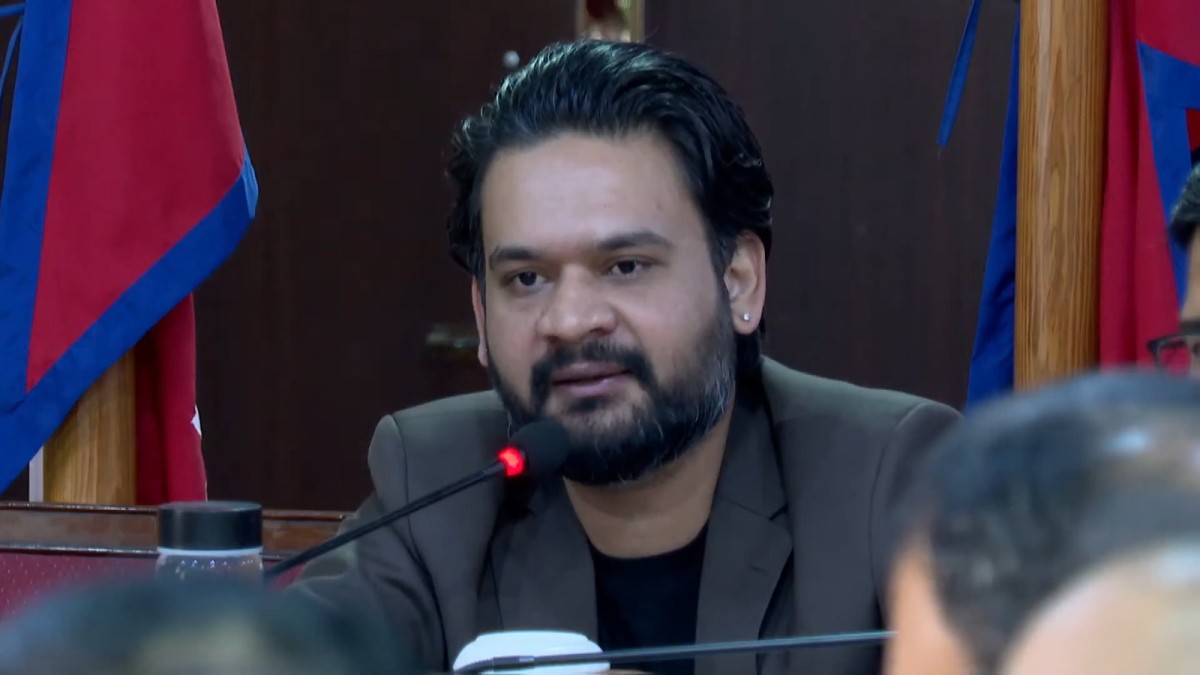
Prime Minister Balendra Shah’s inaugural diplomatic tour to India marks a pivotal moment for the young, reform‑driven government that seized power in March 2026. At 36, the former rapper‑turned‑politician arrives in Delhi for a two‑day agenda that blends routine bilateral issues with the urgent need to secure reconstruction assistance after the catastrophic flash floods that devastated Nepal in August. The visit, the first high‑level engagement between Nepal’s new political generation and its giant neighbour, is being watched closely by analysts who see it as a potential reset of a relationship long marred by mistrust, territorial disputes and asymmetrical trade.
Backdrop of a Generational Shift
Shah’s ascent follows a wave of Gen Z activism that toppled the administration of K P Sharma Oli six months earlier, ending a decade‑long dominance by three traditional parties. The Rastriya Swatantra Party (RSP), which swept to power in March, positions itself as a pragmatic alternative, pledging to move beyond the ideological baggage that has characterised Nepal’s past politics. Former Indian ambassador Ranjit Rae notes that the new leadership “does not have the political baggage of the past and they want to focus on development, diplomacy and economic partnership.” This generational shift underpins the tone of Shah’s Delhi itinerary, which is expected to stress concrete development outcomes over symbolic gestures.
Nevertheless, the youth of Shah’s cabinet also raises questions about diplomatic experience. Veteran Nepali analyst Kanak Mani Dixit cautions that “they do lack experience” and warns that “a lack of gravitas” could hinder negotiations with an “overwhelmingly powerful neighbour.” The balance between fresh optimism and seasoned statecraft will be a defining feature of the talks.
Economic Imperatives: Trade, Energy and Reconstruction
Economic cooperation dominates the agenda. Bilateral trade already exceeds $9 billion, heavily skewed in India’s favour, a longstanding source of resentment in Kathmandu. Nepal relies on India for petroleum products, key food items and as a transit corridor for its external trade. Shah’s delegation will therefore seek to alleviate the trade imbalance, possibly by expanding Nepal’s export portfolio.
Hydropower presents a strategic lever. India has approved imports of up to 1,200 MW of Nepalese electricity and is keen to increase that volume. As Rae explains, “India has a huge demand for electricity and Nepal has the potential to generate due to its water resources and geography.” Extending electricity exports—currently routed to Bangladesh via India—could generate revenue and reduce Nepal’s trade deficit.
The immediate reconstruction challenge looms large. The August floods claimed more than 1,450 lives and left thousands missing. Shah’s government estimates the rebuilding cost at nearly $5 billion, yet international pledges fall short. Securing a sizeable assistance package from Delhi would not only address urgent infrastructure needs but also bolster Shah’s domestic standing, which has been eroded by criticism over governance decisions.
Connectivity: Air Corridors and Border Dynamics
Improving physical connectivity is another priority. Nepal has long urged India to open additional air entry routes that would allow large aircraft to serve the new Gautam Buddha International Airport at Bhairahawa and the airport at Pokhara. Access to Indian airspace would cut flight times, lower costs and improve the commercial viability of these facilities, which are intended to boost tourism to the Buddhist pilgrimage site of Lumbini and the scenic hub of Pokhara.
However, the push for expanded air links intersects with geopolitical sensitivities. Both Bhairahawa and Pokhara airports were constructed with Chinese involvement—Northwest Civil Aviation Airport and Chinese financing, respectively—prompting some Nepali observers to suspect Indian wariness. Shah’s recent 11‑day delegation visit to China, timed just before his India trip, suggests a deliberate effort to balance relations with both neighbours while pursuing connectivity upgrades.
Security and Strategic Calculus
Nepal’s location as a buffer between India and China makes its internal stability a direct concern for Delhi’s security calculus. Analysts note that any destabilisation in Kathmandu could reverberate across the Himalayan frontier. Consequently, India has historically been quick to assist Nepal in crises, such as the 2015 earthquake and the recent floods, reinforcing a pattern of disaster diplomacy that both nations rely upon.
Yet strategic competition persists. In 2019, India’s publication of a map that incorporated disputed territories near the Chinese border sparked a diplomatic flare‑up, prompting Nepal to release its own counter‑map. Dixit urges Shah to raise the border issue with Delhi, acknowledging that while an immediate resolution is unlikely, initiating negotiations would be a prudent step toward de‑escalation.
Domestic Political Pressures on Shah
Shah’s domestic agenda is under strain. Early in his tenure he pledged not to travel abroad for a year, a promise later set aside by the flood emergency. Critics also point to controversial governance moves, such as the removal of police chief Dan Bahadur after alleged non‑compliance with ministerial directives, and the deployment of police to detain journalists, raising concerns over press freedom. These actions have attracted criticism from civil society and opposition parties, amplifying the stakes of the India visit.
Securing tangible outcomes—particularly a clear financial assistance package—could serve as a political lifeline. Failure to deliver concrete benefits may embolden opposition forces and deepen public scepticism about the RSP’s capacity to govern effectively.
Prospects for a Reset in Bilateral Relations
Despite historical frictions, the underlying social fabric linking the two nations remains strong. Families straddle the 1,750 km open border, and daily cultural exchanges reinforce a shared heritage. This human dimension offers a foundation for renewed cooperation, provided political leaders can translate goodwill into policy.
Rae’s assessment that the new Nepali leadership appears “more pragmatic, less ideological” captures the cautious optimism surrounding the visit. If Shah can secure commitments on reconstruction aid, expand air corridor access, and perhaps negotiate a roadmap for border dispute discussions, the trip could mark the start of a more balanced partnership, mitigating the “Big Brother” perception that has long haunted Nepal’s view of India.
What Success Will Look Like
Ultimately, the success of Shah’s Delhi mission will be measured by the substance of agreements signed, not merely the rhetoric exchanged. A definitive reconstruction assistance package, expanded electricity import quotas, and a clear timetable for opening additional air routes would constitute concrete victories. Such outcomes would not only address immediate economic and humanitarian needs but also reinforce Shah’s credibility at home.
Conversely, an absence of firm commitments could reinforce Kathmandu’s grievances over trade imbalances and perceived Indian dominance, potentially fueling nationalist sentiment and complicating future diplomatic overtures. As the two‑day talks progress, observers will be watching closely to see whether the generational optimism of Nepal’s new government can translate into a durable, mutually beneficial framework for Indo‑Nepal relations.
This article was produced with AI-assisted research and editorial support. Reporting is based on the source material cited below. Sources: BBC News Asia; bbc.co.uk; Global1.News (24 November 2026).
By Kenji Tanaka, Staff Writer
What's Your Reaction?
 Like
0
 Dislike
0
 Love
0
 Funny
0
 Wow
0
 Sad
0
 Angry
0

Japan Correspondent at Global1.News. Tokyo-based voice covering Japanese politics, technology, economy, and culture. Tracks the intersection of tradition and innovation in one of the world's most dynamic societies.












Comments (0)