
Houthi Drone Claim Against Saudi Aramco in Najran Deepens the Gulf Energy War’s Second Front
Yemen's Houthis claimed a drone strike on Saudi Aramco's Najran facility, deepening the Gulf energy war's second front while the Strait of Hormuz stays shut. The claim follows attacks on Jizan and Yanbu, squeezing Red Sea export routes and testing Riyadh's response.
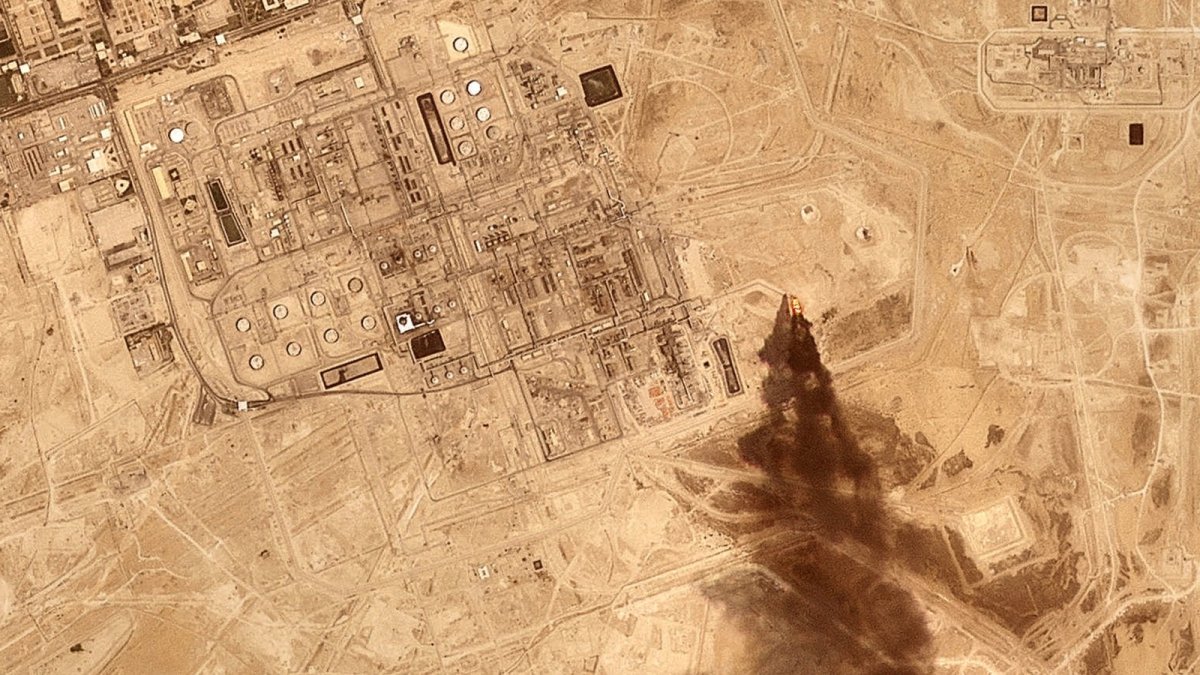
Houthi Drone Claim Against Saudi Aramco in Najran Deepens the Gulf Energy War's Second Front
Beirut, Lebanon – August 15, 2026 — The Houthi-run Saba news agency, citing an unnamed military source, said Houthi forces "successfully targeted Aramco Najran with a drone" and that the operation "successfully achieved its objective." The claim provided no further details on the alleged strike or any resulting damage. The attack was framed as retaliation for what the Houthis described as a Saudi military aircraft violating Yemen's sovereignty by entering the northeastern airspace of Saada province.
Najran Strike: A Claim That Shakes the Red Sea Corridor
There was no immediate comment from Saudi authorities or Saudi Aramco on the claim, and no independent verification of the strike has emerged. The lack of confirmation is notable, but the pattern of recent weeks suggests the Houthis are actively probing Saudi border defenses and western export infrastructure with increasing frequency.
The Najran claim follows a similar Houthi announcement on August 13 regarding an attack on the Aramco refinery in Jizan, and an earlier August 9 strike on facilities in Jizan and Yanbu that Saudi Arabia's energy ministry confirmed caused a fire at the Jazan refinery, which was extinguished with no injuries reported. The ministry did not directly attribute the cause. The cumulative effect, confirmed or not, is a strategic narrative: the Houthis are asserting their ability to reach Saudi oil infrastructure at will.
The Second Front: How Yemen Became a Pressure Point
The escalation in Yemen is not occurring in a vacuum. Since early July, the Houthis have declared a naval blockade against Saudi Arabia and expanded attacks to vessels linked to the kingdom, intensifying tensions in the Red Sea and Gulf of Aden. This represents a deliberate second front in the broader energy war, one that exploits Yemen's geographic position astride the Bab el-Mandeb strait, the southern gateway to the Red Sea and the Suez Canal.
The human cost of this escalation is already visible. On August 6, a Houthi attack on the Najran region wounded 11 civilians, including seven Saudi nationals — among them a woman and a four-year-old child with second-degree burns — plus one Yemeni, two Egyptians, and one Pakistani expatriate, according to the Saudi-led Coalition to Restore Legitimacy in Yemen. On August 13, Yemen's internationally recognized government reported that the Houthis fired six ballistic missiles at the Red Sea port of Mocha, killing four civilians.
For the Houthis, the calculus is clear: by targeting Saudi Arabia's western export corridor while Hormuz is shut, they can inflict maximum economic pain on Riyadh and its allies. The group's military spokesman, Yahya Saree, announced on X on August 9 that the Houthis "succeeded in targeting the Aramco refinery in Jizan with a drone, and the strike was precise." The messaging is designed to demonstrate that Iran's most capable proxy in the Arabian Peninsula can disrupt global energy supplies far beyond the strait.
Two Chokepoints, One Strategy
The strategic logic behind the Houthi campaign becomes clear when examining the state of the Strait of Hormuz. The strait normally carries roughly one-fifth of global oil and liquefied natural gas trade—about 15 to 20 million barrels per day. It has been effectively shut since the U.S.-Israel war against Iran began on February 28, 2026. Iran has established de facto control over much of the strait, while the U.S. Navy is mounting a blockade of Iranian ports. Kpler ship-tracking data shows only two vessels passed through the strait on Friday, with no crude oil shipments visible, compared to more than 130 ships daily before the war.
Iran's Deputy Foreign Minister Kazem Gharibabadi made Tehran's position unambiguous on X on August 15: "This strait will be opened and closed only under Iran's command, and so long as you do not accept the reality of defeat... Iran will continue to enforce the blockade." He added, "The Strait of Hormuz cannot be seized by a tweet or an aircraft carrier, by issuing an order or by delivering an election speech." Iranian Foreign Minister Abbas Araqchi said Tehran had not decided whether to resume negotiations, and that the U.S. would have to meet Iran's conditions regarding the strait before shipping resumes.
With Hormuz shut, Saudi Arabia has relied more heavily on its East-West Pipeline and Red Sea terminals at Jizan and Yanbu to move crude. The Houthi strikes target that fallback export corridor directly. Reuters reported that transit through the Bab el-Mandeb strait fell after the August 9 strike, squeezing both Gulf and Red Sea routes at once. The strategy is to close the loop: if Iran controls the eastern exit and the Houthis threaten the western one, Saudi oil has nowhere to go.
Energy Markets and the Cost of Escalation
The market impact of this dual-chokepoint pressure is severe. Average U.S. gasoline prices reached approximately $4.08 per gallon on Friday, up 29 percent from a year earlier, according to AAA. Brent futures were on track for a weekly gain of 6 percent, with WTI up 5.4 percent, and crude futures rose $1 on Friday alone. The March 2026 spike, when Brent rose about 60-65 percent, was described by Reuters and the World Bank as a record monthly increase.
The Dallas Federal Reserve has estimated that a complete Gulf export shutdown could push WTI to about $98 per barrel and cut annualized global GDP growth by 2.9 percentage points in the second quarter of 2026. The current situation is not a complete shutdown—Saudi Arabia is still moving some crude via its East-West Pipeline—but the Houthi attacks threaten to erode that capacity. Reuters, citing industry monitor IIR, reported that Saudi Aramco postponed the restart of its 400,000-barrel-per-day Jazan refinery to August 30 after two Houthi attacks since late July.
President Donald Trump, campaigning in New York and New Jersey, acknowledged the economic pain but framed it as a necessary cost. At a rally in Garden City on August 14, he said paying "a tiny little bit more for your gasoline" was worth ensuring "a very evil country" could not have a nuclear weapon. He also said he plans to "declare the Hormuz Strait a territory of the United States" after the war with Iran ends, without explaining how such a declaration would be implemented or recognized internationally.
Riyadh's Response: Coalitions, Airstrikes and New Allies
Saudi Arabia has responded on multiple fronts. Riyadh has stepped up airstrikes on Houthi positions in Yemen's western Hodeidah province, saying the sites were being used to threaten maritime navigation. The Saudi-led Coalition to Restore Legitimacy in Yemen, which backs the internationally recognized government, has confirmed the strikes and the August 6 civilian casualties in Najran.
Diplomatically, Saudi Arabia recently announced the formation of a multinational maritime defense coalition to safeguard freedom of navigation in the Bab al-Mandab Strait. The coalition includes the United States, Yemen, Kuwait, Oman, Jordan, Sudan, Morocco, the Maldives, Bangladesh, and New Zealand. The inclusion of Oman is notable, given its role as a mediator between Tehran and Riyadh, and its participation suggests a broader regional consensus against the Houthi threat.
Beyond the maritime coalition, The Guardian reported that Turkey and Pakistan signed a defense pact with Saudi Arabia two days before the August 9 refinery attack — a significant realignment. Turkey, which has historically maintained complex relations with both Iran and the Gulf states, appears to be deepening security cooperation with Riyadh. Pakistan, a nuclear-armed state with a large expatriate workforce in the Gulf, has long been a Saudi strategic partner. The timing of the pact suggests Riyadh is building a defensive architecture that extends beyond the traditional U.S.-led security umbrella.
Regional Implications
The Houthi campaign against Saudi energy infrastructure carries profound implications for the region. For Iran, the Houthis serve as a strategic asset that can pressure Riyadh without requiring direct Iranian involvement. Tehran denies supporting the Houthis, an allegation made by regional and Western countries, but the coordination of messaging and tactics suggests at minimum a shared strategic outlook. The Houthi attacks give Iran leverage in any future negotiations over the strait: Tehran can point to the chaos in the Red Sea as evidence that the entire region is destabilized, not just Hormuz.
For Saudi Arabia, the challenge is twofold. The kingdom must defend its critical infrastructure while also managing its broader strategic position. The attacks on Jizan and Yanbu, and the claimed strike on Najran, expose vulnerabilities in Saudi air defense and the limits of its ability to protect a sprawling energy network. The postponement of the Jazan refinery restart is a tangible economic cost, and the disruption to Bab el-Mandeb transit adds to the pressure on global supply chains. With Hormuz shut and Red Sea routes threatened, Asian importers such as China, Japan, and South Korea face a dual squeeze on their energy supplies, which could accelerate diversification toward alternative suppliers, including Russia, whose interests lie in a fragmented energy market. Great power competition between the U.S., China, and Russia adds another layer of complexity.
The Houthi claim on Najran, whether or not it is fully verified, underscores a central reality: the energy war has moved beyond the Strait of Hormuz. The Red Sea corridor, once a fallback route, is now a front line. As long as the strait remains shut and the Houthis retain the capacity to strike Saudi infrastructure, the global energy market will remain in a state of heightened alert. The path to de-escalation runs through Tehran, but with Iranian officials insisting on their terms and U.S. political rhetoric hardening, that path appears distant.
By Malik Hassan, Staff Writer
This article was produced with AI-assisted research and editorial support. Sources: Daily Sabah, TASS, Reuters, Middle East Eye, Saudi Press Agency.
What's Your Reaction?
 Like
0
Like
0
 Dislike
0
Dislike
0
 Love
0
Love
0
 Funny
0
Funny
0
 Wow
0
Wow
0
 Sad
0
Sad
0
 Angry
0
Angry
0

Middle East Correspondent at Global1.News. Based in Beirut, covering politics, conflict, energy, and society across the Middle East. Brings context and depth to a region often reduced to headlines.













Comments (0)