
Israeli Police Detain Palestinian Minister in East Jerusalem Raid
Israeli police detained Palestinian Minister of Jerusalem Affairs Ashraf al-Awar at his home in Silwan, occupied East Jerusalem, on Wednesday. The arrest follows repeated travel bans and marks the latest escalation in restrictions on Palestinian political activity in the city.
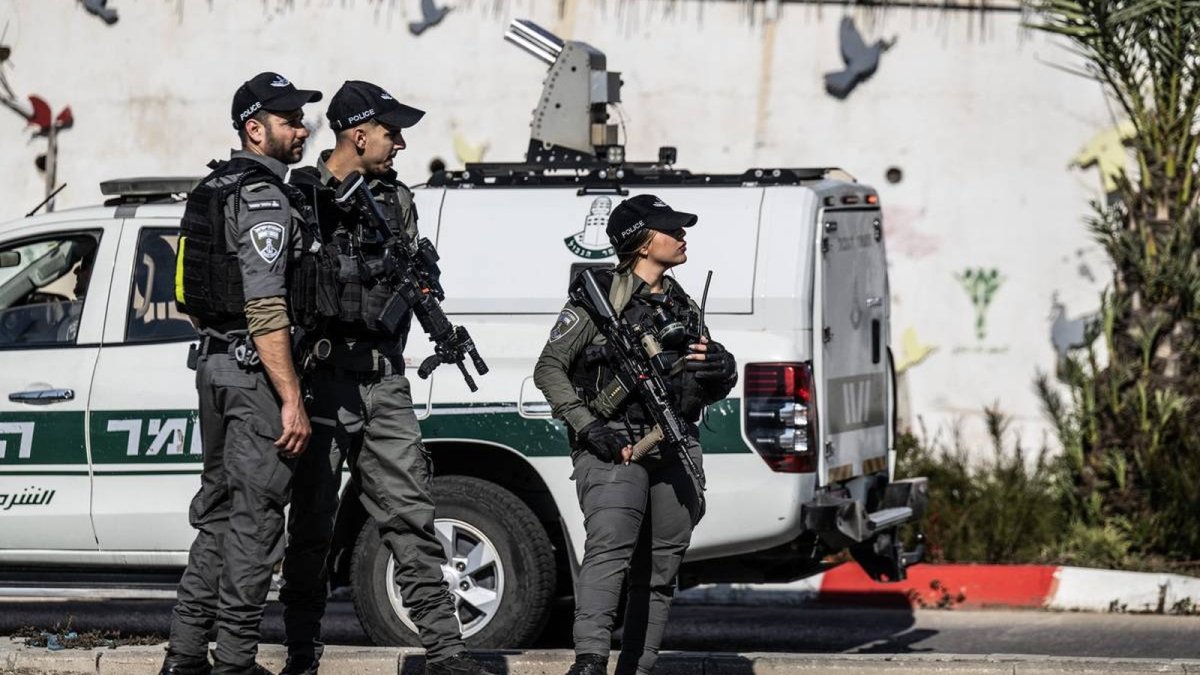
Israeli police detained Palestinian Minister of Jerusalem Affairs Ashraf al-Awar at his home in the Silwan neighborhood of occupied East Jerusalem on Wednesday morning, August 19, 2026, in a raid that Palestinian officials say came without explanation. The arrest of a sitting minister marks a significant escalation in Israel's ongoing restrictions on Palestinian political activity in the city, which Palestinians view as the capital of their future state.
Israeli Police Detain Palestinian Minister in East Jerusalem Raid
Jerusalem — August 19, 2026 — Israeli police arrested Palestinian Minister of Jerusalem Affairs Ashraf al-Awar at his residence in the Silwan neighborhood of occupied East Jerusalem on Wednesday morning, according to an official from his office who spoke to Anadolu Agency on condition of anonymity. The official said police detained al-Awar without providing a reason, and Israeli authorities had not issued an official statement by the time of publication.
The Arrest: A Raid in Silwan
An official from the minister's office described a coordinated operation in which Israeli forces stormed al-Awar's home in Silwan, a densely populated Palestinian neighborhood located just outside the Old City walls. The detention took place on Wednesday morning, according to the Palestinian official news agency WAFA, which reported that occupation forces "raided his home" before taking him into custody.
The official from the minister's office told Anadolu that police gave no immediate justification for the detention. Israeli police did not respond to requests for comment at the time of reporting. The arrest follows a pattern of Israeli enforcement measures against al-Awar, who has been repeatedly summoned for questioning and subjected to travel restrictions over the past two years.
This is not the first time al-Awar has been detained or questioned by Israeli authorities. He has previously been summoned for interrogation at the Al-Maskubiya detention center in Jerusalem, a facility historically used by Israeli intelligence for the questioning of Palestinian political figures. The latest arrest, however, is the first time he has been taken into custody from his home.
Who Is Ashraf al-Awar?
Ashraf Hassan Abbas al-Awar was appointed Minister of Jerusalem Affairs in 2024 by Palestinian Prime Minister Mohammad Mustafa, who leads the Palestinian Authority's government. His mandate is to support Palestinian residents of East Jerusalem and oversee the city's political and institutional interests, including issues related to housing, residency rights, and the preservation of Palestinian cultural and religious sites.
Since taking office, al-Awar has faced significant operational constraints. In early 2025 and again in January 2026, Israeli authorities handed him consecutive six-month orders barring him from entering the occupied West Bank. These orders, which were later extended, have severely limited his ability to carry out his duties, particularly his participation in Palestinian government meetings, which are conventionally held in Ramallah.
The travel bans have also prevented al-Awar from visiting the Ministry of Jerusalem Affairs' headquarters in Al-Ram, a town located in the occupied West Bank just north of Jerusalem. The ministry's operations have been effectively paralyzed by these restrictions, according to Palestinian officials who describe the measures as part of a broader campaign to isolate Palestinian leadership from the communities they serve.
A Campaign of Restrictions Since October 2023
Al-Awar's arrest comes amid a broader intensification of Israeli restrictions on Palestinian political, social, and economic life in occupied East Jerusalem. Since October 7, 2023, Israeli authorities have significantly increased their enforcement measures against Palestinian officials, activists, and ordinary residents in the city.
These measures include heightened policing of Palestinian sporting events, cultural gatherings, and political activities. Israeli authorities have also stepped up settlement activity and home demolitions in East Jerusalem, while facilitating settler incursions into the Al-Aqsa Mosque compound — one of the most sensitive religious sites in the world — and barring Palestinian worshippers and preachers from the site during periods of heightened tension.
Palestinian officials say the arrest of a sitting minister represents a qualitative escalation in this campaign. The targeting of high-ranking political figures, they argue, is designed to send a message that no Palestinian official is immune from detention, and that the Israeli authorities will not tolerate any form of Palestinian political organization in Jerusalem.
Ministry Condemns 'Systematic Escalation'
The Ministry of Jerusalem Affairs has condemned the travel bans and arrests of its leadership as a "systematic escalation" aimed at paralyzing official Palestinian institutions and isolating leadership from the local population. In statements following the earlier travel restrictions, ministry officials described the measures as an attempt to sever the connection between Palestinian political representatives and the residents of East Jerusalem.
The practical impact of these restrictions has been severe. Because al-Awar has been barred from entering the West Bank, he has faced significant logistical challenges in attending Palestinian government meetings in Ramallah. The ministry's base in Al-Ram, which lies on the Jerusalem side of the separation barrier, has also been difficult to access for staff and officials subject to Israeli permit requirements.
The arrest of the minister raises questions about the future functioning of the ministry itself. With its leadership in detention and its staff facing movement restrictions, the institution's ability to advocate for Palestinian residents of East Jerusalem — on issues ranging from residency rights to house demolitions — is likely to be further diminished.
East Jerusalem's Contested Status
The status of East Jerusalem remains one of the most contested aspects of the Israeli-Palestinian conflict. Palestinians insist that East Jerusalem, which includes the Old City and its holy sites, is the capital of their future independent state. Israel, however, claims the entire city as its "undivided capital," a position that is widely rejected by the international community.
Israel's annexation of East Jerusalem following the 1967 war has never been recognized by the United Nations or most countries. The international community continues to regard East Jerusalem as occupied territory subject to the Fourth Geneva Convention, which prohibits the transfer of civilian populations into occupied territory and restricts the powers of the occupying power over the local population.
Despite this international consensus, Israel has continued to expand settlements in East Jerusalem, demolish Palestinian homes, and restrict Palestinian political activity in the city. The arrest of al-Awar is the latest in a series of measures that Palestinian officials say are designed to entrench Israeli control over the city and make the prospect of a Palestinian capital in East Jerusalem increasingly unattainable.
Human Impact on Palestinian Residents
Beyond the arrest of political figures, Palestinian residents of East Jerusalem face a daily reality of increasing pressure. Palestinian officials report a rise in home demolitions across the city, with families displaced from neighborhoods like Silwan, Sheikh Jarrah, and Beit Hanina. Settlement expansion continues in areas such as Givat Hamatos and Har Homa, further fragmenting the Palestinian presence in the city.
The Al-Aqsa Mosque compound, known to Muslims as Haram al-Sharif, has become a particular flashpoint. Israeli authorities have facilitated settler incursions into the compound, which is administered by the Jordanian-run Waqf, while imposing restrictions on Palestinian worshippers, particularly during Friday prayers and religious holidays. Preachers and religious leaders have been barred from the site, and young Palestinian men face frequent entry bans.
For residents of Silwan, where al-Awar was arrested, the presence of Israeli police and border police units is a constant feature of daily life. The neighborhood, which sits in close proximity to the Old City, has been the focus of settlement activity by groups seeking to establish a Jewish presence in the area. Palestinian residents face the constant threat of eviction, home demolition, and arrest.
What the Arrest Signals
The detention of a sitting Palestinian minister is a significant development that signals a hardening of Israeli policy toward Palestinian political activity in Jerusalem. By arresting al-Awar without providing a reason, Israeli authorities appear to be asserting their claim of sovereignty over the entire city and rejecting any Palestinian political presence within its boundaries.
The arrest also comes at a time of heightened regional tension, with the ongoing conflict in Gaza continuing to shape Israeli security policy across the occupied territories. Since October 2023, Israeli authorities have used the security situation as justification for a wide range of measures against Palestinians, from administrative detention to movement restrictions to the suppression of political activity.
For the Palestinian Authority, the arrest of its Jerusalem Affairs minister is a direct challenge to its ability to function. The PA has long maintained that East Jerusalem is the political and spiritual heart of the Palestinian national project. The detention of the minister responsible for that portfolio sends a clear message that Israel will not tolerate any Palestinian institutional presence in the city.
As of this writing, al-Awar's whereabouts and legal status remain unclear, with no official Israeli statement released by the time of publication. Figures on the number of Palestinian officials currently detained by Israeli authorities were not immediately available.
This article was produced with AI-assisted research and editorial support. Sources: Middle East Monitor, WAFA, TRT World, Anadolu Agency.
By Fatima Al-Rashid, Staff Writer
What's Your Reaction?
 Like
0
Like
0
 Dislike
0
Dislike
0
 Love
0
Love
0
 Funny
0
Funny
0
 Wow
0
Wow
0
 Sad
0
Sad
0
 Angry
0
Angry
0

Gulf/MENA Correspondent at Global1.News. Based in Doha, covering Gulf politics, energy markets, diplomacy, and development across the Middle East and North Africa. Tracks the economic transformation of the Gulf states.













Comments (0)