
Israel Seizes Historic Beaufort Castle in Southern Lebanon, Deepening Conflict
Israel Seizes Historic Beaufort Castle in Southern Lebanon, Deepening Conflict Israeli forces have captured the historic Beaufort Castle in southern Lebanon, a crusader-era fortress perched on a steep cliff overlooking the Litani River valley. The seizure, confirmed by multiple reports this week, marks a significant military development in Israel's widening ground operation aga
Israel Seizes Historic Beaufort Castle in Southern Lebanon, Deepening Conflict
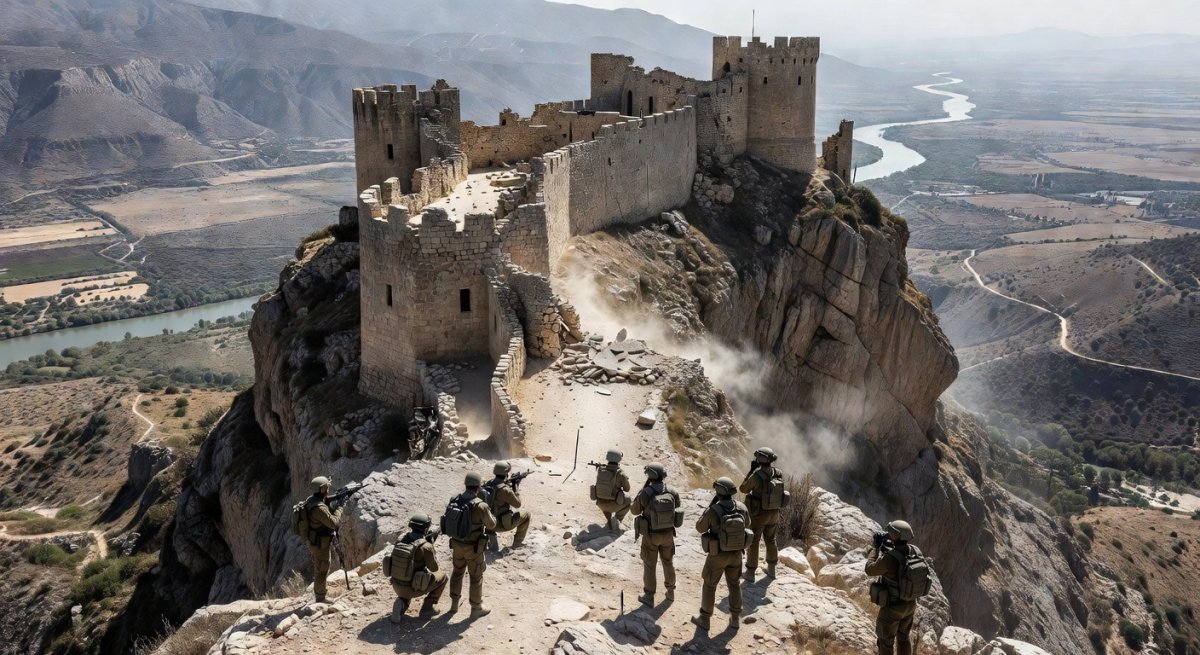
Israeli forces have captured the historic Beaufort Castle in southern Lebanon, a crusader-era fortress perched on a steep cliff overlooking the Litani River valley. The seizure, confirmed by multiple reports this week, marks a significant military development in Israel's widening ground operation against Hezbollah positions along the border.
Beaufort Castle — known in Arabic as "Qala'at al-Shaqif" or "قلعة شقيف" — has long been a symbol of Lebanon's contested southern region. The 12th-century crusader stronghold was used as a military outpost by both the Palestine Liberation Organization and later Hezbollah before being captured by Israel during its 1982 invasion and 18-year occupation of southern Lebanon.
Strategic Military Value
The castle sits on a strategic ridge roughly 700 meters above sea level, giving whoever controls it a commanding view of the entire southern Litani corridor and deep into northern Israel. Military analysts cited by Reuters and the Associated Press say the position allows Israeli forces to monitor Hezbollah movement across a wide stretch of southern Lebanon.
Regional security analysts told the Associated Press that the castle commands the southern approach to the Litani River valley and the road to the Beqaa Valley, making it a critical tactical position for any force operating in the area.
Historical Symbolism Reawakens
For many Lebanese, the fall of Beaufort Castle carries painful echoes of the past. During Israel's 1982 invasion, the capture of the castle was broadcast as a defining moment of the campaign. It later became a symbol of Lebanese resistance during Israel's occupation, which lasted until 2000.
The New York Times reported that the seizure "called up bitter memories in both countries amid a widening Israeli conflict with Hezbollah that seems far from over." The castle grounds bear scars from decades of conflict — bullet holes in ancient stone walls, collapsed sections from aerial bombardments, and the remains of military fortifications layered atop crusader-era architecture.
Part of a Wider Incursion
The capture of Beaufort comes as part of a broader Israeli ground operation in southern Lebanon that has intensified in recent weeks. Global News reported earlier this week that Israel's incursion in Lebanon could complicate ongoing diplomatic efforts, including potential negotiations with Iran.
Israeli officials have described the operation as aimed at pushing Hezbollah forces away from the border and destroying tunnel infrastructure. However, Lebanese officials and humanitarian organizations cited by Reuters say the operation has displaced tens of thousands of civilians from villages across the south and inflicted significant damage on infrastructure.
Cultural Heritage at Risk
The Beaufort Castle is classified as a UNESCO World Heritage tentative site and is one of Lebanon's most重要的 historical landmarks. Archaeologists and heritage preservation groups have expressed alarm about the fighting around the structure, which dates back to the early 12th century when it was built by the Crusaders and later expanded by Muslim rulers including Saladin.
"This is not just a military target. It's an irreplaceable piece of human history," a cultural heritage official told the BBC. "The damage from shelling and military use could be irreversible."
What This Means for the Region
The capture of Beaufort Castle signals that Israel's ground operation in southern Lebanon is expanding both in scope and duration. With the castle now under Israeli control, analysts say Hezbollah has lost a key observation post and symbolic stronghold along its northern front.
Diplomatic efforts by the United Nations Interim Force in Lebanon (UNIFIL) and international mediators to broker a ceasefire have so far failed to halt the fighting. The United States has condemned the escalation while stopping short of calling for an immediate Israeli withdrawal.
For Lebanese civilians in the south, the fall of Beaufort is both a strategic loss and a wound to national pride — a reminder of past occupations and a signal that this conflict, now entering its second year, still has no end in sight.
— Malik Hassan, Global 1 News
This article was produced with AI-assisted research and editorial support. Reporting is based on sources cited in the article.
What's Your Reaction?
 Like
0
Like
0
 Dislike
0
Dislike
0
 Love
0
Love
0
 Funny
0
Funny
0
 Wow
0
Wow
0
 Sad
0
Sad
0
 Angry
0
Angry
0

Middle East Correspondent at Global1.News. Based in Beirut, covering politics, conflict, energy, and society across the Middle East. Brings context and depth to a region often reduced to headlines.













Comments (0)