
Israel commemorates three years of Oct 7 attacks amid ongoing Gaza violence
In the early hours of 07 October 2026, the nation of Israel marked a somber anniversary: three years since the coordinated assaults launched on 7 October 2023 that shocked the region and the world.
In the early hours of 07 October 2026, the nation of Israel marked a somber anniversary: three years since the coordinated assaults launched on 7 October 2023 that shocked the region and the world. Across cities and towns, families, friends and community groups gathered to remember the more than 1,195 people who lost their lives when Hamas and allied Palestinian factions breached the border and stormed civilian sites, including a music festival in Kfar Azza in the south. While the day was meant for reflection, the sounds of conflict continued to echo from the Gaza Strip, where Israeli forces persisted with air strikes despite a declared ceasefire. Al Jazeera English’s correspondent Hani Mahmoud captured the juxtaposition of mourning in Israel and the ongoing humanitarian crisis in Gaza, offering a vivid picture of a conflict that remains entrenched in the collective memory of both peoples.
Remembering the Oct 7 tragedy
The commemorations unfolded in a range of settings, from candle‑lit vigils in Jerusalem to gatherings in community halls in the north. Organisers emphasised the personal loss felt by many families, recalling the suddenness of the attacks that saw militants infiltrate neighbourhoods, military installations and public venues. The memory of the Kfar Azza music festival, where revelers were caught in the crossfire, was a particular focus, symbolising the indiscriminate nature of the assault.
Speakers at the events repeatedly cited the figure of 1,195 fatalities, a number that has become a touchstone for Israeli society in the three years since the attacks. The tone was one of solemn resolve, with many participants pledging to keep the memory alive as a safeguard against future aggression. The gatherings also served as a platform for expressing solidarity with the security forces, who have been tasked with preventing a repeat of the October 7 breach.
While the commemorations were largely peaceful, the atmosphere was punctuated by the distant rumble of artillery and the occasional loud bang heard from across the border. Those sounds reminded attendees that the conflict, though marked by moments of pause, remains an active and volatile reality for both sides.
The ongoing Gaza ceasefire violations
In the midst of Israel’s remembrance, the Gaza Strip endured another night of hostilities. Al Jazeera’s footage showed that, despite a ceasefire declared earlier in the year, Israeli aircraft continued to conduct strikes over the densely populated enclave. The report highlighted an incident in which a member of Gaza’s civil‑defence agency was killed while attempting to rescue injured civilians near a hospital. This tragic loss underscores the perilous conditions faced by humanitarian workers who operate under constant threat.
The ceasefire, intended to reduce civilian casualties and allow aid delivery, has been repeatedly breached. According to the Al Jazeera coverage, at least 1,500 Palestinians have been killed during the ceasefire period, a figure that adds to the broader death toll of more than 74,000 Palestinians since the conflict began. These numbers illustrate the stark disparity between the ceasefire’s promise and the reality on the ground, where sporadic air raids continue to claim lives.
Humanitarian agencies have warned that each new strike compounds the challenges of providing medical care, shelter and basic services. The death of a civil‑defence worker near a hospital not only represents a personal tragedy but also signals the erosion of safe zones that were supposed to be protected under international humanitarian law.
Displacement and living conditions in Gaza
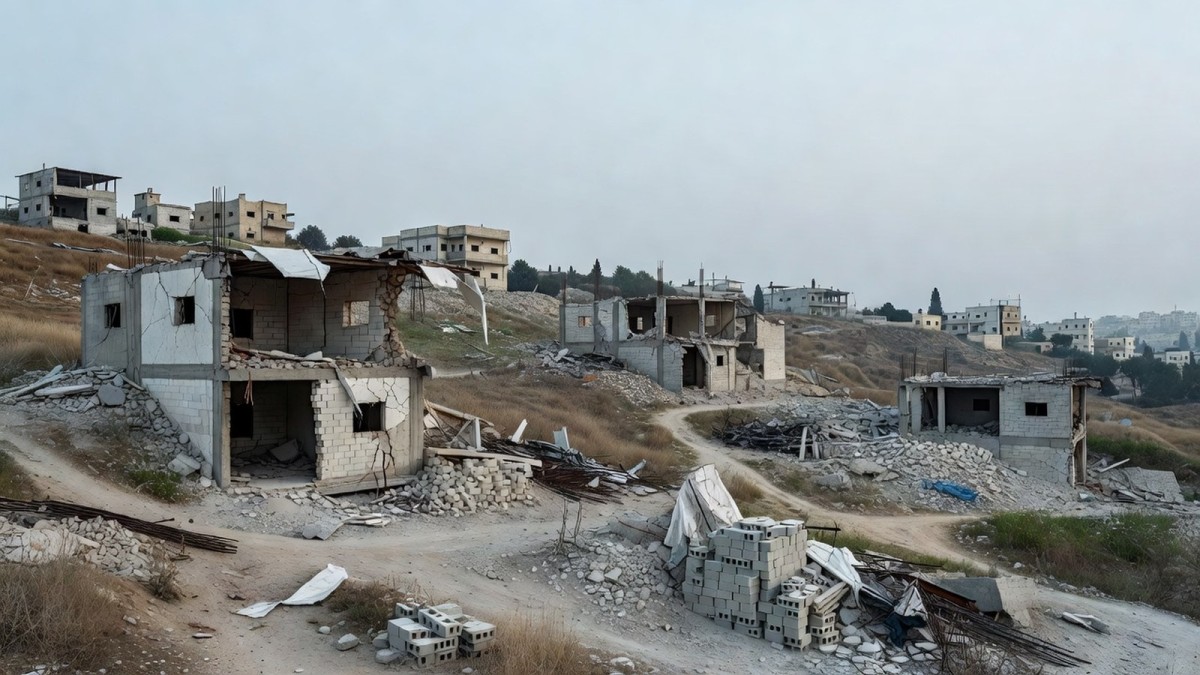
Beyond the immediate casualties, the Al Jazeera report painted a grim picture of the living conditions for Gaza’s civilian population. The majority of residents remain displaced, having been forced to leave their homes after the extensive destruction that followed the initial October 2023 onslaught. Many now reside in makeshift tents or in structures that have been severely damaged, with limited access to clean water, electricity and medical supplies.
The persistence of displacement highlights the long‑term humanitarian fallout of the conflict. While the ceasefire was meant to create a window for reconstruction and relief, the continued air strikes have hampered rebuilding efforts and kept many families in a state of limbo. The report noted that the presence of loud bangs could be heard even as people tried to sleep, a constant reminder that safety remains elusive.
International organisations have called for an immediate cessation of hostilities to allow for the safe delivery of aid. The ongoing violence not only endangers lives but also exacerbates the psychological trauma experienced by a population that has endured years of siege, bombardment and uncertainty.
International reactions and diplomatic pressures
The anniversary of the Oct 7 attacks has drawn renewed attention from the global community, with many governments and multilateral bodies issuing statements of remembrance and condemnation. While the video report did not detail specific diplomatic actions, the broader context suggests that the international community continues to grapple with how to balance Israel’s right to security with the humanitarian imperatives in Gaza.
Regional actors, particularly within the African continent, have historically advocated for a negotiated settlement that respects the rights and security of both Israelis and Palestinians. Nigerian officials, for instance, have often called for an end to the cycle of violence and for renewed dialogue under United Nations auspices. The persistence of ceasefire violations complicates these diplomatic efforts, as each new casualty fuels further mistrust.
Human rights organisations have also used the anniversary as a platform to highlight alleged breaches of international law. The death of a civil‑defence worker near a hospital, as reported by Al Jazeera, is likely to be cited in calls for accountability and for the protection of medical personnel under the Geneva Conventions.
The human cost behind the numbers
While statistics such as 1,195 Israeli fatalities and over 74,000 Palestinian deaths convey the scale of loss, the human stories behind those figures are what give the conflict its enduring weight. Families in Israel gathered to mourn loved ones who were taken in an instant, while in Gaza, survivors continue to navigate a landscape of rubble and uncertainty.
The Al Jazeera footage captured a poignant moment in Gaza City, where a mother cradled her child amidst the sounds of distant explosions. Such images underscore the daily reality of living under fire, where even routine activities like fetching water become fraught with danger. The death of the civil‑defence worker, who was actively trying to save others, exemplifies the courage and sacrifice of many Gazans who risk their lives to protect their neighbours.
These personal narratives are essential for understanding the broader political dynamics. They remind policymakers that behind every headline lies a community grappling with loss, trauma and the hope for a future free from fear.
Looking ahead: prospects for peace and stability
The three‑year mark since the Oct 7 attacks serves as a stark reminder of the conflict’s endurance and the challenges that lie ahead. The continued air strikes, even under a ceasefire, suggest that a durable peace remains elusive. Yet the very act of remembrance in Israel demonstrates a collective desire to prevent a repeat of such a catastrophic breach.
For Gaza, the path to stability hinges on an immediate halt to hostilities, the safe delivery of humanitarian aid, and a clear framework for reconstruction. International actors, including African nations that have historically championed dialogue, may play a pivotal role in mediating a renewed ceasefire that is respected on the ground.
Ultimately, the anniversary is not just a moment of looking back but also an opportunity to assess the effectiveness of diplomatic initiatives, humanitarian responses and the resilience of ordinary people on both sides. As the sounds of conflict continue to reverberate, the hope remains that the memory of those lost will galvanise a stronger push for a lasting resolution that safeguards lives, respects rights and paves the way for a more peaceful future for the region.
By Sarah Okafor, Staff Writer
This article was produced with AI-assisted research and editorial support. Reporting is based on the source material cited below. Sources: Al Jazeera English video report (07 October 2026); Al Jazeera English; Global1.News
What's Your Reaction?
 Like
0
Like
0
 Dislike
0
Dislike
0
 Love
0
Love
0
 Funny
0
Funny
0
 Wow
0
Wow
0
 Sad
0
Sad
0
 Angry
0
Angry
0

Africa Correspondent at Global1.News. Based in Lagos, covering politics, business, technology, and culture across the continent. Focused on telling African stories beyond the headlines — the innovation, entrepreneurs, and communities shaping the region's future.












Comments (0)