
Thailand, China Launch New 2+2 Security Dialogue
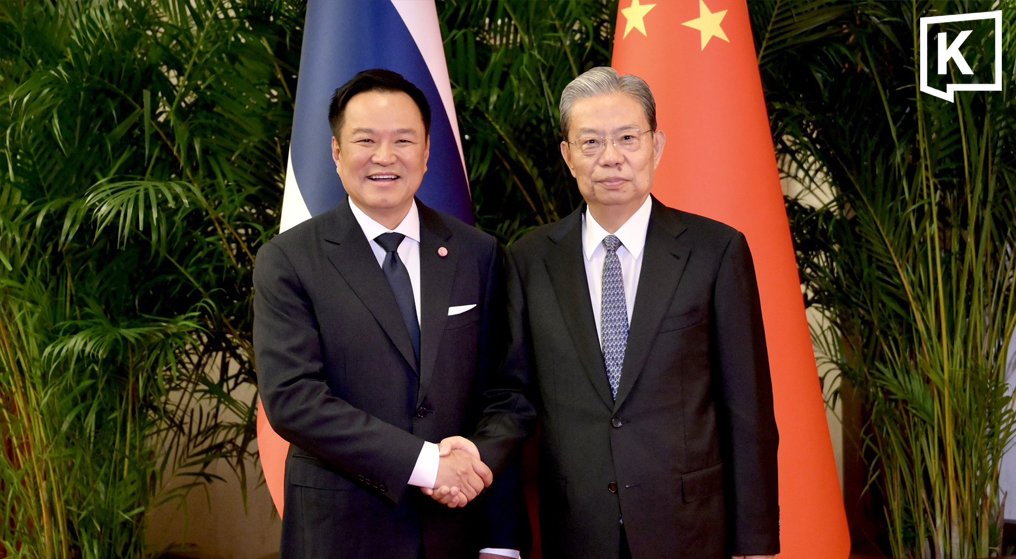
Thailand and China have agreed to launch a new 2+2 security dialogue involving their foreign and defence ministers. Deputy Prime Minister and Foreign Minister Sihasak Phuangketkeow announced the agreement this week during an official visit to Beijing. The mechanism will strengthen policy coordination on security matters between the two countries. Thailand and China Establish 2+2 Security Dialogue Chinese President Xi Jinping hosted talks with the Thai delegation.
Thailand, China Launch New 2+2 Security Dialogue
Bangkok, Thailand — Thailand and China have agreed to launch a new 2+2 security dialogue involving their foreign and defence ministers. Deputy Prime Minister and Foreign Minister Sihasak Phuangketkeow announced the agreement this week during an official visit to Beijing. The mechanism will strengthen policy coordination on security matters between the two countries.
Thailand and China Establish 2+2 Security Dialogue
Chinese President Xi Jinping hosted talks with the Thai delegation. China has offered to host the first meeting of the dialogue. This step builds on existing ties and focuses on practical cooperation against shared threats.
Priority on Combating Call Centre Scams
Thailand placed the fight against call centre scam syndicates at the top of the agenda in the talks. Both sides agreed to expand joint work on law enforcement, anti-human trafficking operations, anti-money laundering efforts and intelligence sharing. These measures target transnational criminal networks operating across borders.
Deputy Prime Minister Sihasak Phuangketkeow stressed that such syndicates require coordinated responses. The new dialogue will support direct exchanges between Thai and Chinese agencies to disrupt these operations at their source.
Call centre scams have generated estimated annual losses exceeding 10 billion baht for Thai citizens, according to Thai authorities. These operations are run from compounds in Myanmar, Cambodia, and Laos, where syndicates recruit workers through misleading online job advertisements that promise legitimate employment. Once inside the compounds, recruits are often confined and compelled to conduct fraud via encrypted messaging applications that obscure communication trails.
Thai police records show a steady rise in reported cases involving cross-border fraud networks, with many incidents linked to victims targeted through social media and phone calls. The Mekong region has developed into a concentrated hub for these activities due to porous borders, limited law enforcement coordination among the four countries, and the presence of established criminal infrastructure. This pattern has prompted Thai officials to prioritize joint mechanisms that address both the financial flows and the physical bases of the syndicates.
Thai Leaders Conduct Talks in Beijing
Prime Minister and Interior Minister Anutin Charnvirakul joined Deputy Prime Minister Sihasak Phuangketkeow on the visit to China. The pair met Chinese President Xi Jinping to discuss the security framework. The presence of both the foreign and interior ministers underlined Thailand's whole-of-government approach to the issues.
The announcement came after these high-level discussions in Beijing. Thai officials used the platform to outline specific concerns affecting communities inside Thailand.
Regional Cooperation With Myanmar and Cambodia
Deputy Prime Minister Sihasak Phuangketkeow noted that dismantling cross-border criminal networks needs broader regional cooperation. He highlighted the roles of Myanmar and Cambodia in particular. Effective action against scam operations and organised crime depends on joint efforts beyond the bilateral level.
This approach aligns with Thailand's position as a central actor in Southeast Asian security matters. Neighbouring countries share similar challenges from the same networks, making coordinated responses essential for all parties involved.
Addressing Grey Businesses Operating in Thailand
Deputy Prime Minister Sihasak Phuangketkeow raised concerns over grey businesses in Thailand and urged China to help address the issue. He stated that the Thai government welcomes only high-quality, sustainable investment. All foreign investors must comply fully with Thai law.
Grey businesses represent a small proportion of overall Chinese investment in Thailand. However, illegal activities linked to some operators can undermine public confidence and affect Thai public sentiment. Sihasak Phuangketkeow said China should take the feelings of the Thai people into consideration when handling these cases.
Grey businesses in Thailand refer to Chinese-owned enterprises that operate in regulatory grey areas, often without full compliance with local licensing or ownership rules. These activities have concentrated in real estate development, tourism services, and retail sectors, where foreign capital has expanded rapidly in recent years. Such operations have created friction over land use, labor practices, and competition with domestic firms.
Thailand has a long record of managing foreign economic influence, including earlier periods of Japanese and Western investment that required periodic policy adjustments. Deputy Prime Minister Sihasak's reference to the "feelings of the Thai people" highlights how public concerns over these businesses can affect the broader bilateral relationship, particularly when economic ties intersect with security cooperation. Thai policymakers have noted that sustained public unease could limit the scope of future agreements if not addressed through clearer regulatory frameworks.
Implications for Thailand's Security and Investment Climate
The 2+2 dialogue provides Thailand with a structured channel to coordinate responses to transnational crime. It supports Thai agencies in protecting communities from scam networks and related offences. Clear expectations on investment compliance also reinforce Thailand's legal framework for foreign business activity.
By linking security cooperation with investment standards, Thailand aims to maintain public trust while continuing economic ties with China. The focus on intelligence sharing and law enforcement will help Thai authorities act more effectively against criminal groups.
Thailand maintains a foreign policy tradition of balancing relations with major powers, including longstanding security cooperation with the United States through joint military exercises and equipment purchases alongside growing economic and infrastructure ties with China. This approach has allowed successive Thai governments to avoid exclusive alignment while securing benefits from both sides. The 2+2 security dialogue with China represents one element of this strategy, providing a structured channel for discussing border issues and transnational threats without displacing existing U.S. partnerships.
Within ASEAN, several member states have established comparable bilateral security mechanisms with China, reflecting a regional pattern of diversified external engagement. Thailand's participation in the 2+2 format aligns with this trend, enabling focused talks on practical matters such as crime networks while preserving space for U.S. military access and training programs. Analysts observe that this dual-track approach helps Thailand manage competing interests in the South China Sea and Mekong subregion.
Benefits for Southeast Asia Regional Stability
The agreement between Thailand and China sets a model for addressing cross-border crime that affects multiple Southeast Asian nations. Calls for involvement from Myanmar and Cambodia show how bilateral steps can lead to wider regional mechanisms. This matters for the region because scam syndicates and trafficking networks operate across several borders.
Enhanced intelligence sharing and ministerial-level talks can reduce the reach of these networks in Thailand and neighbouring countries. The emphasis on compliance with local laws also supports stable investment environments across Southeast Asia.
ASEAN maintains several frameworks for transnational crime cooperation, including the ASEAN Ministerial Meeting on Transnational Crime and related working groups that address cyber fraud and human trafficking. Thailand has played an active role in these discussions, often serving as a coordinator for Mekong-specific initiatives due to its geographic position and established law enforcement contacts. Effective dismantling of scam networks could reduce cross-border criminal activity and support more stable conditions for trade corridors along the Mekong.
Improved security outcomes in the region would also benefit tourism and investment flows, as reduced scam operations lower reputational risks for neighboring countries. Thai officials have linked progress on these issues to broader economic integration goals under ASEAN frameworks, noting that sustained cooperation could facilitate smoother movement of goods and people while addressing shared enforcement gaps.
By Ann Srisawat, Staff Writer
This article was produced with AI-assisted research and editorial support. Reporting is based on sources cited in the article.
What's Your Reaction?
 Like
0
Like
0
 Dislike
0
Dislike
0
 Love
0
Love
0
 Funny
0
Funny
0
 Wow
0
Wow
0
 Sad
0
Sad
0
 Angry
0
Angry
0

Southeast Asia Correspondent at Global1.News. Based in Bangkok, covering Thai and Southeast Asian politics, economy, technology, and culture. Deep regional perspective on one of the world's most dynamic regions.















Comments (0)