
Inflation Jumps to 2.9% as Energy Shock Deepens UK Crisis
The return of the cost-of-living squeeze is no longer a forecast — it is a fact. Official figures published this morning show inflation accelerated to 2.9% in the year to July, a four-month high, driven almost entirely by the sharpest rise in domestic energy bills since the price cap was introduced.
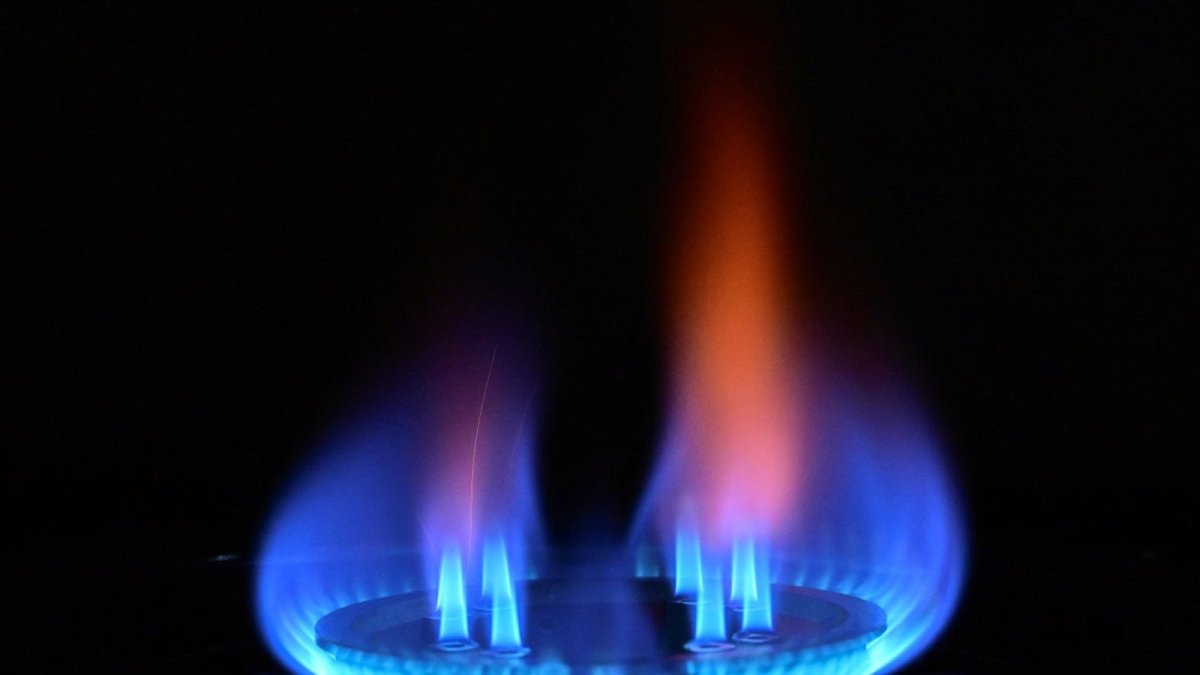
Inflation jumps to 2.9% as energy shock deepens cost-of-living crisis
The return of the cost-of-living squeeze is no longer a forecast — it is a fact. Official figures published this morning show inflation accelerated to 2.9% in the year to July, a four-month high, driven almost entirely by the sharpest rise in domestic energy bills since the price cap was introduced. The data lands as a significant political blow to the new Prime Minister, Andy Burnham, who has staked his early credibility on easing household financial pressures.
Energy bills drive the sharpest rise in four months
The Office for National Statistics confirmed that the Consumer Prices Index rose to 2.9% in the 12 months to July, up from 2.6% in June. The single largest contributor was energy. Gas prices rose by 14.7% in July compared with a fall of 7.2% in the same month a year earlier — a swing that alone added substantial upward pressure to the headline rate.
This is the first inflation reading to fully capture the impact of the 13.5% increase in the Ofgem price cap, which rose from £1,489 to £1,663 a year for a typical dual-fuel household on 1 July. The cap increase was itself a direct consequence of the Iran war and its effect on wholesale energy markets, which have remained volatile for months. For millions of British households, the July data merely confirms what their direct debits have already told them: the era of falling bills is over.
The rise moves inflation further away from the Bank of England's 2% target, and it complicates the delicate balancing act facing the Monetary Policy Committee. Threadneedle Street held interest rates at 3.75% at its most recent meeting — the first since Burnham entered Downing Street — but the accompanying monetary policy report carried a distinctly hawkish warning. The Bank said the risk of "material second-round effects" in price and wage-setting was greater the longer higher energy prices persist. In plain English: if workers demand pay rises to offset their bills, and companies pass those costs on, the Bank may have no choice but to respond with higher rates.
Burnham's first test arrives earlier than expected
For Burnham, the timing could hardly be worse. The Prime Minister is barely a month into the job, having taken office on 20 July promising economic stability and social fairness. In his first week in office, he announced a package of "breathing space" measures designed to ease the immediate pressure on households. These include a VAT cut intended to reduce consumer electricity bills by an average of £45 a year from October, and a £2 cap on bus fares in England. The Treasury has projected these measures will shave about 0.1 percentage point off the headline inflation rate.
That is a modest effect, and economists were quick to note this morning that it will do little to offset the scale of the energy shock. The Chancellor, John Healey, now faces a difficult autumn. The next Ofgem price cap announcement, covering October to December, is due on 26 August — just one week away. Early indications from wholesale markets suggest the cap could rise again, which would mean the July figures are not a one-off spike but the beginning of a sustained period of elevated prices.
The political calculus is unforgiving. Burnham inherited an economy that was already showing signs of strain, but the energy-driven inflation surge is now his problem to manage. His "breathing space" measures were designed to be visible and immediate — the bus fare cap, in particular, is the kind of policy that resonates with voters in the northern constituencies that delivered his landslide. But a 0.1 percentage point reduction in inflation is unlikely to feature prominently in the next round of headlines if the August cap increase is as steep as some analysts fear.
Bank of England faces a difficult autumn
The Bank of England's position is becoming increasingly uncomfortable. Having held rates at 3.75%, the Monetary Policy Committee is now caught between two unwelcome scenarios. On one hand, a slowdown in the jobs market — which has been evident in recent labour force surveys — could argue for keeping rates on hold or even cutting them to support growth. On the other, the persistence of energy-driven inflation, and the risk of second-round effects, could force the Bank to raise rates further, potentially by more than the quarter-point moves that have characterised recent tightening cycles.
The Bank had previously forecast that inflation would rise later this year as the effects of higher energy prices continued to pass through. Today's data suggests that forecast is being realised earlier and more sharply than expected. The question now is whether the Bank treats this as a temporary supply-side shock — which would argue for looking through it — or as the beginning of a more entrenched inflationary period, which would demand a decisive response.
Market expectations have shifted accordingly. Traders are now pricing in a significant probability of a rate rise at the next meeting, although the jobs data will be crucial. If unemployment continues to creep up, the Bank may conclude that the economy cannot withstand further tightening. If wage growth remains strong, the opposite conclusion becomes more likely. Either way, the Bank's credibility is on the line, and the new Prime Minister's relationship with Threadneedle Street is about to be tested.
Household budgets under renewed pressure
For ordinary households, the arithmetic is grim. The 13.5% rise in the price cap translates into an additional £174 a year for a typical dual-fuel household — before any further increases in October. When combined with food price inflation, which remains stubbornly above the headline rate, the cumulative effect on disposable incomes is significant. Independent analysts have warned that the poorest households, who spend a far higher proportion of their income on energy and food, will feel the impact disproportionately.
The timing is particularly painful because the July figures come at the end of a summer in which many families had begun to feel a degree of relief. Inflation had been trending downwards for much of the year, and the Bank's decision on 30 July to hold rates for a fifth consecutive meeting was widely interpreted as a signal that the worst of the cost-of-living crisis was behind us. Today's data shatters that narrative. The Iran war has reintroduced a geopolitical premium into energy prices that shows no sign of dissipating, and the wholesale markets are pricing in continued volatility for the remainder of the year.
There is also a regional dimension that will concern the Government. Energy costs are not distributed evenly across the country. Households in Scotland, the North East and rural areas — many of which rely on heating oil or electric heating rather than mains gas — face higher bills relative to their incomes. The bus fare cap may help with transport costs, but it does nothing to address the fundamental issue of energy affordability in areas where the grid is less efficient and homes are older and harder to heat.
What happens next: Ofgem, the Bank, and the autumn Budget
The immediate focus now shifts to Ofgem's announcement on 26 August. The regulator will set the price cap for the October-to-December period, and the direction of travel is clear. Wholesale gas prices have remained elevated throughout the summer, and analysts widely expect the cap to rise again. Some forecasters have suggested the increase could push the typical annual bill towards £1,800 — a cumulative rise of nearly 20% since April, and a brutal reversal for households that had been promised relief.
Beyond the cap, the Bank of England's next decision will be the key event for financial markets. The Monetary Policy Committee meets again in September, and today's inflation data will be central to its deliberations. The Bank has been at pains to stress that it will not hesitate to act if second-round effects materialise, and the warning in its most recent report was deliberately stark. But it is also aware that raising rates too aggressively could tip the economy into recession, particularly if the jobs market continues to soften.
For the Government, the autumn Budget is shaping up to be the defining moment of Burnham's first year. Healey will have to balance the cost of the "breathing space" measures — which are not free — against the need to maintain fiscal credibility. The VAT cut on electricity bills, while welcome, is a relatively small intervention. If the October cap rise is as steep as feared, the pressure on the Chancellor to do more will be intense. Options on the table include expanding the Warm Home Discount, increasing winter fuel payments, or introducing a social tariff for vulnerable households. Each of these carries a fiscal cost, and none will be easy to fund given the state of the public finances.
A political and economic test rolled into one
What makes this moment particularly significant is that it combines a political test for a new Prime Minister with an economic test for the Bank of England. Burnham came to office promising a different kind of politics — more interventionist, more focused on regional inequality, more willing to use the state to shield households from market shocks. The energy crisis is now the proving ground for that agenda. His early measures are a start, but they are modest in scale. The question is whether he has the appetite — and the fiscal headroom — to go further.
The Bank, for its part, is navigating an unusually complex environment. The Iran war has introduced a supply shock that is outside its control, but the second-round effects are very much within its remit. If wage settlements begin to reflect higher energy prices, the Bank will have little choice but to tighten policy further, regardless of the political consequences. The tension between the Government's desire for growth and the Bank's mandate for price stability is not new, but it is about to become much more visible.
For now, the immediate outlook is one of continued uncertainty. The August cap announcement will set the tone for the autumn, and the September rate decision will determine whether the Bank is prepared to look through the energy shock or respond to it. What is already clear is that the cost-of-living crisis, which many had hoped was receding, is back with a vengeance. The new Prime Minister promised breathing space. Today's figures suggest that space is about to get a great deal tighter.
By Erica Thornton, Staff Writer
This article was produced with AI-assisted research and editorial support. Sources: The Independent, The Guardian, The Telegraph, Bloomberg, Office for National Statistics, Bank of England.
What's Your Reaction?
 Like
0
Like
0
 Dislike
0
Dislike
0
 Love
0
Love
0
 Funny
0
Funny
0
 Wow
0
Wow
0
 Sad
0
Sad
0
 Angry
0
Angry
0

US Politics and Policy Correspondent at Global1.News. Based in Washington DC, covering American politics, policy, elections, and the courts. Knows how the system works and tells you what it actually means.














Comments (0)