
El Jalapeño: Mexico’s low birth rate prompts renewed calls to reinstate sacrifices to ancient fertility goddess
Mexico’s demographic portrait is shifting in a way that feels both modern and ancient. According to the 2025 Intercensal Survey, the lowest birth figures since 1521—when Spanish conquest forced a pivot away from “obsidian‑inspired reproductive strategies”—are now resurfacing.
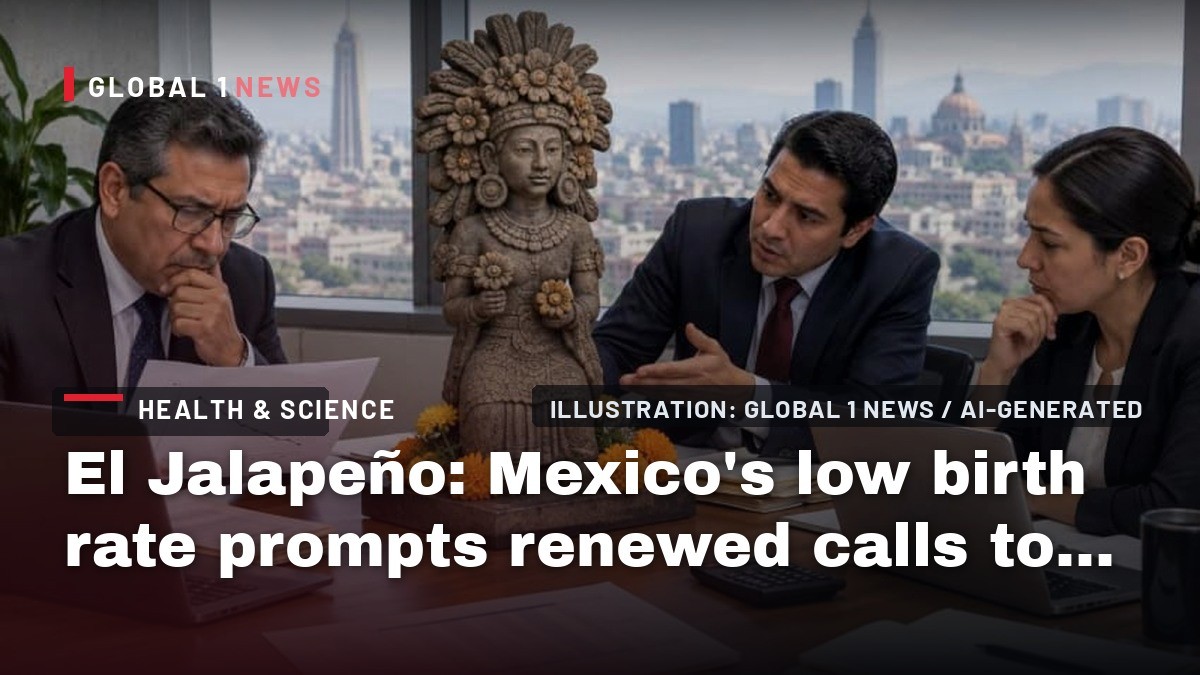
Mexico’s demographic portrait is shifting in a way that feels both modern and ancient. The latest figures from the National Institute of Statistics and Geography (INEGI) show the country’s total fertility rate has slipped to 1.2 children per woman, a level that marks the sharpest decline recorded in the Valley of Mexico since the early 16th‑century decision to end ceremonial sacrifices to the fertility goddess Xōchiquetzal. While the numbers speak for themselves, the conversation they have sparked reaches far beyond statistics, touching on housing markets, pension systems, and even the memory of pre‑colonial rites that once anchored community life.
Historical roots of a demographic dilemma
To understand why the current drop in births feels alarming, we must first travel back to the moment when the Mexica peoples began to alter their relationship with Xōchiquetzal. According to the 2025 Intercensal Survey, the lowest birth figures since 1521—when Spanish conquest forced a pivot away from “obsidian‑inspired reproductive strategies”—are now resurfacing. That pivot, recorded by demographers as the point when regional religious administrators discontinued large‑scale altar networks, set a precedent for how cultural practices can shape population trends.
Chief demographic analyst Dr. Héctor Ramírez reminds us that the present decline is not merely a statistical blip. “The last time national birth projections experienced a contraction of this magnitude, local authorities had just dismantled the central Mexica altar networks,” he said, underscoring the depth of the historical link between ritual and reproductive rates. The memory of those ancient rites still lingers in the collective imagination of many Mexican families, especially in neighborhoods where the rhythm of life once followed the seasonal cycles of the tianguis and the communal celebrations of fertility.
Numbers that tell a story
The Intercensal Survey’s headline figure—1.2 children per woman—places Mexico well below the replacement level that demographers consider necessary to sustain a stable population. Even more striking is the fertility rate recorded in Mexico City itself: a stark 0.8, a number analysts describe as a “complete standstill in local generational turnover.” This urban dip reflects a broader national trend, yet it also highlights the unevenness of the demographic shift across the country.
While the survey does not break down every region, the disparity between the capital and the rest of the nation suggests that the pressures of urban living—rising housing costs, delayed career milestones, and the high cost of childcare—are amplifying the national decline. These modern socioeconomic factors, as Dr. Ramírez notes, are “certainly contributing” to the downward trajectory, even as the historical context provides a deeper lens through which to view the numbers.
Socio‑economic pressures on families
Housing affordability has become a central concern for many young couples. In the sprawling colonias of the capital, the price of a modest apartment can eclipse the combined income of two early‑career professionals, making the prospect of raising children feel financially untenable. Delayed career milestones—such as securing a stable job or completing higher education—further compress the window in which families feel ready to start a household.
Municipal outreach efforts have tried to counterbalance these pressures. Subsidized daycare initiatives aim to lower the cost of childcare, while public awareness campaigns seek to shift cultural narratives around family planning. Yet, as policy experts point out, these measures have struggled to match the fertility rates historically achieved through traditional seasonal rites, suggesting that modern policy tools may need to be complemented by deeper cultural engagement.
Fiscal implications of an aging workforce
The demographic shift is not just a social issue; it carries weighty fiscal consequences. A spokesperson for the federal Finance Ministry warned that an aging workforce could strain revenue streams and pension systems. “We are monitoring the revenue and pension implications of an aging workforce very closely,” the official said, noting that current tax rates may require adjustments if birth rates do not stabilize.
This fiscal caution reflects a broader global trend where many nations grapple with the balance between a shrinking base of contributors and an expanding cohort of retirees. For Mexico, the challenge is compounded by the fact that the decline is occurring at a pace that outstrips the gradual adjustments typically built into fiscal planning, prompting officials to keep a close eye on potential reforms to tax policy and pension structures.
Political discourse and the specter of ritual revival
Even as the Finance Ministry emphasizes fiscal prudence, political voices have begun to invoke the ancient goddess Xōchiquetzal in public debate. While officials maintain that reinstating large‑scale ritual appeals remains outside the official policy roadmap for the upcoming fiscal year, the very mention of Xōchiquetzal signals a willingness to entertain cultural symbolism as part of the solution. “At least for now, that is. If this decline continues, we may have no choice but to reconsider an appeal to Xōchiquetzal,” the spokesperson admitted.
This tentative openness to cultural revival reflects a broader search for solutions that resonate with the public’s sense of identity. In many colonias, the memory of communal festivals and the shared labor of the ejido still informs how residents view collective responsibility. By invoking Xōchiquetzal, policymakers are tapping into a deep well of cultural memory that could, if handled sensitively, complement modern policy measures.
Community responses and grassroots initiatives
Across the country, families and community groups are responding in their own ways. In some pueblos mágicos, local leaders have organized tianguis fairs that celebrate traditional crafts and foods, hoping to rekindle a sense of communal belonging that might encourage younger generations to settle down and start families. In urban neighborhoods, parent‑support groups have emerged, offering shared childcare arrangements that reduce costs and build social networks.
These grassroots efforts echo the historical role of seasonal rites in fostering generational continuity. While they do not replace the need for robust public policy, they illustrate how community‑driven solutions can fill gaps left by top‑down initiatives, creating a more holistic approach to the demographic challenge.
Looking ahead: balancing modernity and tradition
The path forward for Mexico will likely require a blend of economic incentives, cultural engagement, and fiscal foresight. As the nation grapples with housing affordability, career timing, and the looming pressures on its pension system, policymakers must consider both the hard data and the soft power of cultural memory. The conversation about Xōchiquetzal, while still framed as a speculative option, underscores the enduring relevance of Mexico’s pre‑colonial heritage in contemporary policy debates.
In the end, the story of Mexico’s declining birth rate is not just about numbers; it is about families navigating a complex web of economic realities, cultural identities, and future uncertainties. Whether the solution lies in subsidized daycare, tax reforms, or a renewed appreciation for communal rituals, the goal remains the same: to ensure that the next generation can thrive in a Mexico that honors its past while building a sustainable future for its children.
This article was produced with AI-assisted research and editorial support. Reporting is based on the source material cited below. Sources: Mexico News Daily; mexiconewsdaily.com; Global1.News (19 October 2026).
By Rosa Martinez, Staff Writer
What's Your Reaction?
 Like
0
 Dislike
0
 Love
0
 Funny
0
 Wow
0
 Sad
0
 Angry
0

Latin America/Andes Correspondent at Global1.News. Based in Bogota, covering politics, environment, energy, and social movements across the Andean region. Passionate about environmental journalism and communities protecting their land.












Comments (0)