
Ecological Imbalance Is Driving Bear Encounters in Mongolia
In early October 2026, Mongolia’s northern provinces reported an unprecedented wave of bear encounters, prompting both concern and analysis among environmental officials, local communities, and international observers.
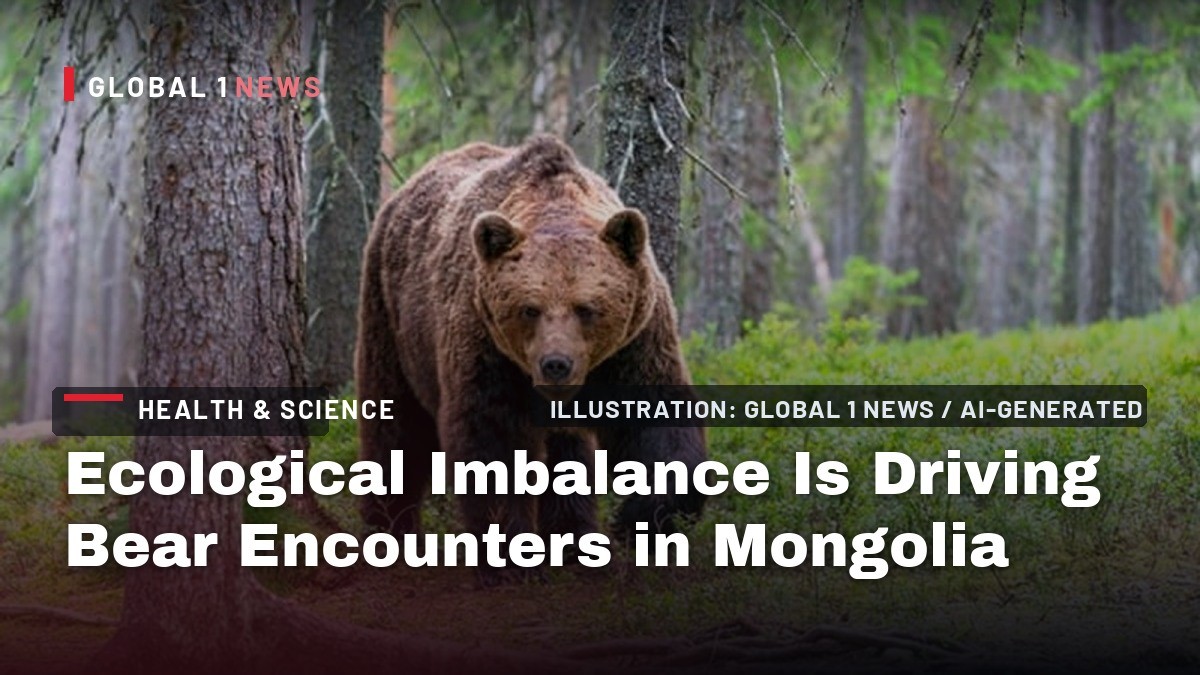
In early October 2026, Mongolia’s northern provinces reported an unprecedented wave of bear encounters, prompting both concern and analysis among environmental officials, local communities, and international observers. The surge, documented through 754 calls to authorities, reflects a broader ecological shift that intertwines climate stress, resource extraction, and the complex dynamics of wildlife management across Northeast Asia.
Scale of the Recent Bear Sightings
The Mongolian government logged 754 reports of bear sightings across several northern provinces, including Khuvsgul, Bulgan, Darkhan-Uul, and Tuv. The reports encompass solitary bears, mothers with cubs, and even lost cubs wandering away from their mothers. While most encounters have been non‑fatal, the incidents have already resulted in one fatality among nomadic herders and injuries to several others, as well as attacks on livestock in remote towns.
Authorities have largely responded by capturing the animals alive and releasing them back into the wild, a practice that aligns with Mongolia’s legal framework protecting large carnivores. This humane approach contrasts sharply with the lethal measures adopted by neighboring Russia and Japan, where authorities have authorized mass culling in response to similar bear movements.
Ecological Context of Northern Mongolia
The provinces most affected by the bear sightings are dominated by boreal forest, or taiga, which covers roughly half of the land in Khuvsgul, Bulgan, and Darkhan-Uul. These forests provide a natural diet of cedar and pine nuts, berries, and access to water sources—essential resources for bears preparing for winter hibernation. During the autumn months of August through October, bears traditionally forage extensively with their cubs to accumulate fat reserves.
However, recent climate patterns have shortened the summer season and intensified heatwaves, jeopardizing the availability of key food sources such as berries and nuts. The resulting scarcity may be driving bears to expand their range in search of sustenance, pushing them into human‑occupied areas.
Climate‑Induced Food Shortages
Extreme weather fluctuations, notably abbreviated summers and heightened temperatures, have been identified as a primary factor constraining the growth of vegetation in the taiga. In provinces like Khuvsgul and Bulgan, the limited summer window heightens the risk of insufficient berry and nut yields, which are crucial for bear nutrition before hibernation.
Rebecca Watters, founder of the Mongolian Wolverine Project, notes that bears are highly opportunistic and will seek out any predictable food source, including human waste, livestock, and cultivated gardens. When bears associate human settlements with food, they are more likely to return, escalating the potential for conflict.
Impact of Mining on Water and Food Resources
Beyond climate stress, mining activities in northern Mongolia have raised additional environmental concerns. Bulgan Province, while not the largest mining hub, hosts gold and polymetallic extraction sites. According to the World Resources Institute, gold mining has become a leading source of water contamination in Mongolia, releasing lead, arsenic, and other toxic chemicals into groundwater and rivers.
These pollutants threaten aquatic ecosystems, potentially reducing fish populations that form part of the broader food web supporting forest wildlife. While the source material does not provide direct evidence linking fish shortages to bear movements, the possibility of degraded water basins in Khuvsgul and Selenge adds another layer of stress to the ecosystem.
Comparative Management Strategies in Northeast Asia
Russia and Japan have responded to similar bear surges with markedly different policies. In Russia’s Far East, authorities in Krasnoyarsk, Tuva, and Buryatia have deployed specialized teams—24 in Buryatia alone—to kill bears, operating under an “open season” framework that encourages lethal control. This approach reflects a prioritization of immediate human safety over long‑term wildlife conservation.
Japan’s Environmental Ministry reported that in 2025 more than 14,600 bears were killed nationwide, attributing the increase to climate‑driven reductions in tree‑nut harvests and an expansion of bear ranges. The ministry’s data underscores a national strategy focused on population reduction rather than coexistence.
Underlying Socio‑Ecological Dynamics
Watters suggests that the rise in bear sightings may paradoxically stem from conservation successes. Improved protection measures have allowed more bear cubs to survive, potentially increasing the overall bear population and, consequently, the number of individuals venturing into human‑dominated landscapes. Simultaneously, demographic shifts among nomadic herders and expanding settlements may bring humans into closer proximity with bear habitats.
The convergence of these factors—climate‑induced food scarcity, mining‑related water contamination, and a growing bear population—creates a feedback loop wherein bears increasingly rely on anthropogenic food sources, further heightening the risk of conflict.
Future Outlook and Policy Implications
Given the current trajectory, Mongolia faces a delicate balancing act. Maintaining strict legal protections for bears while ensuring the safety of herders and remote communities will require integrated strategies that address both ecological and socio‑economic dimensions. Potential measures include bolstering waste management to eliminate attractants, implementing targeted habitat restoration to enhance natural food availability, and monitoring mining impacts on water quality.
Internationally, Mongolia’s humane approach stands in stark contrast to the lethal tactics employed by Russia and Japan. As the region grapples with shared climate challenges, the divergent policies may influence future cooperation on wildlife management and transboundary conservation. Continued observation of bear movements, coupled with adaptive management that incorporates scientific insights and community input, will be essential to mitigate conflict and preserve the ecological integrity of Mongolia’s taiga.
This article was produced with AI-assisted research and editorial support. Reporting is based on the source material cited below. Sources: The Diplomat; thediplomat.com; Global1.News (19 October 2026).
By Kenji Tanaka, Staff Writer
What's Your Reaction?
 Like
0
 Dislike
0
 Love
0
 Funny
0
 Wow
0
 Sad
0
 Angry
0

Japan Correspondent at Global1.News. Tokyo-based voice covering Japanese politics, technology, economy, and culture. Tracks the intersection of tradition and innovation in one of the world's most dynamic societies.















Comments (0)