
Meta and Zuckerberg Face $1.4 Trillion Child Addiction Trial — What It Means for the UK
The world's most consequential legal reckoning for Big Tech begins today in a federal courthouse in Oakland, California, as Meta Platforms faces trial over allegations that it deliberately engineered Facebook and Instagram to addict children.
The world's most consequential legal reckoning for Big Tech begins today in a federal courthouse in Oakland, California, as Meta Platforms faces trial over allegations that it deliberately engineered Facebook and Instagram to addict children. For British parents, teachers and regulators watching from across the Atlantic, this is not merely an American spectacle — it is the first hard test of whether the platforms woven into the daily lives of UK teenagers can be held legally accountable for the documented harms they inflict.
Zuckerberg in the Dock: The $1.4 Trillion Trial That Could Redraw the Rules of the Social Media Age
Oakland, California – 18 August 2026 — The federal courtroom fell silent this morning as California's lead prosecutor, O'Neill, stood before District Judge Yvonne Gonzalez Rogers and delivered an opening salvo that will echo through boardrooms from Menlo Park to Manchester. "You're going to hear that Meta knew a lot about kids' brains," O'Neill told the court. "Meta didn't do its share."
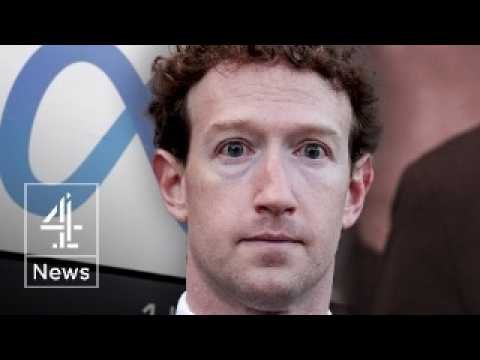
That simple accusation — that the company behind the two most popular social media applications on Earth knowingly exploited the neurological vulnerabilities of minors — now forms the crux of a trial that legal scholars are already comparing to the Big Tobacco litigation of the 1990s. The stakes are almost incomprehensible: penalties estimated as high as $1.4 trillion, a figure roughly equivalent to the entire market capitalisation of Meta's equity on the Nasdaq, according to NPR. Other filings put the states' damages claim closer to $200 billion, but even the lower figure would represent the largest corporate penalty in American legal history.
The Case Against Meta: Four States, One Unified Theory of Harm
The litigation before Judge Rogers is not a single lawsuit but a consolidated action brought by four lead states — California, Colorado, Kentucky and New Jersey — acting on behalf of a broader coalition of 29 states that first filed suit against Meta in 2023. The legal architecture is built on two pillars: alleged violations of the federal Children's Online Privacy Protection Act (COPPA), and a web of state consumer protection statutes that prohibit deceptive business practices.
The states' theory of harm is devastating in its simplicity. Meta, they allege, knew from its own internal research that Facebook and Instagram were causing measurable psychological damage to adolescent users — increased anxiety, depression, body image disorders and sleep deprivation — yet chose to conceal those findings while simultaneously refining its algorithms to maximise the time children spent on the platforms. The company, prosecutors argue, engaged in a deliberate cover-up, misleading both parents and regulators about the safety of its products for young users.
The comparison to Big Tobacco is not hyperbole. Like the cigarette manufacturers of the 1990s, Meta is accused of possessing internal documents that prove knowledge of harm, of funding research designed to obfuscate rather than illuminate, and of deploying a public relations machine to cast doubt on settled science. The tobacco analogy carries particular weight in the United Kingdom, where the parallels between the two industries' playbooks have not been lost on campaigners who have spent years fighting for stronger online safety legislation.
How the Trial Will Work: An Advisory Jury and a Judge With Final Say
The procedural mechanics of this trial are as unusual as its scale. An eight-person jury has been empanelled, but their role is strictly advisory. Under the structure agreed for this case, District Judge Yvonne Gonzalez Rogers — a jurist with a reputation for rigorous scrutiny of technology companies, having previously presided over Epic Games' antitrust battle with Apple — will ultimately decide the outcome. The jury's findings will inform her judgment, but the final verdict rests with the bench.
The trial is expected to run for four to six weeks, a timeline that will see some of the most powerful figures in Silicon Valley take the stand. Mark Zuckerberg, Meta's chief executive, and Adam Mosseri, the head of Instagram, are both expected to testify. For Zuckerberg, this represents a personal reckoning: he has previously appeared before US congressional committees and UK parliamentary inquiries, but never under oath in a civil trial where his company's entire business model is the defendant.
The evidence will be forensic. The states have secured access to years of internal Meta communications, including emails, chat logs and research memoranda. The question of what Zuckerberg knew, and when he knew it, will be probed with the kind of granular detail that has already produced damning headlines in pretrial filings. Meta's defence team, led by some of the most expensive lawyers in America, will argue that the company has invested billions in safety measures, that it has introduced parental controls and age verification tools, and that the causal link between social media use and mental health deterioration remains unproven.
What This Means for the UK: Ofcom, the Online Safety Act and the 73% Problem
For British readers, the significance of this trial extends far beyond the San Francisco Bay Area. The United Kingdom has pursued a different regulatory path — the Online Safety Act 2023 — which granted Ofcom, the communications regulator, powers to fine platforms up to £18 million or 10% of their global turnover, whichever is greater. The child safety duties under that Act came into force in July 2025, and Ofcom has already demanded stronger age checks from Meta, TikTok, Snap and YouTube.
Yet the enforcement reality remains sobering. Ofcom's own Children's Online Experiences Report found that 73% of UK 11-17 year olds still encounter harmful content online, a statistic that suggests the current regulatory framework is not moving fast enough to protect young people. The trial in Oakland will be watched closely by officials at the Department for Science, Innovation and Technology, who are currently consulting on a proposed social media ban for under-16s, expected to come into force by spring 2027.
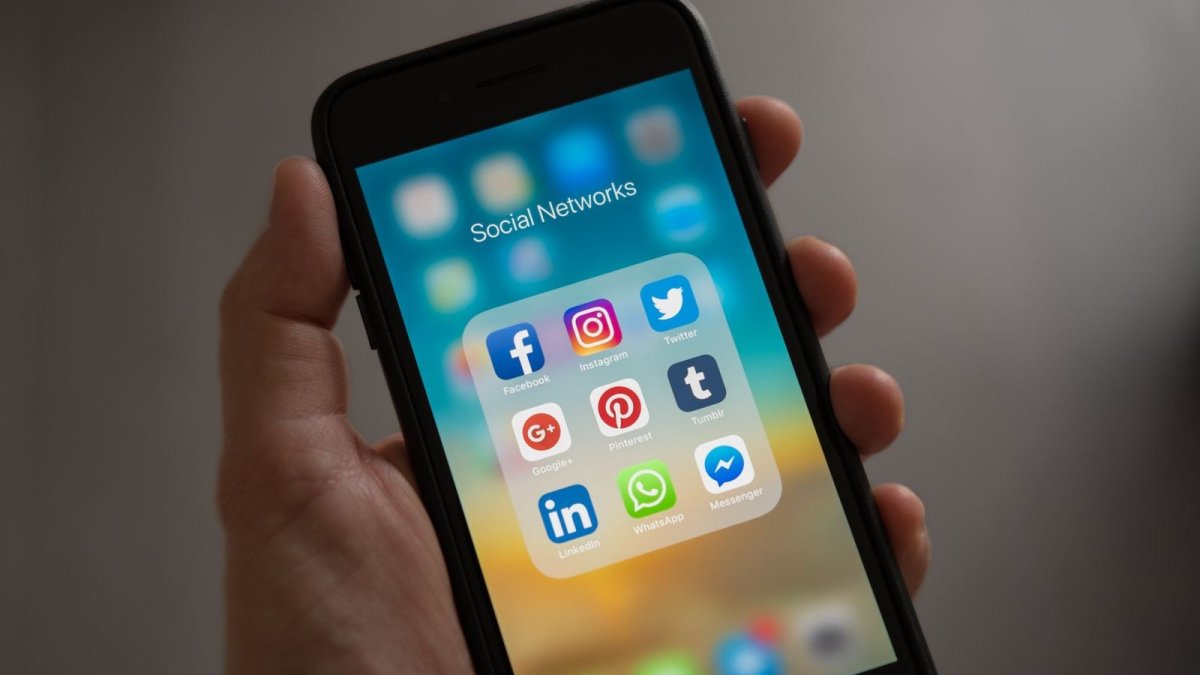
The UK government's position has been complicated by the trial's revelations. If the American proceedings produce evidence that Meta knowingly concealed research on child harm, it will strengthen the case for more aggressive UK intervention. Ian Russell, whose daughter Molly took her own life in 2017 after viewing harmful content on Instagram, has been a relentless campaigner for reform. Through the Molly Rose Foundation, Russell has argued that Meta is now paying the price for a "cavalier approach" to online safety. The BBC reports that campaigners continue to insist Instagram poses serious risks to children, despite the company's introduction of Teen Accounts in September 2024.
Deeper Analysis: The "Not a Diagnosis" Defence and the Evidence Problem
Meta's core defence rests on a deceptively simple proposition: social media addiction is not a recognised medical diagnosis, and the states cannot prove causation. The company's lawyers will argue that correlation is not causation, that the rise in adolescent mental health issues predates the smartphone era, and that blaming Meta for complex societal problems is a legal and scientific overreach.
This defence has a veneer of plausibility, but the states have ammunition. Internal Meta research, some of which has already been leaked to journalists, reportedly shows that company scientists identified specific mechanisms by which Instagram's algorithm could push vulnerable teenagers toward harmful content, including content related to self-harm and eating disorders. The company's own researchers, according to pretrial filings, warned that the platform was making body image issues worse for a significant proportion of teenage girls.
The "not a diagnosis" argument also faces a credibility problem in the UK context. The NHS has seen a dramatic increase in demand for child and adolescent mental health services, with the number of children and young people treated for eating disorders rising from 8,034 in 2019/20 to 11,174 in 2024/25 — an increase of around two-fifths since the pandemic. While no single factor explains that surge, the role of social media in shaping adolescent behaviour is now so well documented that the burden of proof may be shifting. The trial will test whether American tort law can do what UK regulation has so far failed to achieve: force Meta to internalise the social costs of its products.
Reaction and Response: Campaigners, Regulators and the Parental Front Line
The opening of the trial has already generated a wave of reaction across the Atlantic. In the UK, the response has been notably more assertive than in previous years. Regulators including Ofcom and the Information Commissioner's Office (ICO) have demanded stronger age checks and safety features from Meta, TikTok, Snap and YouTube under the Online Safety Act's enforcement phase, and the ICO's longstanding position is that the onus is on platforms to prove they are protecting children — not on parents to police their children's online activity alone.
For British parents, the trial's revelations are landing at a moment of acute anxiety. The proliferation of smartphones in secondary schools, the rise of cyberbullying and the documented links between social media use and sleep deprivation have made online safety a defining issue of modern parenthood. The proposed under-16s ban, while controversial among civil liberties groups, reflects a growing political consensus that the status quo is untenable. The trial in Oakland may accelerate that consensus, providing the evidentiary foundation for more aggressive UK action.
Meta's UK operations have sought to strike a conciliatory tone, pointing to the company's investment in safety features and its cooperation with Ofcom. But the company's public statements have been undermined by the steady drip of internal documents emerging from the American litigation. The gap between Meta's public positioning and its private conduct, as revealed in court filings, is becoming impossible to reconcile.
The Bottom Line — What Comes Next
The trial in Oakland will run until late September or early October, and its outcome is genuinely uncertain. Judge Rogers could rule for the states, imposing penalties that would force Meta to fundamentally redesign its platforms for users under 18. She could rule for Meta, delivering a blow to the broader movement for tech accountability. Or she could land somewhere in between, finding liability on some claims but rejecting the most aggressive damages requests.
Whatever the verdict, the trial has already achieved something historic: it has placed the business model of social media addiction under the most intense legal scrutiny in history. For the United Kingdom, the implications are profound. If the states prevail, the case for the under-16s ban becomes nearly unanswerable. If Meta wins, UK regulators will face renewed pressure to prove that the Online Safety Act can deliver what American tort law could not.
One thing is certain: the children who grew up with Instagram and Facebook are now young adults, and they are watching. The generation that was experimented upon is now old enough to vote, to campaign and to hold the platforms accountable. The trial in Oakland is their day in court, and the echoes will be felt in every British classroom, every family dinner table and every Ofcom enforcement decision for years to come.
By Erica Thornton, Staff Writer
This article was produced with AI-assisted research and editorial support. Reporting is based on sources cited in the article.
What's Your Reaction?
 Like
0
Like
0
 Dislike
0
Dislike
0
 Love
0
Love
0
 Funny
0
Funny
0
 Wow
0
Wow
0
 Sad
0
Sad
0
 Angry
0
Angry
0

US Politics and Policy Correspondent at Global1.News. Based in Washington DC, covering American politics, policy, elections, and the courts. Knows how the system works and tells you what it actually means.















Comments (0)