
Stratospheric airship flew from US to Japan to test sky cell tower concept
When I first saw the news that a helium‑filled airship had crossed the Pacific and back, my instinct was to ask: does this matter to anyone running a data centre or a telco backbone?
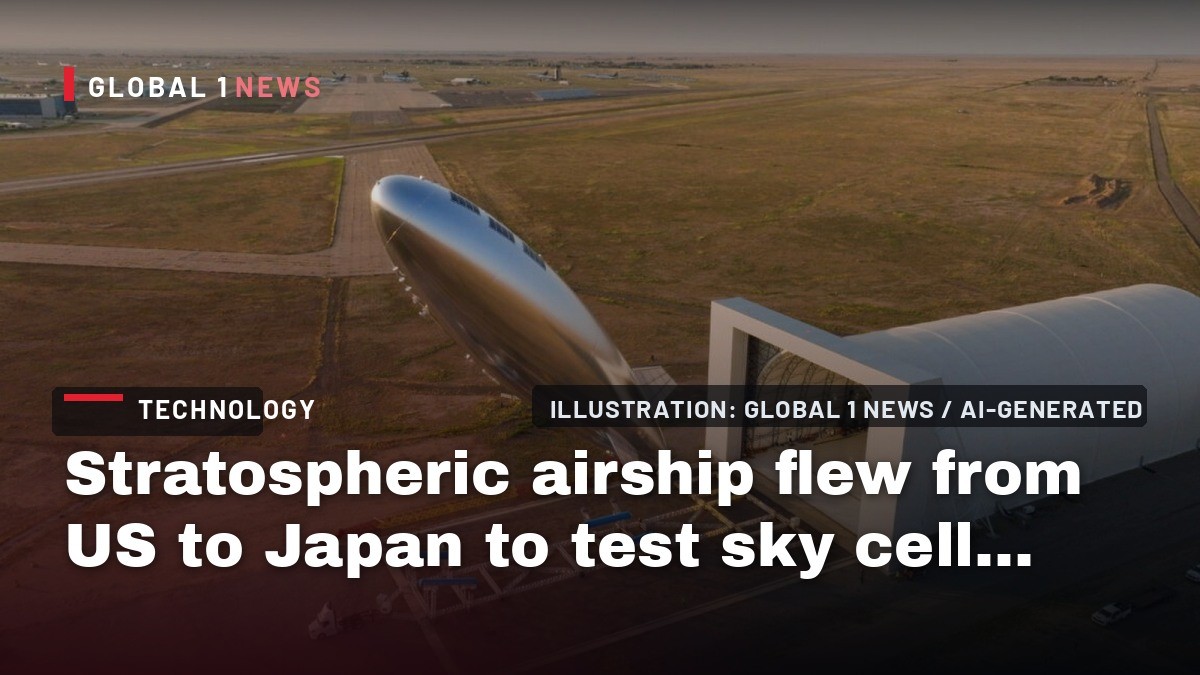
When I first saw the news that a helium‑filled airship had crossed the Pacific and back, my instinct was to ask: does this matter to anyone running a data centre or a telco backbone? The answer, from a founder’s seat, is a resounding yes – but only if you strip away the hype and look at the hard numbers and operational realities that Sceye just proved in the sky.
Why the stratosphere matters more than low‑Earth orbit
Most of the buzz around “high‑altitude platforms” comes from the claim that they sit “30 times closer than low‑Earth orbit satellites.” That’s a useful shorthand, but the real advantage is the latency and the ability to hover over a specific spot. Sceye’s platform operates at roughly 60,000 feet – twice the altitude of commercial air traffic and comfortably above the jet stream. At that height, the round‑trip latency to a ground device is a fraction of a satellite link, and you can keep the antenna beam fixed on a city or a disaster zone without the hand‑off gymnastics that LEO constellations demand.
From a business‑risk perspective, that means you can deliver a “cell‑tower‑in‑the‑sky” service with predictable coverage footprints, something that matters when you’re trying to sell to carriers who need to meet regulatory coverage maps. The trade‑off is you need a platform that can stay aloft for days on end, power its payload, and survive the stratospheric environment – exactly what Sceye demonstrated.
The hardware story: helium, solar and batteries
Sceye’s airship is an uncrewed helium‑filled hull, about 270 feet long in its latest version. The lift comes from helium, while propulsion is provided by an electric‑driven propeller that can counteract strong winds. Power comes from top‑mounted solar panels and onboard batteries, letting the craft operate “around the clock” – day for solar charging, night on battery reserve. The company says the platform can stay over a location for “long periods,” a claim backed by the month‑long trans‑Pacific test.
What matters to us in the hosting world is the payload capacity and power budget. Sceye’s current platform can carry payloads exceeding 220 pounds (100 kg) and deliver up to 1 kilowatt of power to onboard equipment. That’s enough to run a 4G LTE base station, as the SoftBank demo proved, and leaves headroom for additional radios, edge compute boxes, or even a small edge‑cache node. The numbers are modest compared to a full‑scale cell tower, but the altitude advantage compensates for the lower power.
Payload capacity – how it stacks up
According to the nonprofit Helena, which has invested in Sceye, the platform could eventually lift 551 pounds (250 kg). That puts it 25‑50 times ahead of competing high‑altitude drones, which typically max out at a few dozen kilograms. The difference is not just a brag‑ging point; it translates into real‑world capability. A single Sceye platform could, in theory, replace “500 ground‑based cell towers” – a claim that hinges on scaling both payload and power. Even at today’s 220‑pound payload limit, you can run a full LTE base station plus a modest edge compute box, delivering both connectivity and localized processing.
For independent telecom operators or disaster‑response agencies, that means you can drop a single airship into a region and instantly get coverage comparable to a small cell‑site cluster. The cost model is still emerging, but the ability to avoid the civil‑engineering expense of building towers in hard‑to‑reach terrain is a clear upside.
Operational lessons from the Japan flight
The August‑September 2026 “Service Test 1” (ST1) was the longest flight Sceye has attempted, covering more than 9,320 miles (15,000 km) round‑trip. The airship launched from New Mexico on August 9, spent 13 days crossing the Pacific, and then returned. During the journey it faced “strong winds” and “typhoon season” weather, yet the auto‑navigation system kept it on course by pausing (“parking”) in calm air when needed. That ability to “station‑keep” in a safe pocket of the atmosphere is crucial – you can’t afford to drift off‑course when you’re providing a live service.
From a risk‑management angle, the system’s reliance on automated waypoint chaining reduces the need for a large crew of human operators. The chief technology officer, Johnny Truong, emphasized that the platform’s navigation frees humans to focus on higher‑level decisions like weather monitoring and flight‑path simulation. That’s a model that scales: you can run a fleet of such platforms from a central NOC, with each unit handling its own low‑level flight control.
The SoftBank demo – real‑world connectivity proof
SoftBank Corp, a Japanese telco that also invested in Sceye, used the airship to backfill a disabled cellular area on Shikoku. The payload was a 4G LTE base station, and the tests covered voice, SMS, web browsing, YouTube streaming, video calls, and even emergency alerts for earthquakes and tsunamis. Drones equipped with LTE cards were also controlled via the airship’s link, proving that the connectivity held up for remote‑piloted assets.
Crucially, the tests spanned three environments: an open beach, a forested area, and an indoor building. The platform passed all three, even though the antenna was not run at full power to avoid regulatory interference. That shows the system can deliver usable throughput in dense urban canyons and indoor settings – a common concern for any “high‑altitude cell tower.” For providers worried about spectrum compliance, the ability to dial back power while still maintaining service is a practical advantage.
Business implications for independent hosting and telco founders
What does all this mean for us, the scrappy operators who run real infrastructure and watch hyperscaler pricing with a grain of salt? First, the cost curve is still steep – building a 270‑foot helium platform, integrating solar, batteries, and a payload bay is not cheap. But the capital expense is a one‑off, and the operating expense can be lower than leasing satellite bandwidth or maintaining a network of remote towers in rugged terrain.
Second, the payload limits dictate a hybrid approach. You can’t yet replace a full macro‑cell site with a single airship, but you can supplement coverage gaps, provide rapid disaster recovery, or run edge compute nodes where fiber is absent. That niche aligns with the “disaster‑response” angle the demo highlighted – an area where carriers are willing to pay a premium for guaranteed connectivity.
Finally, the technology’s maturity is evident. Sceye has been iterating since 2016, moving from smaller prototypes to the 215‑foot version in 2021 and now the 270‑foot model. The incremental progress shows a roadmap that independent operators can follow – start small, test in controlled environments, then scale payload and power as the platform evolves.
Actionable takeaways for founders and operators
1. Start with a clear use case. The airship excels at temporary, high‑altitude coverage – think disaster zones, events, or remote sites. Don’t try to replace your entire macro network in one go.
2. Partner with a telco or a regulator early. SoftBank’s involvement gave Sceye both a testbed and credibility. Aligning with a carrier can smooth spectrum licensing and provide a revenue stream.
3. Design for modular payloads. With a 1 kW power budget and 220‑pound payload limit today, you can stack a base station, a small edge compute box, and a backup battery. Keep the design flexible to upgrade as payload capacity grows.
4. Leverage the auto‑navigation capability. The ability to park in calm air and resume flight reduces the need for a large ops team. Invest in robust waypoint planning and weather forecasting tools.
5. Factor in regulatory power limits. Sceye deliberately ran its antenna below full power to avoid interference. Build in power‑control mechanisms to stay compliant while still delivering usable throughput.
6. Plan for a phased rollout. Begin with pilot deployments in low‑risk areas, collect performance data, then expand to larger, revenue‑generating contracts.
7. Watch the cost trajectory. As material science advances – graphene‑enhanced hulls, higher‑energy‑density batteries – the economics will improve. Keep an eye on those tech trends to time your next investment.
In short, Sceye’s trans‑Pacific flight isn’t just a cool headline; it’s a proof point that a stratospheric, helium‑lifted platform can deliver reliable, low‑latency mobile broadband from 60,000 feet up. For founders who are fed up with the endless price‑inflation of hyperscalers and the fragile “best‑practice” playbooks that crumble under real‑world stress, this is a concrete alternative worth a serious look.
— Allan Ali, Founder
This article was produced with AI-assisted research and editorial support. Reporting is based on the source material cited below. Sources: Ars Technica; arstechnica.com; Global1.News (19 October 2026).
By Allan Ali, Global1.News
What's Your Reaction?
 Like
0
 Dislike
0
 Love
0
 Funny
0
 Wow
0
 Sad
0
 Angry
0

Publisher of Global1.News. Automation architect, systems builder, and the guy making sure the truth gets published.













Comments (0)