
Toronto police officer who pleaded guilty in Project South probe gets conditional discharge
Toronto police officer Elias Mouawda — one of the officers arrested in the sweeping Project South corruption probe — has been handed a conditional discharge after pleading guilty to an unauthorised computer use charge.
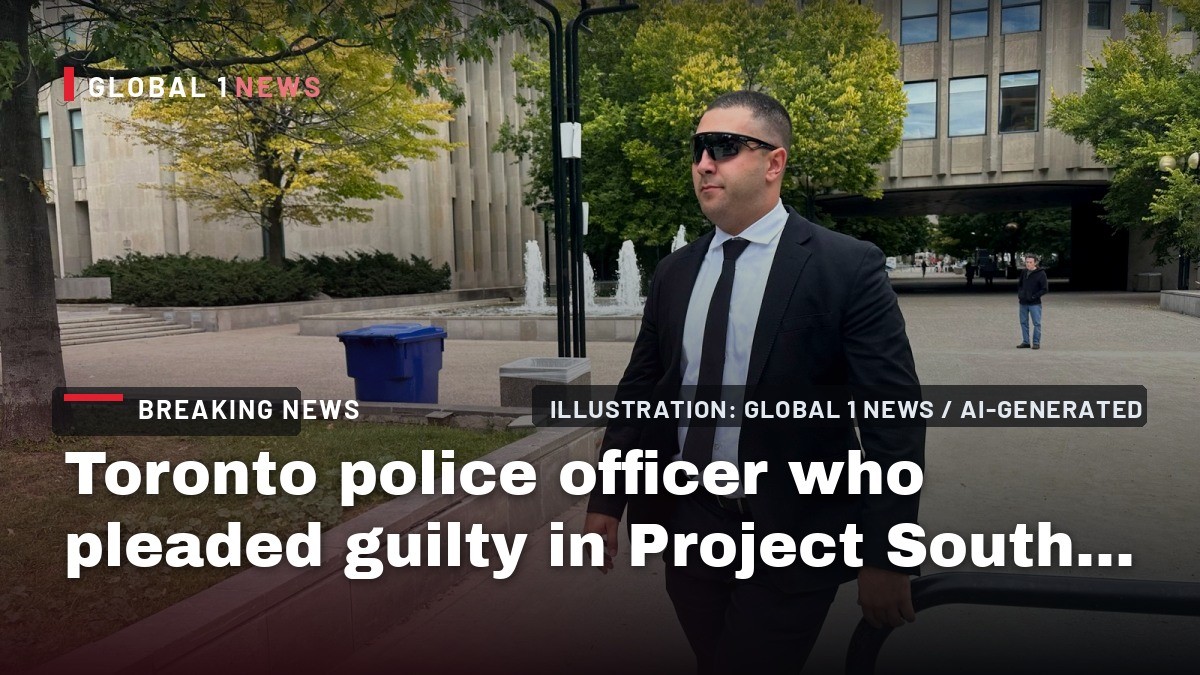
Toronto police officer Elias Mouawda — one of the officers arrested in the sweeping Project South corruption probe — has been handed a conditional discharge after pleading guilty to an unauthorised computer use charge. The court’s decision, delivered by Superior Justice Catherine Rhinelander on Monday, underscores a shift in how the justice system is responding to misconduct that, while not rising to the level of organised crime, still breaches the public trust placed in law‑enforcement officers.
What a conditional discharge means for Mouawda
Under the terms of the conditional discharge, Mouawda will avoid a criminal conviction provided he complies with a one‑year probation order and completes 100 hours of community service. The judge also imposed a strict condition that he must have no contact with two other individuals arrested in the Project South investigation: Daljit Singh and Brian Da Costa. By meeting these conditions, Mouawda’s record will not bear a formal conviction, but the discharge does not erase the fact that a court found his conduct to be a “serious lapse of judgement”.
Justice Rhinelander noted that the breach‑of‑trust charge was withdrawn, yet she stressed that the unauthorised licence‑plate query itself represented a breach of the trust placed in police officers. Her remarks reflect a broader judicial view that internal disciplinary measures alone may no longer suffice for certain abuses of police authority.
The facts behind the licence‑plate query
According to an agreed statement of facts, Mouawda, then a 25‑year‑old officer stationed at 11 Division, performed an unauthorised licence‑plate search on 19 January 2026 at the request of his former security‑company boss, Daljit Singh. Singh, who had been charged with unauthorised computer use in the same probe, allegedly asked Mouawda to run the query for “his boy”. Court evidence suggested that “his boy” referred to Brian Da Costa, an alleged large‑scale drug trafficker who had been bribing Constable Timothy Barnhardt for confidential information.
When Mouawda told Singh the plate was for a rental‑company Chevrolet, Singh subsequently passed the information to Da Costa. The precise motive for the query remains unclear, but the chain of events links a routine police database request to a broader network of alleged corruption and violent crime.
Project South: A wider corruption investigation
Project South, launched by York Regional Police in June 2025, targets allegations that police officers, including Constable Barnhardt, leaked information to criminal networks. The investigation has uncovered alleged bribery, unauthorised data access and a series of violent incidents affecting victims of the queries. Among those victims was a corrections officer at the Toronto South Detention Centre who survived an attempted murder, highlighting the potentially lethal consequences of police misconduct.
The probe also secured a search warrant for an audio intercept involving Da Costa, Barnhardt and Singh. Crown prosecutor Samuel Walker testified that Singh was heard asking Mouawda to run the licence‑plate query for “his boy”, confirming a direct link between the police officer’s unauthorised search and the drug trafficker.
Judicial reasoning: From internal discipline to criminal sanction
Justice Rhinelander explained that historically, conduct like Mouawda’s might have been dealt with through internal police discipline alone. However, she argued that “criminal sanctions may be required to adequately denounce such conduct and disrespect for the law and to deter others who may be tempted to commit similar conduct.” This reflects a judicial trend toward holding individual officers accountable through the criminal system when their actions intersect with broader corruption investigations.
Rhinelander also highlighted mitigating factors: Mouawda pleaded guilty, cooperated with investigators, expressed remorse and did not profit financially from the query. She noted the “substantial collateral consequences” he has already endured, including suspension without pay and intense media scrutiny, which have cast uncertainty over his future with the Toronto Police Service (TPS).
Impact on Mouawda’s career and the TPS
Following his sentencing, Mouawda remains suspended without pay and faces a forthcoming hearing before the TPS professional standards tribunal. That tribunal will determine an appropriate penalty, which could range from reinstatement with conditions to termination of employment. The outcome will set a precedent for how the service handles officers caught up in large‑scale corruption probes but whose own misconduct is comparatively limited.
Legal counsel for Mouawda, Peter Brauti and Alexa Banister‑Thompson, characterised the discharge as a “big difference” for their client, particularly compared with the Crown’s request for house arrest. Brauti described Mouawda as a “small fish” in a “big case”, suggesting that while he was not involved in the core allegations of bribery and organised crime, his actions nonetheless entangled him in the investigation.
Broader implications for policing and public trust
The conditional discharge and the surrounding circumstances raise questions about the balance between accountability and proportionality in policing. On one hand, the court’s decision signals that unauthorised database access will not be brushed aside as a minor infraction, especially when it feeds into a larger corruption network. On the other hand, the relatively lenient sentence—probation rather than incarceration—reflects the judge’s view that Mouawda’s conduct was a lapse in judgement rather than an entrenched pattern of misconduct.
For Canadians, the case reinforces the importance of robust oversight mechanisms. It also underscores the need for clear policies governing police access to sensitive data, a topic that has featured in parliamentary debates on privacy and law‑enforcement powers. As the TPS awaits the tribunal’s decision, the public will be watching closely to see whether the service’s internal disciplinary processes align with the expectations set by the courts.
Looking ahead: What the tribunal decision could mean
The pending professional standards tribunal hearing will be the next decisive moment for Mouawda. If the tribunal imposes a severe penalty, it could signal a tough stance by the TPS on any misuse of police databases, even when the misuse is not directly linked to organised crime. Conversely, a more lenient outcome could reinforce the view that the criminal sentence already satisfies the need for accountability.
Regardless of the tribunal’s ruling, the Mouawda case will likely be cited in future discussions about police reform, data governance and the scope of criminal liability for officers. It serves as a reminder that even seemingly routine requests for information can have far‑reaching implications when they intersect with larger investigations into police corruption. For Canadians, the case adds another chapter to the ongoing conversation about how to ensure that law‑enforcement agencies operate with transparency, integrity and respect for the rule of law.
This article was produced with AI-assisted research and editorial support. Reporting is based on the source material cited below. Sources: Global News Canada; globalnews.ca; Global1.News (19 October 2026).
By Alex Thompson, Staff Writer
What's Your Reaction?
 Like
0
 Dislike
0
 Love
0
 Funny
0
 Wow
0
 Sad
0
 Angry
0

Canada Correspondent at Global1.News. Based in Toronto, covering Canadian politics, energy, trade, and US-Canada relations. Provides the Canadian perspective on North American and global affairs.














Comments (0)