
This Day in History: 19 October
Every year the Caribbean calendar is peppered with dates that stir memories of triumph, tragedy and the relentless quest for freedom. The Tension That Built Up to Bloody Wednesday In the early hours of 19 October 1983, Grenada was already a nation on edge.
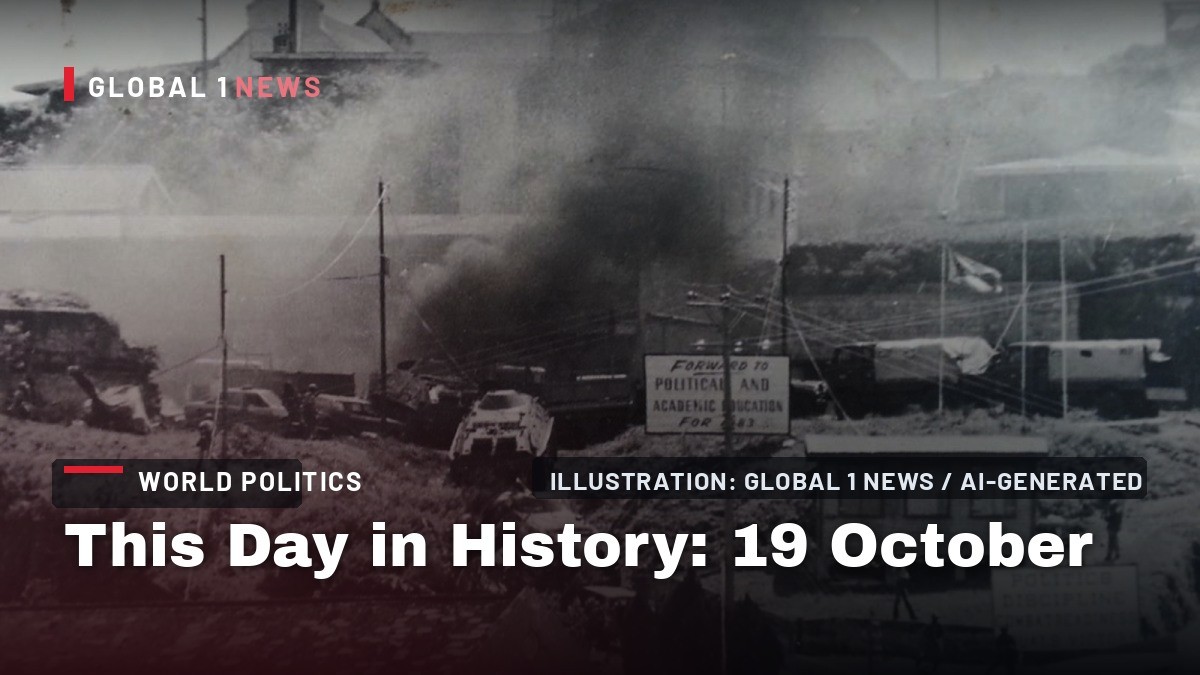
Every year the Caribbean calendar is peppered with dates that stir memories of triumph, tragedy and the relentless quest for freedom. One such day, 19 October, carries a particularly heavy resonance for Grenada, where the events of 1983 still echo across the islands and shape the way we understand the fragility of democracy in our region. As we mark the anniversary this year, it is worth revisiting the chain of events that unfolded on that fateful Wednesday, the aftermath that led to foreign intervention, and the ongoing efforts to commemorate the victims in a manner that honours their sacrifice while teaching future generations about the perils of political division.
The Tension That Built Up to Bloody Wednesday
In the early hours of 19 October 1983, Grenada was already a nation on edge. The ruling People's Revolutionary Government, led by Prime Minister Maurice Bishop, had been forced into a power struggle with his deputy, Bernard Coard. The Central Committee, the governing body of the revolution, decided that Bishop should share power, a demand he refused. This refusal led the Committee to place Bishop under house arrest, a move that ignited widespread unrest among his supporters.
Attempts were made to broker a compromise that would see Bishop reinstated as prime minister pending his approval of the power‑sharing arrangement. However, the atmosphere was already charged with suspicion and anger, and the proposed “solution” failed to calm the streets. The stage was set for a massive demonstration that would soon turn deadly.
The Mass Demonstration and the Capture of Fort Rupert
Later that morning, a crowd numbering in the thousands, led by Unison Whiteman and Norris Bain, marched to Bishop’s residence at Mt Wheldale and liberated him from house arrest. The demonstrators then proceeded to Fort Rupert—also known as Fort George—where the island’s army headquarters stood. In a striking display of popular mobilisation, the armed forces stationed at the fort did not confront the crowd, allowing the demonstrators to seize the stronghold.
The seizure of Fort Rupert was a pivotal moment. It signalled that the people’s anger had moved beyond protest and into direct confrontation with the military establishment. Bishop, desperate to regain control, called on his opposition to surrender, but the situation spiralled beyond his capacity to manage.
The PRA’s Brutal Retake and the Human Cost
In a desperate bid to re‑assert authority, the leaders of the People's Revolutionary Army (PRA) ordered a forceful retake of the fort. The ensuing clash was violent and chaotic. While the PRA initially claimed that the deaths occurred in the heat of the exchange of gunfire, it later emerged that the captured prime minister, three cabinet members and four key supporters were executed in the central courtyard of the fort.
The human toll was stark. At least sixteen people lost their lives, and more than one hundred were injured in the pandemonium that followed the assault. Reports of hundreds more missing or dead have persisted over the years, though they remain unverified. The brutality of the episode left an indelible scar on Grenadian society and set the stage for the next, even more dramatic chapter.
Martial Law and the Rise of the Revolutionary Military Council
Following the bloodshed, the PRA swiftly imposed martial law, instituting a 24‑hour shoot‑on‑sight curfew to quell any further dissent. General Hudson Austin announced the formation of a 16‑member Revolutionary Military Council (RMC), which effectively assumed control of the nation. This abrupt shift in governance underscored how quickly a revolutionary movement could descend into authoritarian rule when internal fractures erupt.
The imposition of martial law and the establishment of the RMC heightened international alarm. Observers across the Caribbean and beyond watched with growing concern as Grenada’s political crisis deepened, fearing that the island could become a flashpoint for wider Cold War tensions in the region.
The US‑Led Invasion Six Days Later
The chaos that erupted on 19 October culminated in a foreign military response. Six days after the violent takeover of Fort Rupert, on 25 October 1983, a US‑led coalition launched a full‑scale invasion of Grenada. The operation, known as “Operation Urgent Fury,” was justified by the intervening powers as a move to restore order and protect American citizens, but it also reflected broader geopolitical anxieties about left‑wing governments in the Caribbean.
The invasion marked a turning point not only for Grenada but for the entire region. It reinforced the perception that external powers could intervene decisively when internal instability threatened to spill over into wider strategic concerns. For many Caribbean citizens, the event served as a stark reminder of the delicate balance between sovereignty and external influence.
Commemoration and the Quest for a National Holiday
In the years that followed, Grenada sought to memorialise the victims of 19 October. A plaque was erected in 1993 on the historic site of Fort Rupert, bearing the names of those who perished in the tragic events. Over the decades, advocates have campaigned to have 19 October recognised as a national holiday, arguing that the day of the massacre should be honoured rather than the date of the subsequent US invasion, which is currently observed as Thanksgiving Day.
The push for a dedicated holiday reflects a broader desire within Grenadian society to reclaim the narrative of that day. By foregrounding the memory of the victims, the nation aims to foster a collective reflection on the dangers of political division and the importance of safeguarding democratic institutions.
National Heroes Day: A Recent Development
In 2023, Grenada took a significant step by marking its first National Heroes Day on 19 October. This new observance seeks to honour those who fought for the ideals of freedom and justice, while also acknowledging the painful lessons of the past. The establishment of National Heroes Day demonstrates how the island is attempting to transform a day of tragedy into one of remembrance and education.
For Trinidadians and fellow Caribbean neighbours, Grenada’s journey offers a poignant case study. It reminds us that the cost of political discord can be steep, and that the preservation of democratic norms is a shared responsibility across the region. As we reflect on 19 October, we are called to consider how our own societies can learn from Grenada’s experience, ensuring that the wounds of the past become the foundation for a more resilient and united Caribbean future.
This article was produced with AI-assisted research and editorial support. Reporting is based on the source material cited below. Sources: Now Grenada; nowgrenada.com; Global1.News (19 October 2026).
By Sharon Sahatoo, Staff Writer
What's Your Reaction?
 Like
0
 Dislike
0
 Love
0
 Funny
0
 Wow
0
 Sad
0
 Angry
0

Caribbean Correspondent at Global1.News. Based in Port of Spain, Trinidad, covering Caribbean politics, economy, energy, climate, and culture. Amplifying the voices and stories of the Caribbean region.









Comments (0)