
Hormuz Standoff and the Gaza Contradiction: Trump's Truce Gambit Faces a Fragile Reality
The article examines Trump's truce claim with Iran, rejected by Tehran, alongside Hormuz closure driving oil prices up, ongoing Gaza strikes despite Hamas disarmament signals, and Ukraine's Caspian action potentially opening a second front that interconnects theaters and raises risks...
Trump's Saturday Truce Claim and Iranian Rejection
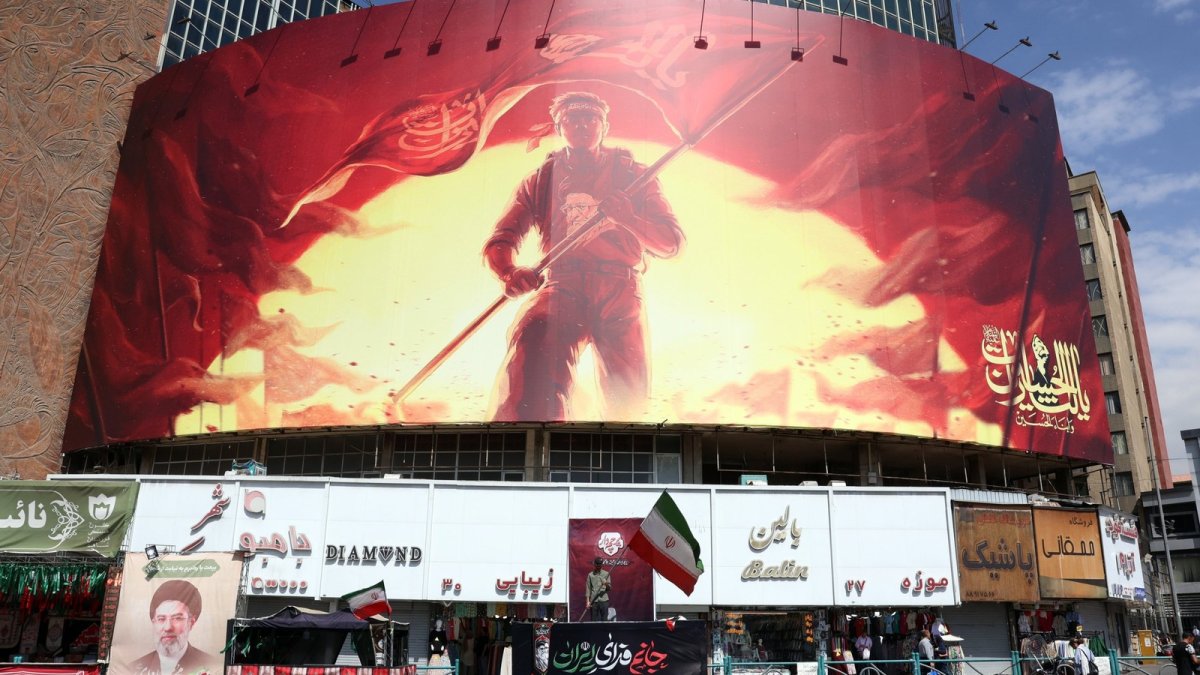
President Donald Trump stated on Saturday that the United States and Israel had agreed to suspend new strikes on Iran if a deal could be reached quickly. He cited conversations with Saudi Arabia's Crown Prince Mohammed bin Salman and noted requests from Iran and other Middle Eastern countries to hold off. Trump described the United States as locked and loaded yet willing to cancel attacks for the benefit of the world and a prosperous Iran, provided the Strait of Hormuz opened immediately and Iran's nuclear threat ended. Iran's Mehr news agency dismissed the claim that Tehran had asked for restraint as a new lie and stated that Iran's military remained on high alert. Saudi Arabia's SPA agency reported that the Crown Prince emphasized dialogue and efforts toward a truce during his call with Trump.
The current diplomatic opening echoes earlier patterns of Gulf mediation seen during the 2015 JCPOA negotiations, when Saudi Arabia and other regional actors pressed for de-escalation to protect energy infrastructure. Crown Prince Mohammed bin Salman's involvement now reflects the kingdom's ongoing interest in shielding its diversification plans from renewed conflict, consistent with its role in the Abraham Accords framework that sought broader regional stability.
Rejection of the truce claim by Iranian state media underscores Tehran's insistence on verifiable concessions before any reduction in alert status, a stance rooted in memories of the 2020 Soleimani strike that hardened positions against perceived U.S. pressure tactics. This dynamic risks prolonging the standoff even as external actors seek to prevent a return to full-scale exchanges.
Second-order effects of failed early diplomacy could include accelerated Iranian efforts to consolidate alliances with non-state actors, further complicating any future Saudi-brokered talks and testing the limits of Trump's stated willingness to prioritize economic outcomes over sustained military pressure.
Iran's Control of the Strait of Hormuz
Iran has maintained effective control over navigation through the Strait of Hormuz since the war began on February 28, requiring vessels to obtain permission and pay transit fees. Maritime trade tracking firm Kpler reported that traffic through the strait has dropped sharply. Iran's Fars news agency quoted a source close to negotiators stating that the strait would remain closed as long as the United States maintained hostile actions. The resumption of hostilities has pushed global oil prices higher after an earlier dip during the initial cease-fire period. On the Bab el-Mandeb Strait, Iran-backed Houthi rebels in Yemen denied seeking to charge ships for passage.
Previous Hormuz crises, including those in the 1980s tanker war, demonstrated how even partial closures can trigger sustained OPEC production adjustments and force Gulf exporters to seek alternative routes that strain infrastructure. Current restrictions amplify these historical vulnerabilities, directly affecting Saudi and Emirati plans to expand non-oil sectors under the Abraham Accords-era economic partnerships.
Energy market impacts extend beyond immediate price spikes, as reduced Hormuz traffic raises insurance costs and prompts Asian buyers to diversify toward longer-haul suppliers, reshaping trade flows that the 2015 JCPOA had sought to stabilize through sanctions relief.
Strategic interpretation of Iran's leverage suggests the closure serves as a calibrated signal to deter further U.S. or Israeli escalation, while exposing the fragility of global supply chains that remain dependent on the strait for roughly one-fifth of seaborne oil trade.
Escalation Signals Despite Diplomatic Overtures
The White House warned on Friday that President Trump was considering additional military strikes on Iran. Press secretary Karoline Leavitt accused Iran of violating the truce by attacking commercial shipping and killing American service members. Trump told reporters at Camp David that the campaign against Iran would continue and that the United States just wanted to win. Kuwait's Defense Ministry reported intercepting Iranian drones that entered its airspace after targeting military facilities, with falling debris causing material damage but no casualties. Iran's Revolutionary Guard claimed responsibility for striking two oil tankers in the Strait of Hormuz, while four additional tankers turned back. A drone struck a U.S.-owned gas vessel in an Egyptian port on Wednesday, and an unknown projectile hit a tanker off Oman.
IRGC tanker attacks build on patterns established after the 2020 Soleimani strike, when Iran responded with calibrated strikes on U.S. positions to restore deterrence without triggering full war. These actions now intersect with ongoing Gaza operations that began after the October 7, 2023 attacks, creating overlapping fronts that stretch Israeli and American resources.
Kuwait's interception of drones illustrates the spillover risks to neighboring Gulf states, whose airspace has become contested terrain in ways reminiscent of earlier regional crises that threatened the stability of Abraham Accords signatories.
The persistence of strikes despite truce rhetoric highlights how each side interprets restraint differently, with the United States viewing shipping attacks as violations and Iran conditioning any de-escalation on an end to hostile actions, a deadlock that echoes the collapse of prior cease-fire attempts.
The Gaza Contradiction Amid Truce Rhetoric
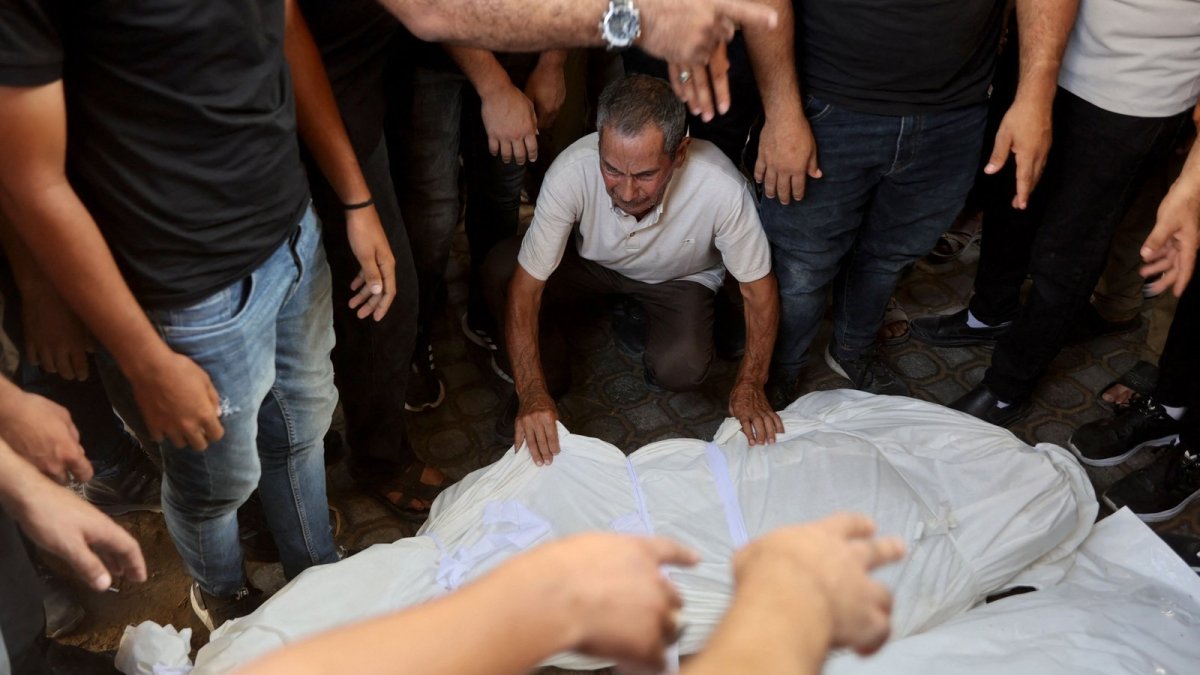
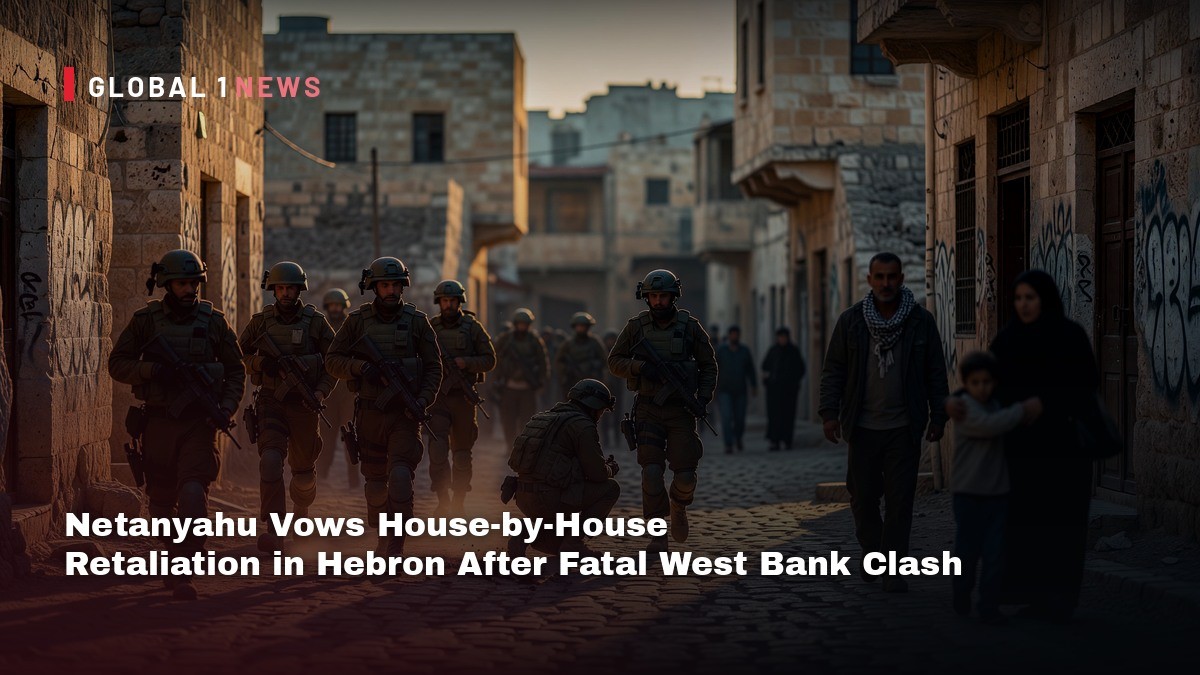
Hamas announced readiness to begin disarming under a U.S.-backed framework, first surrendering lighter weapons while heavier arms would depend on an independent Palestinian state. U.N. Secretary-General Antonio Guterres welcomed the announcement as the only encouraging development in the region. Despite this, Israeli airstrikes across Gaza on Sunday killed at least nine Palestinians, including a man and wife in Deir al-Balah, two people including a child in Gaza City, and a family of three in Khan Younis. Israeli Energy Minister Eli Cohen stated there was no deal to halt attacks on Gaza and that Israel, already controlling 70 percent of the Strip, should take full control. The Israeli military said some strikes targeted Hamas Nukhba force members and other operatives.
The October 7, 2023 war continues to shape Israeli calculations, with operations persisting even as Hamas signals conditional disarmament that could theoretically align with U.S. truce objectives in the broader Iran confrontation. This disconnect reveals how Gaza remains a separate but linked theater that undermines unified diplomatic messaging.
Israeli Energy Minister Eli Cohen's rejection of any halt to strikes reflects domestic political pressures that prioritize territorial control over immediate cease-fire, a stance that complicates Saudi mediation efforts tied to the Abraham Accords vision of regional integration.
Second-order effects include the erosion of international support for Gaza stabilization initiatives, as continued violence undercuts the credibility of disarmament announcements welcomed by the U.N. and risks prolonging humanitarian fallout that draws in additional regional actors.
Ukraine's Caspian Strike and Emerging Second Front
Ukraine struck an Iran-linked vessel in the Caspian Sea on July 28. This development followed meetings in Washington where Israeli Prime Minister Benjamin Netanyahu and Ukrainian President Volodymyr Zelenskyy each met separately with President Trump on the same day. Zelenskyy had discussed Patriot interceptor missile production licenses and a U.S.-Ukraine drone deal with U.S. officials and Raytheon representatives in the preceding days. The structural integration of Ukraine into American air defense production chains reflects Ukraine's experience with long-range drone attacks and sabotage operations, as demonstrated in Operation Spider Web.
The Caspian action extends the geographic reach of the Iran-centered conflict, linking it to the Ukraine-Russia theater in ways that recall how the 2020 Soleimani strike prompted Iranian responses across multiple domains. Netanyahu and Zelenskyy's parallel Washington visits underscore the strategic convergence of these fronts under U.S. oversight.
Integration of Ukrainian capabilities into U.S. production chains offers a force-multiplier effect that could pressure Iranian air defenses, yet it also risks drawing additional actors into the Caucasus corridor and testing Turkish neutrality in any expanded security zone.
Historical parallels with previous Hormuz crises suggest that opening a second front may accelerate Iranian efforts to secure alternative supply lines, further complicating energy market stability already strained by Strait restrictions.
Strategic Calculus for Each Actor
The United States faces sustainability challenges with high-intensity conventional warfare as strategic ammunition stocks approach critical levels. Integrating Ukraine could serve as a force multiplier by forcing Iran to divert air defense systems, missile forces, and drones. Iran seeks to maintain leverage through Hormuz control while denying requests for restraint. Israel continues operations in Gaza even as Hamas signals conditional disarmament. Saudi Arabia positions itself as mediator to reduce tensions. The interconnection of the Ukraine-Russia theater with the Iran-centered conflict risks expanding the geography of confrontation across the Black Sea and Caucasus.
U.S. calculations draw on lessons from the post-2020 Soleimani period, when ammunition constraints limited options and encouraged reliance on partners. Incorporating Ukraine now represents an attempt to offset those limits through distributed production and operational expertise.
Iran's Hormuz leverage and Israel's Gaza posture create asymmetric pressures that Saudi mediation must navigate, with the Abraham Accords providing a partial template for de-escalation that has yet to encompass the current multi-theater reality.
The risk of expanded confrontation across the Black Sea and Caucasus carries implications for OPEC dynamics, as any widening could disrupt additional energy corridors and force Gulf states to recalibrate their diversification timelines.
Regional Implications for Energy and Alliances
Disruption in the Strait of Hormuz directly affects global energy supplies and Gulf state economic diversification plans. The potential linkage of the two theaters heightens risks for Turkey at the center of any expanded security zone. With U.S. midterm elections three months away, sustained high oil prices and regional instability could influence domestic political calculations. Previous cease-fire efforts collapsed after brief implementation, leaving the current diplomatic window dependent on verifiable steps on Hormuz access, Gaza stabilization, and ammunition constraints across both fronts.
Energy market volatility stemming from Hormuz restrictions interacts with OPEC production decisions that have historically buffered against supply shocks, yet prolonged closure could test the cartel's cohesion as Gulf members weigh domestic economic needs against collective output discipline.
Turkey's exposure at the intersection of Black Sea and Caspian routes underscores how Abraham Accords-era alliance structures may face new stresses if the Ukraine-Iran linkage draws Ankara into balancing competing security commitments.
Domestic U.S. political calculations ahead of midterms add urgency to any truce effort, as sustained instability risks amplifying voter concerns over energy costs in ways that echo the economic fallout from earlier regional crises.
By Malik Hassan, Staff WriterThis article was produced with AI-assisted research and editorial support. Reporting is based on sources cited in the article.
What's Your Reaction?
 Like
0
Like
0
 Dislike
0
Dislike
0
 Love
0
Love
0
 Funny
0
Funny
0
 Wow
0
Wow
0
 Sad
0
Sad
0
 Angry
0
Angry
0

Middle East Correspondent at Global1.News. Based in Beirut, covering politics, conflict, energy, and society across the Middle East. Brings context and depth to a region often reduced to headlines.










Comments (0)