
Israeli Strikes on Gaza Test Trump's Hamas Disarmament Deal
The Israeli military's release of footage showing strikes on claimed Hamas weapons sites in Gaza coincides with the fragile implementation phase of the Board of Peace disarmament framework announced by President Donald Trump on July 30, 2026.
The Israeli military's release of footage showing strikes on claimed Hamas weapons sites in Gaza coincides with the fragile implementation phase of the Board of Peace disarmament framework announced by President Donald Trump on July 30, 2026. These actions occur against the backdrop of a US-brokered ceasefire from October 2025 that left Israeli forces controlling more than 70 percent of the territory, raising questions about how incremental withdrawals will proceed alongside reported Hamas rearmament concerns. Regional actors including Egypt, which hosted the Cairo negotiations, now face renewed pressure to manage the gap between stated disarmament goals and continued military operations.
Israeli Airstrikes Target Hamas Depots Under Ceasefire Terms
Jerusalem – August 3, 2026 — On August 1, 2026, the IDF and Shin Bet stated they destroyed five Hamas weapons depots in overnight airstrikes across Gaza, including one near Al-Aqsa Hospital. The military described the strikes as necessary because Hamas intended to use the weapons against Israeli forces in Gaza and Israeli civilians, despite the ongoing ceasefire.
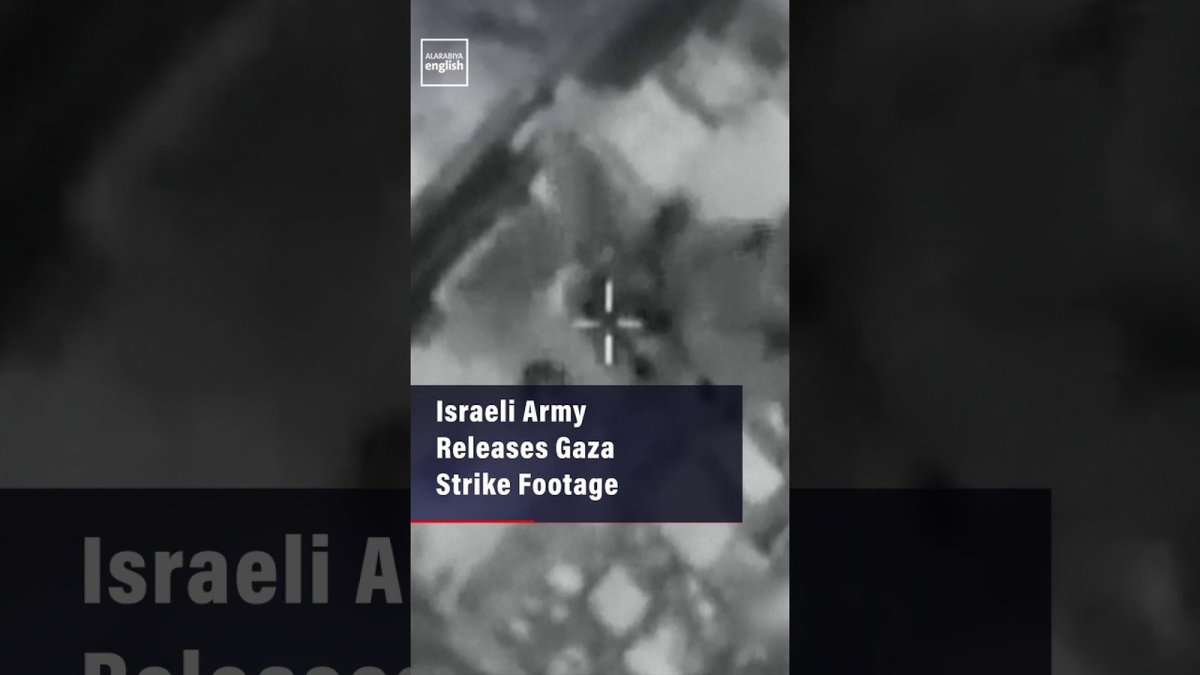
Operation Gideon's Chariots B Details
The strikes formed part of Operation Gideon's Chariots B, a precision airstrike on a Hamas weapons storage facility in Gaza City conducted by the Israeli Air Force with Division 98 forces and Shin Bet guidance. This operation targeted explosives intended for use against Israeli soldiers and follows the original Operation Gideon's Chariots, the 2025 Gaza City offensive. The IDF released footage of the strikes as evidence of the targeted facilities.
The precision airstrikes conducted on August 1, 2026, targeted five Hamas weapons depots, including one adjacent to Al-Aqsa Martyrs Hospital, reflecting Israel's emphasis on disrupting supply lines even under the terms of the US-brokered ceasefire. Division 98, operating alongside Shin Bet intelligence, executed the operation in Gaza City as part of a pattern that prioritizes rapid degradation of stored munitions intended for attacks on Israeli forces or civilians. The "B" designation signals a direct continuation of earlier 2025 operations in the same urban corridor, where similar combined air and ground coordination had been employed to maintain pressure on remaining armed infrastructure.
Footage releases from the Israeli Air Force serve multiple purposes within Israel's strategic communications. They demonstrate operational capability to domestic audiences concerned about force protection, while also providing documented evidence of weapons storage that Israeli officials cite as violations of the disarmament timeline. This approach underscores the tension between incremental Israeli withdrawals outlined in the framework and the persistent requirement to neutralize threats before any further territorial concessions.
Reported Casualties and Medical Facility Damage
Al Jazeera reported that Israeli strikes killed at least seven Palestinians across Gaza on August 1, with separate attacks hitting medicine warehouses beside a hospital. Gaza's Health Ministry condemned the strike on medicine stores as heinous. Al-Aqsa Martyrs Hospital stated the bombing caused over US$500,000 in damage and destroyed vital medical materials. Al Jazeera correspondent Moath al-Kahlout reported that the Israeli military issued an evacuation order and struck the facility 15 minutes later.
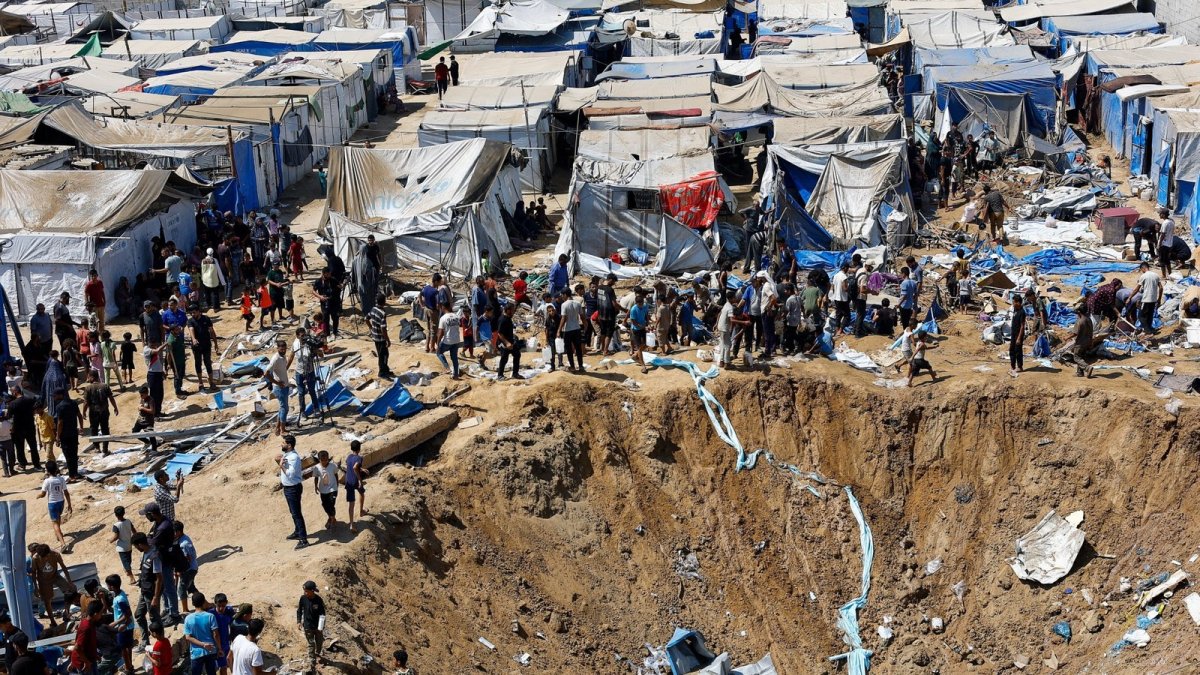
Humanitarian and Medical Crisis in Gaza
The August 1 strikes damaged medicine warehouses beside Al-Aqsa Martyrs Hospital, causing over US$500,000 in losses to vital medical materials and prompting an evacuation order only 15 minutes prior to impact. Gaza Health Ministry statements described the action as heinous, noting that the destruction compounds an already acute shortage of supplies amid the broader toll of more than 73,000 Palestinian deaths reported by local health authorities since October 2023. These incidents illustrate how military operations continue to intersect with civilian infrastructure even after the ceasefire took effect.
The resulting medical strain directly influences the politics surrounding the disarmament framework. Delays in treatment capacity and the loss of storage facilities heighten local resistance to any arrangement perceived as prioritizing security sequencing over immediate humanitarian relief, thereby complicating Egyptian and international efforts to advance staged withdrawals tied to verifiable disarmament milestones.
Board of Peace Disarmament Framework
On July 30, 2026, President Donald Trump announced that the Board of Peace, established the previous year, had reached a historic agreement for the complete disarmament of Hamas and all other armed groups in Gaza after months of negotiations in Cairo. Trump said the agreement would be implemented in stages, with Israeli forces withdrawing incrementally as disarmament advances. Egypt hosted the Cairo negotiations, and the Board of Peace is a Trump initiative involving international partners.
The Board of Peace, established as a Trump initiative with international partners, announced the July 30, 2026, agreement following extended Cairo negotiations. The framework calls for complete disarmament of Hamas and other armed groups through staged implementation, linking each phase of weapons removal to corresponding Israeli withdrawals. Egypt's role as host aligns with its longstanding security interests along the Philadelphi corridor, where control over southern Gaza borders remains central to preventing cross-border movement of fighters and materiel.
This structure builds on the October 2025 ceasefire that expanded Israel's "Yellow Line" of control over more than 70 percent of Gaza territory. It also extends the logic of the earlier 20-point plan by conditioning full demilitarization on verifiable steps, while preserving space for Arab states to assess how the outcome shapes prospects for Palestinian statehood and future normalization tracks.
Israeli Government Position and US Communications
Netanyahu's office issued a statement demanding the full disarmament of Hamas, including removal of the weaponry from Gaza and the complete demilitarization of the enclave. Israeli officials raised serious security concerns with the White House, warning that Hamas is rebuilding forces, and vowed not to withdraw troops from Gaza. A spokesperson for Netanyahu's office told Reuters that Israel expressed concerns to the United States about the Hamas disarmament plan. Reuters reported Israeli strikes killed 18 in Gaza and quoted an Israeli minister saying there is no deal to halt attacks.
Netanyahu's office has consistently demanded full disarmament, including the removal of all weaponry and complete demilitarization of Gaza, while conveying serious security concerns directly to the White House. These concerns center on verification mechanisms, inspection regimes, and the risk that Hamas could reconstitute capabilities during any phased Israeli pullback. Israeli officials have warned that Hamas is already attempting to rebuild forces, creating pressure within the coalition to limit withdrawals until tangible results are confirmed on the ground.
Trump's assertion that Israel was "very happy" with the deal stands in contrast to the more guarded statements from Israeli spokespeople, who continue to highlight gaps in enforcement. This divergence reflects domestic political calculations in Israel, where public support for sustained operations remains tied to assurances that no armed threat will persist along the border after any reduction in troop presence.
Hamas Response to Withdrawal Sequencing
Senior Hamas officials told AFP that the agreement includes provisions addressing the group's weapons and the gradual withdrawal of Israeli forces. A senior Hamas official said Israel must withdraw first. The war background shows it began on October 7, 2023, when Hamas led an attack on Israel that killed 1,195 Israelis and foreign nationals and took 251 hostages, with Israel's subsequent offensive killing more than 73,000 Palestinians according to Gaza health authorities.
Strategic Implications for Regional Stability
The August 1 strikes highlight the tension between Israel's stated security requirements and the staged withdrawal process outlined in the Board of Peace agreement. With Israeli forces having expanded the Yellow Line of control since the October 2025 ceasefire, any incremental pullback remains tied to verifiable disarmament steps. Egypt's role in hosting the Cairo talks positions it as a key mediator in managing implementation disputes between the parties.
By Malik Hassan, Staff Writer
Should the disarmament framework falter, Egypt's mediation position would face renewed strain given its direct stake in border stability and the Philadelphi corridor. Gulf Arab states are monitoring the process for signals on Palestinian statehood and the viability of reconstruction funding, both of which influence their calculations on deeper Arab-Israeli ties. A collapse could reinforce Iranian narratives framing the Gaza conflict as part of a wider regional confrontation, potentially affecting proxy calculations across multiple fronts.
Successful implementation, by contrast, might ease disruptions to Red Sea shipping and energy markets that have persisted since the war's onset. Jordan and Egypt, already bound by peace treaties with Israel, would likely view measured progress as reducing immediate spillover risks, while broader normalization efforts remain contingent on how the Gaza outcome shapes Palestinian political horizons.
This article was produced with AI-assisted research and editorial support. Reporting is based on sources cited in the article.
What's Your Reaction?
 Like
0
Like
0
 Dislike
0
Dislike
0
 Love
0
Love
0
 Funny
0
Funny
0
 Wow
0
Wow
0
 Sad
0
Sad
0
 Angry
0
Angry
0

Middle East Correspondent at Global1.News. Based in Beirut, covering politics, conflict, energy, and society across the Middle East. Brings context and depth to a region often reduced to headlines.












Comments (0)