
Spain Installs 500-Meter Floating Barrier in Ceuta After Deadly Migrant Surge
In a recent DW News report on the installation of a floating barrier in Ceuta, Spanish authorities moved quickly to seal off the Tarajal breakwater after more than 50,000 migrants crossed from Morocco starting July 30, 2026. The surge left at least 72 people dead from drowning or crushing injuries at the fences.
Spain Installs Floating Barrier in Ceuta Following Deadly Migrant Surge
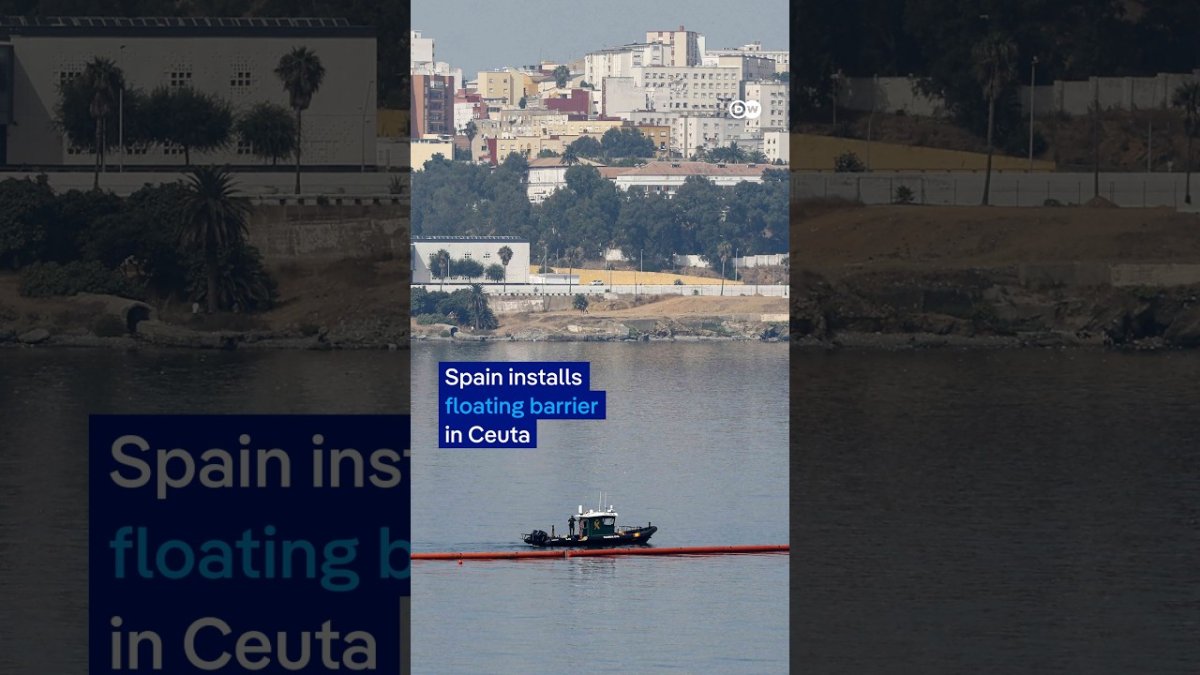
Ciudad Autónoma de Ceuta – Spain, August 2026 - Spanish Civil Guard officers began placing a 500-meter floating containment barrier at the Tarajal breakwater on Saturday August 1 after the largest recorded crossing into the North African enclave.
The Story Unfolds
More than 50,000 migrants breached Ceuta's border from Morocco beginning Thursday July 30, 2026, an unprecedented surge that Ceuta's local government head Juan Jesús Vivas estimated reached up to 60,000 people. Many swam the roughly 5 kilometers from Fnideq while others took the shorter route from Belyounech, mixing sea and land entries at the Tarajal breakwater. Ceuta authorities linked the scale of the crossing to a Spanish Supreme Court ruling earlier in July that blocked immediate returns for migrants arriving by sea, though land entries faced different rules, and Moroccan activists later questioned whether most migrants even knew about the decision.
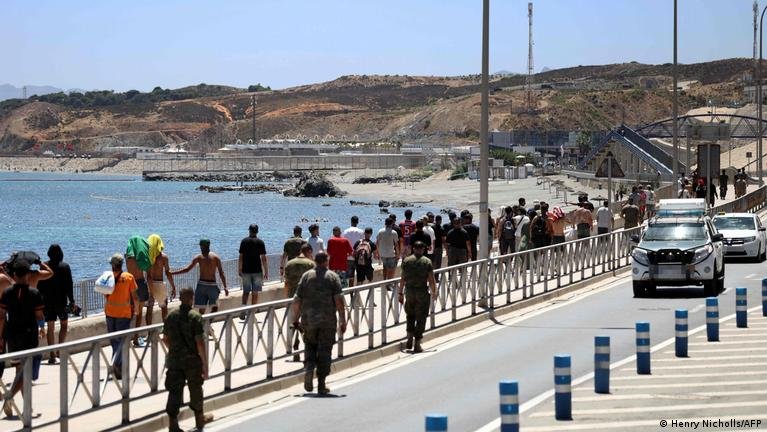
Spain returned more than 48,000 within 48 hours, with nearly all back in Morocco by Sunday as Spanish soldiers escorted groups amid full processing centers. At Spain's other enclave, Melilla, authorities stopped 1,135 people and recorded 11 deaths, ten from drowning and one from a fall in a rocky area. The rapid return operation highlighted how quickly numbers climbed from the initial breach to the near-complete reversal by the weekend.
The Human Toll
At least 72 people died during the crossings, a figure raised from 67, as migrants drowned in the water or were crushed while scaling the barriers at the Tarajal breakwater. Spanish officials noted possible additional casualties on the Moroccan side near Fnideq and Belyounech. The crush injuries and drownings turned what began as a mass movement into a tragedy that stretched across days, from the Thursday surge through the weekend returns.
Migration processing centers in Ceuta reached full capacity as Spanish soldiers escorted groups back across the border. Juan Jesús Vivas called for completing returns while strengthening security. The Tarajal breakwater, a stretch of coast heavily used during the crossings, now hosts the new 500-meter barrier plus reinforced police and army patrols. Families on both sides of the Strait felt the weight of these losses, with the same deadly pattern repeating across both enclaves.
The floating barrier at Ceuta sharpens long-standing worries about how border enforcement treats people as obstacles rather than individuals with rights. Migrants attempting the short but treacherous swim face strong currents, cold water, and the jagged concrete of the Tarajal breakwater, where waves can slam bodies against rocks or pull them under before they reach shore. Families on both sides of the Strait often spend weeks or months calling consulates and aid groups, never learning whether a loved one drowned, was detained on the Moroccan side, or slipped through an unofficial route that leaves no record. Because many crossings happen outside official checkpoints and bodies can drift into Moroccan waters, the true number of lives lost stays hidden. Mexican observers at the CNDH have raised similar dignity concerns along their own southern border, noting that enforcement tactics focused on containment often overlook the basic need to treat every person with respect and to account for those who simply disappear.
Echoes for Mexican Readers
The Spanish Supreme Court ruling earlier in July that blocked immediate returns for migrants arriving by sea parallels ongoing debates in Mexico's Suprema Corte de Justicia de la Nación over detention periods and due process for migrants held by the Instituto Nacional de Migración. Mexican families in Oaxaca, Guerrero, Michoacán, and Chiapas have experienced similar tensions between sovereignty claims and humanitarian obligations during the 2018-2019 caravans and under the current Sheinbaum administration's approach to southern border management through the Secretaría de Gobernación. The floating barrier in Ceuta serves as another physical symbol of containment that resonates with communities familiar with border walls and Plan Frontera Sur operations.
Remittances from those who reach the US-Mexico border sustain many households in these states, just as the Ceuta returns disrupted families hoping for stability. Guardia Nacional operations at the southern border offer a familiar frame for understanding how Spain's 48-hour reversal operation played out under pressure from both sides. Mexican families watching the Ceuta events see parallels to how SCJN rulings on INM migrant detention have shaped returns and processing along the southern border.
Impact on Communities
Ceuta and Melilla remain the European Union's only land borders with Africa. The rapid returns and new barrier directly affect families who rely on cross-border movement for work and trade, much as Mexican border communities in Tijuana, Ciudad Juárez, and Reynosa navigate daily enforcement alongside economic ties. Small business owners and migrant workers on both sides of the Strait of Gibraltar face disrupted routines, echoing the pressures felt by maquiladora workers and campesinos when enforcement tightens along Mexico's northern and southern frontiers.
The 500-meter floating containment barrier installed at the Tarajal breakwater on Saturday August 1, alongside reinforced police and army patrols, changed daily movement patterns in Ceuta. Local life near the breakwater slowed as the structure took shape, affecting the short crossings that once connected communities across the Strait of Gibraltar. Similar barriers along the US-Mexico border have long altered family visits and trade for residents on both sides. Remittance-dependent towns in southern Mexico feel the ripple when returns happen quickly, just as Ceuta's near-complete reversal by Sunday left many migrants back in Morocco without reaching processing.
Ceuta's economy has long depended on steady cross-border movement with Morocco for everyday trade, port services, and small-scale commerce that keeps local shops and transport firms running. The barrier and tighter controls threaten to slow that flow, raising costs for goods and reducing work for dockworkers and market vendors who rely on daily crossings. Processing centers already stretched by arrivals now face longer backlogs, pulling resources away from routine municipal services that residents count on. Mexican border towns face parallel pressures where sudden enforcement shifts disrupt tianguis stalls, maquiladora supply lines, and the informal markets that tie communities on both sides of the line. When movement slows, families and businesses on either side feel the pinch in lost income and strained local services, showing how physical barriers reshape entire regional economies rather than just the immediate crossing points.
Reactions and Responses
Prime Minister Pedro Sánchez traveled to Ceuta on Friday and described the crossing as a violation of Spain's territorial sovereignty, blaming mafias for spreading rumors about the Supreme Court ruling. Foreign Minister José Manuel Albares posted on X that virtually all who entered had returned to Morocco. Twenty-two European Union governments called for an emergency response, and EU interior ministers scheduled a video meeting for Tuesday. Sánchez called for an urgent teleconference among leaders.
Germany's Friedrich Merz urged Morocco to accept irregular migrants without delay, while Italy's one-month suspension of Schengen free movement took effect. Right-wing leaders across Europe called for expanded expulsions and security reinforcement. These statements mirror the human rights critiques that Mexican institutions like the CNDH have raised during large-scale returns, emphasizing dignity even in enforcement moments.
What to Watch For
Right-wing leaders across Europe continue pressing for expanded expulsions and security measures. Mexican observers will note how the Ceuta events test the balance between rapid enforcement and legal protections, a tension that has shaped recent rulings by Mexico's SCJN and operations by the Guardia Nacional at the southern border. The outcome of the scheduled EU interior ministers' meeting will shape future joint responses that could influence migration diplomacy between Mexico, the United States, and Central American nations.
The installation of the 500-meter barrier at Tarajal marks a concrete step in Spain's containment strategy, yet the underlying drivers of migration from North Africa persist. Observers will track whether the reinforced patrols and barrier alter future crossing attempts from Fnideq and Belyounech, much as Mexican communities monitor shifts under the Sheinbaum administration and SEGOB coordination. The coming weeks will show how these responses shape longer-term cooperation across borders, reminding communities on both sides of the Atlantic that sudden policy shifts can trigger large movements while families continue to seek stability and safety.
Spain's floating barrier could face challenges in domestic courts or at the European Court of Human Rights in Strasbourg, where judges have examined similar cases involving pushbacks and collective expulsions. Any deeper returns agreement between Spain and Morocco would likely set new rules on who can be sent back and under what conditions, affecting future flows. The EU meeting may push toward shared standards on maritime barriers and asylum screening that member states would then apply. Mexican officials at the SRE and SEGOB are watching these steps closely as they consider adjustments along the southern border under Sheinbaum, weighing how legal safeguards and bilateral talks might balance enforcement with the practical needs of communities that depend on orderly movement.
By Rosa Martinez, Staff Writer
This article was produced with AI-assisted research and editorial support. Reporting is based on sources cited in the article.
What's Your Reaction?
 Like
0
Like
0
 Dislike
0
Dislike
0
 Love
0
Love
0
 Funny
0
Funny
0
 Wow
0
Wow
0
 Sad
0
Sad
0
 Angry
0
Angry
0

Latin America/Andes Correspondent at Global1.News. Based in Bogota, covering politics, environment, energy, and social movements across the Andean region. Passionate about environmental journalism and communities protecting their land.















Comments (0)