
Caribbean Airlines Ends Direct Trinidad-Barbados Flights: A Blow to Regional Connectivity
Caribbean Airlines (CAL), the state-owned carrier based in Port of Spain, has confirmed it will discontinue the direct routing of its Trinidad and Tobago to Barbados return flights, BW212 and BW213, effective 2 September 2026. The announcement, which came as part of a broader restructuring of the airline’s regional network, has raised questions about the future of seamless travel between two of the Caribbean’s most important economic hubs.
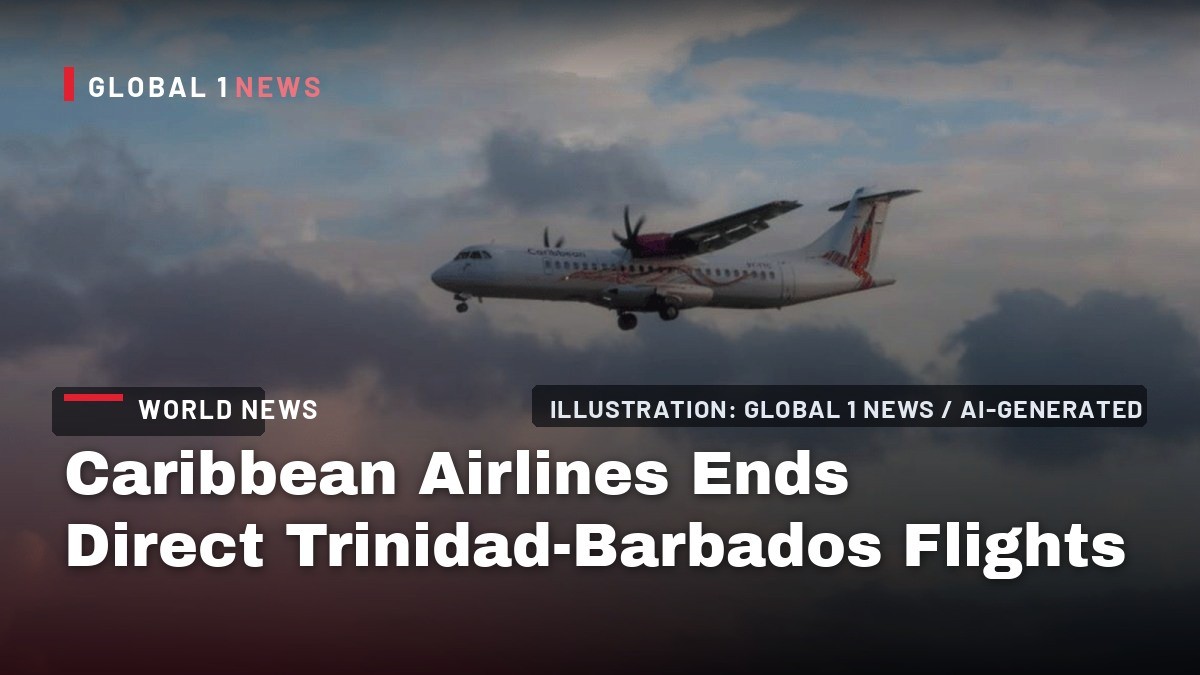
Caribbean Airlines (CAL), the state-owned carrier based in Port of Spain, has confirmed it will discontinue the direct routing of its Trinidad and Tobago to Barbados return flights, BW212 and BW213, effective 2 September 2026. The announcement, which came as part of a broader restructuring of the airline’s regional network, has raised questions about the future of seamless travel between two of the Caribbean’s most important economic hubs.
The airline has framed the decision as part of "ongoing schedule optimization across its regional network," a phrase that will offer little comfort to the thousands of passengers who rely on the direct link for business, family visits, and leisure travel. While CAL has assured that other scheduled connections between Trinidad, Tobago, and Barbados will continue, the removal of the direct routing marks a significant shift in how the airline views its role in knitting the region together.
For travellers accustomed to the quick hop between Piarco International Airport and Grantley Adams International Airport, the change signals a return to the days of longer layovers and more complicated itineraries. The decision also comes on the heels of a separate announcement, made around 25 August 2026, that CAL would discontinue its direct Barbados-Tobago service as part of the same cost-cutting and schedule optimisation efforts.
A Route That Defined Regional Travel
The BW212 and BW213 flights have long been more than just a pair of flight numbers. They represented a practical and symbolic link between Trinidad and Tobago and Barbados, two nations with deep historical, cultural, and economic ties. The route between Bridgetown and Tobago, in particular, is a short one—approximately 161 miles (259 kilometres)—with a direct flight time of roughly 55 minutes. For many, it was the easiest way to move between the sister isle and the eastern Caribbean’s most developed tourism market.
The decision to pull the direct routing is a pragmatic one for the airline, but it carries a heavier cost for the travelling public. Passengers who have already booked on the affected flights will be re-accommodated on alternative Caribbean Airlines services on the same day, according to the carrier. That promise, while welcome, does little to mask the inconvenience of altered schedules, longer journey times, and the uncertainty that comes with any change to a well-established route.
For the people of Tobago, the loss of the direct Barbados service is particularly acute. The island’s economy leans heavily on tourism, and the ability to attract visitors from Barbados—as well as those connecting through Barbados from further afield—has been a key part of its growth strategy. The removal of this direct link could make Tobago a less attractive destination for travellers who value convenience and simplicity.
The Financial Reality Behind the Cuts
The decision to trim the Barbados routes is not an isolated one. It is part of a wider pattern of retrenchment at Caribbean Airlines, which has been grappling with significant financial losses across its regional network. According to government records, CAL’s 2023 Eastern Caribbean expansion generated US$18.84 million—more than TT$128 million—in combined accumulated losses as of April 2026. These are not abstract numbers; they represent real money, much of it drawn from the pockets of Trinidad and Tobago taxpayers who ultimately back the state-owned carrier.
Trinidad and Tobago’s Minister of Transport and Civil Aviation, Senator Eli Zakour, has been candid about the scale of the problem. In a statement to Parliament, he confirmed that the affected routes had generated the losses, providing a clear rationale for the airline’s decision to pull back. The minister’s frankness is refreshing, but it also underscores the difficult choices facing the government as it balances the need for a viable national carrier against the demands of regional connectivity.
The airline’s struggles are not new. From 1 June 2026, CAL had already dropped its services to Dominica, St Kitts, and the Guyana-Suriname route, while halving services to Martinique and Guadeloupe. Each of those cuts was justified on the same grounds: reducing losses and optimising the schedule. But taken together, they paint a picture of a carrier in retreat, pulling back from the ambitious expansion that once seemed to promise a more connected Caribbean.
An Expert's Mixed Verdict
Regional aviation expert Richard Nanton has offered a nuanced assessment of the earlier cuts, and his words carry weight in the context of the latest announcement. "This move is good for Caribbean Airlines because it will reduce its losses. But it's bad for the Caribbean because..." The partial quote, confirmed across multiple sources, captures the essential tension at the heart of CAL’s strategy. What is good for the airline’s bottom line is not necessarily good for the region it serves.
Nanton’s observation points to a deeper dilemma. Caribbean Airlines is not just a business; it is a public service, a tool for regional integration, and a lifeline for communities that would otherwise be cut off from the rest of the world. When the airline retreats from a route, it is not merely a commercial decision—it is a statement about the value of connectivity itself. The challenge for CAL, and for the governments that own it, is to find a way to balance the books without severing the ties that bind the region together.
The airline has indicated that it is working toward finalising a codeshare agreement with a regional airline partner, which is expected to expand customer access through coordinated schedules, seamless connections, and integrated ticketing. Such an arrangement could, in theory, mitigate some of the damage caused by the route cuts. But codeshares are not the same as direct flights. They require passengers to navigate multiple carriers, transfer between terminals, and accept the risk of missed connections. For many travellers, particularly those from smaller islands, the convenience of a single direct flight is irreplaceable.
What This Means for the Travelling Public
For the average passenger, the practical implications of these changes are significant. The loss of the direct Trinidad-Barbados routing means that travellers will need to plan for longer journey times and potentially more complex itineraries. While CAL has promised to re-accommodate affected passengers on alternative services the same day, the reality is that "alternative services" may not offer the same convenience or timing as the direct flights they replace.
The timing of the announcement is also worth noting. September is traditionally a quieter period for Caribbean travel, as the summer peak fades and the region braces for the hurricane season. By making the change at this point, CAL may be hoping to minimise the immediate disruption to its schedule. But the long-term impact on traveller confidence could be more lasting. Passengers who have grown accustomed to the ease of direct flights may now think twice before booking with a carrier that appears to be shrinking its network.
For the wider Caribbean, the news is a reminder of the fragility of regional air travel. The Caribbean has long struggled with high airfares, limited routes, and the dominance of foreign carriers. CAL’s retreat from Barbados is a step backward in the effort to build a more integrated and accessible region. It is also a reminder that the dream of seamless Caribbean connectivity remains just that—a dream, subject to the harsh realities of economics and politics.
A Regional Perspective on Connectivity and Cost
The decision by Caribbean Airlines must be viewed against the backdrop of the region’s broader economic challenges. Across the Caribbean, the cost of living continues to rise, and the price of air travel is a significant component of that burden. For families separated by the sea, the cost of a flight is not a luxury—it is a necessity. When routes are cut, those costs rise, and the ties that bind the region together are stretched.
Tourism, too, is a critical factor. The post-pandemic recovery has been uneven across the Caribbean, with some islands bouncing back faster than others. Barbados, with its strong tourism brand and well-developed infrastructure, has been a relative success story. But that success depends on the ability of visitors to reach the island easily and affordably. The loss of direct connections from Trinidad and Tobago could make Barbados a less convenient destination for travellers from the southern Caribbean, with knock-on effects for the island’s tourism sector.
The role of state-owned enterprises in the region is also called into question by this decision. Caribbean Airlines is not a private company; it is a public asset, funded by the taxpayers of Trinidad and Tobago. When it loses money, the burden falls on the public. When it cuts routes, the burden falls on the travelling public. The challenge for the government is to ensure that the airline serves the public interest, not just its own balance sheet. This is a delicate balancing act, and one that is unlikely to be resolved easily.
Looking Ahead: A Smaller Network, A Bigger Question
As Caribbean Airlines continues to restructure its services across the Caribbean, the region is left to ponder what kind of air travel it wants and needs. The codeshare agreement with a regional partner could offer a way forward, allowing CAL to maintain a presence on key routes without bearing the full cost of operating them. But such agreements are complex to negotiate and even more complex to implement successfully.
The airline’s retreat from Barbados is a sobering reminder that the Caribbean’s aviation landscape is changing. The era of the state-owned carrier as a universal provider of regional connectivity may be coming to an end, replaced by a more cautious, cost-conscious approach. Whether this is a necessary correction or a short-sighted retreat remains to be seen. What is clear is that the region’s travellers will feel the impact of these changes for years to come.
For now, passengers with bookings on the affected flights can take some comfort in CAL’s promise to re-accommodate them. But the broader question—whether the Caribbean can maintain the connectivity it needs to thrive—remains unanswered. As the region’s carriers retrench and restructure, the dream of a seamlessly connected Caribbean seems, for the moment, to be slipping further away.
By Sharon Sahatoo, Staff Writer
This article was produced with AI-assisted research and editorial support. Sources: Caribbean360, Nation News, CBC Barbados, CNC3, Times Caribbean Online.
What's Your Reaction?
 Like
0
Like
0
 Dislike
0
Dislike
0
 Love
0
Love
0
 Funny
0
Funny
0
 Wow
0
Wow
0
 Sad
0
Sad
0
 Angry
0
Angry
0

Caribbean Correspondent at Global1.News. Based in Port of Spain, Trinidad, covering Caribbean politics, economy, energy, climate, and culture. Amplifying the voices and stories of the Caribbean region.















Comments (0)