
Dozens Killed at a Ukrainian Aid Point as Russia Hits the Grid in Nine Regions
Russian guided bombs hit a humanitarian aid point in Komyshuvakha and the shelter beside it, killing dozens in one of the war's deadliest attacks on Zaporizhzhia region, as a nationwide strike on Ukraine's power grid hit nine regions and damaged a hospital in Kharkiv.
Folks, a line for bread became a kill zone in southern Ukraine. Then came the second strike, the drones, and a night that hit power grids across the country. Here is what we know, and what is still unaccounted for.
Dozens Killed at a Ukrainian Aid Point as Russia Hits the Grid in Nine Regions
Zaporizhzhia, Ukraine - Rescue teams were still pulling people from the rubble on Tuesday night, and the count of the dead was still moving.
A Line for Bread, and Nine Bombs
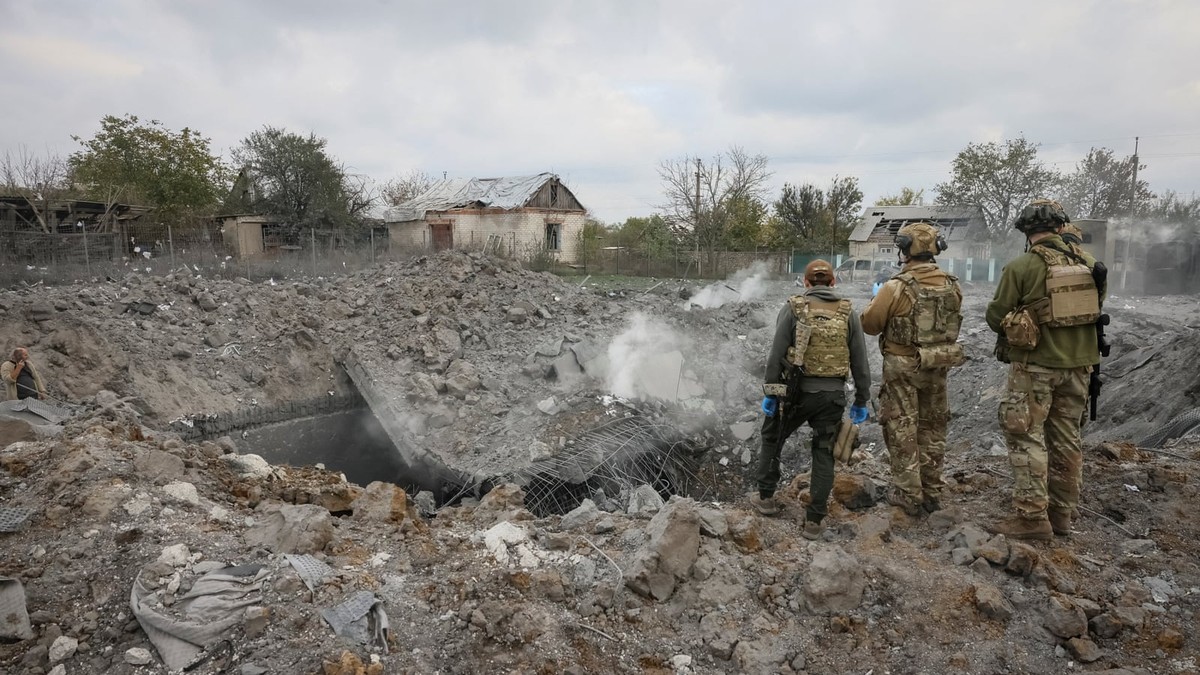
In Komyshuvakha, a village in south-eastern Zaporizhzhia region about 20 kilometres from the front line, people came on Monday for bread and food packages. Ukrainian officials said Russian guided aerial bombs hit the aid distribution point, then hit the shelter beside it where people had taken cover. The site was a school, used for aid and shelter rather than for classes.
Mykhailo Semikin, acting head of the regional military administration, said the aid centre collapsed from a direct hit and that at least nine aerial bombs of 3,000 kilogrammes each were used. "They had come for help - not to a military facility, not to a frontline position, but to a place where they were supposed to receive support," he said.
There were no classes at the school because the village lies too close to the fighting, President Volodymyr Zelensky said. The strike destroyed a gymnasium, an outbuilding and a fire truck, and damaged the school building. Komyshuvakha has been treated as a front-line settlement since November 2025.
The Toll, as It Stands
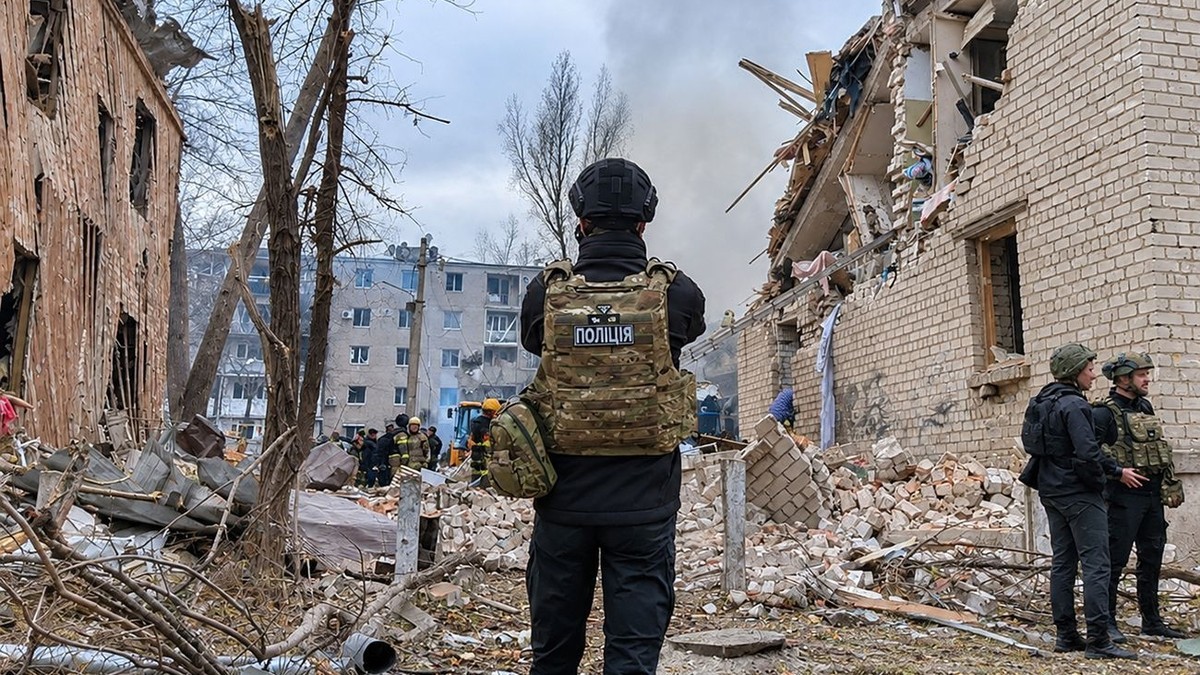
The count moved all day, and it kept moving. Semikin gave 18, then 29, then 31. Zelensky, at a press conference in Berlin, gave 33. That was the last official figure released on Tuesday, and no official presented it as final. Semikin called it one of the deadliest attacks on the region since the start of the full-scale invasion.
Semikin said 48 people were listed as missing. Zelensky said more than 50 may still be under the rubble. The two numbers come from different officials and are not part of the toll of the dead.
The State Emergency Service said the dead include two of its own rescuers and four police officers. Five people were injured, including two rescue workers. Of those, four were still in hospital on Tuesday - three women and a man, a rescuer, aged between 22 and 68. Three had already undergone surgery and were in a stable condition. Zelensky said five people had been rescued. Semikin said teams were still working at the scene and that "people were still under the rubble." Three days of mourning were declared for 3, 4 and 5 November.
Two Waves, Then the Drones
Zelensky described the sequence in his nightly address. "The Russians struck first just as people were arriving - a few aerial bombs," he said. "Then there was a second strike - more air bombs, this time on the shelter. A vile terrorist strike." He said Russian forces could not have been unaware that residents who stayed in the village collected humanitarian aid at that site every week.
Rescue work was hampered by Russian drones that attacked the area again after the bombs landed, according to Semikin. It is the pattern Ukrainian emergency crews have described repeatedly: strike, wait for the rescuers, strike again.
Ukrainian officials say Russia relies on guided aerial bombs, known as KABs, fitted with wing kits that let aircraft release them from tens of kilometres away, outside the reach of air defences. Ivan Fedorov, co-chair of the Zaporizhzhia Regional Defence Council, said a FAB-3000 was used - a three-tonne bomb carrying nearly 1.5 tonnes of explosives, built to break concrete fortifications. The Zaporizhzhia Investigation Center says Komyshuvakha has been hit repeatedly since it became a front-line settlement.
Who Was Standing in That Queue
The names came out through the day. Olha Tverdenko worked at an administrative services centre and travelled to Komyshuvakha every Monday to sort and hand out humanitarian aid, including bread and food packages, to the residents who had stayed. She was killed there.
Tetiana Ivanivna, who headed a humanitarian aid centre, was also among the dead. So was Nataliia Karapetian, the wife of Komyshuvakha community head Yurii Karapetian and a mother of three.
The National Police said one of the bombs hit a humanitarian aid hub that doubled as a shelter for local residents, trapping civilians, police officers and rescue workers under the rubble. Ukrainian officials say the site had no military role and was a weekly stop for people who had refused to leave a village inside artillery range.
Kharkiv, Twenty Past Three in the Morning
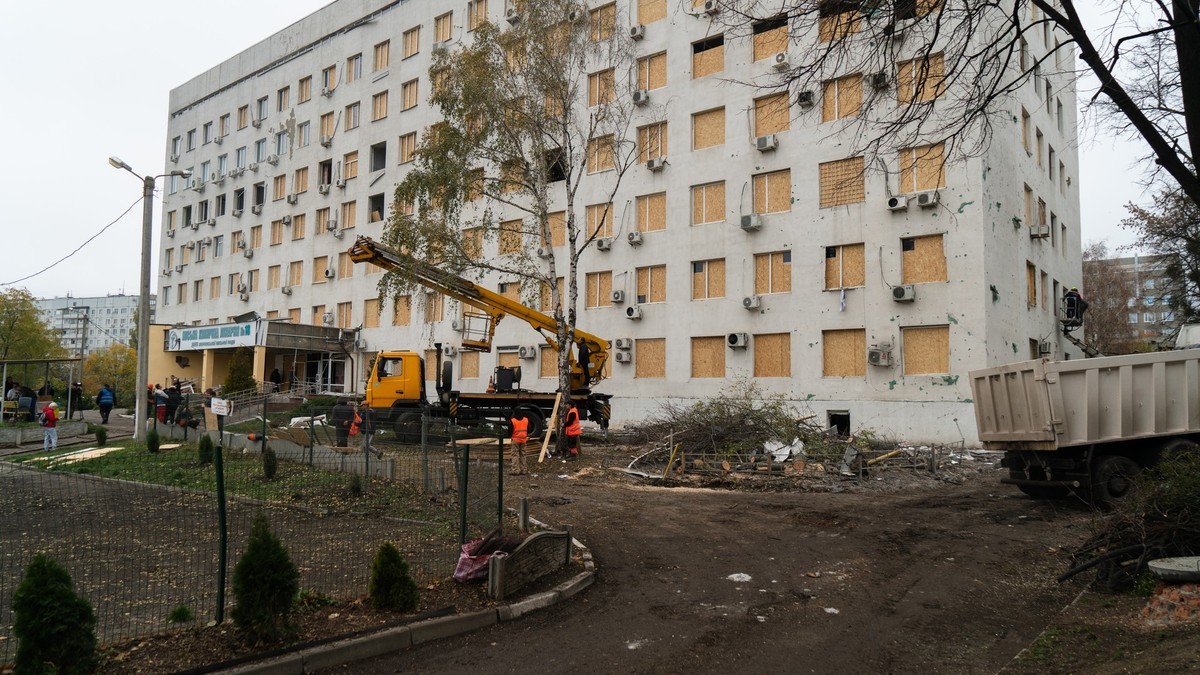
A separate strike hit Kharkiv. At about 03:20 on Tuesday a guided bomb landed in the passageway between the buildings of a hospital complex in the Nemyshlianskyi district. The prosecutor's office said preliminary data pointed to a FAB-250 bomb fitted with a UMPK-5R guidance module.
The prosecutor's office said 73 people were injured, among them hospital patients, medical staff and residents of nearby buildings, and that most were diagnosed with acute stress reaction. The blast damaged the facade and wards and shattered windows, and also hit another medical facility, a laboratory and the windows of ten apartment blocks. About 226 patients were evacuated to other hospitals. Zelensky said the cardiology department, where people were being treated, was damaged.
Olha Romanenko, director of City Multiprofile Hospital No. 18, said 236 patients and 31 staff were inside when the bomb came in. The alert sounded at about a quarter to two, and most of them were in the shelter. Mayor Ihor Terekhov said more than 1,000 windows were blown out. The city council said three medical facilities and 17 high-rise buildings were damaged in the Saltiv residential complex, along with 13 cars.
Nine Regions, One Grid
The same night brought a mass combined attack on Ukraine's power system, after what the air force described as a long pause in such strikes. Zelensky said Russia fired 289 drones, 120 of them jet-powered, along with 17 ballistic missiles and 59 cruise missiles. The air force said it shot down or suppressed 309 aerial targets - three ballistic or Zircon missiles, 49 cruise missiles and 257 drones - with direct strikes at 23 locations and debris falling at 14 more.
Prime Minister Serhii Koretskyi said generation and transmission facilities were hit in nine regions, with damage recorded in 14. "The damage is significant both at power generation facilities and across the grid," he said.
Large plants in the Dnipropetrovsk, Vinnytsia and Kharkiv regions were struck, along with substations, particularly in the west. Strikes also hit manufacturing plants, business warehouses and railway infrastructure, according to Koretskyi. In Zhytomyr region, attacks on energy facilities in two districts cut power to about 180,000 people, and emergency outages were introduced across numerous cities and communities. Air force spokesman Yurii Ihnat said the ballistic missiles came around 3 a.m. and the cruise missiles toward dawn.
What Moscow Says
Russia's defence ministry has not commented on the Komyshuvakha strike. Its public statement covered the energy attack instead: it claimed high-precision land- and air-based weapons and strike drones against energy facilities in the Vinnytsia, Dnipropetrovsk and Kharkiv regions.
The ministry named the plants it says it hit - the Ladyzhyn plant in Vinnytsia, the Kryvyi Rih and Prydniprovsk plants in Dnipropetrovsk, the Kharkiv plant, and two 330-kilovolt substations, Zmiyiv and Losevo. It said it also struck port infrastructure in the Odesa region, including at the port of Kiliia, and hit two bulk carriers at Pivdennyi and in the Black Sea.
Those are claims, and Ukraine has not confirmed the list. Ukrainian officials describe the same night as a mass attack on generation and substations that forced emergency outages across the country. On the village, Moscow has said nothing at all.
The Truce That Ended on Sunday
The aid point was hit a day after a US-brokered ceasefire in the Russian-occupied southern city of Oleshky ended on Sunday 1 November. The truce allowed an evacuation and was brokered with the involvement of US first lady Melania Trump. It was the longest pause in fighting in a war now in its fifth year.
Zelensky said the strike showed Moscow was counting on more killing instead of building on that pause. "If Russia genuinely wanted de-escalation, there was an opportunity following the situation in Oleshky to continue taking humanitarian steps," he said. "We proposed this. But Russia continues to kill people."
The Kremlin said no other similar humanitarian missions were being planned "at the moment". US special envoy Steve Witkoff said US-led talks between Russia and Ukraine will be held on 10 and 11 November in Abu Dhabi.
A Week When Washington Was Looking Elsewhere
Zelensky tied the timing to the American calendar. He said the overnight attack coincided with US congressional election day, and that the main target was energy generation and substations. He said it in Berlin, at a joint press conference with German Chancellor Friedrich Merz, on the day the Komyshuvakha toll rose from 31 to 33.
Kyiv and its European allies worry that President Donald Trump has increasingly sided with Moscow, the Guardian reported.
The next round of US-led talks is on the calendar for Abu Dhabi next week. Nothing announced by either capital in the past seven days suggests the two sides are closer to a settlement. The Kremlin has given no timeline for another humanitarian mission, and no date beyond the two days in Abu Dhabi has been set for the talks.
What Happens Now
The search in Komyshuvakha is not finished and officials have not closed the missing list. In Dnipro, one person was killed and 15 were injured in the overnight attack; a hospital, a police station and a residential neighbourhood were damaged there.
In Rivne region a substation operated by the national grid company Ukrenergo was damaged. In Vinnytsia region, damage to energy facilities and power lines left most settlements without electricity. Near Kyiv, a business and private homes were damaged in Brovary.
The Kharkiv hospital is being assessed for repair. Romanenko said the building handles acute heart attacks around the clock, more than a thousand patients a year, and needs to reopen fast. Anna Chumachenko, deputy director of the European Radiology Centre, said her staff were not in the building when the bomb hit and came in that morning to clear the rubble. Patient visits there are suspended indefinitely.
By Jessica Ali, Staff Writer
This article was produced with AI-assisted research and editorial support. Sources: The Guardian, BBC News, Kyiv Independent, Kyiv Post, The New Voice of Ukraine, Ukrinform, Ukrainska Pravda, Hromadske, RBC-Ukraine and Gwara Media. Photographs: Ukrainian soldiers among the rubble of the aid hub, Reuters via The Guardian; a Ukrainian police officer at the site of a strike, Ukraine's National Police via RBC-Ukraine; a city clinical hospital in Kharkiv, Gwara Media / Mia Kliushnikova. Cover: Global 1 News editorial image.
What's Your Reaction?
 Like
0
 Dislike
0
 Love
0
 Funny
0
 Wow
0
 Sad
0
 Angry
0

Editor-in-Chief at Global1.News. Atlanta-based journalist who cuts through the BS and tells it like it is. Lead anchor, host, and the voice you hear when the spin stops and the truth starts.











Comments (0)