
US Missionary Kevin Rideout Freed After Nine Months in Captivity in Niger
US missionary Kevin Rideout freed after nine months in captivity in Niger — a rare good-news story from the Sahel that underscores the region's deepening security crisis and the heavy toll on West Africa.
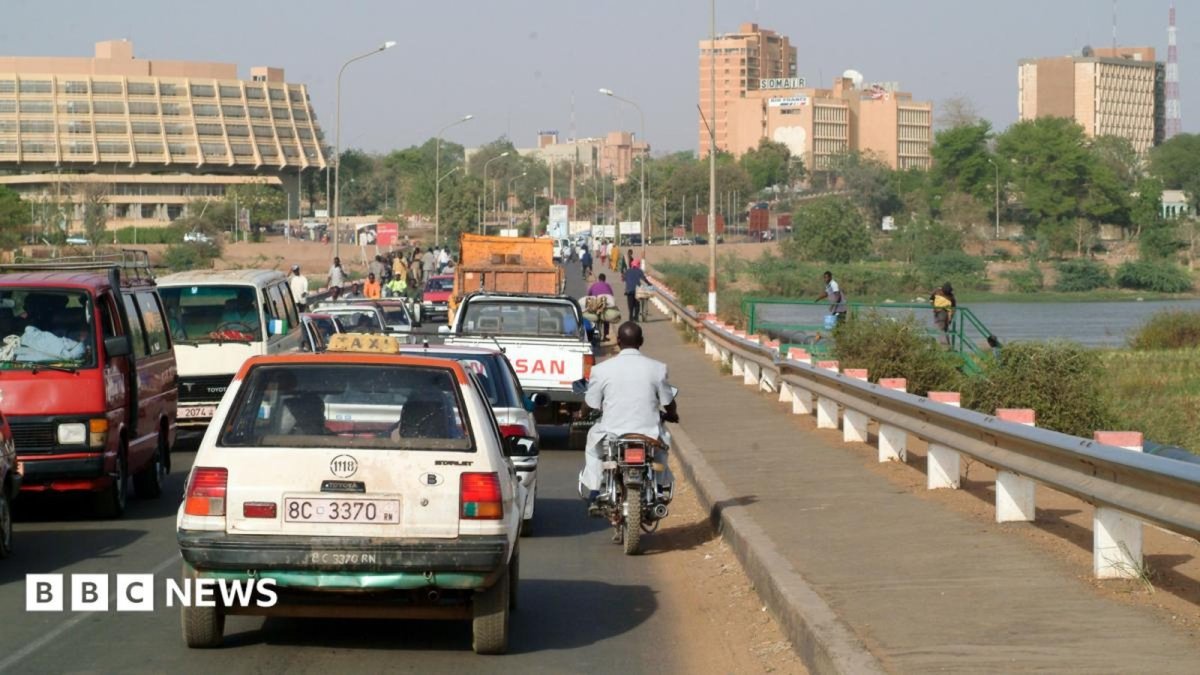
For more than nine months, a family in the American Midwest held its breath. Kevin Rideout, a pilot and Christian missionary who had called Niger home for nearly two decades, was finally released this week after being kidnapped at gunpoint in the capital, Niamey. The news, confirmed on Friday by his employer, SIM International, brings a close to an ordeal that had become a stark symbol of the Sahel's spiraling security crisis — one that continues to exact a heavy toll on the people of West Africa.
US Missionary Freed After 9-Month Niger Kidnap
Dakar, Senegal — The release of Kevin Rideout is a rare piece of good news from a region where kidnappings for ransom and militant violence have become grimly routine. But his nine-month disappearance also throws into sharp relief the dangerous reality facing foreigners and locals alike in the vast, lawless spaces where the borders of Niger, Mali, and Burkina Faso collide. While his family prepares for a reunion, the underlying forces that made his abduction possible remain as potent as ever.
A Long Ordeal Ends in the Shadows
SIM International, the Charlotte, North Carolina-based evangelical organization that Rideout served, broke the news on Friday, 14 August 2026. "We are grateful to confirm that our good friend and brother in Christ, Kevin Rideout, has been released after over nine months in captivity," the group said in a statement. The organization added that Rideout was "in good health in the care of US officials" and would soon be reunited with his wife, Krista, their children, and his extended family.
The New York Times, which first reported the release, cited unnamed US officials saying Rideout was in FBI custody and traveling to the United States. President Donald Trump confirmed the development on his Truth Social platform, writing that Rideout was "back in United States Custody" and adding, "Kevin, the United States of America looks forward to welcoming you HOME."
Yet, as is often the case in the opaque world of Sahelian hostage negotiations, the details of how and where Rideout was freed remain murky. The New York Times reported that he may have been transferred to another group prior to his release, a common tactic among militant factions looking to evade tracking or facilitate complex ransom deals. Neither SIM nor US officials have identified the group that held him in the final stages of his captivity.
The Day the World Changed
Rideout's ordeal began on the morning of 21 October 2025. He was heading towards the airport in Niamey when three armed men intercepted him outside his home. The brazen daylight abduction sent shockwaves through the expatriate community and raised immediate fears that he had fallen into the hands of Jama'at Nusrat al-Islam wal-Muslimin (JNIM), an al-Qaeda affiliate that has claimed responsibility for a string of high-profile kidnappings and attacks across the Sahel.
His abductors were believed to have spirited him away to the Tillaberi region, west of the capital, a vast and volatile area along the borders with Mali and Burkina Faso. This tri-border zone has become a notorious haven for jihadist groups, which operate with near-impunity in the absence of effective state control. For months, there was no word of Rideout, leaving his family and colleagues in a state of agonizing uncertainty.
Within days of his kidnapping, the US State Department issued a stark warning to its citizens, advising against all travel to Niger due to an "increased risk of terrorism, crime and civil unrest." For those who knew Rideout, the warning was a grim confirmation of the dangers he had chosen to live with for 19 years.
A Life of Service in a Troubled Land
Rideout was not a newcomer to Niger. He had dedicated nearly two decades of his life to the country, serving as a pilot for SIM International, which operates in more than 70 countries. His work involved flying supplies and personnel to remote mission stations, often in areas far from the security of the capital. For the communities he served, he was more than just a foreign aid worker; he was a lifeline.
SIM's statement emphasized the family's gratitude for the global outpouring of prayer and support. "Krista and the rest of Kevin's family are profoundly grateful for the prayers offered on their behalf by people around the world throughout his captivity," the organization said. The family has requested privacy as they "reconnect after this time apart."
His release is a testament to the quiet, often unseen work of diplomatic channels and intelligence agencies. But it also raises uncomfortable questions about the price of such freedom. While no official details have emerged regarding a ransom, the kidnapping of foreigners for profit has become a lucrative industry in the Sahel, funding further militant activity and perpetuating a cycle of violence.
The Sahel's Bleeding Heart
Rideout's story is a human tragedy that ended well, but it is also a window into a regional catastrophe that shows no signs of abating. For over a decade, Islamist militant groups, some with links to al-Qaeda and the Islamic State, have plagued the Sahel, targeting civilians, military convoys and local officials with devastating regularity. The violence has cost thousands of lives and displaced millions, destabilizing entire nations and crippling fragile economies.
The problem is not confined to Niger. In neighboring Mali and Burkina Faso, jihadist groups have expanded their footprint, exploiting weak governance and vast, ungoverned spaces. The recent spate of military coups in the region — including Niger's own in July 2023 — has further complicated the security landscape. The new military juntas have often struggled to contain the insurgency, and their relationships with Western powers, including the United States and France, have frayed considerably.
For ordinary West Africans, the consequences are dire. Farmers are afraid to tend their fields. Children are missing school. Entire villages have been abandoned as families flee the violence. The kidnapping of foreigners, while highly visible in the international press, is just one symptom of a deeper malaise. The Nigerian army, for instance, recently rescued 33 people kidnapped by gunmen in a separate incident, a reminder that this scourge affects locals far more frequently than it does Westerners.
A Regional Perspective: The Weight on West Africa
From a West African perspective, the release of Kevin Rideout is a moment of relief, but it is also a moment of reflection. The Sahel crisis is not a distant conflict; it is a fire burning on our doorstep. Senegal, my home country, has so far been spared the worst of the violence, but the instability in the region threatens us all. The Economic Community of West African States (ECOWAS) has struggled to find a coherent response to the coups and the insurgency, with member states deeply divided on how to engage with the new military rulers.
The cross-border nature of the militancy means that no single nation can solve the problem alone. The groups operating in the tri-border area move freely between Niger, Mali, and Burkina Faso, exploiting the lack of coordination between security forces. The human cost is borne not just by the victims of attacks, but by the entire region, which sees investment dry up, trade routes disrupted, and development gains reversed.
There is also a deep sense of frustration. Many in the region feel that the international community only pays attention when a Westerner is kidnapped, while the daily suffering of African civilians goes largely unnoticed. The release of Rideout will be celebrated, and rightly so, but it should also serve as a reminder of the thousands of unnamed, unremembered victims of this conflict who will never see a US presidential statement on their behalf.
Faith and Resilience in the Face of Danger
Despite the dangers, faith communities continue to serve across the Sahel. SIM International's work in Niger is part of a long tradition of Christian missionary activity in the region, a presence that predates the current crisis by decades. These organizations provide education, healthcare, and humanitarian aid to some of the most marginalized communities in the world. Their commitment, in the face of such obvious risk, is a powerful testament to their beliefs.
Rideout's release will be a source of encouragement to his colleagues and to the broader missionary community. But it also serves as a stark warning. The security situation in Niger and the wider Sahel is not improving. The groups that kidnapped Rideout are still active, still recruiting, and still capable of striking at will. The US travel warning remains in place, and other nations have issued similar advisories.
For now, the Rideout family can begin the slow process of healing. They have asked for privacy, and they deserve it. But the questions their ordeal raises will not go away. Who held Kevin Rideout? What was the price of his freedom? And what can be done to prevent the next kidnapping, the next attack, the next tragedy in a region that has known too many?
A Fragile Hope
The release of Kevin Rideout is a reminder that even in the darkest corners of the world there is still room for hope — a victory for his family, his colleagues, and all those who prayed for his safe return. But it is also a sobering reminder of the immense challenges that remain, and of the need for regional leaders and the international community to address the root causes of the violence.
As Rideout flies home to the United States, the people of Niger and the wider Sahel remain behind. They continue to face a daily struggle for survival against forces that show no mercy. Their story is not yet over, and it deserves our attention just as much as the story of one man's remarkable release.
This article was produced with AI-assisted research and editorial support. Sources: BBC News Africa, AP, Reuters, Al Jazeera.
By Amara Diop, Staff Writer
What's Your Reaction?
 Like
0
Like
0
 Dislike
0
Dislike
0
 Love
0
Love
0
 Funny
0
Funny
0
 Wow
0
Wow
0
 Sad
0
Sad
0
 Angry
0
Angry
0

West Africa/Sahel Correspondent at Global1.News. Dakar-based journalist covering politics, security, climate, and development across Francophone and Anglophone West Africa. Tells the stories of a region undergoing profound transformation.










Comments (0)