
Gulf of Paria tensions rise as Venezuela demands answers over May oil spill
Port of Spain, Trinidad — The waters of the Gulf of Paria, long a shared highway for fishermen, energy workers and migrating marine life, have become the latest flashpoint in Trinidad and Tobago’s delicate dance with its South American neighbour.
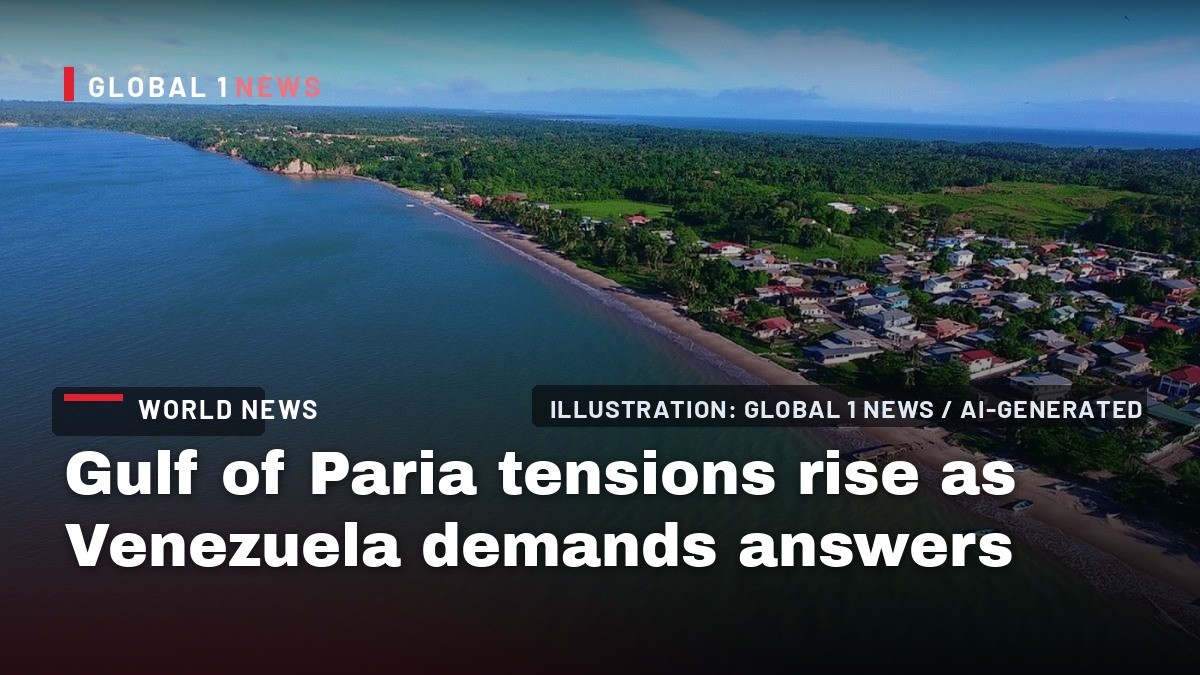
Port of Spain, Trinidad — The waters of the Gulf of Paria, long a shared highway for fishermen, energy workers and migrating marine life, have become the latest flashpoint in Trinidad and Tobago’s delicate dance with its South American neighbour. Venezuela has formally demanded information and compensation from Port of Spain over a May 1 oil spill that Caracas insists originated in Trinidadian waters, warning of “serious” damage to shared ecosystems. The Trinidad and Tobago Government, for its part, is pushing back firmly, describing the incident as a minor, quickly contained spill of roughly 10 barrels.
The diplomatic friction, which has simmered through the summer months, threatens to complicate an already intricate relationship defined by energy cooperation, maritime boundaries and the everyday realities of communities on both sides of the Gulf. For Trinidadians, the episode is more than a bureaucratic spat; it is a reminder of how deeply the fortunes of this twin-island republic are tied to the waters we share with Venezuela, and how quickly environmental incidents can spill over into the political arena.
A May morning in the Main Field
The sequence of events began early on May 1, 2026, when state-owned Heritage Petroleum Company Limited detected an oil spill at its offshore Main Field, known locally as Main Soldado, in the Gulf of Paria. The detection came at approximately 7:25 a.m., and the company moved swiftly, notifying Trinidad and Tobago’s Ministry of Energy and Energy Industries, the Coast Guard, and the Environmental Management Authority (EMA).
According to official accounts, the spill was estimated at roughly 10 barrels of oil — a relatively modest volume in the context of offshore operations. Heritage Petroleum and the relevant authorities say the release was contained the same day, with response teams deploying chemical dispersant approximately 6 to 8 nautical miles from the Trinidad/Venezuelan border after receiving the necessary approvals.
However, oil spill trajectory modelling conducted in the aftermath indicated that, had the hydrocarbon material been left untreated, it could have crossed the Trinidad/Venezuelan border in the Gulf of Paria. That projection, while hypothetical, has become central to Venezuela’s case against Trinidad and Tobago.
Caracas raises the stakes
Venezuela’s Foreign Minister, Yvan Gil, has formally called on the Government of Trinidad and Tobago to provide information and compensation related to the May 1 incident. In his communication, Gil warned of “serious” impact on Venezuelan waters, coastlines, ecosystems and fishing communities in the Gulf of Paria and Venezuela’s eastern coastal states. The language from Caracas has been pointed, framing the spill as a transboundary environmental violation with lasting consequences for communities that depend on the Gulf’s bounty.
Port of Spain, however, strongly disputes the Venezuelan characterisation. Officials describe the incident as minor and emphasise that it was contained within hours. The tone from the Ministry of Energy and Energy Industries has been one of measured defiance, insisting that the facts do not support Venezuela’s dramatic portrayal of the event.
This is not the first time the two nations have traded barbs over oil sheens in the Gulf of Paria. Throughout 2026, Venezuelan authorities have periodically denounced what they describe as oil slicks allegedly originating from Trinidadian waters, keeping environmental tensions alive even as both governments have sought to maintain a working relationship on energy matters. The May 1 spill, however, appears to have elevated the dispute to a formal diplomatic level.
Minister Moonilal’s response
Trinidad and Tobago’s Minister of Energy and Energy Industries, Dr. the Honourable Roodal Moonilal, has been the public face of the Government’s response. In addressing the Venezuelan concerns, Moonilal has been characteristically direct, noting that the spill was “not visible” and pointing to the extensive investigative measures undertaken by Trinidad and Tobago.
According to the Minister, Trinidad and Tobago deployed its Air Guard, Coast Guard and drones to investigate the matter thoroughly. He also noted that the Government had formally requested location coordinates from Venezuela to assist in any joint assessment. That request, which remains a point of contention, underscores the challenges of managing a shared maritime space where jurisdictions overlap and information does not always flow freely.
Moonilal has led the Trinidad and Tobago delegation in bilateral-hybrid meetings with Venezuelan counterparts, sessions designed to strengthen cooperation on spill concerns. These meetings, while constructive in tone, have not yet produced a public resolution to the compensation demand. The Minister’s position has been consistent: Trinidad and Tobago acted responsibly, contained the spill quickly, and remains open to dialogue, but will not accept a characterisation of events that does not match the evidence.
A shared Gulf, a shared history
The Gulf of Paria is more than a body of water; it is a lifeline. For generations, fishing communities on both the Trinidadian and Venezuelan coasts have cast their nets in its productive waters, relying on its fish stocks for both sustenance and income. It is also a significant oil and gas producing zone, with infrastructure that predates the modern era of environmental regulation.
The legal framework governing this shared space dates back to the 1990s, when Trinidad and Tobago and Venezuela signed a delimitation treaty establishing the terms for exploiting hydrocarbon deposits on both sides of the border strip in the Gulf of Paria. That treaty, a landmark of Caribbean diplomacy, was designed to prevent exactly the kind of disputes that are now emerging. It set out clear boundaries and mechanisms for cooperation, recognising that the Gulf’s resources — both hydrocarbon and biological — do not respect lines drawn on a map.
Yet treaties, however carefully crafted, cannot anticipate every contingency. The May 1 spill has exposed the limits of the existing framework, particularly when it comes to transboundary environmental incidents. While the delimitation treaty addresses resource extraction, the question of liability and compensation for cross-border pollution remains a grey area, one that both governments are now navigating in real time.
Regional and economic stakes
The diplomatic tension arrives at a delicate moment for Trinidad and Tobago’s energy sector. This country is widely seen as key to monetising Venezuelan natural gas, including through the bp Loran cross-border gas development, a project that could unlock significant reserves and provide a much-needed boost to Atlantic LNG operations in Point Fortin. The commercial logic of such projects is compelling, but the political and environmental sensitivities are equally real.
For Trinidadians, the cost of living remains a pressing concern, and energy revenues are central to the Government’s ability to fund social programmes and infrastructure. Any prolonged deterioration in relations with Venezuela could jeopardise not only future gas deals but also the day-to-day cooperation that keeps the energy sector running smoothly. The Gulf of Paria, in this sense, is not just an environmental asset; it is an economic engine, and its health is inseparable from the health of the national budget.
The episode also resonates across the wider Caribbean. Small island developing states (SIDS) like Trinidad and Tobago are acutely vulnerable to environmental incidents, and the region has long advocated for stronger frameworks to hold polluters accountable. The Trinidad-Venezuela dispute, while bilateral, carries lessons for the entire Caribbean Community (CARICOM) about the need for robust regional mechanisms to address transboundary environmental harm.
What happens next
As of late August 2026, the dispute remains unresolved. Venezuela has demanded information and compensation; Trinidad and Tobago has provided information and rejected the compensation claim. The bilateral-hybrid meetings have kept channels of communication open, but no breakthrough has been announced.
For the fishing communities of the Gulf of Paria, the uncertainty is palpable. They watch the diplomatic manoeuvring with a mixture of hope and apprehension, knowing that their livelihoods depend on the health of the waters and the goodwill of the governments that claim jurisdiction over them. On the Trinidadian side, there is a quiet confidence that the Government’s response was appropriate and proportionate. On the Venezuelan side, there is a persistent suspicion that the full story has not been told.
What is clear is that the Gulf of Paria will remain a test case for regional environmental governance. The May 1 spill, however minor it may have been in volume, has opened a chapter in Trinidad-Venezuela relations that will require careful management. The delimitation treaty of the 1990s provided a framework for sharing resources; the challenge now is to build a framework for sharing responsibility.
In the meantime, the waters of the Gulf continue to flow, carrying with them the hopes of fishermen, the ambitions of energy companies, and the unresolved questions of two nations bound by geography and history. For Trinidad and Tobago, the path forward lies in steady diplomacy, transparent communication, and a recognition that the Gulf we share with Venezuela is a treasure worth protecting — for our sake, and for theirs.
This article was produced with AI-assisted research and editorial support. Sources: Caribbean360, teleSUR, OilNOW, Ministry of Energy and Energy Industries (Trinidad and Tobago).
By Sharon Sahatoo, Staff WriterWhat's Your Reaction?
 Like
0
Like
0
 Dislike
0
Dislike
0
 Love
0
Love
0
 Funny
0
Funny
0
 Wow
0
Wow
0
 Sad
0
Sad
0
 Angry
0
Angry
0

Caribbean Correspondent at Global1.News. Based in Port of Spain, Trinidad, covering Caribbean politics, economy, energy, climate, and culture. Amplifying the voices and stories of the Caribbean region.










Comments (0)