
Khijadiya Sanctuary Confirmed as Key Black-Necked Stork Breeding Site
GEER Foundation study confirms Khijadiya Bird Sanctuary in Jamnagar as a key Black-necked Stork breeding stronghold — four active nests, eight fledglings and 100 per cent fledging success at the Ramsar wetland.
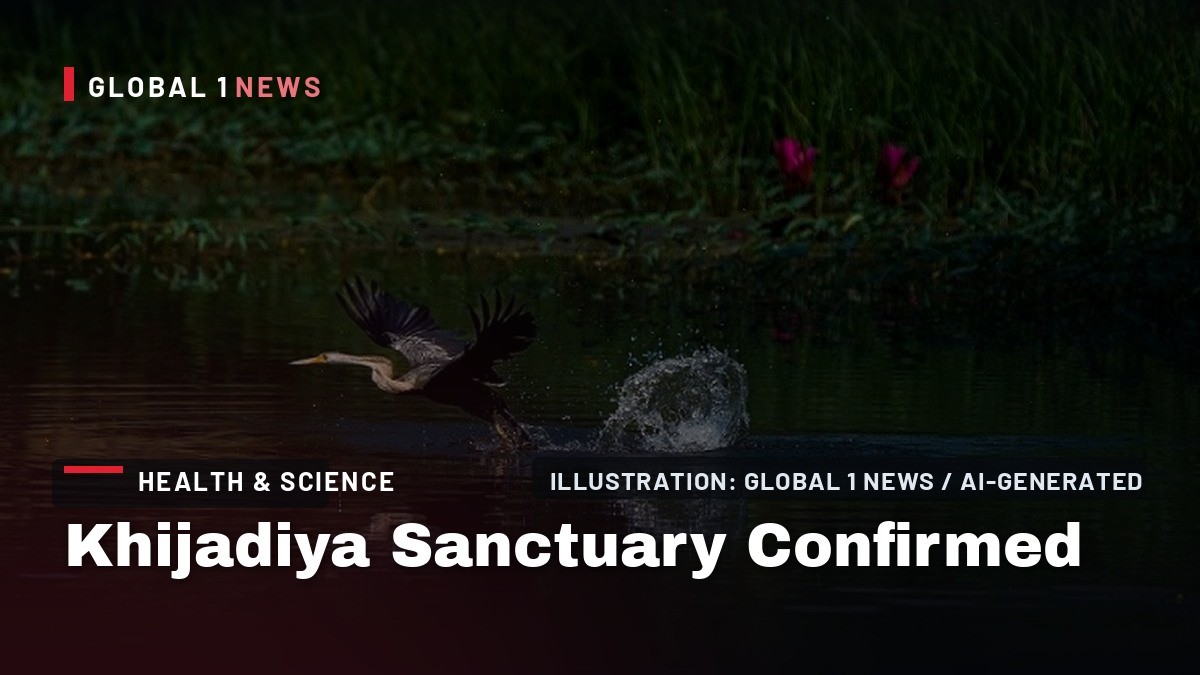
In a significant development for Indian wetland conservation, a new peer-reviewed study has confirmed that the Ramsar-designated Khijadiya Bird Sanctuary in Gujarat's Jamnagar district serves as a critical breeding stronghold for the Black-necked Stork (Ephippiorhynchus asiaticus), one of the subcontinent's largest and most threatened wetland birds. The research, conducted by the Gujarat Ecological Education and Research (GEER) Foundation and published in the Journal of Threatened Taxa, documented four active nests producing eight fledglings with a remarkable 100 per cent fledging success rate between July 2024 and March 2025.
Khijadiya Sanctuary Confirmed as Key Breeding Stronghold for Near-Threatened Black-necked Stork in Western India
Gandhinagar, Gujarat – August 26, 2026 — The shallow freshwater pools of Khijadiya Bird Sanctuary, a 605-hectare Ramsar site on the south coast of the Gulf of Kutch, have yielded data that conservation scientists have long sought. A study by the GEER Foundation, an autonomous body under the Gujarat Forest Department, confirms this wetland complex is not merely a wintering ground for migratory birds but a functioning nursery for one of India's rarest resident stork species. The findings, published in the peer-reviewed Journal of Threatened Taxa, provide the kind of detailed breeding-ecology data for the species that has long been missing in India, offering a management blueprint for wetlands across the country.
A Breeding Record Built on Rigorous Fieldwork
The study's conclusions rest on an unusually intensive monitoring regime. Between July 2024 and March 2025, researchers conducted extensive field surveys across the sanctuary using 48 georeferenced sampling points distributed across eight management zones. The methodology combined nest monitoring, behavioural observations and habitat assessments, generating more than 320 hours of observation data across 89 dedicated nest-monitoring visits.
"Researchers conducted extensive field surveys across the sanctuary using 48 georeferenced sampling points distributed across eight management zones," said B.P. Pati (IFS), Director of the GEER Foundation. "The study involved nest monitoring, behavioural observations and habitat assessments, generating more than 320 hours of observation data." For a species with scattered breeding populations, such sustained, structured observation remains uncommon in Indian ornithology.
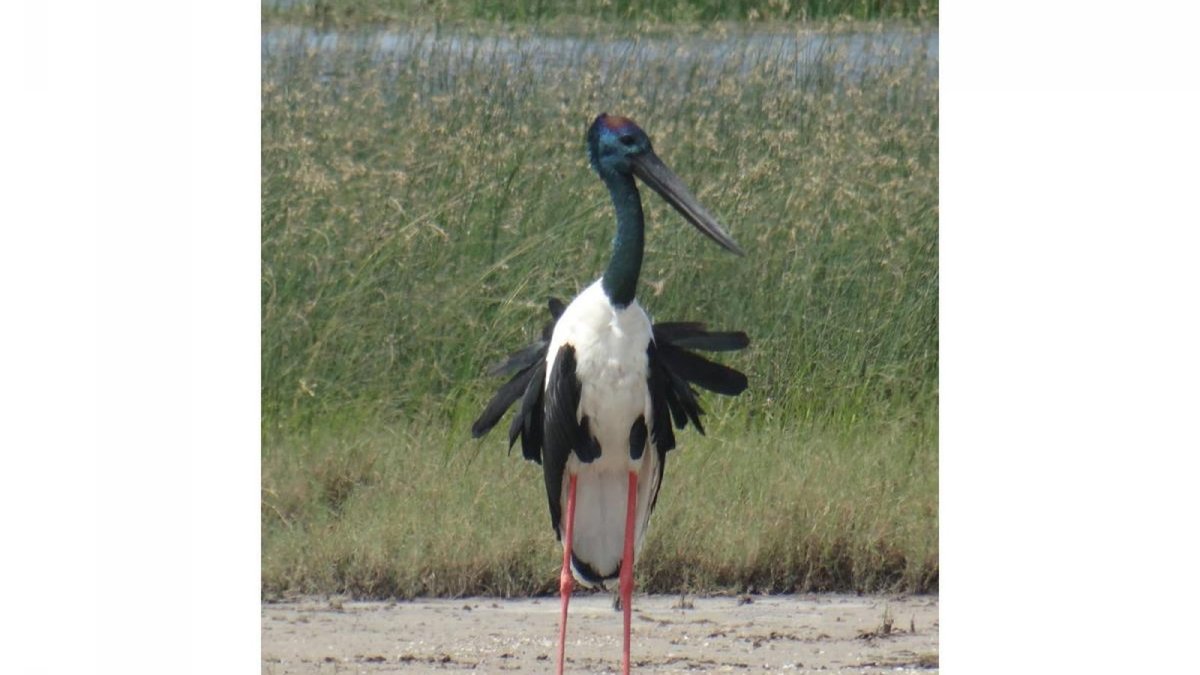
The results were unambiguous. "One of the most significant findings of the study was the confirmation of four active Black-necked Stork nests within the sanctuary. Each nest was occupied by a breeding pair and successfully produced two fledglings, resulting in a total of eight juveniles," Pati confirmed. "Along with five regularly observed non-breeding adults, the sanctuary supported a peak seasonal population of 21 birds during the study period."
The Invasive Tree Paradox: Gando Baval as Nesting Substrate
Perhaps the most counter-intuitive finding concerns the nesting substrate. All four nests were built on Neltuma juliflora, formerly known as Prosopis juliflora and commonly called gando baval — an invasive tree species that is generally considered an ecological menace across Gujarat's arid and semi-arid landscapes. The nests were positioned at heights between three and 4.5 metres.
While the Black-necked Stork is traditionally associated with large native trees such as acacias and figs for nesting, the findings indicate it can also use structurally suitable invasive trees where native nesting options are limited. This creates a genuine management dilemma. On one hand, invasive species removal is a cornerstone of wetland restoration under India's wetland conservation framework and the Amrit Dharohar initiative. On the other, this study demonstrates that gando baval is currently providing critical breeding infrastructure at Khijadiya.
For wetland managers, the lesson is not to embrace the invasive species but to recognise that its removal must be paired with a long-term programme of native tree plantation at appropriate wetland-woodland interfaces. A hasty eradication drive could inadvertently eliminate the only available nesting sites for this Near Threatened species.
A Habitat Recipe for Successful Breeding
The study's analysis of nesting site characteristics offers a clear, replicable checklist for conservation planning. All four nests were located near shallow wetlands with water depths of 0.3 to 0.7 metres, surrounded by a combination of open water, emergent vegetation and elevated ground. This specific hydrological profile is not incidental; it directly supports the stork's foraging ecology, which relies on fish, amphibians, crustaceans and aquatic invertebrates.
"The characteristics of the four nesting locations—particularly shallow water, emergent vegetation, elevated sites and low disturbance—offer important clues for habitat management," said Dr Jaipal Singh, Principal Chief Conservator of Forests (Wildlife). "Maintaining these conditions could be crucial to sustaining the species' breeding population at Khijadiya." The nests were situated in restricted-access areas at wetland-woodland interfaces and on elevated mounds, reducing exposure to flooding while keeping birds close to productive feeding areas.
Amitkumar Nayak, Deputy Director of the GEER Foundation and one of the researchers, noted that the nesting locations shared a common set of habitat features that supported both breeding and access to feeding grounds. This consistency across four separate nests suggests a species-level preference rather than opportunistic site selection, strengthening the case for using these parameters as formal management targets.
Coordinated Parental Care and Zero Mortality
The behavioural data from the study period reveals a species investing heavily in its offspring. During the 89 nest-monitoring visits, adult storks attended their nests for an average of 62 minutes per visit. In 94 per cent of recorded foraging departures, one parent replaced the other at the nest — a level of coordinated biparental care rarely documented in such detail in India.
The breeding timeline followed a predictable seasonal rhythm: behavioural changes were recorded during August and September, nest construction began in early October, eggs hatched between late October and early November, and intensive chick-rearing continued through December. By the end of the year, all four nests had produced fledglings. Critically, the study recorded no nest abandonment, predation or chick mortality during the entire monitoring period.
Post-fledging observations showed juveniles seeking food from parents, with begging and food-sharing interactions indicating continued parental care as the young developed independent foraging abilities. This extended parental investment is a known trait of large stork species but has rarely been documented with such precision in India. The 100 per cent fledging success compares favourably with observations from other parts of India, where nesting outcomes have often been more variable.
Policy Implications for India's Expanding Ramsar Network
Khijadiya Bird Sanctuary, located approximately 10 km northeast of Jamnagar, represents a unique ecological confluence. Its 605 hectares combine seasonal freshwater shallow lakes, intertidal mudflats, creeks, salt pans, saline land and mangrove scrub across three freshwater lakes. Designated a Ramsar site in 2021, it lies along the Central Asian Flyway, making it critical for both resident and migratory waterbirds, with around 300 species recorded.
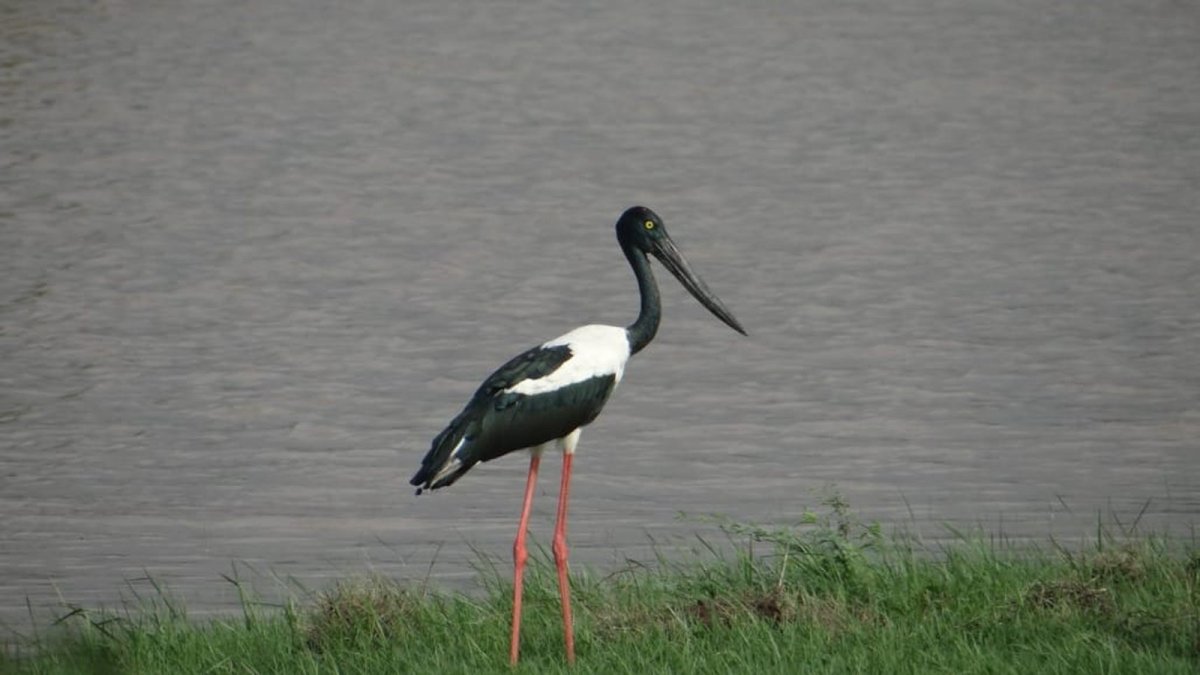
The sanctuary's confirmation as a breeding stronghold for the Black-necked Stork adds a new dimension to its conservation value. The species is listed under Schedule II of the Wild Life (Protection) Act, 1972, as amended in 2022, and is classified as Near Threatened on the IUCN Red List with a decreasing population trend. A tall, long-necked wading bird standing well over a metre tall, it is a resident species across the Indian subcontinent and Southeast Asia, with a disjunct population in Australia.
The findings arrive at a moment when India is rapidly expanding its Ramsar network — now among the largest in Asia — and implementing the Amrit Dharohar scheme to enhance wetland conservation and wise use. "Under the leadership of Chief Minister Bhupendra Patel, we have taken several steps to protect our precious natural heritage, including the Ramsar-designated Khijadiya Bird Sanctuary," said Pravin Mali, Minister of State for Forests and Environment. Arjun Modhwadia, Forests and Environment Minister of Gujarat, congratulated the GEER Foundation research team, stating that the study had shed light on the behaviour and breeding ecology of the wetland bird and would help in developing more focused conservation measures.
Evidence-Based Conservation for India's Wetlands
The deeper significance lies in what structured, long-term monitoring can achieve. The 320-plus hours of observation and 89 nest-monitoring visits produced a dataset that can inform management decisions not just at Khijadiya but across India's wetland network. For too long, Indian conservation policy has operated on anecdotal evidence and single-season surveys; this study sets a new benchmark for ornithological rigour.
"Black-necked Storks require more than water to survive and reproduce," Dr Jaipal Singh noted. "Their successful breeding depends on the availability of suitable feeding areas, aquatic prey, nesting trees, shallow water, vegetation and relatively undisturbed sites." This holistic understanding — that a wetland's conservation value is a function of its structural complexity, not just its water surface area — is a message that resonates far beyond Khijadiya.
For wetland managers across Gujarat and the rest of India, the study offers a practical checklist: maintain shallow water zones of 0.3 to 0.7 metres, preserve emergent vegetation, protect elevated nesting sites, and minimise human disturbance during the breeding season from August to December. For policymakers, it underscores the importance of investing in baseline ecological research before making land-use or restoration decisions. And for citizens, it is a reminder that the health of India's wetlands is measurable, monitorable and worth protecting.
The Black-necked Stork's successful breeding season at Khijadiya is not an accident. It is the product of a specific set of ecological conditions that can be replicated and maintained. The science now exists to guide that effort; what remains is the sustained political and administrative will to act on it.
This article was produced with AI-assisted research and editorial support. Sources: IANS, Journal of Threatened Taxa, Gujarat Ecological Education and Research (GEER) Foundation release.
— By Dr. Raj Patel, Staff Writer
What's Your Reaction?
 Like
0
Like
0
 Dislike
0
Dislike
0
 Love
0
Love
0
 Funny
0
Funny
0
 Wow
0
Wow
0
 Sad
0
Sad
0
 Angry
0
Angry
0

India/South Asia Correspondent at Global1.News. Analytical voice with a background in science and health journalism. Based in New Delhi, covering Indian politics, education, healthcare, technology, and policy. Breaks down complex data into clear, actionable reporting.













Comments (0)