
Greek F-4 Phantom crash kills 2 pilots at Athens air show
Thousands of spectators at the Athens Flying Week air show watched in shock on Saturday as a Hellenic Air Force F-4 Phantom II fighter jet pitched nose-low during its display and slammed into an industrial zone just outside the runway perimeter at Tanagra Air Force Base. Both pilots were killed....
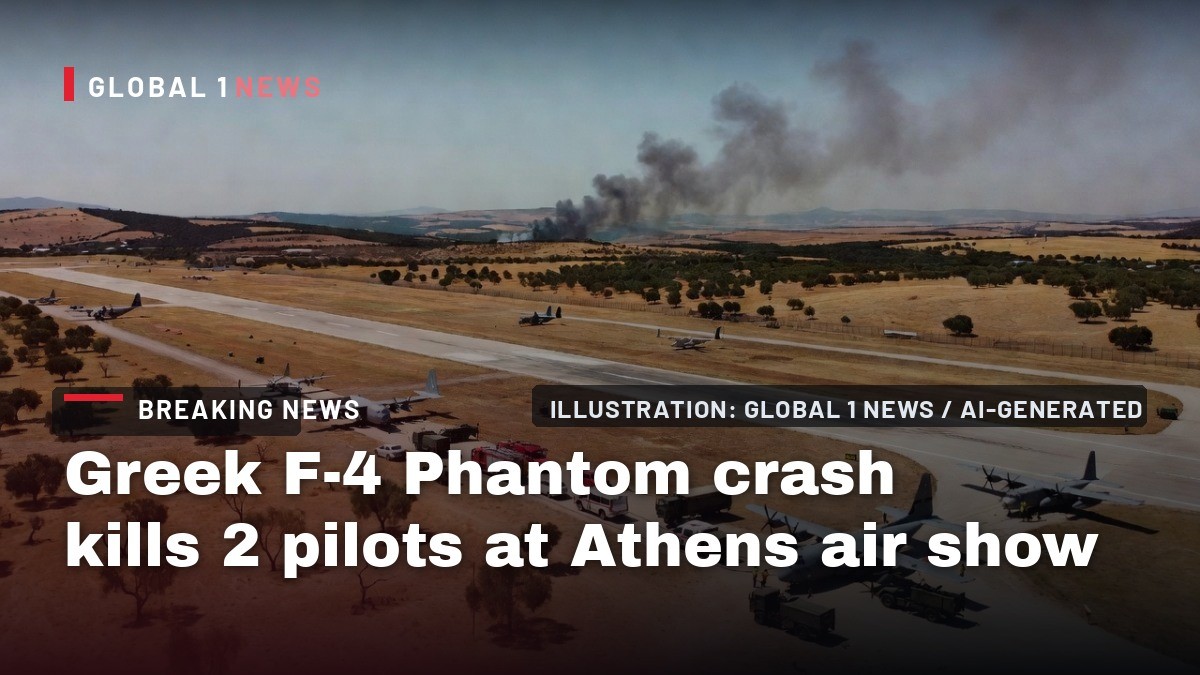
Thousands of spectators at the Athens Flying Week air show watched in shock on Saturday as a Hellenic Air Force F-4 Phantom II fighter jet pitched nose-low during its display and slammed into an industrial zone just outside the runway perimeter at Tanagra Air Force Base. Both pilots were killed. No one in the crowd was hurt, but the image of the twin-engine warhorse, a machine that has defended Greek skies for more than half a century, disintegrating in a fireball will not fade quickly.
Greek F-4 Phantom crash kills 2 pilots at Athens air show
Tanagra, Greece - A Hellenic Air Force F-4E Phantom fighter jet crashed during a solo display at the Athens Flying Week air show on Saturday, September 5, 2026, killing both crew members and sending a large plume of black smoke into the sky before several thousand spectators.
The crash occurred at approximately 2:55 p.m. local time, within the first minutes of the aircraft's scheduled performance. Video shared on social media shows the fighter emerging from a turn in a nose-low attitude, striking the ground and erupting in flames. A larger second explosion followed as the aircraft broke apart, scattering debris across an industrial zone near the base, roughly 60 kilometers (40 miles) north of Athens.
What Happened
The F-4E Phantom II, a twin-seat Cold War-era fighter, was participating in the Athens Flying Week 2026 show at Tanagra Air Force Base, a major Hellenic Air Force installation. The event, scheduled for September 5-6, featured military aircraft, aerobatic teams and displays from Greece and several other nations. The Phantom went down while performing a low-altitude maneuver, according to the air force and eyewitness accounts.
The Hellenic Air Force General Staff said the jet crashed approximately 3 nautical miles southeast of Tanagra Air Base, outside the runway in an industrial zone near factories. Those factories were closed at the time of the crash. Greek media reported that two workers near the crash site were taken to a hospital in Chalkida with minor injuries from debris. No spectators were injured.
Video footage captured the immediate aftermath: a rolling column of smoke and flame rising from the impact point, followed by a secondary explosion as the aircraft broke apart. The fire spread into nearby brush, prompting a large-scale response. Approximately 85 firefighters and 11 water-dropping planes and helicopters worked to contain the blaze, according to the Associated Press. An evacuation alert went out to residents near the base as a precaution.
The Crew
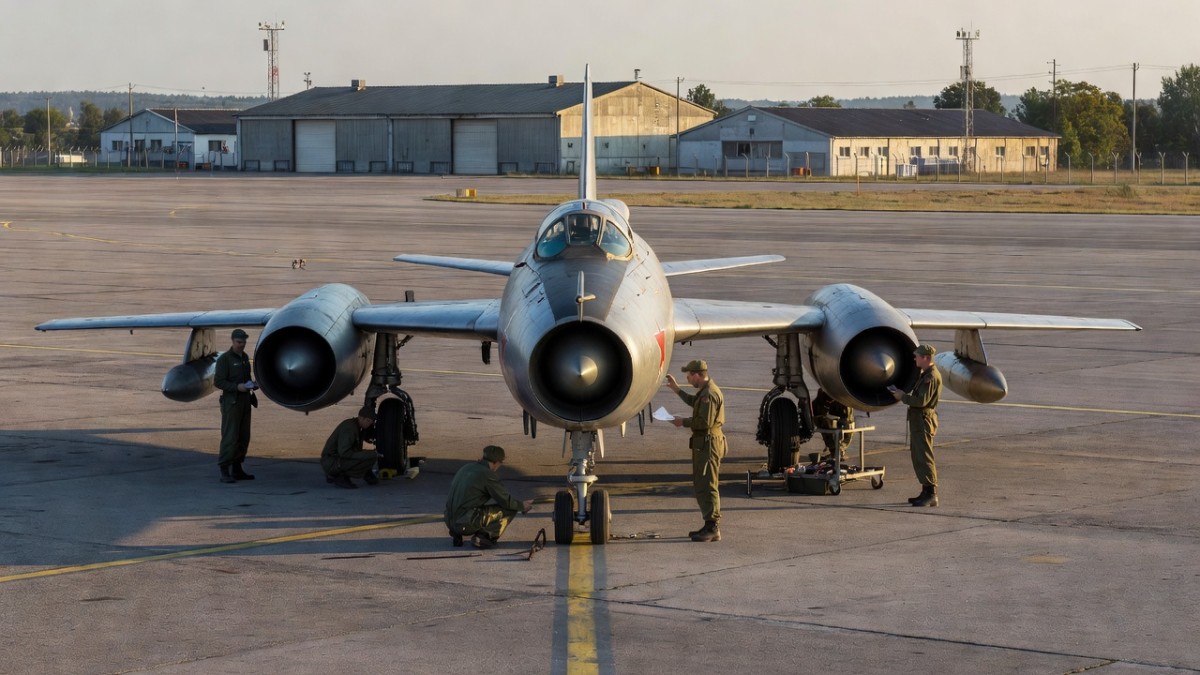
Both pilots were killed in the crash. Their bodies were located during a rescue operation that was hampered in its early stages by the intensity of the fire. Video of the incident shows no ejections and no parachutes deploying, indicating the crew had no opportunity to escape the stricken aircraft.
The Hellenic Air Force identified the crew only by rank and initials: a squadron leader and a flight lieutenant, both rated pilots. Names were not immediately released, pending notification of next of kin. The aircraft belonged to 338 Squadron (338 MDV "Ares") of the 117 Combat Wing, normally based at Andravida in the western Peloponnese. It had deployed to Tanagra specifically for the air show.
The loss of two aviators in a peacetime display is a bitter blow to a service that has been flying the Phantom for more than five decades. The squadron, nicknamed "Ares" after the Greek god of war, operates one of the last Phantom fleets in the world.
The Response
The Greek government moved quickly to respond to the tragedy. Prime Minister Kyriakos Mitsotakis issued a statement expressing national grief and honoring the fallen airmen.
"The sense of grief is widespread, and our thoughts are with the families of the two pilots we lost," Mitsotakis said. "It is a reminder of the daily danger faced by Greece's aviators, who remain on constant standby to protect Greece's skies."
Defense Minister Nikos Dendias cut short his program at the 90th Thessaloniki International Fair and returned to Athens upon learning of the crash. He declared three days of mourning for the armed forces.
Cyprus' Defense Minister Vasilis Palmas said he called his Greek counterpart to express his government's condolences, underscoring the close military and diplomatic ties between Athens and Nicosia. Organizers canceled the remaining events of the weekend show, and the skies over Tanagra fell silent for the rest of Saturday and Sunday.
'A Reminder of Daily Danger'
The prime minister's words carried particular weight given the context. Greece's armed forces operate under a constant state of readiness, with pilots scrambling regularly to police the heavily militarized Aegean airspace. The Phantom crews of 338 Squadron are among those on the front lines of that mission, flying aircraft first delivered to Greece in the 1970s.
The crash is the second fatal aviation accident near Athens this summer. In August 2026, two firefighting helicopters collided over a wildfire west of the capital. Saturday's crash, like that incident, raised questions about the risks faced by military aviators even outside combat.
Why Greece Still Flies a 1960s Fighter
The F-4 Phantom II, built by McDonnell Douglas, first flew in 1958 and became one of the defining fighters of the Cold War. It served in air forces around the world for decades. Greece received its first Phantoms in April 1974 under the "Peace Icarus" program and marked 50 years of service in 2024, a rare milestone for any air force operating a single type for half a century.
About 18 aircraft remain airworthy in Greek service, all with the 117 Combat Wing at Andravida. These jets were rebuilt in the late 1990s and early 2000s under a German-led effort, the Peace Icarus 2000 Avionics Upgrade Program, which added a modern radar, new cockpit displays and a new mission computer. The upgrades extended the life of the airframe but did not change its fundamental design, a 1960s-era machine pushed into the 21st century.
Greece is one of only two military Phantom operators left in the world, alongside Turkey. The two Aegean rivals both continue to fly the type. Greece plans to retire the Phantom as it continues to field Rafale fighters, receive upgraded F-16Vs and move toward the F-35, which will eventually take over the Phantom's ground-attack and air-defense roles.
The Investigation
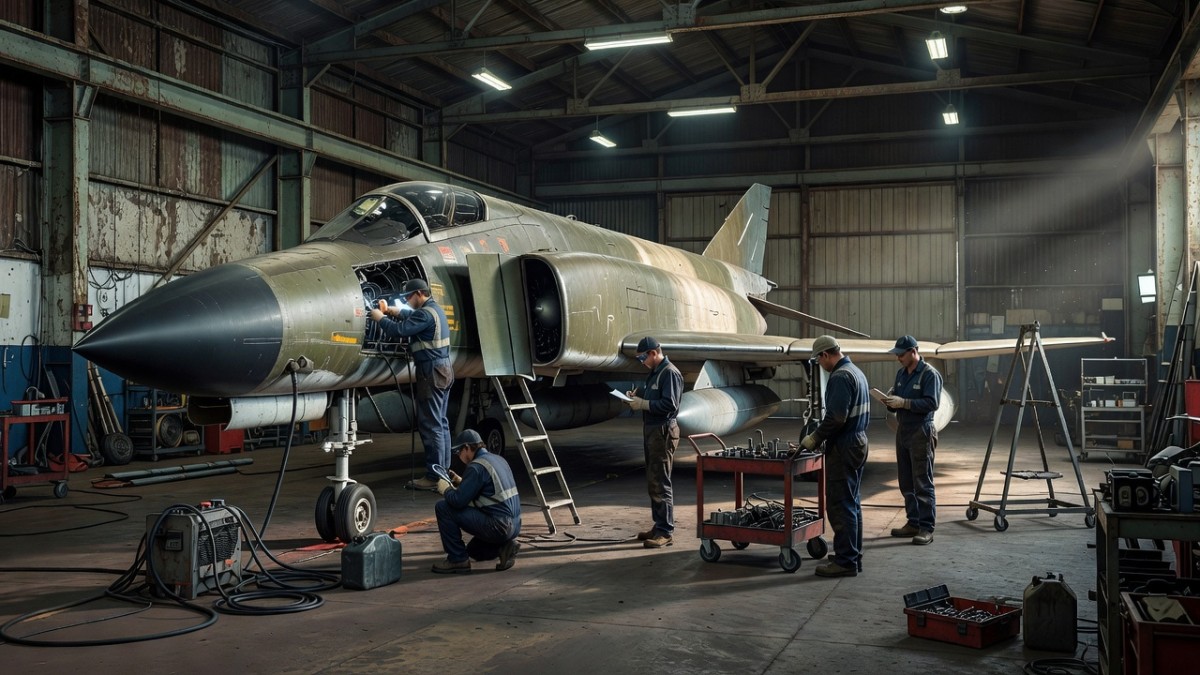
The cause of Saturday's crash has not been established. A Hellenic Air Force board of inquiry is examining the wreckage, flight data, maintenance records and radio traffic, and a preliminary account is expected in the coming weeks. Investigators face a difficult task: the aircraft was destroyed on impact, and the fire that followed may have consumed critical evidence.
Investigators will likely examine the aircraft's maintenance history, the pilots' experience and the precise maneuver being flown at the time of the crash. The board is also expected to look at whether any mechanical failure, hydraulic, electrical or structural, contributed to the loss of control, and at the air show's safety protocols, including the minimum altitude and speed parameters for the display. The Hellenic Air Force has not said whether it suspects a technical failure, a bird strike or a flight-path error.
The Phantom's age is an unavoidable factor in the inquiry. Aircraft that have been in service for more than 50 years require constant attention, and the type was already slated for retirement as Greece's newer fighters arrive. Saturday's loss takes one more flyable example out of a shrinking fleet.
The Narrow Margins of Display Flying
Air show accidents tend to happen low and slow, where there is little room to recover. The F-4 Phantom is a heavy, powerful aircraft, and at low altitude a pilot has only seconds to correct a mistake or respond to an emergency.
Ejection seats need enough height and a survivable attitude to function. A fighter pointed at the ground at low altitude can be below that envelope, leaving the crew with no option but to ride the aircraft down. Video of Saturday's crash shows no ejection attempt, suggesting the pilots were unable to escape before impact.
Display flying is inherently risky. The pilots who perform at air shows are among the most skilled in their air forces, but they operate near the edge of the flight envelope, often just hundreds of feet above the ground, where the margin for error is measured in seconds and feet. Saturday's crash is a grim reminder of that reality.
For the spectators at Tanagra, the show was meant to be a celebration of military aviation, a chance to see the machines, and the men and women who fly them, up close. Instead, they witnessed the ultimate cost of that profession. The organizers' decision to cancel the remainder of the weekend's events met with broad understanding after such a loss.
What Comes Next
The immediate priority for the Hellenic Air Force is supporting the families of the two deceased pilots and conducting a thorough investigation. Three days of mourning declared by Defense Minister Dendias will be observed across the armed forces.
Whether the rest of Greece's Phantom fleet will be temporarily grounded pending the inquiry, and whether Saturday's crash accelerates the type's retirement, are decisions now facing Greek air force commanders. The Hellenic Air Force has not yet announced either step.
Greece's defense modernization plans are already in motion, with Rafale fighters being fielded, the F-16V upgrade program ongoing and the F-35 acquisition moving forward. But those programs take time, and the Phantom remains a significant part of Greece's air defense posture in the interim. The loss of two pilots and one airframe is a painful operational setback, even as the type nears the end of its service life.
For the broader public, Saturday's crash is a sobering reminder of the risks that military aviators take every day, not just in combat but in training and in public demonstrations. The pilots who flew that Phantom were highly trained professionals who knew those risks. Their deaths are a loss to their families, their squadron and their country.
The investigation will take weeks, and the full story of what happened over Tanagra may never be completely known. But the images of that fireball, captured on countless phones and broadcast around the world, will linger. So too will the memory of two pilots who went down with their aircraft, unable to escape, doing their duty to the last.
By Jessica Ali, Staff Writer
This article was produced with AI-assisted research and editorial support. Sources: AP News, The Aviationist, GreekReporter, Gulf News (AP).
What's Your Reaction?
 Like
0
Like
0
 Dislike
0
Dislike
0
 Love
0
Love
0
 Funny
0
Funny
0
 Wow
0
Wow
0
 Sad
0
Sad
0
 Angry
0
Angry
0

Editor-in-Chief at Global1.News. Atlanta-based journalist who cuts through the BS and tells it like it is. Lead anchor, host, and the voice you hear when the spin stops and the truth starts.










Comments (0)