
FSSAI Bans Old Monk and Iconic Liquor Brands Over Artificial Flavouring
Folks, India's food safety regulator just drew a hard line on some of the country's biggest rum and whisky names, and the message is clear: you cannot slap a label on a bottle and call it the real thing when the flavour came from a shortcut instead of years in a barrel.
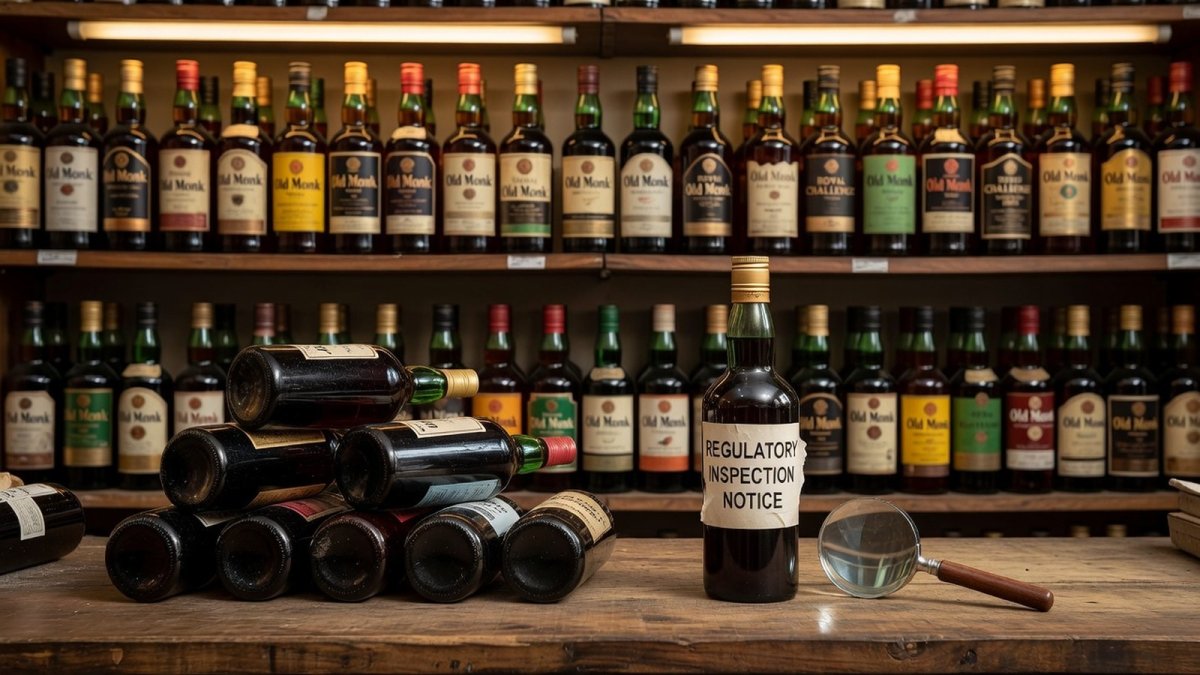
What Just Happened
The Food Safety and Standards Authority of India issued its August 2 statement and followed with a targeted August 3 directive ordering a halt on sales of specific rum and whisky variants. The action stops distribution and retail of the named products after tests showed artificial flavourings had been added instead of relying on natural maturation. In practice this means the affected batches must be pulled from shelves, wholesalers and bars until the companies address the violations.
The enforcement carries real weight because it targets everyday brands that millions of Indian drinkers reach for. India ranks among the largest spirits markets globally, so even a focused order on ten products from three manufacturers sends a signal that regulators are watching composition claims closely. FSSAI made clear the move is limited to identified batches from specific facilities rather than a blanket industry problem.
Reported by India Today and The Economic Times, the timeline shows the regulator moved quickly once the findings were confirmed. The halt is not a recall of every bottle on the market, but it does require immediate compliance from the named producers. That distinction matters for retailers who must now check stock against the listed variants and production sites.
The Brands and Manufacturers Affected
Old Monk The Legend, Gold Reserve and XXX Matured Rum from Mohan Rocky Springwater’s Khopoli unit sit at the centre of the order. McDowell’s No. 1 Rum produced at United Spirits’ Baramati facility also appears. Antiquity Blue Whisky and Royal Challenge Whisky, both made by United Spirits, a Diageo India subsidiary, join the list along with Bagpiper Deluxe Whisky and Old Cask Deluxe XXX Rum from Inbrew Beverages in Madhya Pradesh.
These three companies—Diageo India’s United Spirits, Inbrew Beverages and Mohan Rocky Springwater within the Mohan Meakin group—received the enforcement notice. The location-specific nature of the action is important. It ties the violations to particular plants and batches rather than declaring every product under those brand names non-compliant. That approach lets compliant production continue while the flagged facilities correct their processes.
Corporate structure adds another layer. United Spirits operates as Diageo’s Indian arm with multiple distilleries, so the Baramati finding does not automatically extend to every United Spirits site. Mohan Rocky Springwater’s Khopoli operation is distinct from the main Mohan Meakin facility in Ghaziabad. Inbrew’s Madhya Pradesh plant stands alone in the order. Regulators chose precision over broad-brush enforcement, which keeps the focus on the exact products that failed the natural-flavour test.
The Regulatory Standard at Issue
Under the Food Safety and Standards (Alcoholic Beverages) Regulations, 2018, rum and whisky must develop their taste and aroma through fermentation, distillation and maturation in barrels. Those processes create congeners and esters that give each spirit its character. Adding “rum flavour” to rum or “whisky flavour” to whisky bypasses that requirement and treats the sensory profile as something that can be manufactured separately from the ageing step.
Companies sometimes turn to these additives because barrel maturation is slow and expensive. Proper ageing ties up capital for years and requires storage space. Flavour compounds let producers reach market faster and at lower cost while still claiming the spirit category on the label. The regulator views this as inconsistent with the legal definition of rum and whisky, which expects the flavour to come from the base ingredients and the maturation process itself.
FSSAI’s position fits its broader mandate under the Food Safety and Standards Act, 2006. The same agency has previously acted on misleading claims in honey and other categories where added substances altered the expected composition. The current order simply applies that standard to alcoholic beverages, where consumers pay for the time and craft described on the bottle.
Old Monk's Legacy and the Current Finding
Old Monk launched in 1954 as a vatted Indian dark rum blended and aged for seven years, with a 12-year expression also available. Produced by Mohan Meakin at its Mohan Nagar Ghaziabad site, the brand reaches 42.8 % ABV and ranks as the world’s third-largest selling rum. It built a loyal following among Indian students abroad, backpackers and the diaspora who treat it as a reliable, affordable dark rum with genuine ageing behind it.
The finding that flavour was added to certain Old Monk variants produced at the Khopoli unit undercuts that legacy. A brand whose reputation rests on seven years of barrel time now faces the charge that some of its taste came from an additive rather than the maturation process. Mohan Rocky Springwater, the Khopoli operator within the Mohan Meakin group, is the specific manufacturer named in the order.
That contrast is sharp. Drinkers who chose Old Monk precisely because it promised real ageing now have to separate the flagship reputation from the particular batches that triggered the enforcement. The regulator’s action does not touch the Ghaziabad production, but the Khopoli variants carry the same brand name that millions associate with traditional methods.
Industry Context and FSSAI's Clarification
India’s mass-market spirits economy makes any regulatory move on rum and whisky commercially significant. FSSAI stated that its enforcement remains confined to the listed manufacturers and does not reflect industry-wide practice. The regulator has conducted similar reviews of product standards and labelling across food and beverage categories in recent years, including the honey sector.
Media outlets including WION, ABP Live, NDTV Profit, CNBC TV18, The Week and Hindustan Times covered the August 2–3 developments and confirmed the scope. Their reporting underscores that the action targets specific facilities rather than entire brand portfolios. This manufacturer-specific framing helps prevent panic across the wider industry while still holding the named producers accountable.
The clarification also signals that FSSAI intends to keep verifying sensory claims against permitted production methods. With India’s large spirits market continuing to grow, the regulator’s focus on composition and labelling is likely to stay active under the 2006 Act. Companies that rely on natural maturation now have a clearer benchmark for compliance.
Consumer Implications
Shoppers who expect rum and whisky to reflect the time and processes described on the label now have clearer information about which specific products triggered regulatory action. The distinction between manufacturer-specific findings and broader industry standards matters when deciding whether to switch brands or simply avoid the named variants. Inventory effects will hit retailers and bars that stocked the affected batches, forcing them to rotate stock and check incoming deliveries against the FSSAI list.
Drinkers may choose to move to other expressions or competing brands while the flagged products remain off shelves. Some producers could respond with reformulations that meet the natural-flavour requirement, though any changes would need to satisfy the same regulatory test. The episode also raises the possibility that other regulators in markets where these brands are exported could take notice of the Indian findings.
The enforcement reaches export markets and diaspora communities where Old Monk maintains cult status among Indian students abroad and in bars across the US, UK and Canada. The global Old Monk community values the brand for its association with genuine barrel ageing rather than shortcuts. International drinkers should care because the findings underscore how production claims travel with products across borders, affecting consumer trust wherever the spirit is poured and reinforcing the need for consistent standards that match label descriptions regardless of where the bottle is purchased.
Market and Regulatory Outlook
The episode underscores FSSAI’s ongoing focus on verifying that sensory claims in alcoholic beverages arise from permitted production methods. Continued scrutiny of labelling and composition is expected to remain part of the regulator’s work under the 2006 Act, especially in a market where volume and price competition create pressure to cut corners on ageing. Retailers and distributors will need tighter batch-tracking systems to stay ahead of future enforcement actions.
Real compliance would require companies to prove natural maturation through documented barrel ageing records rather than relying on additives. This may involve re-labelling to accurately reflect production methods, implementing batch traceability from facility to final sale, and preparing for FSSAI audits that examine production logs, sensory verification data, and confirmation that flavour derives solely from permitted processes under the 2018 regulations.
What You Can Do
Check current stock against the listed variants and production locations before you buy. Follow updates from FSSAI and major Indian news outlets for any further clarifications on the affected products. Report concerns about labelling or product quality directly to state food safety authorities so the regulator has the information needed to keep enforcement targeted and effective.
Share this story with other consumers and on social media to raise awareness. Ask retailers which specific batches they are stocking to avoid non-compliant products. Holding brands accountable through public questions on social platforms encourages greater transparency and adherence to the required standards.
By Jessica Ali, Staff Writer
This article was produced with AI-assisted research and editorial support. Reporting is based on sources cited in the article.
What's Your Reaction?
 Like
0
Like
0
 Dislike
0
Dislike
0
 Love
0
Love
0
 Funny
0
Funny
0
 Wow
0
Wow
0
 Sad
0
Sad
0
 Angry
0
Angry
0

Editor-in-Chief at Global1.News. Atlanta-based journalist who cuts through the BS and tells it like it is. Lead anchor, host, and the voice you hear when the spin stops and the truth starts.















Comments (0)