
Free and Open Indo-Pacific at Ten: Japan's Updated Vision, ASEAN Alignment, and the Region's Response
Ten years after former Japanese Prime Minister Shinzo Abe first articulated the vision of a Free and Open Indo-Pacific (FOIP) in Nairobi, the concept has not only outlived its creator but has become the institutional scaffolding for deeper regional cooperation.
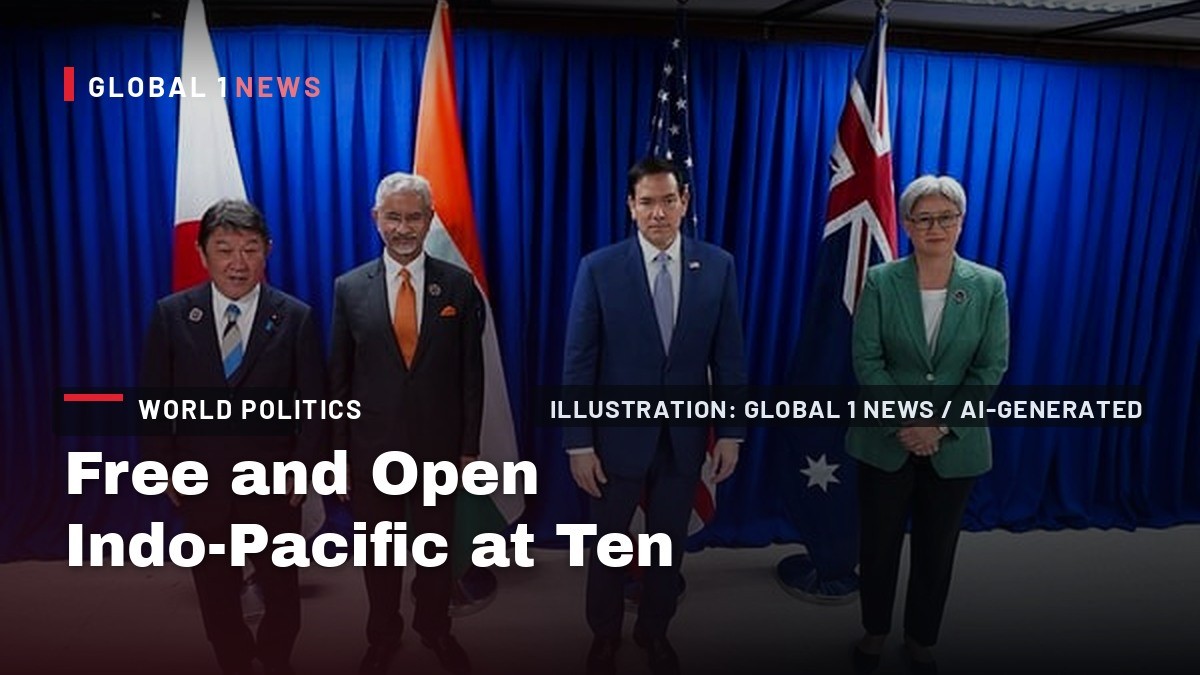
Ten years after former Japanese Prime Minister Shinzo Abe first articulated the vision of a Free and Open Indo-Pacific (FOIP) in Nairobi, the concept has not only outlived its creator but has become the institutional scaffolding for deeper regional cooperation. The clearest signal of this evolution came in July 2026, when the foreign ministers of the Quad countries — Japan, the United States, Australia, and India — meeting on the sidelines of the ASEAN Foreign Ministers' Meeting in Manila, issued a joint press release on Quad cooperation with ASEAN. The statement reaffirmed support for ASEAN centrality and unity, endorsed the ASEAN Outlook on the Indo-Pacific (AOIP), and explicitly positioned FOIP as a core pillar for deepening engagement with the ten-member bloc.
The timing was deliberate. It has been a decade since Abe proposed FOIP at the Sixth Tokyo International Conference on African Development (TICAD VI) in 2016, and the intervening years have transformed the concept from a Japanese diplomatic initiative into a shared regional framework. Yet Beijing remains unpersuaded. A spokesperson for China's Ministry of Foreign Affairs dismissed the updated FOIP as a "sugarcoated scheme that sows division and rivalry," asserting it "will never win genuine recognition from regional countries." The gap between that characterization and the diplomatic record of the past decade frames the central question of FOIP's second decade: can a vision born of Japanese strategic foresight sustain itself as a genuinely inclusive framework for regional order?
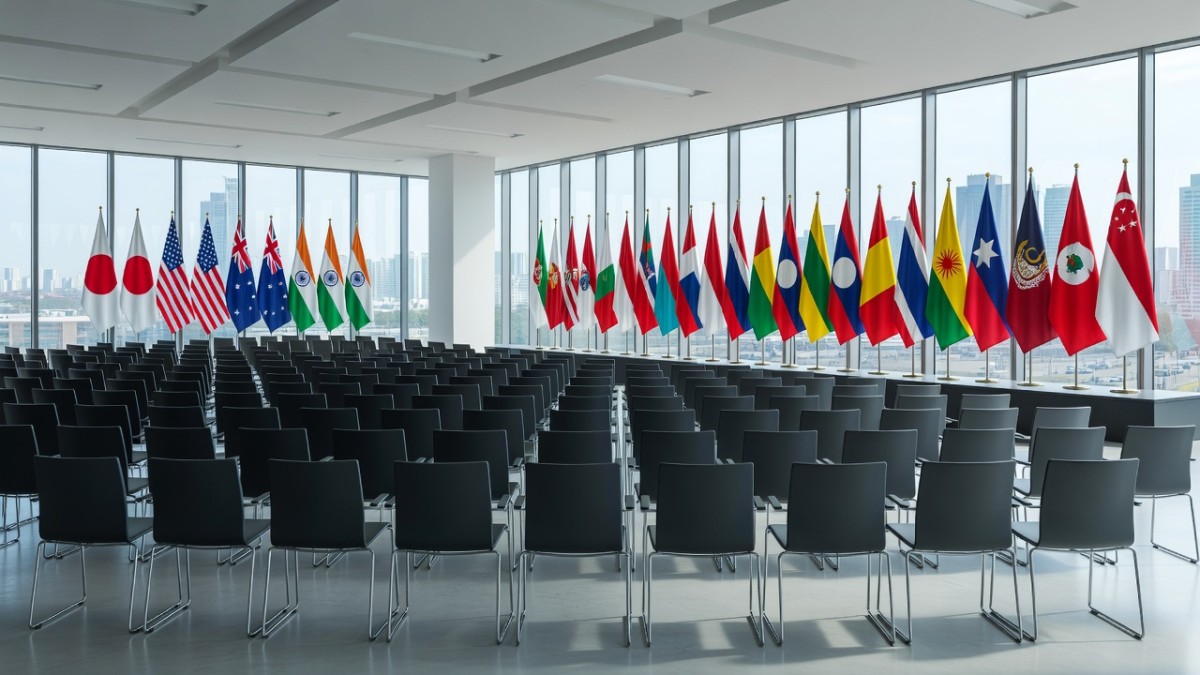
From Connectivity to Resilience: The Evolution of FOIP
The intellectual arc of FOIP is best understood through its three iterations. FOIP 1.0, articulated by Abe in 2016, was built on the keyword "connectivity." It envisioned an Indo-Pacific region linked by free trade, infrastructure investment, and the rule of law, implicitly countering China's growing assertiveness while offering a positive vision of regional order. The concept drew on Japan's historical identity as a maritime nation and its post-war commitment to international law and economic openness.
FOIP 2.0 arrived in March 2023 under Prime Minister Fumio Kishida, who unveiled the "New Plan for a Free and Open Indo-Pacific." Its keyword was "inclusiveness," reflecting a recognition that the vision needed to appeal beyond its original maritime-democracy core. Kishida's iteration placed greater emphasis on cooperation with the Global South, including ASEAN, and sought to position FOIP as a framework for addressing shared challenges rather than a containment strategy.
FOIP 3.0, announced by Prime Minister Sanae Takaichi in a speech at Vietnam National University in Hanoi on May 2, 2026, adopts "resilience" as its organizing principle. Takaichi, who assumed office in late 2025, identified three structural changes reshaping the international order: intensifying geopolitical competition, accelerated technological innovation, and the rise of the Global South. Her updated vision responds to each through three priority areas: building economic infrastructure for the AI and data era, co-creating economic growth opportunities and sharing rules, and enhancing security cooperation to ensure regional peace and stability.
The Quad-ASEAN Nexus: Institutionalizing Cooperation
The July 2026 Manila meeting represents a significant step in FOIP's institutionalization. The Quad foreign ministers' joint press release on cooperation with ASEAN goes beyond earlier statements by outlining concrete intentions to deepen engagement with the bloc, with FOIP as the connective tissue. This alignment between the Quad and ASEAN is not accidental; it reflects a decade of patient diplomatic groundwork by Japan, which has consistently emphasized ASEAN centrality as a foundational principle of its Indo-Pacific approach.
Southeast Asia occupies a strategically vital position connecting the Pacific and Indian Oceans, and it faces acute pressure from attempts to change the status quo by force or coercion. Japan's emphasis on ASEAN is therefore both strategic and principled. At the Japan-ASEAN Summit in Kuala Lumpur in October 2025, Takaichi committed Japan to safeguarding Indo-Pacific peace, stability, and prosperity together with ASEAN by evolving FOIP and deepening its synergy with the AOIP. The subsequent Joint Statement on the Further Promotion and Implementation of the AOIP affirmed that implementing the AOIP contributes to a rules-based international order and welcomed Japan's efforts to promote cooperation rather than division and confrontation.
The ASEAN-Japan relationship has also deepened in practical terms. Japanese Foreign Minister Motegi Toshimitsu, visiting Manila in July 2026, described ASEAN as "at the core" of Japan's FOIP vision, pledging closer cooperation in maritime security, economic security, energy resilience, AI, and disaster response. He also stated Japan's strong opposition to "any unilateral attempts to change the status quo by force or coercion" in the East and South China Seas, and called for any future South China Sea Code of Conduct to conform to the UN Convention on the Law of the Sea (UNCLOS).
Concrete Commitments: From Rhetoric to Capability
FOIP 3.0 is distinguished by its emphasis on tangible cooperation rather than declaratory policy. The shift is measurable: Kishida's 2023 FOIP speech contained nine mentions of the "rule of law," while Takaichi's May 2026 update contained just two. This is not an abandonment of principle but a recalibration toward practical engagement, particularly with the Global South.
The most significant new initiative is the Partnership on Wide Energy and Resource Resilience Asia (POWERR Asia), announced in April 2026. Under this framework, Japan will support ASEAN countries in procuring fuel and bolstering stockpiles through a financial framework worth approximately US$10 billion. The first project supports Vietnam's Nghi Son Refinery crude oil procurement via NEXI, Japan's export credit agency. This initiative responds directly to the energy supply disruptions ASEAN countries have faced, including those stemming from the Strait of Hormuz crisis, and reflects a broader interest among Southeast Asian states in mitigating geoeconomic risks.
Japan has also announced an ASEAN-Japan Co-Creation Initiative for AI, launched in October 2025, and is promoting CPTPP expansion with Vietnam as this year's chair. In the security domain, Japan has provided monitoring and surveillance equipment to the Philippines, a diving support vessel for ASEAN observer teams in Malaysia, high-speed patrol boats for Indonesia, maritime search-and-rescue equipment for Thailand, and communications equipment and patrol boats for Cambodia. Tokyo and Hanoi have agreed to begin discussions on possible joint development and production of fast landing craft, and the Philippines-Japan Acquisition and Cross-Servicing Agreement came into force on August 22, 2026.
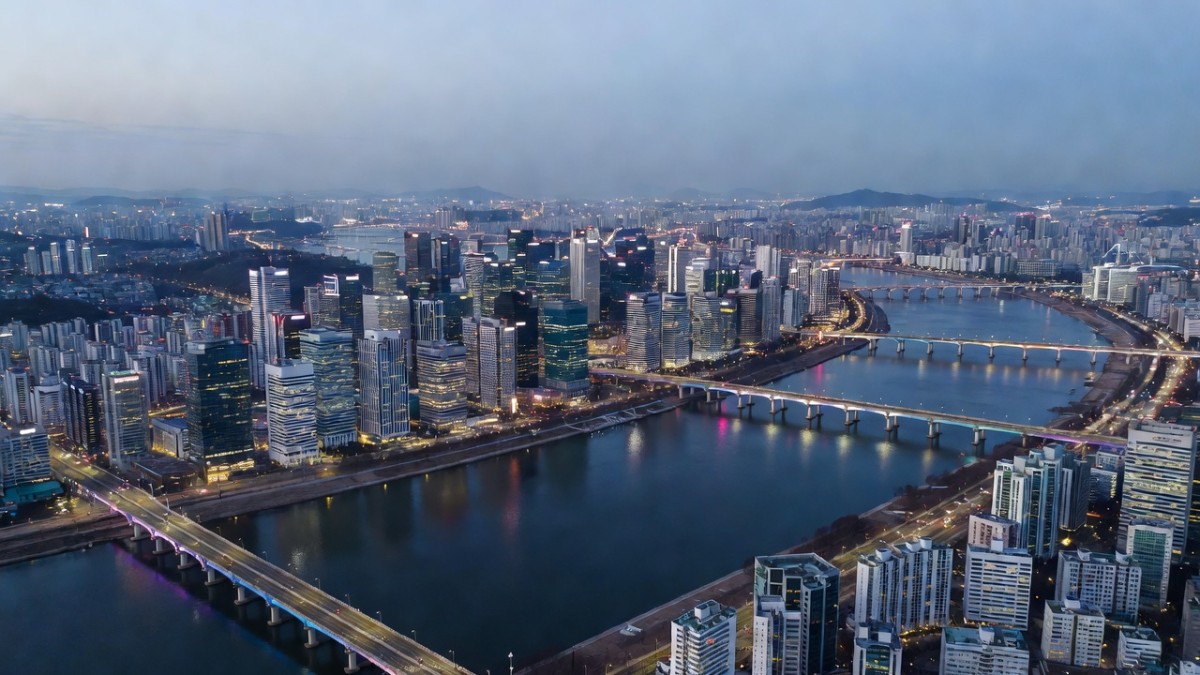
Korea's Indo-Pacific Calculus: Strategic Alignment, Cautious Pace
For South Korea, FOIP's second decade presents both opportunities and constraints. Seoul published its own Indo-Pacific Strategy in December 2022, signaling a departure from its traditionally narrow focus on the Korean Peninsula and Northeast Asia. The strategy emphasizes rules-based cooperation, regional prosperity, and contribution to peace, and South Korea participates actively in ASEAN-led frameworks including ASEAN Plus 3 and the Indo-Pacific Economic Framework (IPEF).
The strategic convergence between Seoul and Tokyo on Indo-Pacific issues is real but incomplete. President Lee Jae-myung visited India and Vietnam in April 2026, while Prime Minister Takaichi visited Vietnam, Australia, and South Korea in May 2026, followed by India in early July. These reciprocal visits suggest a warming of trilateral dynamics, yet the Japan-South Korea relationship remains hampered by historical issues, and intelligence-sharing between the two countries remains politically precarious.
Seoul's threat perception prioritizes North Korean issues, which shapes its defense posture differently from Tokyo's focus on maritime and cross-domain challenges. South Korea plans to lift its defense spending from 2.3 percent to 3.5 percent of GDP by 2035, a significant increase that reflects both the North Korean threat and broader regional uncertainties. Notably, South Korean defense industries are already deeply integrated into Indo-Pacific supply chains: Korean K9 self-propelled howitzers are being built in India as the "Vajra," and Hanwha is delivering Huntsman howitzers and Redback armored vehicles to Australia. These defense-industrial links create de facto strategic alignment even where formal security cooperation lags.
China's Objections and the Strategic Stakes
Beijing's rejection of FOIP has been consistent since its inception, but the tone has sharpened. Chinese officials have warned against a "revival of militarism" by Japan, and Chinese commentators portray Japan's higher defense spending, long-range missile programs, and deeper integration with the United States as evidence that Tokyo is abandoning postwar restraint. The updated FOIP, with its emphasis on resilience and its expansion into new domains such as AI, semiconductors, and energy security, is characterized by Beijing as a thinly veiled attempt to maintain strategic advantage.
These objections reflect a deeper divergence in visions of regional order. China's own Indo-Pacific diplomacy emphasizes a "community with a shared future" and has sought to frame FOIP as an exclusionary, US-aligned project. Yet the diplomatic record suggests otherwise: ASEAN adopted the AOIP in June 2019 as its own Indo-Pacific vision, guided by principles including ASEAN centrality, inclusiveness, and respect for international law. The Quad's July 2026 endorsement of the AOIP, and Japan's consistent emphasis on synergy between FOIP and AOIP, indicates that the framework has evolved beyond its original strategic rationale into a broader platform for regional cooperation.
What FOIP 3.0 Must Prove
As FOIP enters its second decade, the framework faces a critical test: can it move from vision to sustained delivery? The Quad's four concrete initiatives — maritime and transnational security, economic prosperity and security, critical and emerging technology, and humanitarian assistance and emergency response — provide a structure, but implementation will determine credibility. The updated FOIP maps onto 17 strategic fields identified by Japan's Council for Japan's Growth Strategy, with emphasis on AI, semiconductors, digital server security, ICT, and quantum technology. This alignment between foreign policy and domestic economic strategy is a notable innovation of FOIP 3.0.
Analysts have suggested that the moment is right to expand cooperation outward from the Japan-ASEAN relationship to include Australia, South Korea, India, and the European Union, without creating an entirely new bloc. The IPEF supply-chain agreement, in which seven ASEAN countries participate, can serve FOIP's objectives. What the region needs, the argument runs, is not exclusive blocs but "collective self-reliance."
Yet a cautionary note is warranted. Cooperation built solely on pragmatism has limits; Japan must also clearly demonstrate its commitment to a rules-based international order. The reduction in "rule of law" references in FOIP 3.0 may be a tactical adjustment, but it carries risks if perceived as a dilution of principle. Japan faces a "double risk" — unlikely improvement in relations with China and unpredictable US foreign policy — which makes deeper cooperation with Indo-Pacific countries essential for ensuring its own autonomy and resilience.
Ten years after Abe's Nairobi speech, FOIP has achieved what few grand strategies manage: it has outlived its creator, adapted to changing circumstances, and found genuine partners across the region. The record speaks for itself. Whether FOIP 3.0 can translate its resilience agenda into concrete outcomes that benefit ASEAN and the broader Indo-Pacific will determine whether the vision endures for another decade — or becomes a historical footnote.
This article was produced with AI-assisted research and editorial support. Sources: The Diplomat (Iida Masafumi, September 6, 2026), The Diplomat Tokyo Report, the International Institute for Strategic Studies, and the Prime Minister's Office of Japan.
By Prof. David Park, Staff WriterWhat's Your Reaction?
 Like
0
Like
0
 Dislike
0
Dislike
0
 Love
0
Love
0
 Funny
0
Funny
0
 Wow
0
Wow
0
 Sad
0
Sad
0
 Angry
0
Angry
0

East Asia/Technology Correspondent at Global1.News. Seoul-based voice covering Korean politics, technology, business, and culture. Analyzes how technology and geopolitics intersect across East Asia.











Comments (0)