
South Korea's 1 Million-Won Marriage Subsidy Sparks Singles Backlash
South Korea's Cabinet has approved a 2027 budget plan that introduces a direct cash payment of 1 million won (approximately US$735) for couples who register their marriage, a policy designed to make marriage more financially accessible in a nation grappling with the world's lowest fertility rate.
South Korea's Cabinet has approved a 2027 budget plan that introduces a direct cash payment of 1 million won (approximately US$735) for couples who register their marriage, a policy designed to make marriage more financially accessible in a nation grappling with the world's lowest fertility rate. The measure, embedded in the Ministry of Gender Equality and Family's 2.1191 trillion won (US$1.56 billion) budget proposal approved on September 1, 2026, has ignited a fierce public debate over fairness, lifecycle discrimination, and the efficacy of cash incentives in reversing demographic decline.
South Korea's New 1 Million-Won Marriage Subsidy: A Demographic Gamble or a Fairness Faux Pas?
Seoul, South Korea - September 7, 2026 - The Ministry of Gender Equality and Family's 2027 budget, totaling 2.1191 trillion won, represents a 5.5% increase over the current year's 2.0087 trillion won allocation. At the heart of this expansion is a strategic pivot in how the state approaches marriage incentives: the creation of a "Marriage Support Fund" worth 166.3 billion won that will provide a one-time payment of 500,000 won per spouse to couples registering their marriage on or after January 1, 2027. This cash transfer, applicable regardless of age or income, is designed to replace the existing marriage tax credit—a deduction of up to 500,000 won per spouse that is scheduled to expire at the end of 2026.
The policy shift represents a significant philosophical change in Korea's pronatalist toolkit. According to the Ministry of Economy and Finance, the tax credit system was fundamentally flawed: it provided negligible benefit to citizens with low income-tax liabilities, effectively excluding the very demographic cohorts the state most needs to encourage. By converting this benefit into a universal cash payment, the government aims to close the gap between those with substantial taxable income and those without, ensuring that the incentive reaches all prospective spouses equally.
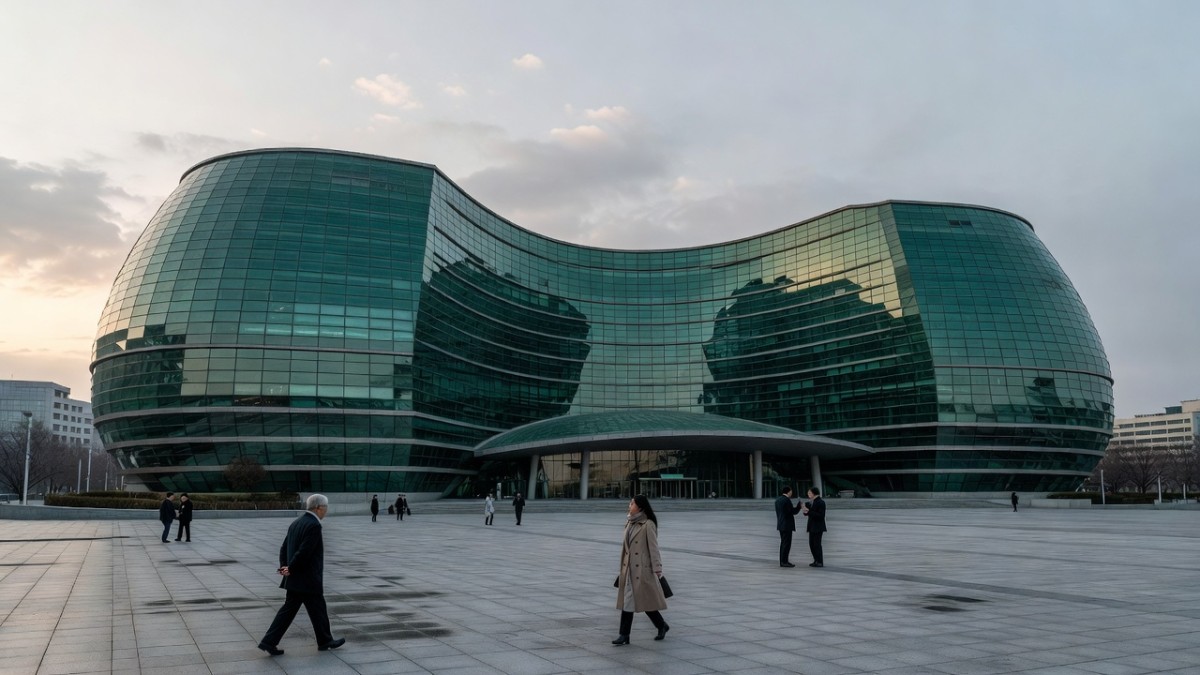
Family policy accounts for the lion's share of the ministry's budget—1.5044 trillion won, or approximately 71% of the total allocation—representing an increase of about 104.5 billion won from 2026. The Gender Equality Ministry has stated that the budget was allocated under the Subsidy Management Act, with legislation providing the legal basis currently being prepared. Notably, the policy covers Korean nationals, while the question of whether foreign nationals will qualify remains undecided—a point that has already become a matter of public debate.
The Fairness Conundrum: Singles and Remarried Couples
The most vociferous opposition to the marriage subsidy has come not from fiscal conservatives but from single, unmarried young adults who view the policy as state-sanctioned discrimination along the lifecycle. These protesters argue that they are excluded from the benefit solely because of their marital status, despite facing the same—if not more acute—housing costs, employment precarity, and living expenses as their married counterparts. The critique has sharpened around a specific provision: individuals who have previously been married qualify for the subsidy upon remarriage, provided they have not already received it. This has led to pointed questions from critics: "Why give to the remarried but not the unmarried?"
The backlash reflects a deeper generational schism in Korean society. For many young people, the state's singling out of marriage as a privileged category feels anachronistic in an era where single-person households have reached a record 8.244 million, constituting 36.6% of all households at the end of 2025—a dramatic rise from 27.2% in 2015. The subsidy, critics contend, ignores the structural economic barriers that make marriage prohibitive in the first place: exorbitant housing costs in Seoul, expensive wedding ceremonies, and the anticipated financial burden of raising children in a society with intense educational competition.
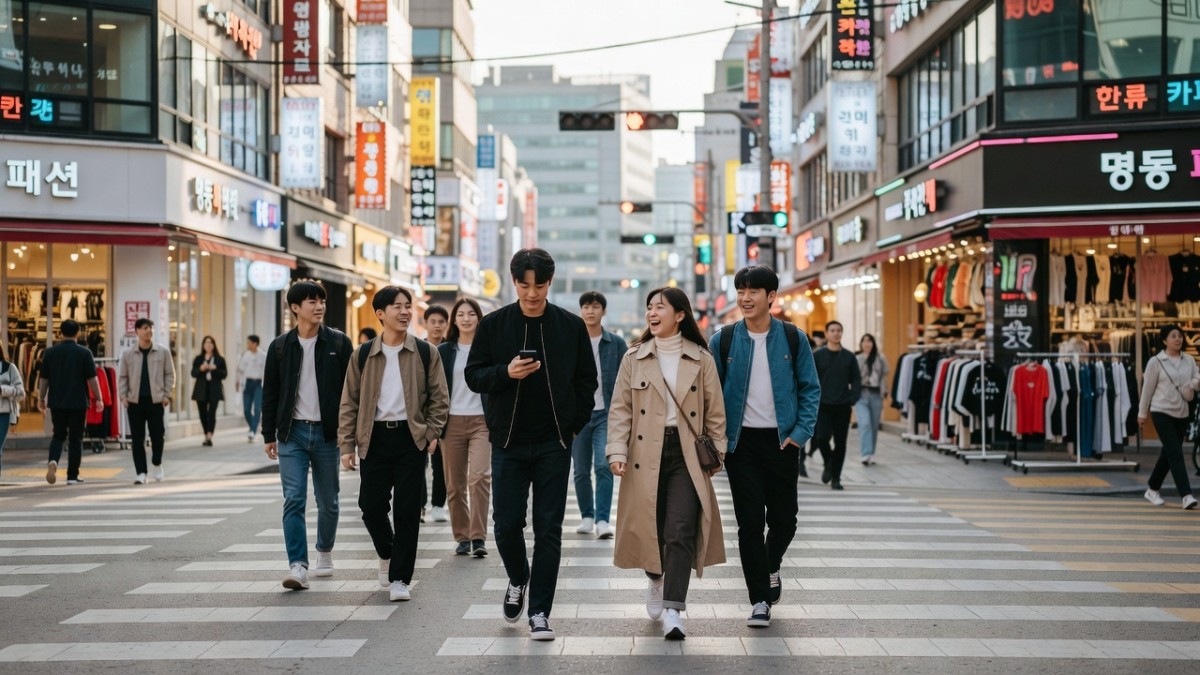
Engaged and newlywed couples, by contrast, have largely welcomed the relief, though with a caveat of timing frustration. Those who registered their marriages in 2026 have expressed dismay at their misfortune, with some openly wondering whether they should have delayed their ceremonies until the new year to qualify for the payment. This temporal arbitrariness—where a few days' difference in marriage registration determines eligibility for 1 million won—has added a layer of absurdity to the policy debate.
Beyond the Binary: LGBTQ+ Exclusion and Family Diversity
The subsidy's restriction to legally recognized marriages has also drawn criticism from LGBTQ+ individuals and others whose households fall outside the bounds of Korean marriage law. Since South Korea does not recognize same-sex marriage, these citizens are categorically ineligible for the benefit. The sentiment was captured poignantly in a comment on X (formerly Twitter): "While heterosexual couples receive 1 million won for getting married, we have to spend millions of won to get married in countries where same-sex marriage is recognized."
This exclusion sits uneasily alongside the ministry's broader rhetorical commitment to "diverse families." Gender Equality and Family Minister Won Min-kyung has articulated a vision of "policies that expand support for diverse families, assist in child care and upbringing, protect youth, and promote healthy growth." The tension between this inclusive language and the marriage-centric design of the new subsidy highlights the ideological contradictions embedded in Korea's pronatalist turn. The ministry's 2027 budget does include provisions for restructuring vulnerable and crisis family support into a "Family for All" initiative that broadens eligibility from couples to all family types, yet the flagship marriage subsidy remains resolutely couple-focused.
Private Sector Parallels: The Rise of "Unmarried Welfare"
Interestingly, the public sector's marriage promotion stands in stark contrast to emerging private-sector trends that recognize and reward unmarried status. South Korean companies are increasingly expanding what has been termed "unmarried welfare." LG Uplus, for instance, now grants employees who officially declare they remain unmarried 100% of their base salary as a congratulatory benefit, along with paid leave. Financial firms SK Securities and KB Securities have similarly introduced congratulatory payments for unmarried employees, acknowledging the financial sacrifices and social pressures faced by those who choose not to marry.
This corporate movement reflects a pragmatic acknowledgment that the demographic crisis cannot be solved solely through marriage incentives. In Japan, a comparable dynamic has emerged, though with a different emphasis: approximately 1,500 companies and organizations, including industrial giant Toyota, provide matchmaking services for their employees. In April 2025, Japanese credit card firm Orient Corporation launched a company-sponsored matchmaking app, which saw 176 employees use it, resulting in 17 entering relationships. These private-sector initiatives suggest that the state's focus on cash transfers may be addressing only one dimension of a multifaceted demographic challenge.
Demographic Stakes and the Limits of Cash Incentives
The urgency behind these policy experiments is undeniable. South Korea maintains the world's lowest fertility rate, hovering around 0.7 children per woman in recent years—far below the replacement rate of 2.1 needed to maintain population stability. The nation is also experiencing rapid population aging, with profound implications for its pension system, healthcare infrastructure, and economic productivity. The 2027 budget includes additional measures beyond the marriage subsidy: child-rearing allowance eligibility is being eased to 66% of median income (up from 65%), which will expand recipients from approximately 257,000 to 270,000. A new "pre-birth parenting allowance" of 230,000 won per month for three months will support unmarried pregnant women and single parents. Support for single-person households and migrant-background families is increasing by 28.7 billion won.
Can Cash Incentives Change Family Decisions?
Yet the fundamental question remains whether cash incentives meaningfully alter marriage and childbearing decisions. The international evidence is mixed at best. Critics of the subsidy point to research suggesting that while financial support can remove marginal obstacles, it rarely addresses the deeper structural disincentives: the difficulty of balancing work and family in a hyper-competitive labor market, the gendered division of domestic labor, and the cultural expectations surrounding parenting. The 3.8 billion won allocated for an integrated youth at-risk management system and the expansion of youth independence support centers from 13 to 14, along with recovery facilities from 18 to 20, suggest that the government recognizes the need for a broader social safety net, yet the symbolic weight of the marriage subsidy dominates public discourse.
Policy Implications and the Road Ahead
The marriage subsidy debate encapsulates a broader tension in Korean family policy between pronatalist objectives and social equity. By tying a significant cash benefit to the legal institution of marriage, the state has implicitly privileged one family form over others at a moment when Korean society is becoming increasingly diverse in its living arrangements. The record number of single-person households, the growing visibility of LGBTQ+ families, and the rising number of unmarried parents all challenge the marital model that the subsidy reinforces.
The Ministry of Economy and Finance's rationale—that the cash payment addresses the inequity of a tax credit that favored higher-income earners—is technically sound. However, the policy's design has created new inequities that may prove politically costly. The question of whether foreign nationals will qualify, still unresolved, adds another layer of complexity to a policy already struggling with legitimacy among key constituencies. As the legislation providing the legal basis for the subsidy moves through the National Assembly, the debate over who deserves state support—and under what conditions—will likely intensify.
For policymakers, the challenge is to design interventions that acknowledge the diversity of Korean family life while still addressing the demographic emergency. The "Family for All" restructuring initiative suggests an awareness of this need, but its 28.7 billion won allocation pales in comparison to the 166.3 billion won dedicated to the marriage subsidy. Whether the state can reconcile its pronatalist ambitions with its stated commitment to family diversity remains an open question—one that will shape not only Korea's demographic future but also the social contract between the state and its citizens.
By Prof. David Park, Staff Writer
This article was produced with AI-assisted research and editorial support. Reporting is based on sources cited in the article.
What's Your Reaction?
 Like
0
Like
0
 Dislike
0
Dislike
0
 Love
0
Love
0
 Funny
0
Funny
0
 Wow
0
Wow
0
 Sad
0
Sad
0
 Angry
0
Angry
0

East Asia/Technology Correspondent at Global1.News. Seoul-based voice covering Korean politics, technology, business, and culture. Analyzes how technology and geopolitics intersect across East Asia.














Comments (0)