
Former Alberta Rivals Notley and Kenney Unite to Keep Province in Canada
Former Alberta premiers Rachel Notley and Jason Kenney are co-chairing a Canadian Chamber of Commerce campaign urging Albertans to stay in Canada ahead of the Oct. 19 separation referendum, warning the vote is bad for business amid the escalating Canada-U.S. trade war.
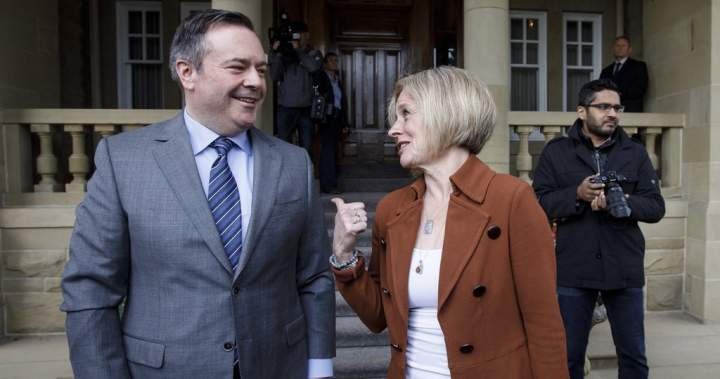
In a recent CBC News report on Power & Politics, two of Alberta's most prominent political adversaries appeared side by side to deliver a unified message: keep Alberta in Canada. Former NDP premier Rachel Notley and former United Conservative Party premier Jason Kenney are co-chairing a Canadian Chamber of Commerce campaign ahead of the province's Oct. 19 referendum on separation, a move that underscores how seriously the business community is taking the vote.
Former Alberta premiers Rachel Notley and Jason Kenney unite for national unity campaign ahead of Oct. 19 separation referendum
Ottawa, Ont. – this week — The unlikely pairing marks a significant moment in Alberta politics, as two leaders who spent years trading barbs across the legislative floor now find themselves on the same side of a campaign that could shape the province's future. Their collaboration reflects growing concern among business leaders and federal officials about the economic and political fallout of a sustained separatist movement in Canada's energy heartland.
The Story: A Campaign for National Unity
The Canadian Chamber of Commerce launched the campaign this summer with a straightforward objective: convince Albertans that separation would be a catastrophic economic mistake. The campaign's message, as Kenney articulated on Power & Politics, is "be careful what you ask for." Both former premiers are travelling the province, appearing at events, and recording messages aimed at voters who may be tempted by the separatist pitch.
Kenney acknowledged the limits of any campaign to change deeply held beliefs. "No one's going to be able to dissuade the super hardcore separatists," he said during the interview. But the target audience is the broader middle — Albertans who are frustrated with Ottawa but have not yet embraced the idea of leaving Confederation. The campaign is designed to reach those voters with concrete economic data and historical examples of what separation talk does to investment and business confidence.
Notley, in a statement released through the Chamber, said she and Kenney "disagree on plenty of things" but agree the referendum is bad for business in Alberta and bad timing during the escalating trade war with the United States. The statement emphasized that the campaign is not about defending any particular government or policy, but about protecting the economic future of the province and the country.
The Former Rivals: From Adversaries to Allies
Rachel Notley served as Alberta's NDP premier from 2015 to 2019, leading a government that introduced a provincial carbon tax, raised corporate taxes, and invested heavily in public services. She stepped down as NDP leader in 2024 after a decade at the helm, having led her party through two election campaigns and a period of significant political change in the province.
Jason Kenney defeated Notley's government in the 2019 provincial election, running on a platform of economic revival and opposition to the NDP's energy policies. As premier from 2019 to 2022, Kenney reversed several Notley-era initiatives: he cut corporate taxes, cancelled a health super lab, and repealed the provincial consumer carbon tax. The two leaders clashed repeatedly over energy policy, fiscal management, and the role of government in the economy.
Despite their history, Kenney said the relationship has evolved in recent months. "We've had frank and sometimes funny exchanges at a couple of events. But I've always respected her … as a very competent woman, a very committed Albertan. So while I disagree with her policy agenda, I would never for one make that personal," he told Power & Politics. He called the pair "frenemies," noting they have been exchanging emails and appearing on panels together in recent months.
The political calculation behind the co-chair arrangement is deliberate. "People who are right-of-centre are typically not going to be persuaded by Rachel Notley, and people who are generally left-of-centre are not going to be persuaded by me. But between us, we can cover a pretty broad spectrum of Alberta," Kenney explained. The strategy acknowledges the deep ideological divisions within the province while finding common ground on the question of Confederation.
What the Referendum Asks
The Oct. 19 referendum will ask Albertans whether they want the province to stay in Canada or to kick-start the process toward a second, binding vote on separation. Elections Alberta previously deemed the separation petition successful, moving the referendum forward despite concerns about the petition's validity and the motivations of its organizers.
The referendum is advisory in nature, meaning it would not itself trigger separation. Instead, a vote in favour would initiate a process toward a future binding referendum, creating a multi-year pathway of uncertainty and political negotiation. This structure mirrors, in some respects, the Quebec model — a fact that Kenney highlighted when discussing the campaign's message.
Kenney pointed to Quebec's long experience with the economic and business uncertainty that accompanies sustained separation talk. The 1980 and 1995 Quebec referendums, and the decades of constitutional wrangling that surrounded them, serve as a cautionary tale for Alberta. Businesses delayed investment, head offices relocated, and the province's economic growth suffered during periods of heightened separatist sentiment.
The referendum's advisory nature does not diminish its potential impact. Even a narrow vote in favour of beginning the separation process would send shockwaves through financial markets, affect credit ratings, and create a prolonged period of uncertainty for investors in Alberta's energy sector. The campaign's co-chairs are betting that Albertans, when presented with these facts, will choose stability over upheaval.
Canadian Context: Federal-Provincial Relations and the Trade War
The referendum comes at a particularly volatile moment in Canadian politics. The Canada-U.S. trade war has intensified this summer, with U.S. tariffs on Canadian goods and Canadian retaliation raising economic anxiety across the country. For energy-rich Alberta, the stakes are especially high: the province's oil and gas exports are central to its economy, and any disruption to cross-border trade would have immediate and severe consequences.
The Alberta NDP has urged Premier Danielle Smith to cancel the separation vote amid the trade war, arguing that the referendum is a distraction from the real challenges facing the province. Smith, who has been critical of federal policies but has not endorsed separation, has so far allowed the referendum to proceed. Her government's position on the vote remains a subject of intense speculation in political circles.
There has also been growing evidence of foreign interference in the Alberta separatism movement. Intelligence officials have flagged suspicious activity linked to foreign actors seeking to exploit Canadian political divisions. This development has added a national security dimension to the referendum, raising questions about the integrity of the vote and the motivations of those pushing for separation.
The federal government has been monitoring the situation closely. While Prime Minister Mark Carney's office has not commented directly on the referendum, federal officials have emphasized the importance of national unity and the government's commitment to addressing legitimate grievances from Western Canada. The campaign co-chairs have framed their effort as a constructive alternative to separation — one that channels frustration into productive federal-provincial dialogue rather than constitutional crisis.
Impact on Albertans and Canadians
The economic consequences of sustained separation talk are already visible. Business confidence in Alberta has been affected by the uncertainty, with some companies delaying investment decisions until the referendum outcome is known. The Canadian Chamber of Commerce has warned that even the perception of instability could deter foreign investment and harm the province's economic prospects.
For Albertans, the referendum represents a choice about identity and economic security. The province has long harboured grievances against Ottawa — over equalization payments, energy policy, and perceived federal interference in provincial jurisdiction. These grievances are legitimate, Kenney acknowledged, but he argued that separation is the wrong remedy. "Everyone knows that Rachel Notley and I have had profound policy disagreements over the years, but we both love our country and love the fact that Alberta is a key part of Canada's success," he said.
The campaign's message resonates beyond Alberta's borders. Canadians in every province have a stake in the outcome, as separation would fundamentally alter the country's political and economic landscape. The loss of Alberta's energy revenues would have significant implications for federal finances, equalization payments, and the national economy. The ripple effects would be felt from coast to coast.
Indigenous communities in Alberta also have a direct stake in the outcome. Treaty rights, land claims, and the federal government's constitutional relationship with Indigenous peoples are all tied to the Canadian state. A move toward separation would create enormous legal and political complexity for those relationships, adding another layer of uncertainty to an already fraught process.
Reactions and Analysis
The collaboration between Notley and Kenney has drawn reactions from across the political spectrum. Some observers have praised the former premiers for putting country ahead of party, while others have questioned whether the campaign will have any meaningful impact on voters. Kenney himself acknowledged the limits of persuasion, noting that the campaign's goal is to reach the persuadable middle rather than convert committed separatists.
Political analysts have noted the irony of two leaders who spent years attacking each other's records now standing together on the same stage. The partnership is a testament to the seriousness of the moment, but it also reflects the narrowness of the anti-separatist coalition. Both former premiers represent a political establishment that many separatists view with suspicion, and their endorsement may not carry weight with voters who feel alienated from traditional politics.
The timing of the campaign, during an escalating trade war with the United States, adds urgency to the message. Kenney has been outspoken all summer condemning the separatist push as a fringe movement that risks undermining legitimate provincial grievances with Ottawa. His argument is that Alberta's interests are better served by working within Confederation to address those grievances than by pursuing a course that would create economic chaos and political instability.
Notley's involvement is equally significant. As the leader who brought the NDP to power in Alberta for the first time, she represents a different political tradition than Kenney. Her willingness to join forces with her former rival sends a powerful signal that the separatist movement is not a left-right issue but a threat to the province's collective well-being.
What Happens Next
The referendum will take place on Oct. 19, with Albertans casting ballots on whether to begin the process toward a second, binding vote on separation. The campaign co-chairs will continue their public appearances and media outreach in the coming weeks, focusing on the economic risks and the historical lessons from Quebec.
If the referendum passes, the provincial government would be required to initiate a process toward a future binding vote. That process would involve significant constitutional and legal questions, including the division of federal assets, the treatment of Indigenous treaties, and the negotiation of new trade relationships. The uncertainty would likely persist for years, with profound implications for Alberta and the rest of Canada.
If the referendum fails, the separatist movement would suffer a significant setback, but the underlying grievances that fuelled it would remain. The campaign's co-chairs have emphasized that their goal is not simply to defeat the referendum but to channel Alberta's frustrations into constructive engagement with Ottawa. Whether that engagement materializes will depend on the federal government's willingness to address the province's concerns on energy policy, fiscal arrangements, and jurisdictional questions.
For now, the focus is on the vote itself. Notley and Kenney have set aside their differences to make the case for Confederation, and their message is clear: Alberta's future is brighter as part of Canada. The voters will have the final say.
By Alex Thompson, Staff Writer
This article was produced with AI-assisted research and editorial support. Reporting is based on sources cited in the article.
What's Your Reaction?
 Like
0
Like
0
 Dislike
0
Dislike
0
 Love
0
Love
0
 Funny
0
Funny
0
 Wow
0
Wow
0
 Sad
0
Sad
0
 Angry
0
Angry
0
Canada Correspondent at Global1.News. Based in Toronto, covering Canadian politics, energy, trade, and US-Canada relations. Provides the Canadian perspective on North American and global affairs.












Comments (0)