
Racism Rising in Alberta as Oct. 19 Referendum Looms
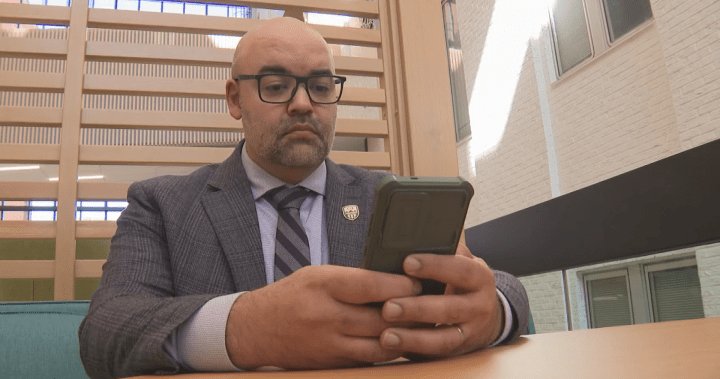
CALGARY — From her home in northeast Calgary, Saima Jamal scrolls through nearly a dozen hateful comments posted online ahead of a Muslim event in the city. The messages range from threatening to unkind, and they have left the long-time Albertan deeply unsettled about the direction of her province.
CALGARY — From her home in northeast Calgary, Saima Jamal scrolls through nearly a dozen hateful comments posted online ahead of a Muslim event in the city. The messages range from threatening to unkind, and they have left the long-time Albertan deeply unsettled about the direction of her province.
“One person said, ‘Hey, someone should plow into them.’ Another person is saying, ‘Please check their ID, arrest, deport,’” said Jamal, co-founder of the Calgary Immigrant Support Society, a group first created more than a decade ago to help Syrian refugees settle into life in Calgary. She has lived in Alberta for almost 30 years.
“Right now racism and hate is on steroids and I’ve never seen this level of hatred toward immigrant communities,” Jamal said. “Muslim communities, Indians, anyone that is wearing a turban.”
The online comments appeared on a recent post promoting the city’s Muslim Heritage Day festival. Calgary police said there was no credible threat to public safety but assigned uniformed officers to attend the event. It was held a day after two men were stabbed at a Sikh temple in Edmonton, an attack that police are still trying to determine whether it constitutes a hate crime.
Rising hate incidents documented by police
Edmonton police report 139 hate incidents and 43 hate crimes to date in 2026. Calgary police say that of 272 suspected hate crimes or incident reports this year, 44 were deemed to be hate-motivated after investigation, with newcomers or immigrants targeted most often.
Following the Sikh temple attack, Edmonton police Chief Warren Driechel expressed concern about heightened tensions in the province.
“We can’t politicize this incident (but) as the chief of the Edmonton Police Service, I see the heightened geopolitical tensions and increasing polarization around the world showing up locally,” he said Aug. 21.
Sikh community leaders believe anti-Sikh hate within the province is on the rise, pointing to both online rhetoric and real-world violence.
“We’ve seen this in online forums,” said Harman Kandola, Alberta regional president for the World Sikh Organization of Canada. “When you see that hate leave social media and come into the real world where actual injuries have happened, it is extremely, extremely shocking.”
The Oct. 19 referendum and its immigration questions
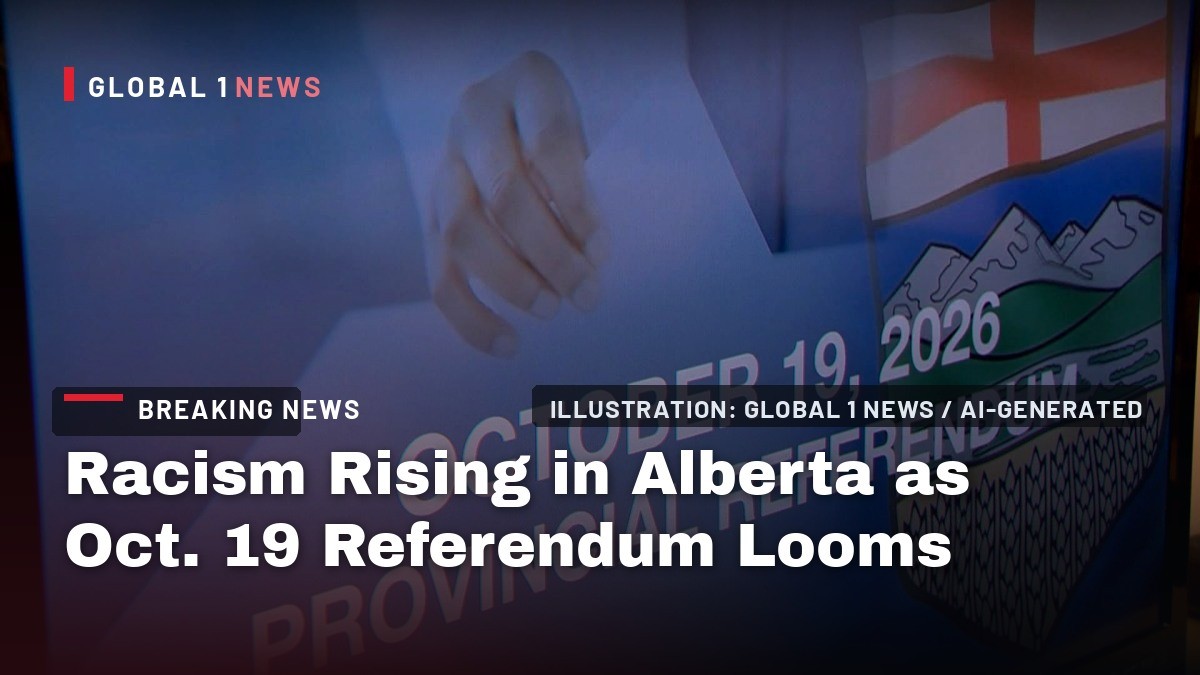
The spike in hate incidents comes as Albertans prepare to vote Oct. 19 on 10 referendum questions put forward by the provincial government, five of them dealing with immigration policy.
One question asks: “Do you support the Government of Alberta taking increased control over immigration for the purposes of decreasing immigration to more sustainable levels, prioritizing economic migration and giving Albertans first priority on new employment opportunities?”
Another asks: “Do you support the Government of Alberta introducing a law mandating that only Canadian citizens, permanent residents and individuals with an Alberta approved immigration status will be eligible for provincially-funded programs, such as health care, education and other social services?”
Albertans will also vote on whether they want a future referendum asking if the province should remain in Canada or begin the legal process to hold a binding referendum on separation.
University of Alberta political science professor Jared Wesley, who has spent two years researching the separatist movement by attending rallies and town halls and conducting surveys and focus groups, says the referendum debate is contributing to the climate of intolerance.
“I have concerns about where this is, not where it’s headed,” he said. “I mean, it is entirely predictable when you table a series of referendum questions about the future treatment of immigrants in Alberta society that the conversation would not be simply limited to economic questions.”
Separatist movement’s vision questioned
Wesley’s research suggests an independent Alberta is seen by many within the separatist movement as predominantly white and Christian.
“Whether that’s on purpose or whether that is subconsciously being projected, those are the types of messages that you see when you’re in separatist chat rooms or in different corners of social media or even at rallies,” said Wesley.
He noted that Alberta Prosperity Project events often start with a Christian prayer and that chief organizer Mitch Sylvestre frequently refers to the fact that “it’s nice to be in a room full of white folks that are not ashamed of being white.”
Wesley said it is also not unusual to hear white replacement theory discussed at these town halls — a conspiracy theory that involves bringing non-white people into communities through immigration and open borders.
Global News contacted Sylvestre for comment about Wesley’s research but he did not provide a response.
“In a very real way,” Wesley said, “the big referendum question, the one around whether Alberta should remain in Canada, isn’t just one about whether we want to start our own country but what kind of country would we want to start and for a lot of folks, not everyone, but for a lot of folks in the separatist movement they have a very different view of what Alberta should be.”
Premier’s office rejects any link to hate
A spokesperson for Alberta Premier Danielle Smith rejected any claim that the fall’s referendum questions could be linked to an increase in anti-immigrant sentiment or hate.
“Any accusation that the referendum questions on sustainable immigration constitute racism is false and inflammatory,” said Sam Blackett, Alberta government director of media relations and press secretary to the premier.
“These questions simply address the current unsustainable immigration levels in Canada that are putting real pressure on critical public services. These questions also reflect the feedback we heard from Albertans during the Alberta Next town halls.”
The premier’s office maintains the referendum is a democratic exercise meant to give Albertans a direct voice on matters of provincial concern, particularly around the shared federal-provincial jurisdiction over immigration.
What the referendum means for Alberta and Canada
The referendum arrives at a delicate moment in Canadian federalism. Immigration is a shared jurisdiction under the Constitution Act, with the federal government setting overall levels and provincial nominee programs allowing provinces to select economic immigrants tailored to local labour needs.
Alberta’s push for increased control over immigration represents a significant shift in that balance, one that constitutional scholars say could have implications beyond the province’s borders. If Alberta were to gain greater authority to set immigration levels or restrict access to provincially-funded services based on immigration status, other provinces might seek similar arrangements.
The question about restricting provincially-funded programs to Canadian citizens, permanent residents and those with Alberta-approved status raises potential Charter concerns. The Charter of Rights and Freedoms guarantees equality rights regardless of national or ethnic origin, and legal experts have noted that provincial health care and education fall under provincial jurisdiction, making any such restrictions constitutionally complex.
For immigrant communities in Alberta, the referendum has created a sense of uncertainty and vulnerability. Jamal said she has never seen this level of anxiety among newcomers in her three decades in the province.
The police data suggests those fears are not unfounded. With 139 hate incidents and 43 hate crimes in Edmonton alone, and 44 hate-motivated incidents confirmed in Calgary, the numbers represent a measurable increase in targeted hostility toward visible minorities and newcomers.
Wesley cautioned that the connection between political rhetoric and hate incidents is not always direct or causal, but he argued the climate created by the referendum debate matters.
“It is entirely predictable,” he said, “that when you put questions about the future treatment of immigrants on the ballot, the conversation will not remain purely economic.”
As Alberta heads into the Oct. 19 vote, the province finds itself at a crossroads — one that will test not only its relationship with the rest of Canada but also its commitment to the multicultural values that have defined the country for decades.
Tags: Alberta referendum, immigration policy, hate crimes, Edmonton Police Service, Calgary Police Service, Saima Jamal, Calgary Immigrant Support Society, World Sikh Organization, Harman Kandola, Jared Wesley, Danielle Smith, Alberta Prosperity Project, Muslim Heritage Day, Sikh temple attack, white replacement theory, Canadian Charter of Rights, federal-provincial relations
By Alex Thompson, Staff Writer
This article was produced with AI-assisted research and editorial support. Sources: Global News
What's Your Reaction?
 Like
0
Like
0
 Dislike
0
Dislike
0
 Love
0
Love
0
 Funny
0
Funny
0
 Wow
0
Wow
0
 Sad
0
Sad
0
 Angry
0
Angry
0

Canada Correspondent at Global1.News. Based in Toronto, covering Canadian politics, energy, trade, and US-Canada relations. Provides the Canadian perspective on North American and global affairs.











Comments (0)