
First-Ever Tree Ordination at US Ambassador's Residence Marks 250 Years of American Independence
On a humid Monday morning in the heart of Bangkok, saffron robes met the manicured lawns of the United States ambassador's residence for a ritual never before witnessed on that historic property.
On a humid Monday morning in the heart of Bangkok, saffron robes met the manicured lawns of the United States ambassador's residence for a ritual never before witnessed on that historic property. An 80-year-old rain tree, its canopy stretching over grounds that have served American diplomacy since 1947, was symbolically ordained in a Buddhist tree ordination ceremony — a gesture that bridged Thai spiritual tradition with American diplomatic protocol in a way that left even seasoned embassy staffers reaching for their cameras.
The event, held on August 25, brought together US Ambassador Sean K. O'Neill, his spouse Sachiyo Kubo, Bangkok Governor Chadchart Sittipunt, and senior Buddhist monks in a display of cultural diplomacy that resonated far beyond the embassy's gated walls. For a region where environmental stewardship and spiritual practice are deeply intertwined, the ceremony sent a clear signal about the importance of protecting urban green spaces — and about the evolving nature of Thailand-US relations as both nations mark significant anniversaries.
First-Ever Tree Ordination at US Ambassador's Residence Marks 250 Years of American Independence
Bangkok, Thailand — The United States Embassy in Thailand hosted its first-ever Buddhist tree ordination ceremony on the grounds of the ambassador's residence this week, a symbolic act that officials say reflects the deepening cultural bonds between the two nations. The ceremony, which took place on Monday morning, came as part of commemorations for the 250th anniversary of US independence, set to be celebrated in 2026.
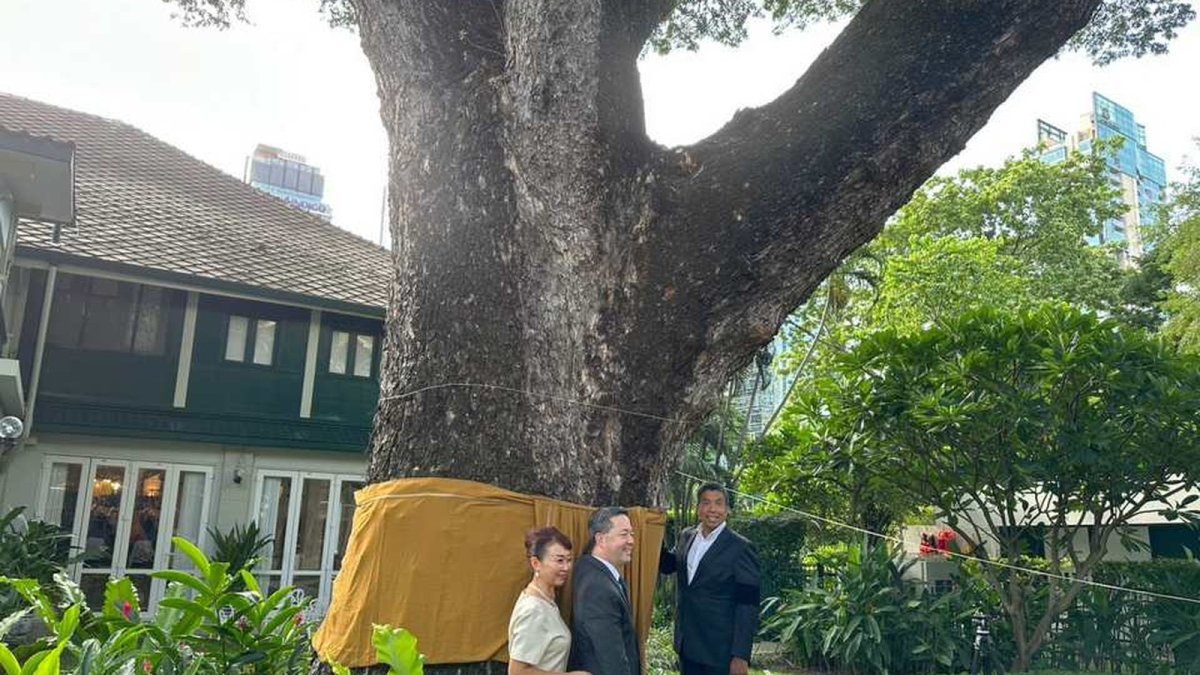
The residence grounds, among the greenest spaces in Bangkok, provided a fitting backdrop for the ritual. The rain tree at the centre of the ceremony has stood for approximately eight decades — some accounts suggest it may be a century old — watching over a property that has served as the US mission's home since 1947. Ambassador O'Neill, who has made environmental stewardship a hallmark of his tenure, described the grounds as "a symbol of the long-standing relationship between the United States and Thailand, growing over time through mutual trust and care."
The Ceremony — Monks, Officials, and a Symbolic Act
Senior Buddhist monks led the ritual, with Phra Ratchasutthiwachirasuthi, Abbot of Wat Suthiwararam, presiding over the proceedings. The monks wrapped the ancient tree's trunk in saffron-coloured cloth — known as ta laew in Thai — transforming the living landmark into a symbolically ordained being. This act, rooted in forest conservation traditions, marks the tree as protected and sacred, a practice that has gained renewed attention across Thailand as urban development threatens mature trees.
Ambassador O'Neill participated alongside his spouse Sachiyo Kubo and embassy officials, while Bangkok Governor Chadchart Sittipunt joined the ceremony as a representative of the city's administration. The presence of both national and municipal leaders underscored the event's significance — not merely as a diplomatic photo opportunity, but as a genuine convergence of American and Thai approaches to environmental care.
"Americans take their role as stewards of historic, cultural, natural, and aesthetic heritage very seriously," Ambassador O'Neill said during the ceremony. "With Thailand now being my home, I wanted to continue that tradition of stewardship in a way meaningful within the Thai context." His words reflected a diplomatic approach that seeks to engage with Thai culture on its own terms, rather than imposing foreign frameworks onto local traditions.
Buat Ton Mai — A Thai Tradition Rooted in Conservation
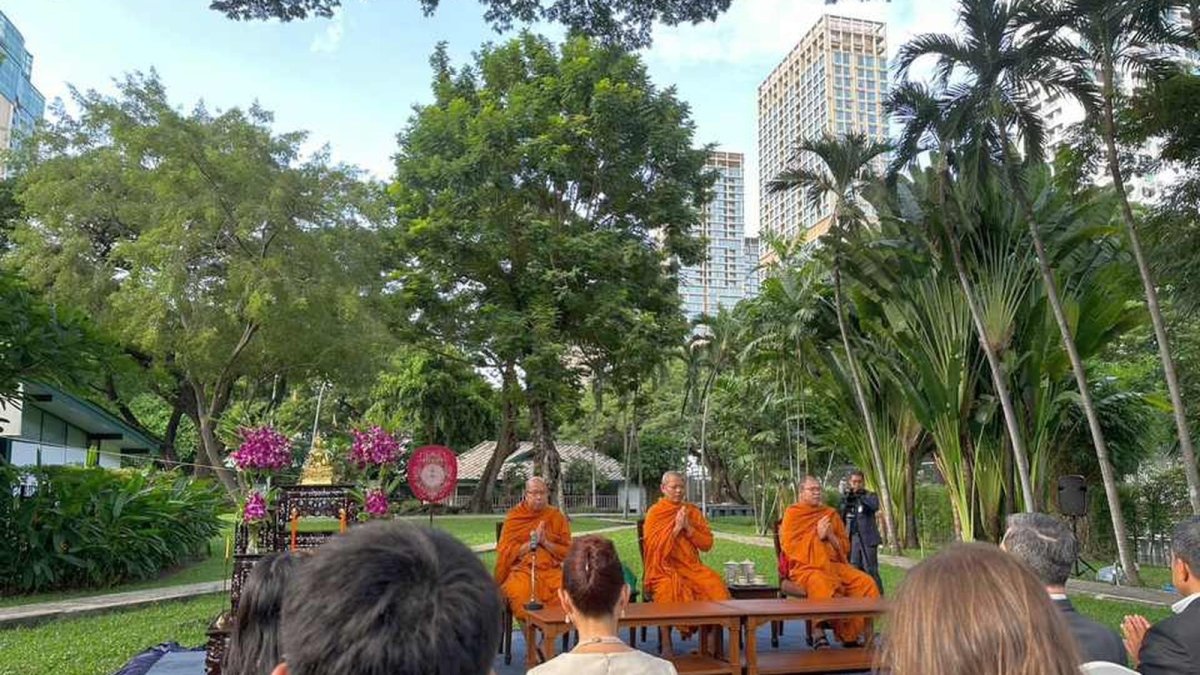
The buat ton mai tradition, or tree ordination, has deep roots in Thai Buddhist practice. Monks symbolically ordain large trees by wrapping their trunks in saffron cloth, a ritual that originated as a forest conservation tool. In a country where Buddhism permeates daily life, the act of ordaining a tree elevates it to a protected status — harming it becomes not just an environmental violation, but a spiritual transgression.
The practice gained prominence through the work of environmental monks in northern Thailand, particularly in the forests of Nan and Chiang Mai provinces, where deforestation threatened watersheds and local livelihoods. By wrapping trees in monk's robes, these monks created a powerful deterrent against illegal logging — communities that might ignore government regulations would think twice before cutting down a tree that had been symbolically ordained.
In Bangkok, where rapid urbanisation has claimed countless mature trees, the tradition has taken on new urgency. The ceremony at the ambassador's residence drew attention to efforts to protect the city's heritage trees — ancient specimens that provide shade, absorb carbon, and offer respite from the concrete jungle. For many Bangkok residents, the sight of saffron cloth wrapped around a tree in one of the city's most exclusive addresses sent a powerful message about the value of urban greenery.
Greening Bangkok — Governor Chadchart's Vision
Governor Chadchart Sittipunt, who has made environmental issues a cornerstone of his administration, used the occasion to highlight the Bangkok Metropolitan Administration's ambitious tree-planting targets. "During our last term, we planted 2.6 million trees, and we aim to plant another 2 million in this term," he said. "Trees are vital assets, but we sometimes forget that. Just as we hold ceremonies for new buildings, we need ceremonies like this to remind us of the importance of caring for them."
The governor's remarks touched on a broader challenge facing Bangkok and other Southeast Asian megacities: balancing development with environmental preservation. Bangkok's green spaces have shrunk dramatically over the past decades, with parks and tree-lined streets giving way to condominiums and shopping malls. The BMA's tree-planting initiatives represent an attempt to reverse this trend, though critics note that planting saplings is only the first step — ensuring their survival requires sustained care and community engagement.
A single mature tree can absorb significant amounts of carbon dioxide each year, provide cooling shade that reduces urban heat island effects, and support biodiversity in otherwise sterile urban landscapes. The rain tree at the ambassador's residence, with its sprawling canopy and decades of growth, represents an irreplaceable asset — one that the ordination ceremony now marks as worthy of protection.
Implications for Thailand-US Ties and Southeast Asia
The tree ordination ceremony carries significance beyond its environmental message. For observers of Thailand-US relations, the event signals a diplomatic approach that embraces Thai cultural traditions rather than merely tolerating them. Ambassador O'Neill's participation in the ritual — alongside his spouse and embassy officials — demonstrates a willingness to engage with Thai Buddhism on its own terms, a gesture that resonates deeply in a country where religion and national identity are closely intertwined.
The timing of the ceremony, tied to the 250th anniversary of American independence, adds another layer of meaning. As the United States prepares to mark this milestone in 2026, the embassy in Bangkok is clearly seeking ways to commemorate the occasion that resonate with Thai audiences. A tree ordination — a uniquely Thai ritual — serves this purpose far better than a conventional diplomatic reception or formal dinner.
For Southeast Asia more broadly, the ceremony offers a model for how foreign missions can engage with local environmental traditions. Across the region, from Indonesia's adat forest management to Vietnam's community-based conservation, indigenous practices are gaining recognition as effective tools for environmental protection. The US Embassy's embrace of buat ton mai suggests that diplomatic missions are increasingly aware of the power of these local traditions.
Expert Perspectives — What the Ceremony Means
Environmental scholars and Buddhist studies experts have noted the significance of the ceremony in elevating tree ordination from a rural conservation tool to a diplomatic gesture. When a foreign embassy embraces the buat ton mai tradition, it validates the practice and brings it to the attention of urban Thais who may have forgotten its significance — a point not lost on conservation groups that have long campaigned for the protection of Bangkok's mature and heritage trees.
The ceremony also comes at a time when Thailand is grappling with severe air pollution issues, particularly in Chiang Mai and Bangkok. Governor Chadchart's emphasis on tree planting as a response to air quality concerns reflects a growing recognition that urban forestry is not merely aesthetic — it is a public health intervention. Trees filter particulate matter from the air, absorb pollutants, and release oxygen, making them essential components of any strategy to combat the region's recurring haze crises.
For the US Embassy, the ceremony represents a continuation of environmental engagement in Thailand that reflects the mission's broader commitment to conservation and sustainability. The embassy's grounds, which include significant green space in the heart of Bangkok, have long been recognised as an urban oasis — the ordination ceremony formalises the embassy's commitment to maintaining that oasis for future generations.
What to Watch For
In the coming months, observers will be watching to see whether the tree ordination ceremony translates into concrete environmental cooperation between the United States and Thailand. The 250th anniversary of American independence in 2026 provides a framework for expanded collaboration, and environmental issues are likely to feature prominently in commemorative events.
The ceremony also raises questions about the future of Bangkok's heritage trees. With the BMA committed to planting 2 million additional trees during the current term, the challenge will be ensuring that these new plantings survive to become the mature trees of tomorrow. The ordination of the ambassador's residence rain tree serves as a reminder that trees are not merely decorative — they are living monuments that connect us to our past and our future.
As the saffron cloth settled around the ancient rain tree and the monks' chants faded into the Bangkok morning, the ceremony concluded with Ambassador O'Neill expressing appreciation to the people of Bangkok and Thailand, reaffirming the US commitment to preserve natural surroundings and nurture bilateral ties. For those present, the image of an American ambassador participating in a Buddhist ritual to protect a tree will linger — a small but significant moment in the long and evolving relationship between two nations.
The rain tree at the ambassador's residence will continue to grow, its branches reaching toward the Bangkok sky, now marked as sacred by the ritual that unfolded beneath its canopy. In a city where concrete increasingly dominates the landscape, that tree stands as a testament to the possibility of coexistence between development and nature — and to the power of tradition to remind us of what we value.
This article was produced with AI-assisted research and editorial support. Sources: Bangkok Post, Pattaya Mail/TNA, Thai PBS World, The Nation.
By Ann Srisawat, Staff Writer
What's Your Reaction?
 Like
0
Like
0
 Dislike
0
Dislike
0
 Love
0
Love
0
 Funny
0
Funny
0
 Wow
0
Wow
0
 Sad
0
Sad
0
 Angry
0
Angry
0

Southeast Asia Correspondent at Global1.News. Based in Bangkok, covering Thai and Southeast Asian politics, economy, technology, and culture. Deep regional perspective on one of the world's most dynamic regions.











Comments (0)