
FDA False Positive Rocks Cyclospora Lettuce Crisis
The cyclospora nightmare ripping through America just got messier. Over 1,700 people sickened across 17 states from contaminated iceberg lettuce, a massive recall hitting 27 states, Taco Bell yanking product from stores, and now the FDA quietly admitting its own positive test on Taylor Farms lettuce was a false positive. This isn't just bad produce—this is a regulatory meltdown that leaves families wondering what, or who, they can trust.
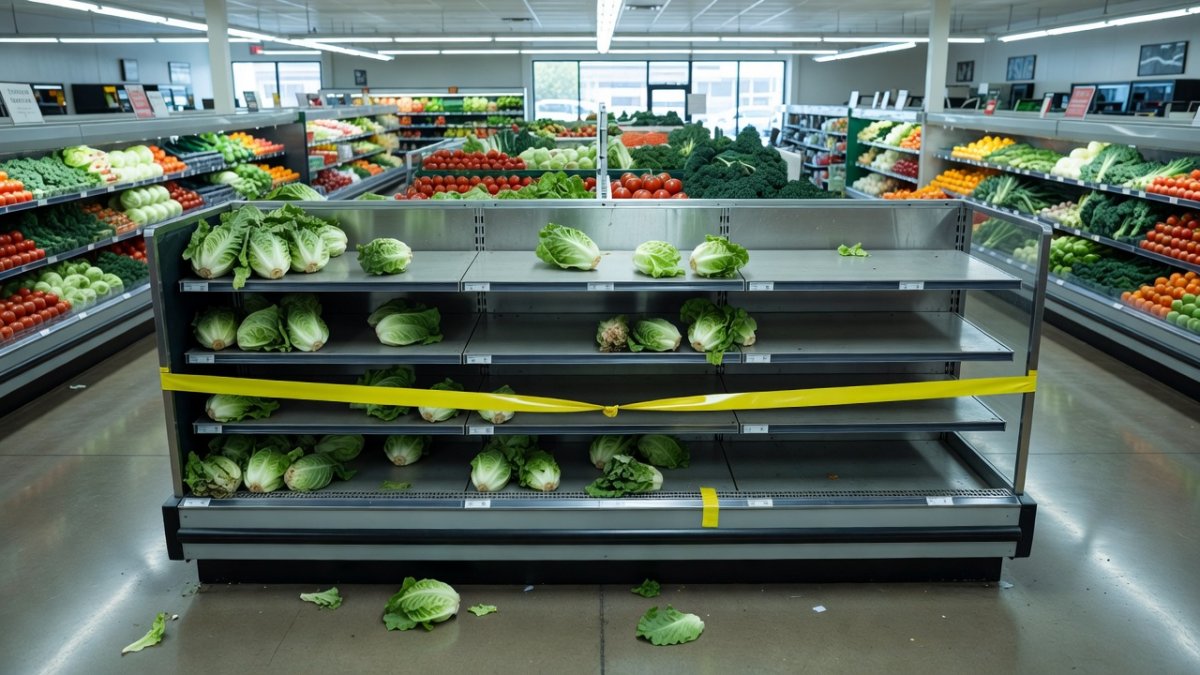
The cyclospora nightmare ripping through America just got messier. Over 1,700 people sickened across 17 states from contaminated iceberg lettuce, a massive recall hitting 27 states, Taco Bell yanking product from stores, and now the FDA quietly admitting its own positive test on Taylor Farms lettuce was a false positive. This isn't just bad produce—this is a regulatory meltdown that leaves families wondering what, or who, they can trust.
FDA False Positive Rocks Cyclospora Lettuce Crisis
Atlanta, GA — July 20, 2026 — The numbers are staggering and the explanations are thin. Since May, more than 1,700 Americans have been slammed with cyclosporiasis, a parasitic infection that turns everyday meals into weeks of misery. The CDC and FDA have zeroed in on iceberg lettuce from a single supplier in Mexico, triggering recalls and restaurant pullbacks that stretch from coast to coast. Yet the agency that should be leading the charge just walked back its own lab result, calling a positive cyclospora finding on Taylor Farms product a false positive. That admission, dropped on July 18-19, raises more questions than it answers and leaves the true source still dangling in the wind.
The Outbreak by the Numbers
Let's lay out the cold facts without the spin. The CDC reports 1,700-plus confirmed cases spanning at least 17 states, with the heaviest concentrations in five primary states where the tainted iceberg lettuce moved through distribution channels. Taylor Farms de Mexico issued a recall covering 27 states, pulling product that had already reached grocery shelves and restaurant kitchens. Taco Bell, one of the largest fast-food chains in the country, removed lettuce from select locations after investigators traced the supply line back to that single Mexican grower. These are not isolated incidents—they represent a coordinated, multistate failure that began months ago and is still unfolding.
The timeline matters. Cases started climbing in May 2026. By mid-July the numbers had exploded, forcing public health officials to issue broad warnings. The parasite does not discriminate by age or health status; it hits hard and lingers. Every new case adds pressure on already strained hospital systems and raises the stakes for the agencies supposedly protecting the food supply.
FDA Flip-Flop: False Positive or Messy Investigation?
The FDA's July 18-19 announcement that its own positive test on a Taylor Farms sample was false should alarm every consumer. The agency initially flagged the sample, then reversed course while insisting it would continue working with Taylor Farms on the recall anyway. That contradiction is breathtaking. Either the lab work was sloppy from the start, or the decision to keep the recall in place is driven by politics rather than science. Neither option inspires confidence.
The FDA's reversal on its own Taylor Farms sample does more than embarrass the agency—it shreds whatever remains of public confidence in its testing regime. Shoppers already skeptical after years of mixed messages now have concrete proof that positive results can vanish overnight without explanation. That uncertainty pushes people toward extreme measures like avoiding all lettuce or demanding source labels at every purchase, behaviors that punish the entire produce sector rather than isolating the actual problem.
This episode echoes the 2018 romaine E. coli outbreaks, where the FDA spent weeks narrowing the source only to leave consumers guessing between multiple growing regions, and the 2011-2012 cantaloupe listeria tragedy that killed dozens while regulators struggled to connect dots across state lines. In each case the agency eventually identified issues but only after damage mounted and trust eroded further. When an agency cannot defend its laboratory findings, lawsuits become harder to settle and harder to win for victims seeking accountability.
Taylor Farms now faces potential liability exposure that extends well beyond the recall itself. Plaintiffs' attorneys will likely argue the company's supply chain lacked adequate verification steps, especially once the FDA's flip-flop removed the clearest scientific link. Insurance carriers covering both the grower and downstream buyers like Taco Bell are already modeling higher premiums and narrower coverage for Mexican produce imports, a direct financial consequence of regulatory inconsistency.
Investigators still have not identified the definitive source. The false positive muddies the water further, giving critics ammunition to claim the agencies are guessing in public while families suffer in private. When the FDA cannot stand by its own test results, the entire traceback process loses credibility. Consumers deserve clarity, not bureaucratic backpedaling.
Taylor Farms and Taco Bell: The Supply Chain Question
Taylor Farms de Mexico sits at the center of the recall, yet the company is not the only player. Taco Bell's swift decision to pull lettuce from affected locations shows how quickly downstream businesses can react when regulators point fingers. The common thread is a single supplier south of the border, but the precise point of contamination—field, packing house, or transport—remains unclear. That gap in the chain is where accountability evaporates.
Mexico-origin produce has triggered repeated multistate outbreaks over the past decade, from cyclospora in cilantro and raspberries to salmonella in cucumbers and peppers. The pattern reveals structural weaknesses in FDA import surveillance, which still relies heavily on port sampling that catches only a tiny fraction of incoming shipments. Limited resources mean most testing occurs after product has already entered distribution, turning routine imports into high-stakes gambles.
Meaningful reform would require mandatory lot-level traceability from farm to retail within hours rather than days, something the current voluntary systems have never delivered. Blockchain pilots exist but remain limited to premium supply chains; extending them to commodity iceberg lettuce would demand enforceable standards and real-time data sharing that most Mexican growers currently lack infrastructure to support. Farm-level testing before harvest, coupled with rapid DNA methods at packing houses, could close the detection gap that allowed this outbreak to spread across seventeen states.
Without those changes, the same vulnerabilities will persist. Long, opaque supply lines reward speed and cost-cutting over verification, and regulators have shown they lack both the manpower and the political will to impose penalties strong enough to alter behavior at scale.
Supply chains this long and this opaque invite exactly these kinds of disasters. One contaminated lot can travel thousands of miles and touch millions of plates before anyone notices. The fact that the outbreak has already crossed 17 states proves how fragile the system is. Until traceability improves dramatically, these outbreaks will keep repeating.
What Is Cyclospora and Why Is It So Hard to Detect?
Cyclospora cayetanensis is a microscopic parasite that thrives in contaminated produce. Unlike bacteria, it cannot be rinsed away with water or killed by standard kitchen prep. The organism is notoriously difficult to spot in lab tests, which is why the FDA's false positive carries extra weight. Standard washing does nothing; the parasite requires specific detection methods that not every facility performs routinely.
This is not a new threat, yet the food industry and regulators still treat it as an occasional surprise rather than a predictable risk. The microscopic size and environmental resilience make cyclospora a perfect storm for large-scale produce outbreaks. Every delay in detection translates directly into more sick people.
The Human Toll: Symptoms and Treatment
The symptoms are brutal: explosive diarrhea, stomach cramps, nausea, and profound fatigue that can drag on for weeks without proper treatment. Many victims require hospitalization for dehydration. The only effective medication is the antibiotic combination trimethoprim-sulfamethoxazole, which must be prescribed and taken for an extended period. Over-the-counter remedies offer little relief.
The financial fallout from this outbreak will dwarf the medical bills facing individual patients. Taylor Farms and its distributors face recall execution costs, lost sales, and potential class-action exposure that could reach tens of millions. Taco Bell has already absorbed inventory losses and possible reputational damage that marketing budgets will struggle to offset. Insurance payouts for business interruption and liability claims will eventually raise premiums across the fresh produce sector, spreading the cost to every buyer.
Hospital systems in the hardest-hit states are logging extended stays for dehydration and complications, expenses that Medicaid and private insurers will absorb while taxpayers ultimately foot much of the bill. Workers who missed shifts due to illness or caring for sick family members face lost wages that no recall notice can restore. These ripple effects hit smaller restaurants and grocery chains especially hard, as they lack the reserves to weather sudden product withdrawals and customer pullback.
Industry analysts note that large-scale recalls of this type accelerate consolidation, with smaller suppliers exiting the market and larger players absorbing their volume. The result is fewer competitors and even longer supply chains—the exact conditions that made the current cyclospora event possible in the first place.
Behind every statistic is a family dealing with lost workdays, medical bills, and lingering health effects. The 1,700-plus cases represent real suffering that could have been prevented with tighter controls upstream. Public health officials warn that numbers will likely rise as more people seek testing.
What Consumers Need to Know Now
Check your refrigerator and pantry for any recalled Taylor Farms iceberg lettuce and discard it immediately. Avoid purchasing bulk iceberg lettuce from regions tied to the outbreak until the investigation concludes. If you develop severe gastrointestinal symptoms after eating salads or restaurant meals containing lettuce, see a doctor and mention the cyclospora outbreak—early testing and the right antibiotic can shorten the misery.
Real progress requires Congress to fund FDA modernization and CDC surveillance at levels that match the scale of imported produce risks, including full implementation of the Produce Safety Rule under FSMA with mandatory foreign supplier verification that actually gets enforced. Current funding shortfalls leave inspectors stretched thin and data systems outdated, guaranteeing that the next outbreak will again outpace detection.
The likelihood of meaningful change remains low without sustained public pressure. Past reforms arrived only after high-profile deaths or massive recalls forced action, and even then implementation dragged for years. Industry lobbying has repeatedly diluted traceability requirements, and nothing in the current political environment suggests regulators will suddenly prioritize rapid, farm-to-fork tracking over trade relations with Mexico. Consumers will continue bearing the risk until liability costs or another deadly outbreak finally force structural fixes.
Do not rely on washing to protect you. Demand that grocery chains and restaurants publish their lettuce sources. Push your representatives for mandatory, rapid traceability rules that actually work. The agencies tasked with keeping food safe have already stumbled once; they cannot be trusted to fix this alone.
By Jessica Ali, Global 1 News
This article was produced with AI-assisted research and editorial support. Reporting is based on sources cited in the article.
What's Your Reaction?
 Like
0
Like
0
 Dislike
0
Dislike
0
 Love
0
Love
0
 Funny
0
Funny
0
 Wow
0
Wow
0
 Sad
0
Sad
0
 Angry
0
Angry
0

Editor-in-Chief at Global1.News. Atlanta-based journalist who cuts through the BS and tells it like it is. Lead anchor, host, and the voice you hear when the spin stops and the truth starts.















Comments (0)