
Midwest Skies Grounded: FAA Telecom Failure Triggers Two-Hour ATC Zero at Minneapolis Center
An FAA telecommunications failure at the Minneapolis Air Route Traffic Control Center grounded flights across nine states Thursday, triggering a two-hour ATC Zero event, more than 1,000 cancellations, and 205-minute delays at Delta's MSP hub.
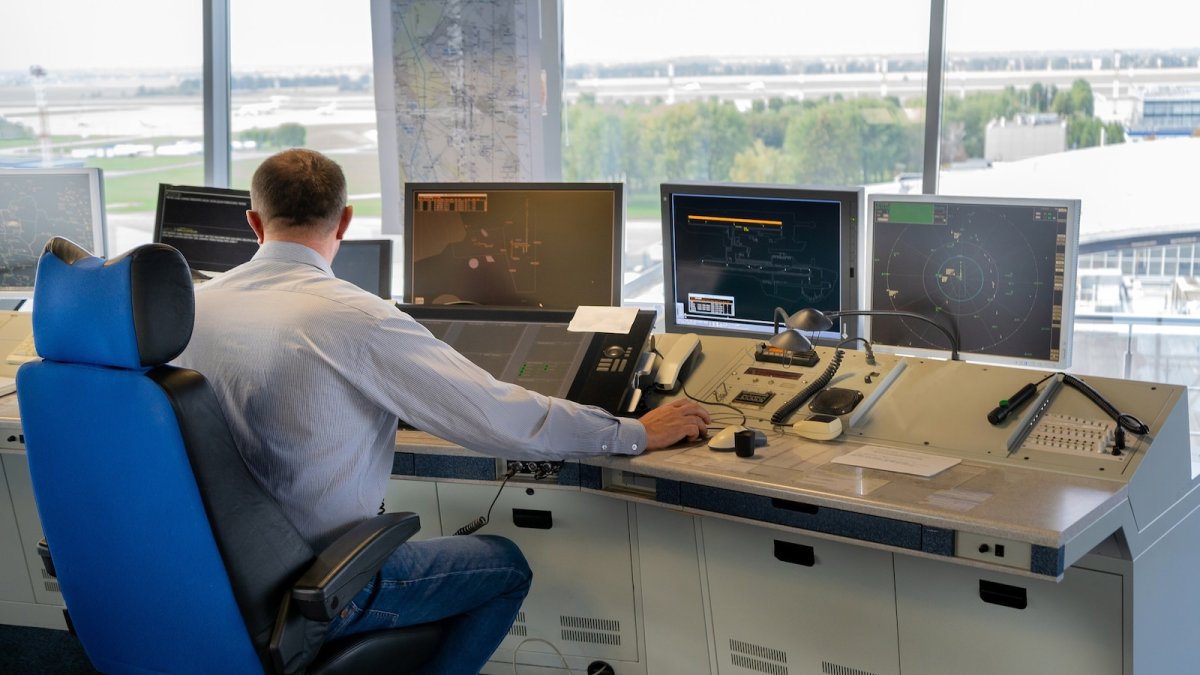
A critical equipment failure at the Minneapolis Air Route Traffic Control Center on Thursday, August 6, 2026, left jetliners over nine states without radar or radio contact for nearly two hours, halting normal operations at the 14th busiest facility in the country and rippling delays across the Upper Midwest. By the time radar and radio services were restored, more than 1,000 flights had been canceled nationwide, hundreds more were grounded or diverted, and an entire region of American airspace had gone silent.
The Scope of the Minneapolis ARTCC Outage
The Minneapolis Air Route Traffic Control Center, designated ZMP and situated in Farmington, Minnesota, about 20 miles south of Minneapolis-St. Paul International Airport, manages cruise-altitude traffic under instrument flight rules across nine states: Minnesota, Missouri, Kansas, South Dakota, North Dakota, Wisconsin, Michigan, Nebraska, and Iowa. The territory spans roughly 330,000 to 400,000 square miles — larger than the land area of Germany or Japan — placing one facility in charge of jetliner separation over a chunk of the country bigger than many sovereign nations.
At approximately 2:00 PM local time on Thursday, critical telecommunications and navigation equipment failed at the center, forcing controllers into an "ATC Zero" condition that eliminated standard radar and radio services. The center, which processed 1.85 million aircraft in 2024 and borders seven neighboring facilities including those in Chicago, Kansas City, and Denver, suddenly could not safely manage the traffic in its sector. The FAA confirmed the outage stemmed from telecommunication issues, issued a ground stop at MSP around 2:00 PM, and lifted it near 4:15 PM once services were restored — roughly two hours of zero radar and radio coverage over the heartland.
ATC Zero: What It Means for Air Traffic Control
ATC Zero represents the FAA's highest contingency level, declared when a facility can no longer safely provide radar or radio services. In this case, the Minneapolis center's degradation meant pilots in the affected airspace operated without direct controller guidance — no radar vectors, no radio clearances — for the duration of the event. Neighboring centers absorbed ZMP's sectors, and aircraft already airborne maintained altitude and heading using onboard navigation, GPS, and TCAS while awaiting handoff to facilities that could still see them.
Such declarations remain rare precisely because they strip away the primary safety layer for high-speed cruise traffic across hundreds of thousands of square miles. The last time American aviation faced anything comparable on a national scale was January 11, 2023, when a failure in the FAA's NOTAM system triggered the first system-wide ground stop since September 11, 2001, canceling roughly 1,300 flights and delaying more than 11,000 others. Thursday's event was localized by comparison — but it still generated average delays of 205 minutes at MSP and forced international arrivals to divert, demonstrating how even a two-hour zero-service event erodes the safety margins built into the roughly 44,000 daily flights the system handles.
Delta Air Lines Hub Bears the Brunt at MSP
Minneapolis-St. Paul International Airport is Delta Air Lines' second-largest global hub, with the carrier controlling roughly 70 percent of passenger traffic at the facility. The majority of disrupted flights on Thursday were Delta-operated, concentrating recovery efforts on one airline's network. Delta diverted three international flights away from MSP during the outage, according to airline spokeswoman Samantha Facteau.
The concentration cut both ways. On one hand, a single carrier bore the brunt of the disruption. On the other, Delta's fleet density meant MSP did not suffer the uncoordinated scramble of dozens of competing airlines — a structural advantage that helped the airport recover faster overnight.
By 4:45 PM, the MSP website listed 87 delayed departures, with average delays reaching 205 minutes at 3:03 PM before easing to 90 minutes by evening. The Metropolitan Airports Commission, which owns and operates MSP, cited a "regional FAA equipment outage" in its 3:10 PM announcement, advising passengers to expect lingering impacts through the night.
Widespread Delays and Cancellations Nationwide
The reach of the outage went far beyond Minnesota. Departures bound for Minneapolis from air traffic control centers covering Los Angeles, Chicago, New York, Dallas, Atlanta, and Denver were held or diverted, along with flights originating in Halifax, Ottawa, Montreal, and Toronto. Aircraft already airborne were rerouted to land outside the affected region, and planes stacked up on tarmacs across the Midwest while airlines scrambled to reposition crews and aircraft.
Thursday's chaos was compounded by a second, unrelated disruption: evening thunderstorms over the Northeast triggered ground stops at Newark, LaGuardia, and JFK. LaGuardia's stop lifted around 8:30 PM, while Newark and JFK remained in effect past 10 PM, with ground delays at Newark Liberty averaging close to five hours — partly attributed to staffing. Together, the two events canceled more than 1,000 flights nationwide on Thursday, with over 560 additional cancellations reported by Friday morning.
The double-hit pattern underscored how one regional center outage can propagate delays across multiple time zones and international borders within hours. Cherry Capital Airport in Grand Traverse County, Michigan, diverted three incoming flights after FAA notification around 3:00 PM; CEO Kevin Klein said the center "controls the airspace that basically controls all the flights going airport to airport in the Midwest."
Challenges Facing the U.S. Aviation Infrastructure
Thursday's event joins a troubling pattern. The January 2023 NOTAM failure, the February 2026 El Paso airspace shutdown triggered by cartel drones and a party balloon, and now the Minneapolis telecom failure — each exposed a different single point of failure in a system that handles 44,000 flights a day. Industry groups have long warned about aging facilities and equipment alongside a controller staffing shortage, and Newark's five-hour delays on Thursday were partly attributed to staffing even after the weather moved through.
The Minneapolis outage highlighted the vulnerability of the 21 air route traffic control centers that manage high-altitude traffic nationwide. When one node — even a facility as capable as the 14th busiest center in the country, with 1.85 million annual operations — loses its telecommunication links, contingency handoffs can mitigate but cannot fully replicate continuous radar coverage.
While the FAA investigates the cause, the incident argues for hardened backup systems and sustained investment in both staffing and infrastructure. The pattern of isolated failures producing nationwide ripples is not going away on its own.
Passenger Experiences During the Two-Hour Blackout
Travelers at MSP described extended tarmac waits with limited updates. One passenger posted on X that their plane had sat for an hour with no information on whether they were returning to the gate or waiting it out. Another arriving passenger reported touching down at 2:40 PM after a slightly wide approach around the northwest metro, roughly 40 minutes after the ground stop began. A Reddit user noted their aircraft remained stuck on the tarmac near 2:30 PM while awaiting takeoff clearance.
The FAA's own website listed the outage as potentially ongoing until 4:15 PM, with a 30 to 60 percent probability of extension — an unusual level of uncertainty broadcast to an anxious traveling public. Airlines worked through the night to reconcile schedules, and MPR News reported that the airfield returned to normal operations by Friday, with weekend travelers expected to encounter typical conditions.
Recovery Timeline and Airline Responses
The FAA said services were fully restored and flights returned to normal after the two-hour pause, directing passengers to fly.faa.gov for real-time airport updates while the investigation continues. The agency's preliminary statement was characteristically cautious: "This information is preliminary and subject to change... Services have been fully restored and flights are returning to normal. The FAA is investigating the cause."
Delta and other carriers focused on repositioning crews and aircraft to clear the backlog, with delays remaining elevated into Thursday evening. By Friday, operations at MSP and surrounding airports had stabilized, allowing the system to absorb remaining schedule adjustments without further widespread ground stops.
Practical Advice for Midwest Travelers This Weekend
Passengers flying through MSP or the nine-state region this weekend should monitor airline apps and fly.faa.gov for any lingering schedule adjustments, and arrive earlier than usual to account for crew or aircraft repositioning delays. Those connecting through Delta's hub can expect the carrier's concentrated operations to speed recovery compared with multi-carrier airports, but checking flight status before heading to the airport remains essential.
The bigger question is what happens next. The FAA is investigating a failure that silenced radar and radio over a region the size of Western Europe for two hours. Until the system gets the redundancy and staffing investments it has long been promised, every traveler in the heartland should know that their flight can be grounded by a single equipment failure in a single building in Farmington, Minnesota.
Stay vigilant, check your flight status, and keep an eye on the investigation — because the next ATC Zero could happen anywhere.
By Jessica Ali, Staff WriterBy Jessica Ali, Staff Writer
This article was produced with AI-assisted research and editorial support. Reporting is based on sources cited in the article.
What's Your Reaction?
 Like
0
Like
0
 Dislike
0
Dislike
0
 Love
0
Love
0
 Funny
0
Funny
0
 Wow
0
Wow
0
 Sad
0
Sad
0
 Angry
0
Angry
0

Editor-in-Chief at Global1.News. Atlanta-based journalist who cuts through the BS and tells it like it is. Lead anchor, host, and the voice you hear when the spin stops and the truth starts.















Comments (0)