
EU Navy Boards Russian Shadow Tanker in Mediterranean
The boarding of the sanctioned Russian shadow fleet tanker Toa Payoh by Italian forces under EUNAVFOR MED IRINI on August 2, 2026, underscores tightening enforcement of oil sanctions in the central Mediterranean, a critical corridor linking European markets to Gulf and North African energy supplies. This second interdiction in two weeks signals coordinated European action against vessels evading restrictions imposed after Russia’s 2022 invasion of Ukraine. The operation...
The boarding of the sanctioned Russian shadow fleet tanker Toa Payoh by Italian forces under EUNAVFOR MED IRINI on August 2, 2026, underscores tightening enforcement of oil sanctions in the central Mediterranean, a critical corridor linking European markets to Gulf and North African energy supplies. This second interdiction in two weeks signals coordinated European action against vessels evading restrictions imposed after Russia’s 2022 invasion of Ukraine. The operation carries direct implications for shipping security and the competitive positioning of OPEC producers in global crude markets.
EU Naval Forces Target Russian Shadow Fleet in Mediterranean Energy Corridor
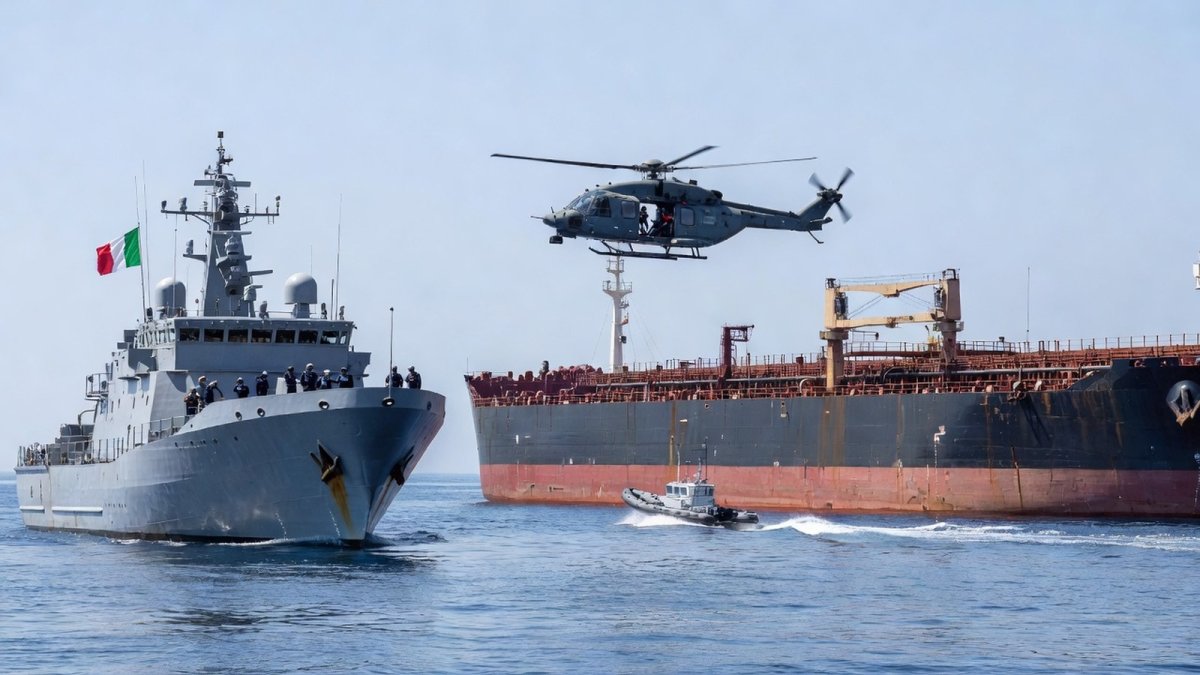
Rome, Italy – August 3, 2026 — Italian naval personnel from the offshore patrol vessel ITS Thaon di Revel boarded the Toa Payoh in international waters west of Pantelleria island on August 2, the Italian Defense Ministry said, verifying the vessel’s recent registry switch to Cameroon while it sailed from Benin toward Istanbul, according to a source familiar with the operation cited by Reuters. The action formed part of Operation IRINI, the EU mission launched in 2020 and commanded from Rome.
Details of the August 2 Boarding Operation
The inspection lasted approximately two hours after the captain initially refused cooperation, Italy’s Defense Ministry reported. Italian forces deployed via helicopter from the Thaon di Revel, supported by the Hellenic Navy frigate Kanaris and a Polish M28B1R Bryza aircraft operating from Sigonella Air Base. The mission collected documents but lacked authority to detain the vessel, leaving any further enforcement to national authorities.
Profile of the Toa Payoh and Shadow Fleet Tactics
The Toa Payoh operates within Russia’s network of aging, often uninsured tankers that use rapid reflagging and complex ownership structures to transport sanctioned crude. The vessel had altered its registry days before the stop, a common method to obscure links to Moscow. Such ships generate revenue that funds Russia’s military operations in Ukraine while also supplying fuel to occupied Ukrainian territories.
Shadow fleets operate through layered mechanisms that obscure vessel identities and ownership chains, allowing sanctioned oil movements despite international restrictions. Aging tankers frequently engage in flag-hopping, as seen when vessels like Toa Payoh shift registries shortly before operations, while disabling or falsifying AIS signals and relying on minimal insurance coverage to reduce traceability. These practices sustain large-scale networks estimated in the thousands of vessels, facilitating the transport of substantial oil volumes that bypass formal markets.
The February 2022 EU oil embargo and accompanying G7 price cap intensified reliance on such fleets, enabling Russia to redirect exports and generate revenue streams that support ongoing military expenditures. Provisions within the EU's 21st sanctions package, which address the sale of seized cargo, introduce additional layers of financial deterrence aimed at disrupting these circuits. Analytical examination reveals how these adaptations erode trust in global shipping registries and elevate operational costs across the sector.
For Middle East observers, the persistence of shadow fleet dynamics underscores vulnerabilities in energy supply chains that link Russian crude to alternative buyers, potentially influencing OPEC+ production decisions and regional pricing stability amid fluctuating enforcement pressures.
EU Sanctions Package and Expanded Interdiction Powers
The EU’s 21st sanctions package permits member states to sell seized crude, grain, and other commodities from shadow fleet vessels, with proceeds barred from reaching Russian entities. Following IRINI’s July 20 boarding of the MV South Star — the mission’s fourth interception of a Russian-linked vessel — EU foreign policy chief Kaja Kallas announced that the bloc had agreed to allow a joint naval mission in the Indian Ocean to intercept suspected shadow fleet tankers. Individual actions by France, Sweden, Belgium, and the UK have supplemented these efforts in territorial waters.
Italy’s Command Role and Mediterranean Security Posture
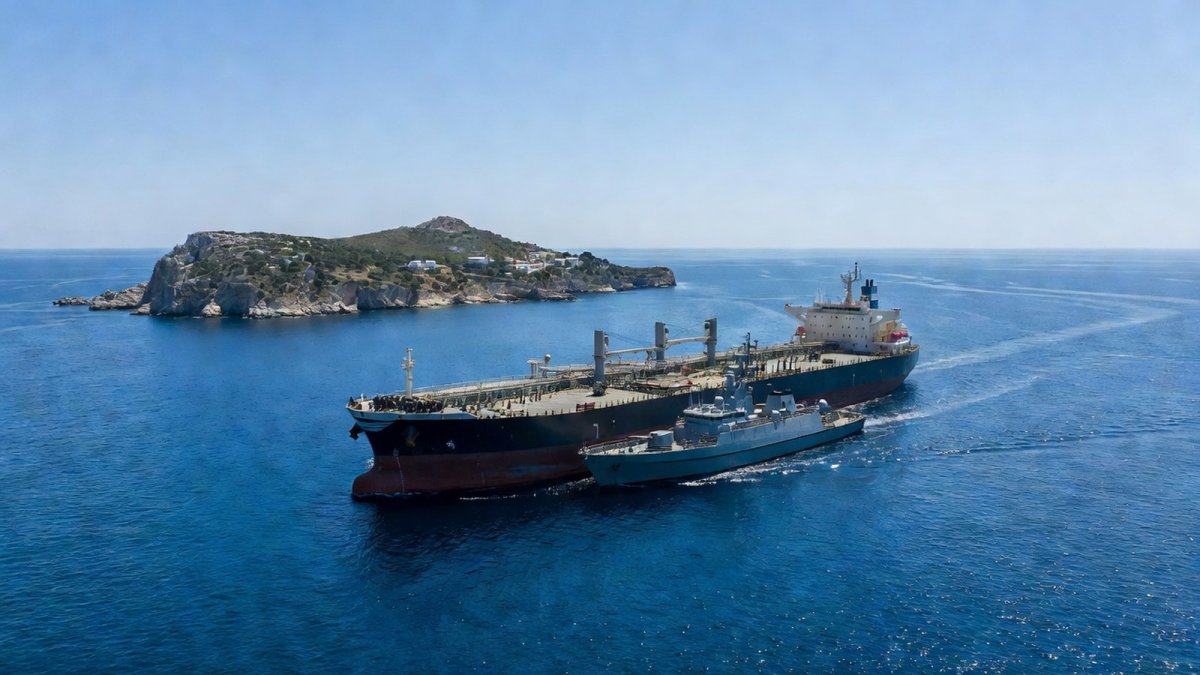
Italian Defense Minister Guido Crosetto praised the Thaon di Revel crew for their “professionalism, preparedness, and resolve,” describing the boarding as “further concrete evidence of Italy’s contribution to security in the Mediterranean and to the European Union’s efforts.” Rome’s leadership of IRINI positions Italy as a central actor in protecting sea lanes that carry energy supplies from Gulf producers and North African exporters to European refineries.
The IRINI mission, established in 2020 under UN Security Council Resolution 2292 to enforce the Libya arms embargo through the EUNAVFOR MED framework, has progressively adapted its operational scope amid shifting maritime security priorities. This evolution reflects broader European efforts to address sanctions evasion in international waters, where legal provisions permit inspections of vessels suspected of carrying prohibited cargo. Such adaptations enable forces to target shadow fleet activities without requiring flag-state consent in designated enforcement zones, thereby extending the mission's reach beyond its original Mediterranean focus.
Recent actions, including the July 20 boarding of MV South Star as the fourth such operation, illustrate this expanded mandate in practice. The deployment of assets like Greece's Kanaris frigate and Poland's Bryza aircraft from Sigonella underscores coordinated multinational logistics that enhance surveillance coverage. High Representative Kaja Kallas's announcement regarding Indian Ocean extensions signals potential future linkages between Mediterranean enforcement and distant theaters, raising questions about resource allocation and jurisdictional overlaps for regional actors monitoring energy flows.
These developments carry analytical weight for Middle East stakeholders, as they intersect with sanctions regimes affecting oil transit corridors. The mission's growth highlights tensions between enforcement efficacy and the risk of diplomatic friction with non-European powers, particularly where inspections challenge established maritime norms in waters critical to Gulf exporters.
Strategic Effects on Energy Markets and Regional Dynamics
Analysts suggest that sustained disruption of shadow fleet movements raises the cost of Russian oil exports, potentially supporting higher prices for Gulf crude in European markets and altering OPEC+ supply calculations. Mediterranean shipping security directly influences transit risks for tankers carrying Qatari LNG and Saudi exports, while Russia’s sanctions-evasion network competes with traditional Middle East suppliers for market share in Asia and Africa. Several market analysts note that sustained interdictions could shift leverage toward Gulf producers if Russian volumes face prolonged constraints.
The Mediterranean serves as a pivotal conduit for global energy transit, encompassing the Suez Canal, the SUMED pipeline, and LNG shipments originating from Qatar, Algeria, and Egypt. Sanctions enforcement operations in these waters interact directly with Gulf oil market dynamics, where OPEC+ coordination shapes supply responses to external disruptions. This interplay creates feedback loops that affect export strategies for producers seeking stable outlets beyond European markets.
In contrast to the Strait of Hormuz, where Gulf states maintain heightened vigilance over chokepoint risks, EU priorities center on Mediterranean interdictions due to proximity to European ports and established naval infrastructure. Such focus influences oil price trajectories by introducing uncertainty into sanctioned flows, while bolstering energy security for Southern European importers through diversified LNG access and reduced reliance on single-source dependencies.
Strategic analysis for Middle East readers highlights how these enforcement patterns may recalibrate freight economics and prompt Gulf exporters to reassess routing preferences, fostering resilience against secondary sanctions effects that ripple through interconnected energy networks.
Geopolitical Calculus and Future Enforcement Outlook
European capitals weigh the benefits of tighter sanctions enforcement against risks of Russian retaliation in energy supplies and hybrid maritime tactics. Gulf states monitor these developments for opportunities to increase market share, while Moscow seeks alternative routes through non-Western partners. If the proposed Indian Ocean mission proceeds, it would extend pressure on Russia’s evasion infrastructure beyond the Mediterranean, affecting global oil logistics and sanctions compliance patterns.
Italy derives tangible advantages from IRINI participation, including elevated positioning in Mediterranean security governance and reinforced alignment with NATO and EU frameworks that enhance its diplomatic leverage. Each successful interdiction diminishes Russian operational capacity by constraining revenue generation, limiting available tanker tonnage, and eroding confidence in cooperative flag registries that previously facilitated discreet movements.
Second-order consequences extend to insurance markets, flag-state administrations, and overall freight rate structures, where heightened scrutiny elevates compliance burdens and prompts fleet reconfiguration. Escalation risks, including potential Russian countermeasures or unintended maritime incidents, remain salient considerations that could destabilize broader trade lanes.
For Middle East audiences, these dynamics translate into indirect pressures on Gulf exporters through elevated shipping costs and variable energy price signals, while forward projections suggest sustained enforcement may encourage alternative financing models and diversified partnerships that reshape regional energy geopolitics over the medium term.
By Malik Hassan, Staff Writer
This article was produced with AI-assisted research and editorial support. Reporting is based on sources cited in the article.
What's Your Reaction?
 Like
0
Like
0
 Dislike
0
Dislike
0
 Love
0
Love
0
 Funny
0
Funny
0
 Wow
0
Wow
0
 Sad
0
Sad
0
 Angry
0
Angry
0
Middle East Correspondent at Global1.News. Based in Beirut, covering politics, conflict, energy, and society across the Middle East. Brings context and depth to a region often reduced to headlines.










Comments (0)