
Who Is Russia’s New Ambassador to North Korea?
Russia’s decision to appoint career diplomat Andrei Podelyshev as ambassador to the Democratic People’s Republic of Korea marks a subtle yet significant shift in the administration of one of Moscow’s most sensitive overseas postings.
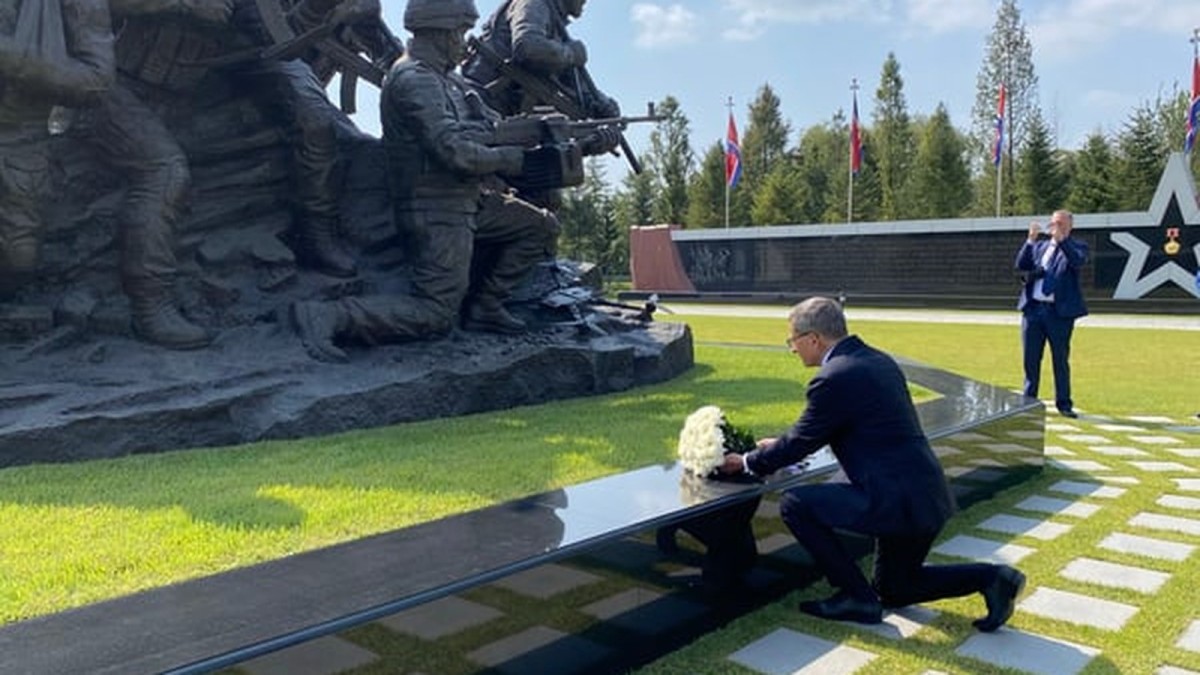
Russia’s decision to appoint career diplomat Andrei Podelyshev as ambassador to the Democratic People’s Republic of Korea marks a subtle yet significant shift in the administration of one of Moscow’s most sensitive overseas postings. The appointment, formalised by a presidential decree on 28 July 2026, ends an eight‑month vacancy that began with the death of long‑serving envoy Aleksandr Matsegora in December 2025. While the move may appear routine, the background of the new envoy—particularly his decade‑long tenure in the Russian Foreign Ministry’s Consular Department—offers insight into how Moscow is managing the rapidly expanding visa and labor‑migration pipeline that underpins the deepening military and economic partnership with Pyongyang.
From Nigeria to Pyongyang: The Diplomatic Journey of Andrei Podelyshev
Andrei Podelyshev arrived in Pyongyang on 26 September 2026, accompanied by his wife, after a direct Nordwind flight from Moscow. Upon landing, he proceeded straight to the Soviet‑era Liberation Monument to pay respects to Red Army soldiers, before visiting a newly constructed memorial dedicated to North Korean troops who fought alongside Russian forces in the 2024–2025 Kursk campaign. This itinerary underscores the symbolic weight Moscow places on the shared wartime narrative that frames the current alliance.
Podelyshev’s résumé reads like a textbook case of a “Korea‑literate” diplomat. A 1984 graduate of the Moscow State Institute of International Relations (MGIMO), he entered the Soviet Foreign Ministry the same year and has served at the Soviet embassy in Pyongyang, as well as at Russian missions in South Korea and the United States. He is fluent in both English and Korean, a skill set that is increasingly rare among senior Russian envoys in East Asia.
A Consular Specialist at the Helm
The most distinctive element of Podelyshev’s career is his ten‑year stint (2005‑2015) as deputy director of the Consular Department, the ministry’s branch responsible for visas, citizenship matters, and the movement of foreign nationals. This experience is directly relevant to the surge in Russian‑issued visas to North Korean citizens, a phenomenon that has accelerated since 2022. Official Russian data show that visas granted to North Koreans rose from 9,239 in 2024 to 36,413 in 2025, with more than 98 % classified as “educational” visas.
Investigations by NK Pro and other observers have revealed that the “student” visa category is routinely employed by Russian firms to bring North Korean labourers into the country, sidestepping United Nations Security Council Resolution 2375, which bars member states from issuing work permits to North Korean nationals. The Multilateral Sanctions Monitoring Team, in a September 2026 report, described the scheme as a “student visa” loophole that conceals labour migration, noting that many of the workers are placed in defence‑related facilities such as the Alabuga special economic zone in Tatarstan.
The Scale of the Labour‑Visa Programme
According to the same monitoring report, an estimated 15,000 to 30,000 North Korean labourers were employed in Russia by the end of 2025. Each worker reportedly earned roughly $7,500 a year, a wage up to five times higher than comparable labour in China. The concentration of these workers in high‑technology and defence sectors, including drone manufacturing, points to a strategic use of North Korean manpower to augment Russia’s military‑industrial capacity amid Western sanctions.
The sheer volume of visa processing now falling under the purview of the Russian embassy in Pyongyang transforms the post from a purely diplomatic outpost into a logistical hub. Managing this pipeline requires detailed knowledge of visa categories, documentation standards, and the institutional workarounds that have enabled the “student visa” scheme to flourish—expertise that Podelyshev possesses from his consular background.
Continuity and Change: From Matsegora to Podelyshev
Matsegora, who served as ambassador from December 2014 until his death in December 2025, was a veteran Asia‑desk diplomat with a career built around regional bureaucracy. His tenure coincided with the signing of the Comprehensive Strategic Partnership Treaty in June 2024, a watershed moment that formalised the security and economic dimensions of the Russia‑North Korea relationship. Matsegora’s long service—over a decade, the longest of any foreign ambassador to Pyongyang—reflected Moscow’s emphasis on continuity during a period of rapid strategic realignment.
In contrast, Podelyshev’s appointment signals a shift toward administrative competence rather than high‑level strategic signalling. While he is not a marquee figure in Moscow’s Asia policy establishment, his technocratic profile aligns with the embassy’s expanding operational responsibilities, especially the handling of visas, labour migration, and related logistics that have grown dramatically alongside the military partnership.
The Military Dimension of the Alliance
Since the 2024 security treaty, North Korea has deployed more than 10,000 troops to assist Russian forces in the recapture of Kursk, with South Korean intelligence estimating a total deployment of over 16,000 troops since October 2024. The same sources report that Pyongyang has supplied Russia with more than 15 million artillery rounds, and the United States estimates that North Korea earned between $7.7 billion and $14.4 billion through 2025 from its military assistance to Russia. Ukrainian President Volodymyr Zelenskyy has indicated that North Korea is preparing to send an additional 10,000 troops.
These figures illustrate that the alliance has moved beyond a symbolic partnership to a substantive, resource‑intensive collaboration. The logistical demands of moving troops, equipment, and ammunition across borders have heightened the importance of a functional consular apparatus, reinforcing the relevance of Podelysyev’s consular expertise.
Symbolic Acts and Strategic Messaging
Podelyshev’s first public act—paying tribute at both the Soviet Liberation Monument and the North Korean Kursk memorial—was a carefully choreographed gesture. By honoring Soviet World War II dead alongside North Korean casualties from the recent conflict, Moscow framed the current military alignment as a continuation of a historic “blood bond” rather than a temporary wartime convenience. This narrative serves both domestic and international audiences, reinforcing the ideological continuity that underpins Russia’s foreign policy rhetoric.
The timing of the appointment, however, also reveals a degree of strategic ambivalence. The eight‑month vacancy persisted through the most intense phase of military cooperation, suggesting that high‑level strategic decisions were being coordinated elsewhere—likely in Moscow’s security apparatus—while the diplomatic post remained unfilled. The eventual selection of a consular technocrat indicates that once the strategic framework was set, Moscow prioritized operational efficiency to sustain the alliance’s logistical backbone.
Implications for Future Russia‑North Korea Relations
The appointment of a consular specialist to the Pyongyang embassy signals that Moscow anticipates a prolonged, logistics‑heavy phase of its partnership with North Korea. As the visa pipeline continues to expand, the embassy will likely become a central node for managing labour migration, educational exchanges, and related economic activities that support the military collaboration.
Looking ahead, the durability of the alliance may hinge less on high‑level diplomatic signaling and more on the capacity of institutions like the Russian embassy in Pyongyang to process the growing flow of people and resources. Podelyshev’s background positions him to oversee this complex administrative machinery, ensuring that the “student visa” system and its associated labour channels remain functional under increasing international scrutiny.
In sum, the choice of Andrei Podelyshev reflects a pragmatic calculus: a seasoned diplomat with deep regional knowledge combined with a decade of consular management experience is well‑suited to navigate the operational challenges of an alliance that now spans battlefield coordination, massive arms transfers, and a burgeoning labour‑migration conduit. As the Russia‑North Korea partnership evolves, the effectiveness of this administrative hub will be a key determinant of how far the two regimes can push their joint strategic objectives in the face of mounting sanctions and geopolitical pressure.
This article was produced with AI-assisted research and editorial support. Reporting is based on the source material cited below. Sources: The Diplomat; thediplomat.com; Global1.News (03 October 2026).
By Kenji Tanaka, Staff Writer
What's Your Reaction?
 Like
0
Like
0
 Dislike
0
Dislike
0
 Love
0
Love
0
 Funny
0
Funny
0
 Wow
0
Wow
0
 Sad
0
Sad
0
 Angry
0
Angry
0
Japan Correspondent at Global1.News. Tokyo-based voice covering Japanese politics, technology, economy, and culture. Tracks the intersection of tradition and innovation in one of the world's most dynamic societies.









Comments (0)