
Ebola's Deadliest Outbreak in DRC History: The Race to Stop It
Folks, I need you to put down the coffee, turn off the background noise, and listen up. Because there is a story breaking right now that is not just a headline on a ticker — it is a five-alarm fire in the heart of Africa, and it is spreading faster than anything we have ever seen from this virus.
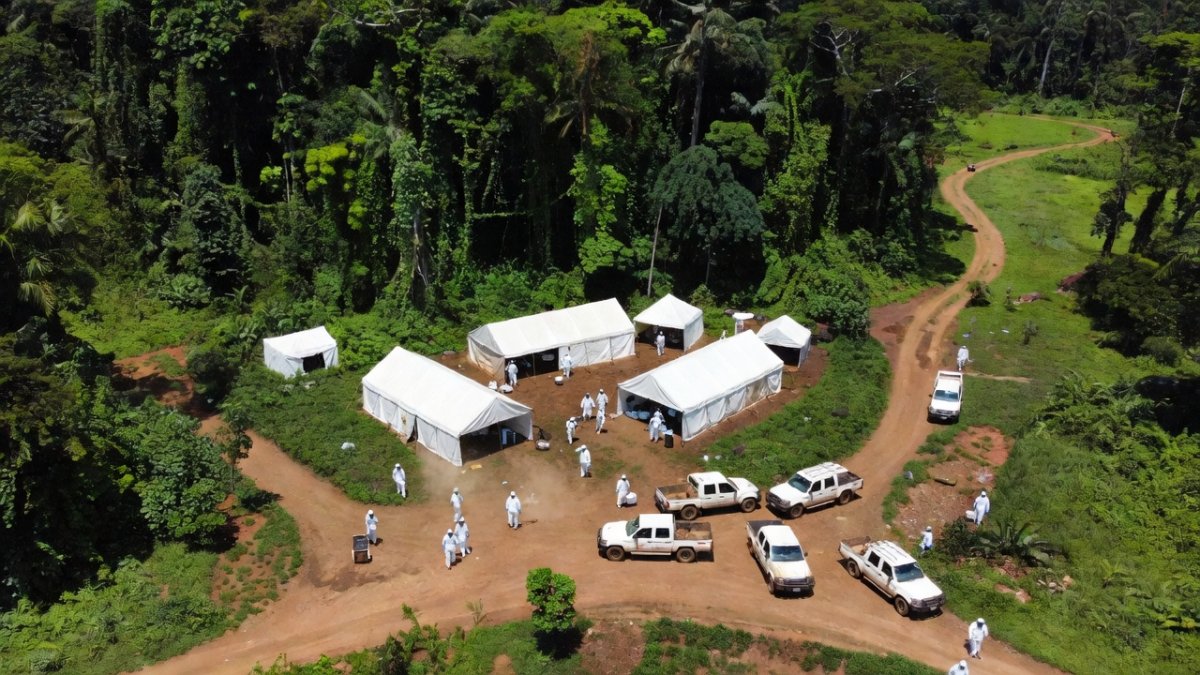
Folks, I need you to put down the coffee, turn off the background noise, and listen up. Because there is a story breaking right now that is not just a headline on a ticker — it is a five-alarm fire in the heart of Africa, and it is spreading faster than anything we have ever seen from this virus. I’m talking about Ebola. And not the Ebola we thought we had figured out. This is a new nightmare, a different beast, and it is tearing through the Democratic Republic of the Congo and Uganda with a speed that has global health officials waking up in cold sweats.
If you’re as fired up as I am — and you should be — then you need to know exactly what is happening on the ground. This isn’t a drill. This is the deadliest Ebola outbreak in DRC history. It is the second-largest ever recorded on this planet. And it is the fastest-growing outbreak of this virus in the known history of medicine. Let that sink in for a second. Fastest. Growing. Ever.
We are not talking about a distant problem that will stay in a remote jungle. We are talking about a virus that has already touched European soil. We are talking about a pathogen that is mutating. And we are talking about a response that is racing against a clock that is ticking louder every single day. So buckle up, because I am taking you inside this fight — the numbers, the science, the fear, and the hope. And I promise you, by the end of this, you will understand why this matters to every single person on this planet, no matter where you call home.
The Numbers That Should Wake Everyone Up
Let’s start with the raw, unfiltered data, because numbers don’t lie, and these numbers are screaming. The outbreak was officially declared on the 15th of May, 2026, in the Democratic Republic of the Congo’s Ituri province and in neighboring Uganda, including the capital city of Kampala. That’s right — Kampala. This is not a rural backwater story anymore. This virus has hit a major urban center.
Just two days later, on the 17th of May, the World Health Organization did something it does not do lightly. They declared this a Public Health Emergency of International Concern — a PHEIC. That is the highest alarm bell the global health community can ring. And they rang it almost immediately, because they saw what was coming.
Now, fast forward to mid-August 2026. The confirmed cases in the DRC have passed 4,000. Let me repeat that: over four thousand confirmed cases. And the cumulative deaths? They have reached 2,325. That number is not just a statistic. That number represents mothers, fathers, children, healthcare workers — real people with real names and real dreams. And that number has already surpassed the toll of the 2018-2020 outbreak, which killed about 2,280 people. That previous outbreak was the worst the DRC had ever seen. This one has now eclipsed it. This is the deadliest Ebola outbreak in the country’s history, and it is not done yet.
But here is the part that should make your blood run cold. The WHO Africa office has confirmed that cumulative deaths crossed the 2,000 mark only 86 days after the outbreak was declared. Eighty-six days. That is less than three months. The 2018 outbreak took over a year to reach that grim milestone. This virus is moving at a pace we have never witnessed before. And the most recent WHO Situation Report, dated the 14th of August 2026, shows that since the 1st of August alone — just two weeks — there have been an additional 1,060 confirmed cases and 597 confirmed deaths in the DRC. That is over a thousand new cases in a fortnight. This is exponential. This is a wildfire.
Why This Outbreak Is Different: The Bundibugyo Factor
Now, you might be thinking, “Jessica, we’ve beaten Ebola before. We have vaccines. We have treatments. Why is this so scary?” And that is exactly the right question to ask. The answer, folks, is a scientific gut punch. This outbreak is caused by a species of the virus called the Bundibugyo ebolavirus. And here is the kicker: there is NO licensed vaccine for this species. There is NO specific treatment for this species. Zero. Zilch. Nada.
All of the existing Ebola treatments and vaccines that we have celebrated in the past — the ones that helped contain the 2014 West Africa outbreak and the 2018 DRC outbreak — they were certified for a different species, the Zaire ebolavirus. That is like having a key that only works on one lock, and then someone changes the lock on you. The Bundibugyo virus is a different enemy, and our current arsenal is largely useless against it.
This is why the case fatality rate is hovering around 45%, according to the European Centre for Disease Prevention and Control. Nearly half of the people who contract this virus are dying. And because we don’t have a targeted treatment, doctors are left with supportive care — fluids, oxygen, managing symptoms — and hoping the patient’s immune system can fight it off. That is not a strategy. That is a prayer.
And to make matters worse, health officials are now openly worried that the virus could be mutating. The Guardian reported on the 6th of August 2026 that there is genuine concern the virus is changing as it passes through human hosts. A mutating virus in the middle of an uncontrolled outbreak is the stuff of epidemiological nightmares. It means our diagnostic tests might miss it. It means our response protocols might fail. It means we are chasing a moving target.
Where the Outbreak Is Hitting Hardest
Let’s zoom in on the ground, because this is not a uniform crisis. The epicenter of this outbreak is Ituri province in the northeastern part of the Democratic Republic of the Congo. This is a region that has been plagued by decades of conflict, armed group violence, and a massive humanitarian crisis. You cannot fight a virus in a war zone. You cannot do contact tracing when people are fleeing their homes because of gunfire. You cannot build trust with communities when they have been terrorized by outsiders for years.
Ituri is remote, but it is also densely populated in certain areas. That combination is a death sentence for containment efforts. The insecurity in the province is not just a side note — it is a primary driver of this outbreak’s explosive growth. Aid workers are being attacked. Health clinics are being looted. And every time a response team has to pull back for safety, the virus gains ground.
And then there is Uganda. The outbreak has spilled over the border, with about 20 confirmed cases and at least 2 deaths reported there. Now, twenty cases might sound small compared to the thousands in the DRC, but do not be fooled. The fact that it reached Kampala — a city of over 1.5 million people — is a terrifying indicator of how easily this virus travels. Uganda is on high alert, but they are fighting an uphill battle because the virus does not respect borders, and neither does the chaos that comes with it.
The response is being coordinated by the WHO, the US CDC, the European CDC, and the Africa CDC. They are all on the ground. But they are operating in an environment where every single day is a logistical nightmare. You have to reach patients in areas with poor roads, no electricity, and active conflict. You have to convince scared communities that you are there to help, not to harm. And you have to do it all while wearing a hazmat suit in 90-degree heat. It is heroic work. But heroism alone does not stop a virus.
The Race for a Vaccine — and a Worry About Mutation
Now, let’s talk about hope, because there is some. On the 4th of August 2026, the WHO announced something that had never been done before: a new vaccine trial specifically for the Bundibugyo species. They are using the Ervebo vaccine platform — the same technology that was used to create the successful Zaire vaccine — and they are repurposing it to target this new enemy. This is the world’s first vaccine trial for this Ebola species. It is a major step, a genuine breakthrough in the making.
But here is the reality check: results may be months away. Months. And in an outbreak that is adding over a thousand cases every two weeks, months might as well be an eternity. The trial is a race against time, and everyone knows it. The scientists are working around the clock. The regulators are moving as fast as they safely can. But science has its own pace, and you cannot rush a clinical trial without risking safety.
And while we wait for the vaccine, there is that nagging fear of mutation. The Guardian’s report on the 6th of August is not just speculative doom-mongering. When a virus passes through thousands of human hosts, it copies itself, and sometimes it makes mistakes. Those mistakes are mutations. Most of them are harmless. But some of them can make the virus more transmissible, more virulent, or better at evading our immune response. If this virus mutates in the wrong direction, we could be looking at a pathogen that is even harder to stop.
This is why the global community cannot afford to be complacent. We cannot wait for the outbreak to be on our doorstep before we act. The vaccine trial is a beacon of hope, but it is a distant lighthouse in a storm. We need to keep the ship afloat until that light reaches us.
The Global Threat: One Imported Case, Zero Second Chances
If you think this is only Africa’s problem, let me introduce you to a cautionary tale that should chill you to the bone. On the 24th of June 2026, France reported an imported case of Ebola. A traveler brought the virus from the outbreak zone to Europe. One person. One flight. And suddenly, a country thousands of miles away was dealing with a potential super-spreader event.
Thankfully, there was no secondary transmission. The patient was isolated, treated, and eventually discharged. France declared itself Ebola-free on the 28th of July 2026. That is a success story. But it is also a warning shot. It took just one person to bring this virus to Europe. It took one missed screening, one delayed quarantine, one moment of human error to create a potential catastrophe.
And here is the thing, folks: the world got lucky with that case. The patient was identified quickly, the contact tracing was aggressive, and the healthcare system was prepared. But what happens when that luck runs out? What happens when an infected person boards a flight to New York, or London, or Sydney, or Atlanta? What happens when the virus lands in a city with a strained healthcare system and a population that is not paying attention?
This is not fear-mongering. This is the reality of a globalized world. A virus that is in Kampala today can be in Paris tomorrow and in your city by the weekend. The WHO, the US CDC, the ECDC, and the Africa CDC are all actively responding, but they cannot be everywhere at once. They need the public to understand the stakes. They need governments to fund the response. And they need every single one of us to stop treating this like a distant tragedy and start treating it like the global emergency it is.
What Happens Next
So, where do we go from here? The next few months are critical. The vaccine trial is underway, and if it shows promise, we could have a tool to fight this specific species. But that is a big “if,” and it is months away. In the meantime, the response on the ground needs to be scaled up dramatically. That means more healthcare workers, more protective equipment, more mobile labs, and more community engagement.
It also means addressing the root causes of this outbreak’s spread. The insecurity in Ituri province is not a side issue — it is the main issue. You cannot contain a virus in a war zone. The international community needs to push for a ceasefire, or at least a humanitarian corridor, so that aid can reach the people who need it. This is not a political statement; it is a public health imperative. If the guns don’t stop, the virus won’t either.
And we need to watch Uganda closely. The cases there are still relatively few, but the potential for explosive growth is real. The Ugandan government, with support from the WHO and Africa CDC, needs to be aggressive in its surveillance and response. Every single case needs to be traced. Every single contact needs to be monitored. Every single community needs to be educated. This is how you stop an outbreak from becoming a pandemic.
The good news is that we have done this before. We have beaten Ebola outbreaks in the past. We have the knowledge, the technology, and the expertise. What we need now is the political will, the funding, and the global solidarity to match the scale of this threat. This is not the time for budget cuts or bureaucratic delays. This is the time for action.
What You Can Do
Now, I know what some of you are thinking. “Jessica, I’m just one person. What can I possibly do about an Ebola outbreak in the DRC?” And I hear you. It can feel overwhelming. But let me tell you, there are concrete steps you can take right now to make a difference.
First, get informed. Do not rely on soundbites or social media rumors. Go to the sources — the World Health Organization, the US CDC, the Africa CDC. Understand what is happening and why it matters. Knowledge is power, and in this case, knowledge can save lives.
Second, speak up. Talk to your friends, your family, your colleagues. Share this article. Share the facts. The more people who understand the severity of this outbreak, the more pressure there will be on governments and international organizations to act. Silence is the enemy of action.
Third, support the responders. There are organizations on the ground — Doctors Without Borders, the Red Cross, local health agencies — that are risking their lives every day to fight this virus. They need funding, they need supplies, and they need our support. If you can donate, do it. If you can volunteer, do it. If you can advocate for more funding, do it. Every dollar, every hour, every voice matters.
Fourth, stay vigilant. If you are traveling, be aware of the situation. Follow the guidance from health authorities. And if you are feeling unwell, especially if you have traveled to affected areas, seek medical attention immediately. Early detection saves lives — yours and others.
And finally, do not give in to fear. Fear is what the virus wants. Fear makes us turn on each other. Fear makes us close borders and hoard resources. Fear makes us forget our common humanity. We are all in this together, and we will only get through this together. The people of the DRC and Uganda are not “them.” They are us. They are our brothers and sisters. And they need us to show up.
Folks, this is a defining moment. The world is watching. The question is not whether we can stop this outbreak — I believe we can. The question is whether we will. Will we act with the urgency this moment demands? Will we invest in the science, the security, and the solidarity needed to win this fight? Or will we look back in a year and wonder why we didn’t do more when we had the chance?
I don’t know about you, but I refuse to be on the wrong side of history. I refuse to let this virus win because we were too distracted, too divided, or too indifferent to act. We have the power to change the course of this outbreak. We have the tools. We have the talent. We just need the will.
So, let’s get fired up. Let’s get informed. Let’s get involved. And let’s make sure that when the history books are written about this outbreak, they talk about the heroes who stopped it, not the bystanders who watched it happen. The fight is on. And we are all in it together.
Stay safe. Stay informed. And stay in the fight.
By Jessica Ali, Staff Writer
This article was produced with AI-assisted research and editorial support. Sources: World Health Organization, US CDC, UN News, CNN, Al Jazeera, The Guardian.
What's Your Reaction?
 Like
0
Like
0
 Dislike
0
Dislike
0
 Love
0
Love
0
 Funny
0
Funny
0
 Wow
0
Wow
0
 Sad
0
Sad
0
 Angry
0
Angry
0

Editor-in-Chief at Global1.News. Atlanta-based journalist who cuts through the BS and tells it like it is. Lead anchor, host, and the voice you hear when the spin stops and the truth starts.









Comments (0)