
Microsoft Walks Out on Britain's Biggest AI Datacentre Weeks Before Its $3 Billion IPO
Microsoft has ended its anchor tenancy at Nscale's Loughton, Essex AI datacentre, leaving Britain's flagship AI supercomputer without a publicly announced customer weeks before a $3bn US listing, as grid power may not arrive until the 2030s.
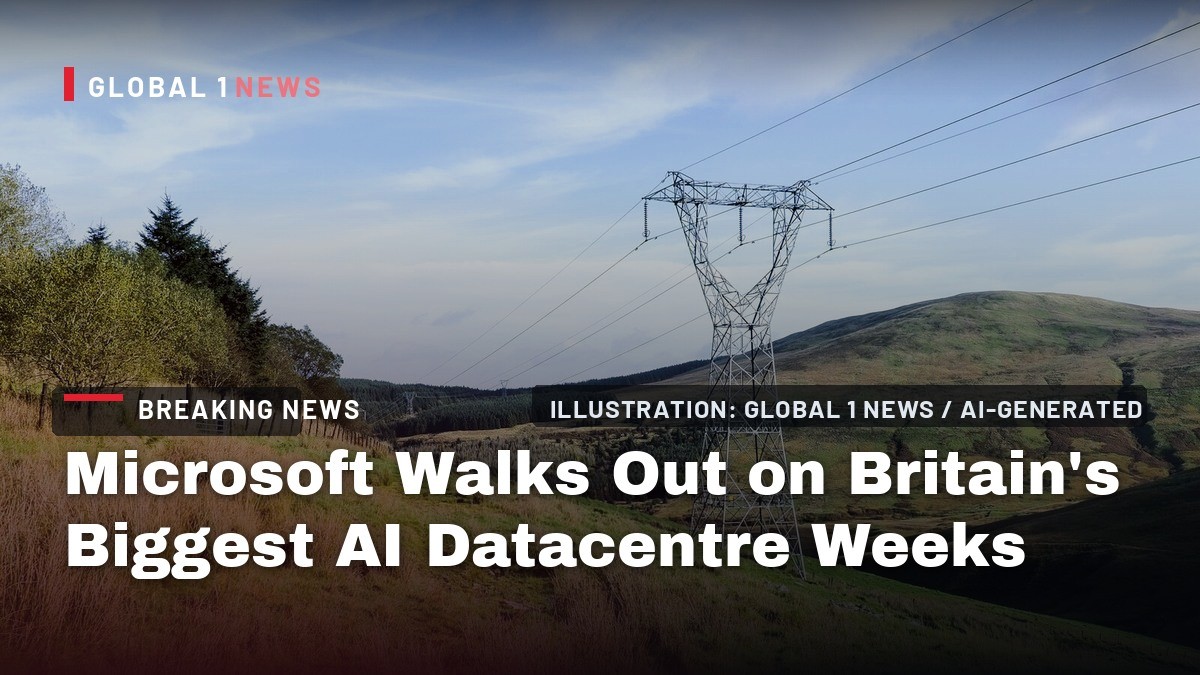
Microsoft has walked away from the anchor tenancy at what ministers called Britain's largest sovereign AI datacentre, weeks before the company behind it seeks up to $3 billion in a US listing. The site in Loughton, Essex, has no publicly announced customer left. The power it needs may not arrive until the 2030s.
Microsoft Walks Out on Britain's Biggest AI Datacentre Weeks Before Its $3 Billion IPO
Loughton, England — Microsoft terminated its agreement to be anchor tenant at Nscale's planned £2 billion AI campus in Loughton, Essex, The Daily Telegraph first reported on Sunday 18 October 2026. Microsoft declined to comment. Nscale says it remains committed to the site and is exploring alternative power sources. The withdrawal lands weeks before Nscale's filed US initial public offering, and it leaves the project without the committed customer that was meant to underwrite it.
What Microsoft Walked Away From
The anchor tenant is the first big committed customer, the contract that lets lenders and investors price the risk of a build. Microsoft held that role at Loughton. The Guardian reported that Microsoft "informed the company that it was pulling the plug on its agreement" over concerns about power supplies. That is the Guardian's attribution, not Microsoft's. Microsoft has given no reason. The Telegraph established none. Microsoft did not comment to the Telegraph, declined a Reuters request for comment, and did not immediately respond to Bloomberg outside business hours. The end of the deal "means Nscale has lost its only publicly announced customer for the Essex datacentre," the Guardian reported. No replacement tenant has been named. No financial value for the Essex agreement has been disclosed. Microsoft remains on board for another Nscale project in Norway, and the two companies are still working together in Portugal and the United States.
The Site That Was a Scaffolding Yard in March
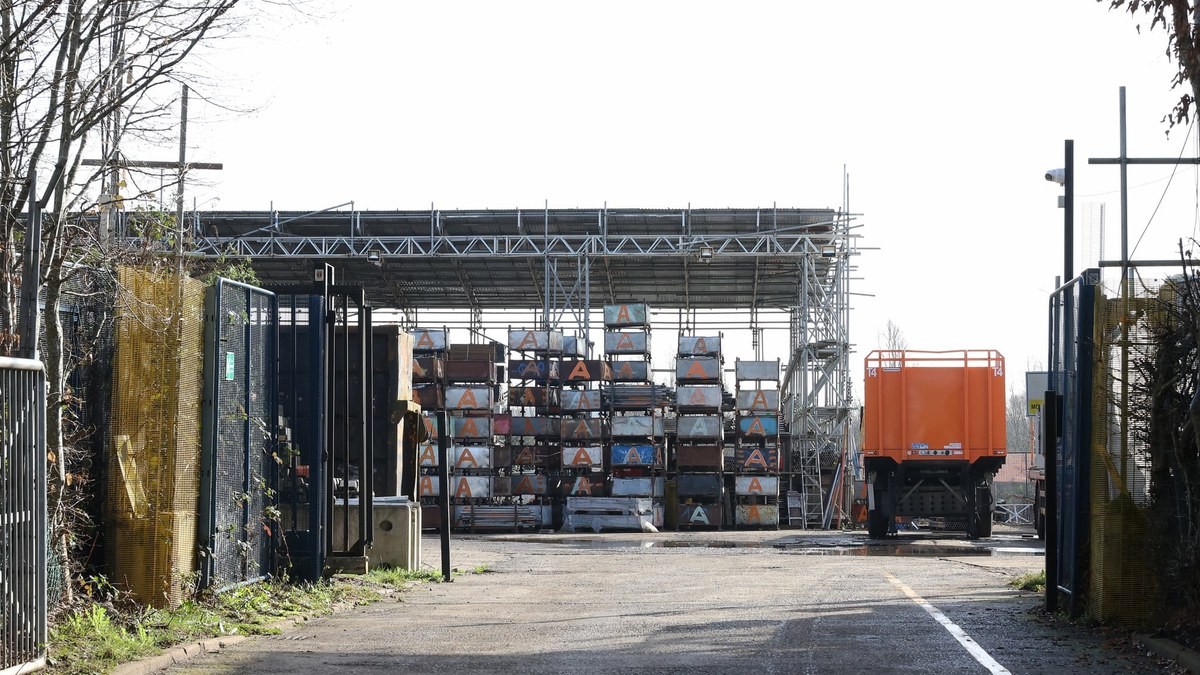
In March 2026, a Guardian investigation into what it called "phantom investments" found the planned location was still an operational scaffolding yard. The site has since been cleared by Nscale. The project was announced in 2025 as part of the first UK-US tech deal, and Keir Starmer's government described it as the "largest UK sovereign AI datacentre." Nscale's press release of 16 September 2025 said the AI campus "will deliver 50MW of AI capacity, scalable to 90MW, and will initially house 23,040 NVIDIA GB300 GPUs delivered in Q1 of 2027." The same release said the facility "will play a vital role in providing Microsoft's Azure services across the UK." It was due to open in 2027 and to create 250 permanent jobs when it eventually opens. Only last month, Microsoft announced that some of the $30 billion it is investing in the UK would fund the Loughton supercomputer. How much of that commitment is affected has not been confirmed.
The Grid Said the 2030s
UK Power Networks, which owns and maintains the electricity grid across London and the south-east and will connect the site, told Nscale the grid will not be able to supply enough electricity until the early to mid-2030s. The Telegraph reported that authorities told Nscale they do not expect a power supply until the 2030s. The BBC reported power was due at the end of the year; it is now the 2030s. A UKPN spokesperson said: "In general, many datacentres, whilst they will connect to our distribution network, are awaiting works on the wider national electricity transmission network before they can begin operation." UKPN said it could not comment on an individual project. National Grid said it is "continuing to work closely with Neso [National Energy System Operator], distribution network operators and customers to identify opportunities to accelerate connections where possible and support economic growth." City AM reported Nscale had secured planning permission and a 90MW grid connection six days before that report, but the electricity supply is now expected later than originally anticipated. At 50 to 90 megawatts, the campus would consume as much electricity in a year as about 315,000 typical UK homes, on Ofgem's 2026 consumption figures.
A $3 Billion Listing That Rests on Two Customers
Nscale filed for a US initial public offering on 18 September 2026, seeking to raise as much as $3 billion as soon as October. A Wall Street flotation this year could value the company at $35 billion, the Guardian reported. The filing discloses the concentration. Microsoft and Anthropic account for around 85% of Nscale's contracts. As of 31 August 2026, the S-1 records approximately $2.6 billion of active contract value and $103.4 billion of active and contracted total contract value under long-term take-or-pay agreements. Nvidia is an investor. Nscale competes with CoreWeave, Nebius, Crusoe and Lambda in the neocloud market. In September it secured a $900 million revolving credit facility backed by a syndicate including JP Morgan, Goldman Sachs and Morgan Stanley. Its board includes former UK deputy prime minister Nick Clegg and former Meta chief operating officer Sheryl Sandberg. Clegg holds a 0.25% stake that could be worth $88 million at a $35 billion valuation.
Norway Is Six Months Behind Too
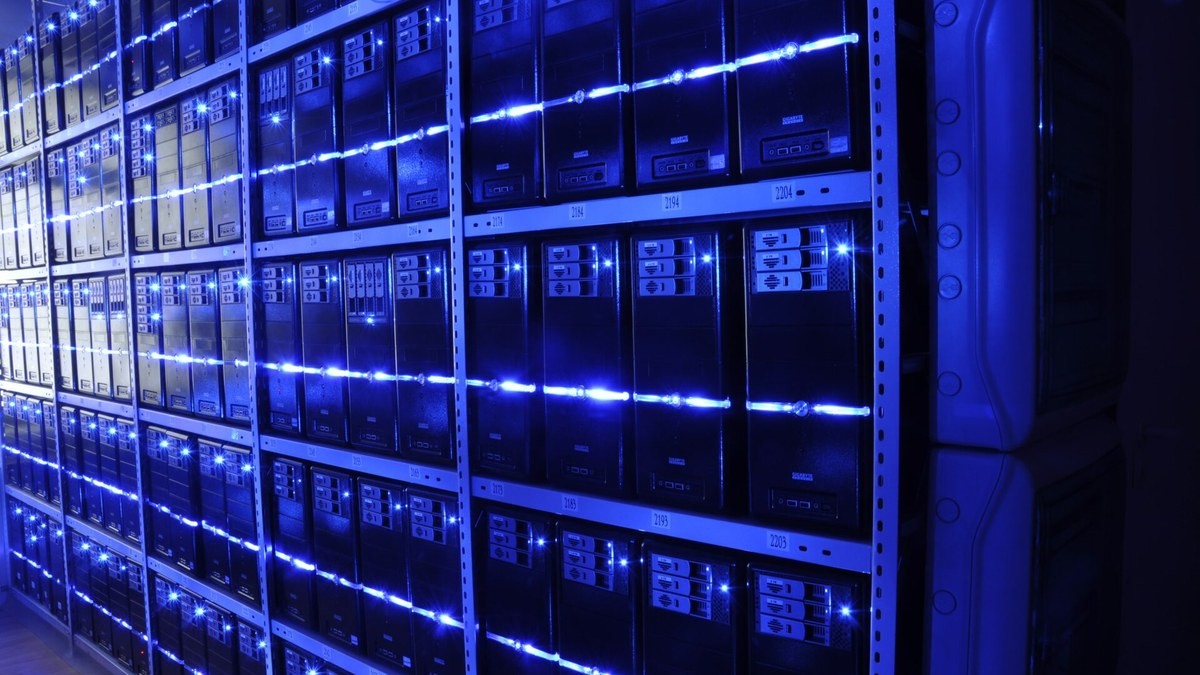
The Essex site is not the only schedule under strain. Nscale's flagship data centre in Norway is about six months behind schedule, with only 6.4MW of the intended 30MW capacity running, according to Bloomberg. That matters because Norway is the project Microsoft has not walked away from, and Norway is where Nscale has secured long-term electricity agreements. The wider market has turned cautious on the sector. CoreWeave shares fell about 25% last week, the stock's worst week since November, after its co-founder said the company was exploring borrowing in investment-grade debt markets. Australian data centre developer Firmus scrapped its IPO after failing to attract sufficient support for the marketed share price. On 14 October the IMF warned that an AI bubble could burst and take the global economy with it.
The Neoclouds Are the Fault Line
The Guardian reported on 18 October that there is "a growing chorus of voices" suggesting neoclouds may be a vulnerability in the broader AI economy, especially as delays pile up across partners. The label covers the newer, rented-compute specialists: Nscale, CoreWeave, Nebius, Crusoe, Lambda. Their model depends on signing large take-or-pay contracts, borrowing against them, and turning power into revenue on schedule. Every quarter of grid delay is a quarter of revenue that does not arrive against debt that still does. The Uptime Institute, which inspects and rates datacentres, counted 250 projects worldwide above 100MW announced between 2021 and 2024, and believes half of them will either not happen or be delayed. Taco Engelaar, senior vice president at infrastructure firm Neara, said: "Britain's dreams of data centre sovereignty will disappear if we don't get a grip on the grid." He added: "This latest delay should hammer home the fact that billion-dollar investment and political ambition mean nothing against our eminently physical infrastructure and the constraints it presents." The exposure is not theoretical. It sits in a filed S-1, in a syndicate of banks, and in a queue for electricity that Nscale does not control.
Britain Promised Clean Power and AI Power at Once
The numbers explain the queue. Ofgem said in June 2026 that 315 datacentres were waiting to connect to the National Grid, representing 73GW of demand, against peak energy demand for the entire country of 45GW. That is up almost 50% in a year, and now sits almost 30GW above national peak demand. In July, Ofgem proposed a regime of hard milestones and forfeitable commitment fees to stop speculative projects holding places in the queue. NESO's most conservative forecast for Great Britain datacentre capacity by the end of the decade is 3.7GW; the top end is 6.7GW. The government's compute roadmap promises "at least 6GW of AI-capable datacentre capacity by 2030." LCP Delta forecasts Britain will reach roughly 83% clean electricity by 2030, not the 95% target, with about 27TWh of renewables curtailed and gas filling the gap. More than 100 UK projects are now considering gas generation while awaiting permanent grid connections, according to City AM. The retrenchment is not only British: Scotland halted new hyperscale AI datacentre approvals in September over grid concerns, Amsterdam has restricted new data centres and expansions, and a Danish government bill would give large electricity users lower priority for connections.
What the Government Says Now
There is no government statement specifically on the Microsoft withdrawal. There is the standing position. A government spokesperson said Neso and Ofgem were working to ensure the right projects got power connections under a reform of the application process: "We are reversing decades of underinvestment and delivering the biggest upgrade to the grid in decades." Energy minister Michael Shanks said in July: "Britain needs a grid connections system that works for the 21st century and allows businesses to invest and grow, creating jobs across the country. That's why this government reformed the connections process and why Ofgem's actions will help ensure that viable, connection-ready projects can get going and not be held up by speculative applications." Sir Keir Starmer, in Nscale's September 2025 press release, said: "In this age of AI, I want the UK to be the destination of choice for companies at the forefront of technological change, and renowned for harnessing homegrown talent and building sovereign capability." He added that the announcements marked "a decisive step towards the UK becoming a world leader in AI."
What Is Not in Dispute
The facts both sides accept are narrow and hard. Microsoft terminated its anchor tenancy at Loughton. Nscale has no publicly announced customer for the Essex site and has named no replacement. Nscale has secured planning permission and a 90MW grid connection; the power supply is now expected in the early to mid-2030s, not at the end of the year. The 2027 opening date has not been formally delayed, but the timeline is now in question. Nscale's spokesperson said: "We remain committed to both the Loughton project and the UK and we are exploring alternative power sources for the site, in addition to other expansion sites in the UK." The spokesperson added: "Our relationship with Microsoft remains strong and long-term, and this unfortunate London-wide grid issue has no impact on our other contracts." Microsoft has not commented. The IPO has been filed, not pulled, delayed or repriced. No financial value for the Essex deal has been disclosed.
What Happens Next
Watch three things. First, the IPO: Nscale is seeking up to $3 billion as soon as October, and investors will now price an anchor tenancy that no longer exists. Second, the power: Nscale says it is exploring alternative sources, and more than 100 UK projects are already looking at gas generation while they wait. Third, the queue: Ofgem's proposed commitment fee, between 2.5% and 7.5% of average project cost with hard milestones, could mean a £350 million pledge to hold 500MW of capacity, and that regime will decide which projects keep their place. NESO's 3.7GW low-end forecast sits well below the government's 6GW promise for 2030. The government has promised the biggest grid upgrade in decades. Microsoft has said nothing publicly at all. Nscale carries the exposure, its banks carry the paper, and Loughton carries a cleared site built for a customer that has now gone.
By Jessica Ali, Staff Writer
This article was produced with AI-assisted research and editorial support. Sources: The Telegraph, Reuters, Bloomberg, BBC News, The Guardian, Euronews, City AM and Nscale. Photographs: Trevor Littlewood/Geograph (CC BY-SA 2.0); Martin Godwin/The Guardian; BalticServers.com (CC BY-SA 3.0).
What's Your Reaction?
 Like
0
 Dislike
0
 Love
0
 Funny
0
 Wow
0
 Sad
0
 Angry
0

Editor-in-Chief at Global1.News. Atlanta-based journalist who cuts through the BS and tells it like it is. Lead anchor, host, and the voice you hear when the spin stops and the truth starts.














Comments (0)