
Personal attacks fire up debate before Brazil's run-off vote
Brazil’s presidential runoff is shaping up as a clash of personalities rather than policies, as the televised debate between incumbent left‑wing President Luiz Inácio Lula da Silva and right‑wing challenger Senator Flávio Bolsonaro demonstrated.
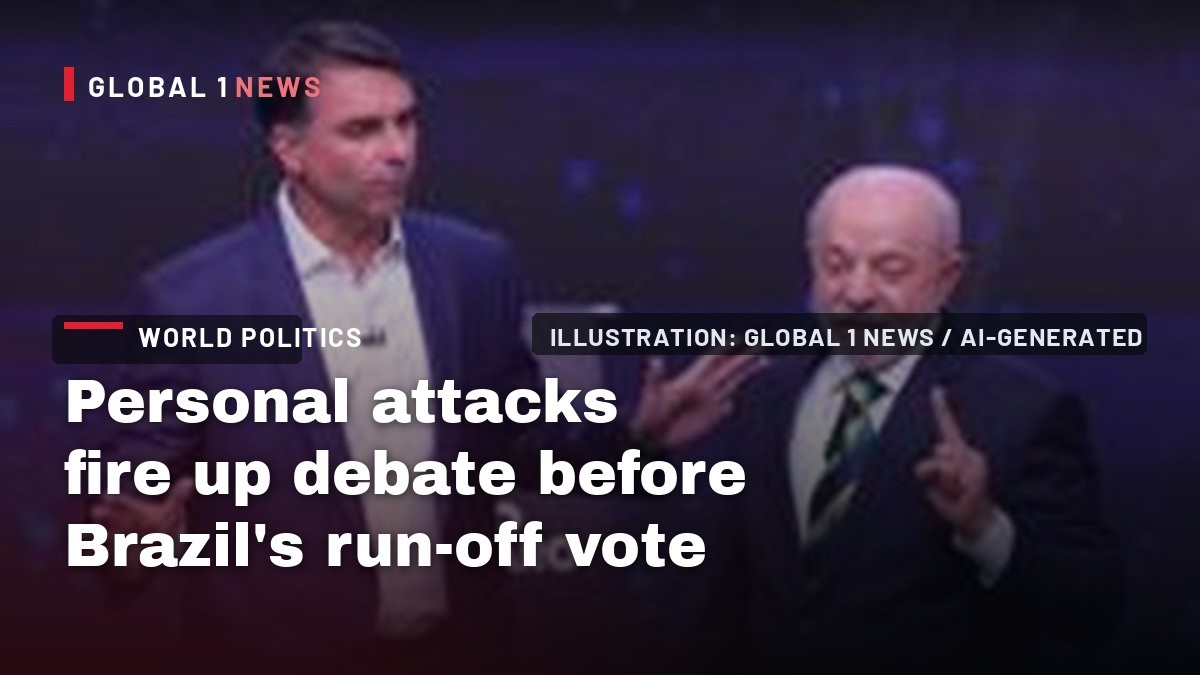
Brazil’s presidential runoff is shaping up as a clash of personalities rather than policies, as the televised debate between incumbent left‑wing President Luiz Inácio Lula da Silva and right‑wing challenger Senator Flávio Bolsonaro demonstrated. The showdown, held a week before voters head to the polls, was marked by sharp personal attacks, theatrical gestures and a tone that analysts warn could deepen voter disengagement. With the first‑round results still fresh—Bolsonaro leading by a narrow margin and both candidates short of the 50 % threshold—the debate was billed as a decisive moment to sway undecided voters. Instead, it left many observers questioning whether Brazil’s democracy can survive a campaign that has drifted far from substantive issues.
The run‑up numbers: a neck‑and‑neck race
On 4 October, Brazil held its first round of voting. Flávio Bolsonaro, running under the Liberal Party, secured 47 % of the vote, edging out Lula’s 45.2 %. Both fell short of the absolute majority needed to avoid a second round, setting the stage for a runoff that analysts described as “neck and neck.” The result also defied earlier opinion polls that had projected a clearer lead for the incumbent.
Since the return to democracy in 1988, no candidate who lost the first round has ever turned the tide to win the second. Lula, aware of this historical pattern, has urged his supporters to “win in extra time,” signalling confidence that the runoff could still swing in his favour despite the tight margins.
The debate’s tone: personal attacks over policy
Both pollsters and political analysts agreed that the televised debate was dominated by personal jabs rather than concrete policy proposals. Yuri Sanches of AtlasIntel described it as a “debate in which no policies were discussed and there were no rational arguments.” For the independent voter, who oscillates between skepticism of Bolsonaro and the Workers’ Party, the impression was largely negative.
Lucas Aragão of Arko Advice noted that Bolsonaro appeared calmer than in the first round, managing to “get under Lula’s skin.” The exchange was less about governance and more about psychological positioning, a tactic that may have resonated with voters already fatigued by partisan rancor.
Key moments: accusations, gestures and theatrics
The debate’s format added to its chaotic feel. Candidates paced around the studio, often speaking over each other, while the set’s cramped layout forced them into close physical proximity. At one point, Bolsonaro invited Lula to “stand next to him so that the two could talk,” a move that Lula rebuffed by insisting on keeping “distance from the Bolsonaro family” and “the militia.”
Bolsonaro’s theatricality continued when he held up his palm with the word “CORRUPTO” written on it, pointing to the Workers’ Party’s initials (PT) and emphasizing the party’s alleged corruption. He also tried to bait Lula with a quip about his own wallet being stolen if they were too close, underscoring the personal nature of the exchange.
Criminality and the “militia” narrative
Crime was a central theme, with Bolsonaro framing himself as the candidate of law and order. He challenged Lula to explain why crime rates had risen during his four‑year tenure, a claim that resonated with voters concerned about safety. Bolsonaro also alleged, without presenting evidence, that “the majority of convicts vote for Lula,” linking the incumbent to Brazil’s criminal underworld.
Lula countered by invoking the specter of Flávio’s father, former President Jair Bolsonaro, who is serving a lengthy prison sentence for plotting to overthrow Lula after the 2022 election. Lula’s retort—“I wish it was 100 %, even your father”—was a thinly veiled jab at Flávio’s lineage and a reminder of the lingering political trauma from the previous administration.
Transparency offers a rare moment of substance
Amid the barrage of insults, Lula managed a brief but notable substantive gesture. He pledged to open his financial and phone records, as well as those of his family, to judicial scrutiny, and challenged Bolsonaro to do the same before the runoff. Rafael Cortez of da Tendências Consultoria highlighted this as a “goal” for Lula, suggesting that the promise of transparency could appeal to voters weary of corruption scandals.
Bolsonaro dismissed the allegations of his own links to paramilitary vigilante groups as “fake news,” refusing to engage with the transparency demand. This refusal left a stark contrast between the two candidates: one offering openness, the other deflecting scrutiny.
Potential impact on voter turnout
The aggressive tone of the debate has raised concerns about voter abstention. Analysts warned that the personal attacks could further alienate independent voters, who already feel disenchanted by the polarising rhetoric. The negative impression noted by AtlasIntel’s Yuri Sanches suggests that the debate may have hardened opposition rather than swayed undecided voters.
With the second debate scheduled for Friday—just two days before polls open—the stakes are high. If the tone remains confrontational, it could depress turnout, especially among younger voters who have expressed fatigue with “political theater.” Conversely, a shift toward substantive discussion could re‑engage those on the fence.
Looking ahead: what the runoff could mean for Brazil
The runoff will test whether Brazil’s electorate can move beyond personal vendettas to evaluate the concrete futures each candidate offers. Lula’s promise of transparency and his appeal to the Workers’ Party’s legacy of social programs contrast with Bolsonaro’s law‑and‑order narrative and his emphasis on “iron‑fist” approaches to crime.
Regardless of the outcome, the debate underscored a troubling trend: Brazilian politics increasingly framed as a battle of egos rather than a contest of ideas. As the nation stands on the brink of a decisive election, the challenge will be to ensure that the final vote reflects a considered choice for the country’s future, not merely a reaction to theatrical provocations.
This article was produced with AI-assisted research and editorial support. Reporting is based on the source material cited below. Sources: BBC News Latin America; bbc.co.uk; Global1.News (19 October 2026).
By Elena Vasquez, Staff Writer
What's Your Reaction?
 Like
0
 Dislike
0
 Love
0
 Funny
0
 Wow
0
 Sad
0
 Angry
0
Latin America Correspondent at Global1.News. Based in Mexico City, covering politics, economics, energy, and culture across the region. Brings an on-the-ground perspective to stories spanning from the Rio Grande to Patagonia.








Comments (0)