
Ombudsman Suspends LTFRB Chief, OTC Chair Over P13.3-B Fees
Ombudsman Remulla suspends LTFRB chief Vigor Mendoza II and OTC chair Teofilo Guadiz III for six months without pay over P13.3 billion in extra computer fees from the outdated STRADCOM system that burdened Filipino motorists from 2019 to 2025.
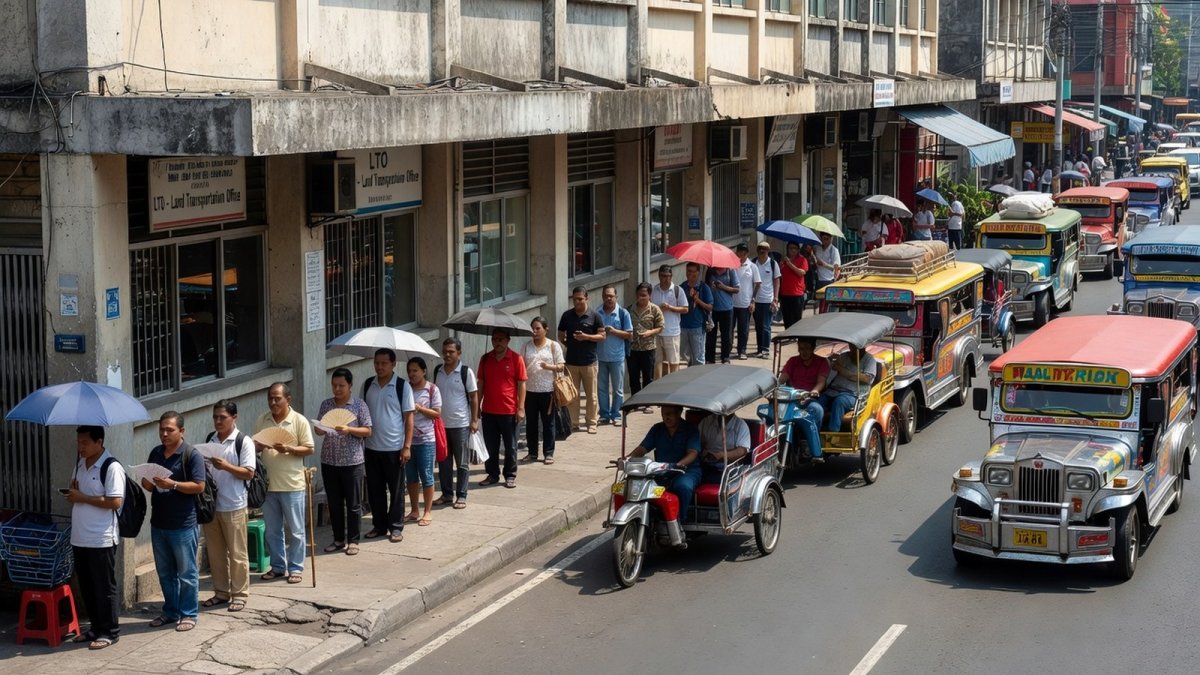
In a decisive move that resonates with millions of Filipino motorists, the Office of the Ombudsman has ordered the six-month preventive suspension of two of the country's top transportation officials over a P13.3 billion burden that fell squarely on the shoulders of ordinary drivers and families.
Ombudsman Jesus Crispin Remulla signed the suspension order on August 17, 2026, against Land Transportation Franchising and Regulatory Board (LTFRB) Chairman Vigor Mendoza II and Office of Transportation Cooperatives (OTC) Chairperson Teofilo Guadiz III. Assistant Ombudsman Mico Clavano announced the development in a press briefing on Tuesday, August 18, confirming that both officials face administrative charges of Grave Misconduct and Conduct Prejudicial to the Best Interest of the Service.
The root of the controversy? The continued use of an outdated, privately-operated computer system that cost Filipino motorists an estimated P13.3 billion in unnecessary fees — money that came out of the pockets of jeepney drivers, tricycle operators, and families simply trying to renew their vehicle registrations and licenses.
What the Suspension Means for Public Accountability
The suspension order is immediately executory, meaning Mendoza and Guadiz must step aside from their posts without pay for six months or until their administrative cases are resolved. The Ombudsman's office emphasized that this preventive measure is crucial to preserve documents and evidence under the respondents' custody and to prevent further malfeasance or misfeasance in office.
For ordinary Filipinos, this is more than just a bureaucratic procedure. It is a statement that public officials can be held accountable when their decisions impose heavy costs on the public. The P13.3 billion in question represents money that could have gone to school supplies, family meals, or savings — instead, it went to computer fees charged by a private company long after its contract should have ended.
Both officials previously served as heads of the Land Transportation Office (LTO), which places them at the center of a decade-long failure to fully transition to a government-owned system. The Ombudsman's ruling stated that their continued utilization of the old LTO IT System "demonstrates a patent disregard of established government policy and prior official directives intended to transition LTO operations to the LTMS."
The P13.3 Billion Burden on Everyday Filipinos
From 2019 to 2025, the Commission on Audit (COA) documented that the parallel use of two computer systems — the outdated STRADCOM-operated LTO IT System and the government-owned Land Transportation Management System (LTMS) — resulted in an "additional burden and expense for the transacting public." The computer fees charged by STRADCOM during this period amounted to exactly PhP13,379,196,499.73.
Think about what that means for a typical Filipino family. A tricycle driver in Quezon City renewing his vehicle registration. A jeepney operator in Cebu managing a fleet of public utility vehicles. A government employee in Davao getting her driver's license renewed. Each transaction came with computer fees that should not have been charged if the government had fully implemented its own system.
COA flagged that this parallel utilization resulted in the "non-maximization of the benefits" expected from the LTMS project. In plain language, the government paid for a new, modern system but continued to use the old one — and the public paid the price through additional fees that went to a private company.
A Decades-Old Contract That Refused to End
The story of how we got here spans nearly three decades. In 1998, the government entered into a Build-Own-Operate (BOO) Agreement with STRADCOM covering computer systems for LTO transactions nationwide. The original 10-year concession period expired on February 10, 2013, but was extended month-to-month — a temporary arrangement that somehow persisted for years.
In February 2003, the then-Department of Transportation and Communications (now Department of Transportation) issued a Final Certificate of Acceptance to STRADCOM. Then in 2016, LTO and STRADCOM signed a Phase Out Agreement that allowed continued use of the old system only while LTO had no fully operational replacement nationwide.
That replacement came in 2018, when the government contracted a joint venture led by Dermalog Identification Systems GmbH to develop the new LTO core system, now known as the LTMS. By 2021, LTO issued a Certificate of Project Completion and Final Acceptance for the LTMS, and it was institutionalized as the government's principal platform for motor vehicle registration, licensing, and related transactions. LTO was directed to gradually transition away from the STRADCOM system.
Yet the transition never fully happened. Instead, both systems operated side by side, and motorists bore the cost of that inefficiency.
Officials Who Chose the Old System Over the New
The Ombudsman's investigation found specific actions by both suspended officials that perpetuated this costly arrangement. During Guadiz's term as LTO chief in 2022, he "pushed for the continued use of the LTO IT System" and "favored STRADCOM," reportedly saying that "the old IT System provides a better solution."
Then in 2023, during his term as LTO chief, Mendoza issued several memoranda "effectively reviving and institutionalizing the continued use of the LTO IT System through a parallel utilization alongside the LTMS." These were not passive decisions — they were active policy choices that kept the old system alive and kept the fees flowing.
The situation escalated further in January 2025, when Mendoza directed the processing of public utility vehicle (PUV) registration renewals through the old system without requiring LTFRB confirmation. This action extended the generation and collection of computer fees even past the BOO agreement's expiration, directly affecting jeepney and bus operators who depend on timely registrations to keep their vehicles on the road.
What This Means for Public Trust and the Bayanihan Spirit
For many Filipinos, this case strikes at the heart of a deeper concern: the erosion of public trust in government institutions. When families line up at LTO offices — often taking time off work, traveling long distances, and waiting for hours — they expect fair treatment and honest service. Discovering that they were charged billions in unnecessary fees undermines that trust.
The bayanihan spirit, deeply embedded in Filipino culture, is built on the idea that we help each other and that our institutions serve the common good. When public officials make decisions that burden ordinary citizens while benefiting private companies, that spirit is betrayed.
Consider the sari-sari store owner who saves up for months to register a second-hand motorcycle for deliveries. Or the provincial bus driver whose livelihood depends on keeping his PUV registration current. These are the people who paid the P13.3 billion — not corporations, not wealthy executives, but everyday Filipinos trying to make an honest living.
The suspension of Mendoza and Guadiz sends a message that such decisions have consequences. It also serves as a reminder that public office is a public trust, and that officials who disregard established government policy to favor private interests will face accountability.
Looking Ahead: The Road to Full LTMS Implementation
With both officials now suspended, the question on many minds is what happens next. The administrative cases against Mendoza and Guadiz will continue, and the Ombudsman's office will have the opportunity to gather more evidence without interference from the respondents.
For the LTFRB and OTC, acting officials will need to step in to ensure continuity of services. For the LTO, the directive remains clear: fully transition to the LTMS and phase out the STRADCOM system once and for all.
The COA's findings provide a clear roadmap for what needs to be done. The government must ensure that the LTMS operates at full capacity nationwide, that computer fees are eliminated or reduced to reflect the actual cost of government-owned systems, and that no future contracts replicate the STRADCOM arrangement.
For ordinary Filipinos, the hope is that this suspension marks a turning point — a moment when government agencies finally prioritize the welfare of the transacting public over convenience or private interests. The P13.3 billion that was collected should serve as a cautionary tale, not just for transportation officials, but for all public servants who hold positions of trust.
As the case unfolds, motorists and families across the country will be watching. They will be watching to see if justice is served, if the LTMS is finally fully implemented, and if the era of unnecessary fees is truly over. The suspension of two top officials is a significant step, but the real victory will come when Filipino drivers can transact with government offices without wondering if they are being charged for something they should not have to pay for.
In the meantime, the message from the Ombudsman is clear: public office is not a privilege to be abused, but a responsibility to be honored. And for the millions of Filipinos who have been paying these fees, that message is long overdue.
This article was produced with AI-assisted research and editorial support. Sources: PhilStar, Office of the Ombudsman, Commission on Audit.
By Bella Reyes, Staff Writer
What's Your Reaction?
 Like
0
Like
0
 Dislike
0
Dislike
0
 Love
0
Love
0
 Funny
0
Funny
0
 Wow
0
Wow
0
 Sad
0
Sad
0
 Angry
0
Angry
0

Philippines/Southeast Asia Correspondent at Global1.News. Manila-based journalist covering Philippine politics, environment, maritime security, and social issues. Passionate about marine conservation and the communities protecting the Philippines' natural heritage.












Comments (0)