
Drone Attack Near Zaporizhzhia Nuclear Plant Kills One, IAEA Says
The IAEA confirmed a drone strike at a bus stop used by Zaporizhzhia Nuclear Power Plant staff killed one and injured 15 on Tuesday, as Russia and Ukraine traded blame over the attack on Europe's largest nuclear facility.
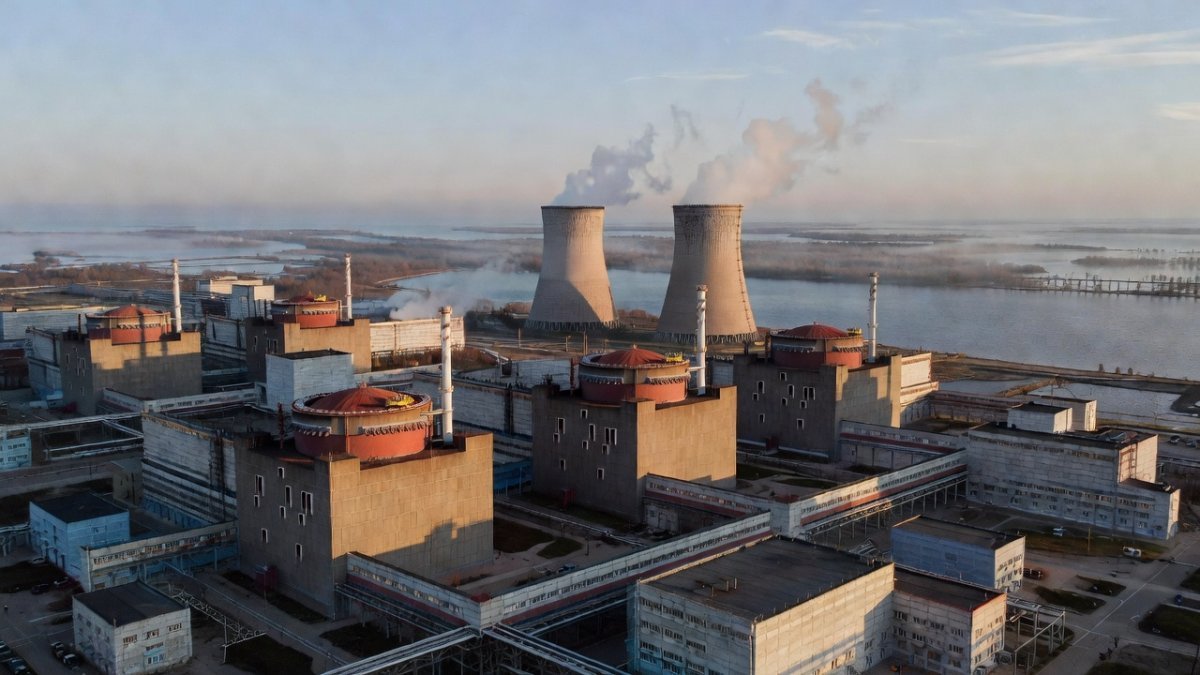
The International Atomic Energy Agency confirmed on Tuesday that a drone strike on a bus stop used by staff of the Zaporizhzhia Nuclear Power Plant killed one person and injured 15 others, marking what the plant’s director called the most severe incident since the facility was seized by Russian forces in 2022. The attack, which occurred at approximately 06:00 local time, has reignited international alarm over the safety of Europe’s largest nuclear facility, with the UN watchdog warning that the incident posed a direct risk to the plant’s operational security. As both Moscow and Kyiv trade accusations over the strike, the IAEA has called for an immediate halt to all military activity in the vicinity of the site.
IAEA Confirms Deadly Strike on Staff Transport Hub
The IAEA said in an official statement that a drone exploded at a bus stop used by personnel travelling to the Zaporizhzhia NPP on Tuesday morning. The explosion caused 16 casualties among plant staff and subcontractors, including one death and three serious injuries. The agency, which maintains a permanent presence of inspectors at the facility, described the location as a designated assembly point for workers commuting to the plant’s shift rotations.
Rafael Grossi, the IAEA Director General, condemned the attack in the strongest terms, calling it “an unacceptable act” that endangered the safety of the facility, and urged all parties to cease military actions against or near nuclear installations. The plant’s director, who was not named in the IAEA release, reportedly described the incident as “the worst event the plant has faced” since the Russian occupation began, according to the UN watchdog’s account of internal communications.
Conflicting Narratives: Moscow and Kyiv Trade Blame
Within hours of the explosion, Russian authorities asserted that the drone had been launched by Ukrainian forces. The Russian-installed administration of the Zaporizhzhia region claimed the attack was a deliberate attempt to disrupt the plant’s operations and endanger international inspectors. Moscow has repeatedly accused Kyiv of targeting the facility, which Russian troops have occupied since March 4, 2022, in the first weeks of the full-scale invasion.
Ukraine’s Southern Defense Forces categorically rejected the Russian claim, dismissing it as “manipulation and an attempt to influence the IAEA.” In a statement issued on Tuesday, the Ukrainian military command said that “the only source of risks to nuclear and radiation safety at the ZNPP is the presence of Russian troops” on the plant’s territory. Kyiv has long argued that the continued Russian military occupation of the site, including the positioning of troops and heavy weaponry within the plant’s perimeter, constitutes the primary threat to regional and international safety.
The Strategic Significance of the Zaporizhzhia Plant
The Zaporizhzhia Nuclear Power Plant is the largest nuclear facility in Europe, comprising six reactors with a combined capacity of 5,700 megawatts. Located in the city of Enerhodar in Zaporizhzhia Oblast in southern Ukraine, the plant has been a critical source of electricity for the region and a cornerstone of Ukraine’s energy grid. Since the Russian seizure in 2022, the facility has operated under precarious conditions, with external power lines repeatedly severed by shelling and the plant’s reactors cycling through shutdown and standby modes.
For ordinary Russians and Ukrainians, the plant’s fate carries profound consequences. A catastrophic failure at the site—whether from a direct strike, a loss of cooling capacity, or a grid failure—could release radioactive material across vast swaths of Eastern Europe, contaminating agricultural land, displacing millions, and rendering large areas uninhabitable for decades. The plant’s proximity to the front lines has made it a persistent flashpoint, with both sides accusing each other of reckless endangerment.
Recurring Power Losses and Fragile Safety Systems
The IAEA has documented recurring off-site power losses at the plant throughout 2026, highlighting the fragility of nuclear safety during the ongoing war. According to the agency’s monitoring reports, the plant has experienced multiple complete disconnections from the external power grid this year, forcing operators to rely on emergency diesel generators to maintain critical cooling systems. Each such event carries the risk of a reactor meltdown if backup systems fail.
In its Tuesday statement, the IAEA separately noted that it had been informed of additional attacks in the plant’s industrial area, although no nuclear safety or security damage was reported from those incidents. The agency did not specify the nature of these additional attacks, but the acknowledgment underscores the volatile environment in which the plant’s staff and international inspectors are operating.
International Response and Calls for Restraint
Grossi’s condemnation of Tuesday’s attack has been echoed by international observers, who view the incident as a dangerous escalation in the pattern of strikes near the facility. The IAEA chief has repeatedly called for the establishment of a demilitarized zone around the plant, a proposal that has gained little traction amid the broader military conflict. The agency’s permanent presence at the site, which includes a rotating team of inspectors, has become a critical lifeline for monitoring the plant’s condition and verifying the integrity of its nuclear material.
The attack on the bus stop, which occurred during the morning shift change, has raised particular concerns about the safety of civilian personnel working at the plant. The victims were not soldiers or combatants; they were engineers, technicians, and maintenance workers tasked with keeping the facility stable under extraordinary duress. The death of one worker and the serious injury of three others represent a human toll that extends beyond the geopolitical posturing of the warring parties.
Analysis and Implications
This incident could indicate a deliberate strategy by one or both sides to test the limits of international tolerance for attacks near nuclear infrastructure. Analysts suggest that the targeting of a bus stop—a soft, civilian target—signals a willingness to escalate beyond the plant’s physical perimeter, potentially to pressure the IAEA or to force a shift in the international community’s focus. The timing of the attack, just hours before the IAEA’s scheduled reporting cycle, may also be intended to influence the agency’s assessments of the plant’s safety status.
The broader geopolitical meaning of this strike is fraught with ambiguity. If the drone was launched by Ukrainian forces, as Moscow claims, it would represent a significant departure from Kyiv’s stated policy of avoiding direct attacks on the plant itself, though Ukrainian officials have previously warned that they would target Russian military assets stationed within the facility’s grounds. Conversely, if the attack originated from Russian-controlled territory, it could be an attempt to frame Ukraine as the aggressor and to justify further militarization of the plant’s surroundings.
What remains clear is that the Zaporizhzhia NPP has become a hostage to the war, its operational integrity dependent on the restraint of commanders who have shown little regard for the consequences of their actions. The IAEA’s ability to verify facts on the ground is limited by the ongoing occupation, and the agency’s inspectors operate under constant threat. The international community, meanwhile, has been largely powerless to enforce the norms that are supposed to protect nuclear facilities during armed conflict.
Looking Ahead: A Precarious Status Quo
As the war grinds on, the Zaporizhzhia plant remains a ticking clock. The IAEA has warned that the margin for error is shrinking, and Tuesday’s attack has only reinforced that assessment. The plant’s six reactors, all of which are currently in a state of shutdown or low-power operation, still contain significant amounts of nuclear fuel that require continuous cooling. A prolonged loss of power, a failure of backup generators, or a direct hit on a spent fuel storage facility could trigger a disaster that would dwarf the 1986 Chernobyl catastrophe in scale and complexity.
For the staff who continue to report for work at the plant, the bus stop attack is a grim reminder that their daily commute is now a matter of life and death. The IAEA has called for an immediate investigation into the incident, but in the absence of a ceasefire or a demilitarized zone, such inquiries are unlikely to yield accountability. The world watches, once again, as the largest nuclear plant in Europe teeters on the edge of a precipice, its fate tied to the whims of a war that shows no signs of abating.
This article was produced with AI-assisted research and editorial support. Sources: The Moscow Times, International Atomic Energy Agency (IAEA) statements, Reuters, Al Jazeera, Kyiv Independent, Xinhua.
By Irina Volkov, Staff Writer
What's Your Reaction?
 Like
0
Like
0
 Dislike
0
Dislike
0
 Love
0
Love
0
 Funny
0
Funny
0
 Wow
0
Wow
0
 Sad
0
Sad
0
 Angry
0
Angry
0

Russia/Eastern Europe Correspondent at Global1.News. Covering Russian politics, energy, security, and the shifting dynamics of the post-Soviet space. Provides clear-eyed analysis on one of the world's most opaque regions.














Comments (0)