
Trump Pauses 50 Per Cent Tariffs on Canada for Three Days, Citing Pending Trade Deal
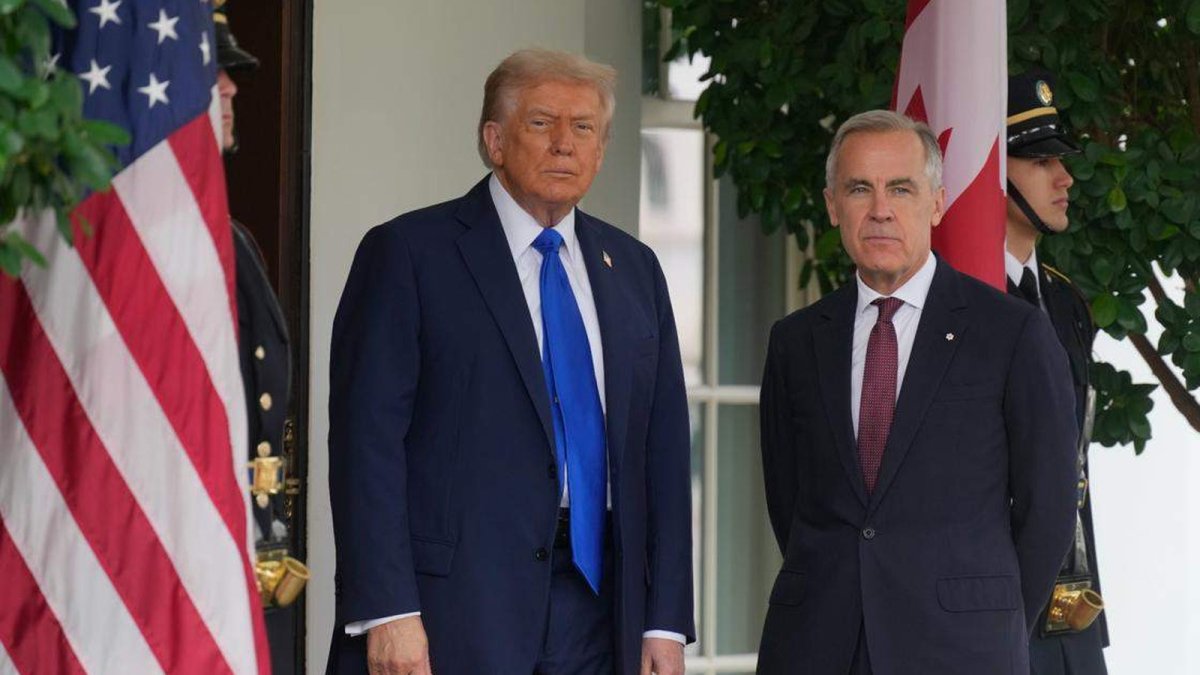
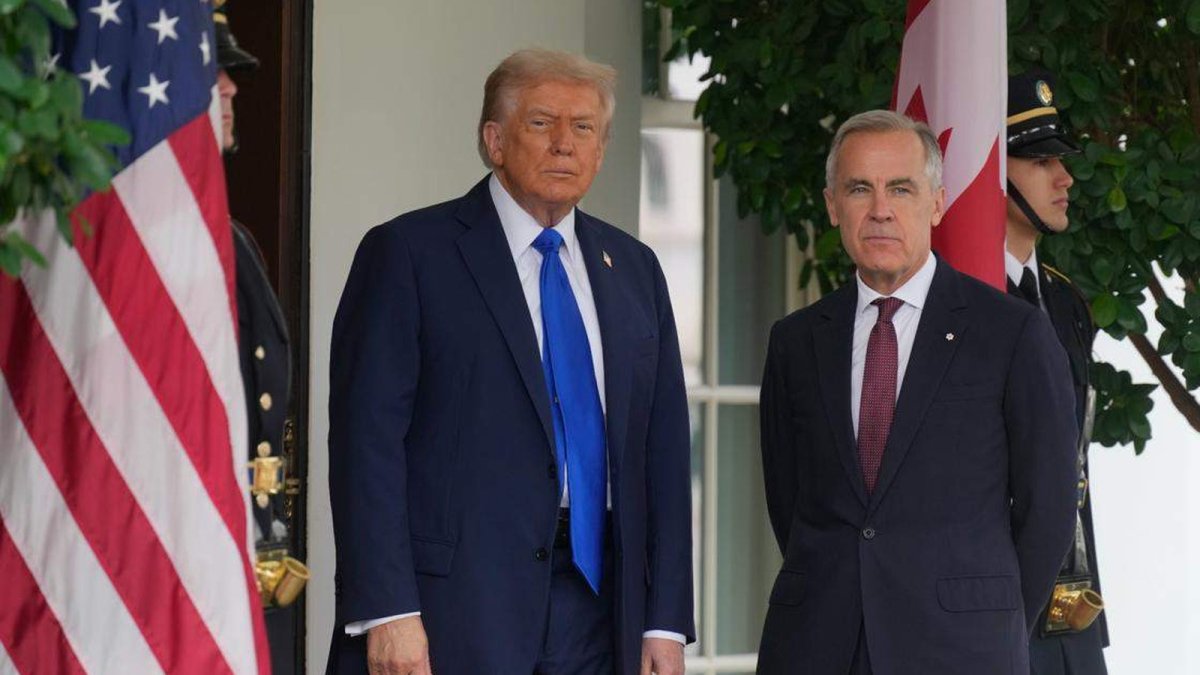
In a dramatic late-night development that averts an immediate economic crisis for Canadian exporters, U.S. President Donald Trump has announced a three-day pause on the sweeping 50 per cent tariffs that were scheduled to hit Canadian goods just after midnight.
Trump Pauses 50 Per Cent Tariffs on Canada for Three Days, Citing Pending Trade Deal
In a dramatic late-night development that averts an immediate economic crisis for Canadian exporters, U.S. President Donald Trump has announced a three-day pause on the sweeping 50 per cent tariffs that were scheduled to hit Canadian goods just after midnight. The president’s social media declaration, which cited a tentative trade agreement between the two nations, came hours after Prime Minister Mark Carney spoke with Trump by phone and as Canada’s top trade officials worked frantically in Washington, D.C. to secure a deal.
The Announcement: A Late-Night Reprieve on Truth Social
President Trump took to his Truth Social platform Tuesday evening to announce the sudden reversal, stating that he had paused the tariffs for a three-day period. In his post, the president framed the decision as a direct result of ongoing negotiations, writing that the duties were delayed “based on the fact that Canada and the U.S.A., subject to the finalization of documents, have a DEAL!”
The announcement marks a significant de-escalation from the rhetoric of the past several weeks, during which the White House had threatened punishing economic measures against its northern neighbour. The president’s message was characteristically blunt, thanking his followers for their attention and framing the pause as a victory for his administration’s trade posture. However, the post also introduced a new wrinkle into the negotiations, with Trump explicitly referencing the dormant Keystone XL pipeline project, which he claimed “may be awoken from the grave!”
Within moments of the initial post, the president followed up with a fictional image of himself slamming an illustration of the pipeline into the ground, a clear signal that the energy infrastructure project remains a personal priority for the U.S. leader. The social media posts, while celebratory in tone, left many critical details of the purported agreement unspecified, creating a sense of cautious optimism mixed with uncertainty in Ottawa and in boardrooms across Canada.
Frantic Final Hours: Carney’s Call and Ottawa’s Washington Push
The eleventh-hour reprieve came after a day of intense diplomatic activity. Prime Minister Mark Carney spoke directly with President Trump by phone on Tuesday, hours before the tariffs were set to take effect at midnight. The conversation between the two leaders was seen as a critical final step in a process that had been underway for days, with Canadian officials seeking to prevent the economic damage that the levies would have inflicted.
On the ground in the American capital, Canada’s negotiating team was led by Canada-U.S. Trade Minister Dominic LeBlanc and chief negotiator Janice Charette. The pair were stationed in Washington, D.C., working to bridge the remaining gaps with their American counterparts. Their presence underscored the seriousness with which the Canadian government viewed the threat, as they laboured to find common ground on a range of contentious trade issues that have strained the bilateral relationship.
The fact that a deal was reached—at least in principle—so close to the deadline suggests that both sides were motivated to avoid the economic fallout of a full-blown trade war. For the Canadian team, the objective was not only to halt the immediate threat of the 50 per cent tariffs but also to lay the groundwork for a more stable trading relationship moving forward. The frantic final hours in Washington reflect the high stakes involved for a Canadian economy deeply integrated with its southern neighbour.
What the Tariffs Would Have Hit: Hockey Sticks, Honey, and Cement
The tariffs that were paused represent a significant escalation in the ongoing trade dispute. The 50 per cent duties were targeted at roughly $28 billion worth of Canadian goods, a broad swath of products that would have had an immediate impact on Canadian manufacturers, producers, and exporters. The list of affected goods was notably diverse, ranging from hockey sticks and honey to wine and cement.
For Canadian businesses, the imposition of these tariffs would have been a severe blow. The hockey stick industry, a symbol of Canadian identity, would have faced a sudden cost disadvantage in the U.S. market. Similarly, agricultural producers of honey and vintners in regions like British Columbia and Ontario would have seen their competitiveness erode overnight. The inclusion of cement in the tariff list also highlighted the wide-reaching nature of the threat, affecting construction supply chains across the border.
The sheer scale of the $28 billion in goods targeted demonstrates the potential for significant economic disruption. Canadian workers in these sectors were facing an uncertain future, with the threat of job losses and reduced output looming large. The pause, while temporary, provides a measure of relief for these industries, though the underlying uncertainty remains until a final agreement is formalised.
The Keystone XL Twist: A Pipeline’s Second Life?
Perhaps the most surprising element of President Trump’s announcement was his explicit linkage of the trade deal to the Keystone XL pipeline. The project, which was designed to transport oil from Alberta’s oil sands to Nebraska, has been a flashpoint in Canada-U.S. relations for over a decade. Former president Joe Biden revoked the pipeline’s permit on his first day in office, effectively killing the project and straining relations with Ottawa.
President Trump, who has long championed the pipeline, returned to office with a stated intention to reverse that decision. Earlier this year, he signed an executive order aimed at reviving parts of the Keystone project. Now, by tying the pipeline’s future to the trade deal, Trump has placed the energy file squarely at the centre of the negotiations, a move that carries significant implications for Alberta’s energy sector.
For Alberta, the potential revival of Keystone XL represents a major economic opportunity. The province’s oil producers have long sought additional pipeline capacity to access U.S. markets and secure better prices for their product. However, it remains unclear how much of the trade talks between Canadian and American officials actually focused on the energy project. The Canadian government has not confirmed whether the pipeline was a central pillar of the negotiations or a peripheral issue raised by the president. The uncertainty surrounding the project’s future adds another layer of complexity to an already intricate trade relationship.
What Remains Unclear: The Tentative Agreement’s Fine Print
Despite the celebratory tone from the White House, significant questions remain about the substance of the tentative agreement. Late Tuesday, the Canadian government had not immediately released a statement, and officials in Ottawa were likely still reviewing the details of what was discussed in Washington. The lack of immediate clarity is a cause for caution, as the three-day pause is not a permanent resolution.
One of the key outstanding issues is whether the deal provides relief on the existing tariffs that target Canadian steel, aluminum, lumber, and autos. These sectors have been under pressure for years due to ongoing trade disputes, and Canadian officials were reportedly seeking to address these levies in the current round of talks. Whether the tentative agreement includes provisions for these industries remains to be seen.
The phrase “subject to the finalization of documents” in President Trump’s post is a critical caveat. It suggests that while a framework has been agreed upon, the legal and technical details have yet to be ironed out. This leaves room for potential breakdowns in the coming days. For Canadian businesses and consumers, the next 72 hours will be crucial in determining whether this pause becomes a permanent ceasefire or merely a brief interlude in a protracted trade conflict.
What Happens Next: Implications for Canadian Workers and Families
For Canadian workers, exporters, and energy producers, the three-day pause offers a temporary reprieve but not a definitive solution. The threat of tariffs has already created a climate of uncertainty that affects investment decisions and business planning. Companies that rely on cross-border trade will be watching closely as negotiators work to finalise the documents that President Trump referenced in his post.
For Canadian families, the outcome of these negotiations has direct implications for the cost of living. Tariffs on goods like honey and wine would have led to higher prices for consumers, while broader trade disruptions could have affected supply chains and the availability of various products. The avoidance of these tariffs, at least for now, is a positive development for household budgets that are already stretched by the cost of living.
The coming days will test the durability of this tentative agreement. Prime Minister Carney and his team, including Minister LeBlanc and negotiator Charette, will need to secure concrete commitments from the U.S. administration to ensure that the pause becomes a permanent settlement. The reference to Keystone XL adds a layer of complexity, as energy policy and trade policy become increasingly intertwined. For now, Canadians can breathe a cautious sigh of relief, but the underlying tensions in the relationship remain unresolved, and the path to a stable, long-term trade agreement is far from certain.
Tags: Donald Trump, Mark Carney, Canada-U.S. trade, tariffs, Keystone XL, Dominic LeBlanc, Janice Charette, Canadian economy, trade deal, Washington D.C., Alberta oil, CUSMA
By Alex Thompson, Staff Writer
This article was produced with AI-assisted research and editorial support. Reporting is based on sources cited in the article.
What's Your Reaction?
 Like
0
Like
0
 Dislike
0
Dislike
0
 Love
0
Love
0
 Funny
0
Funny
0
 Wow
0
Wow
0
 Sad
0
Sad
0
 Angry
0
Angry
0

Canada Correspondent at Global1.News. Based in Toronto, covering Canadian politics, energy, trade, and US-Canada relations. Provides the Canadian perspective on North American and global affairs.














Comments (0)