
UAE Cuts All Trade With Iran as Strait of Hormuz Conflict Deepens
The UAE declared an indefinite trade embargo on Iran on August 19, 2026, after accusing Tehran of firing ballistic missiles at its territory. The move escalates the US-Iran war over the Strait of Hormuz, with oil demand forecast to drop 1.6 million barrels per day.
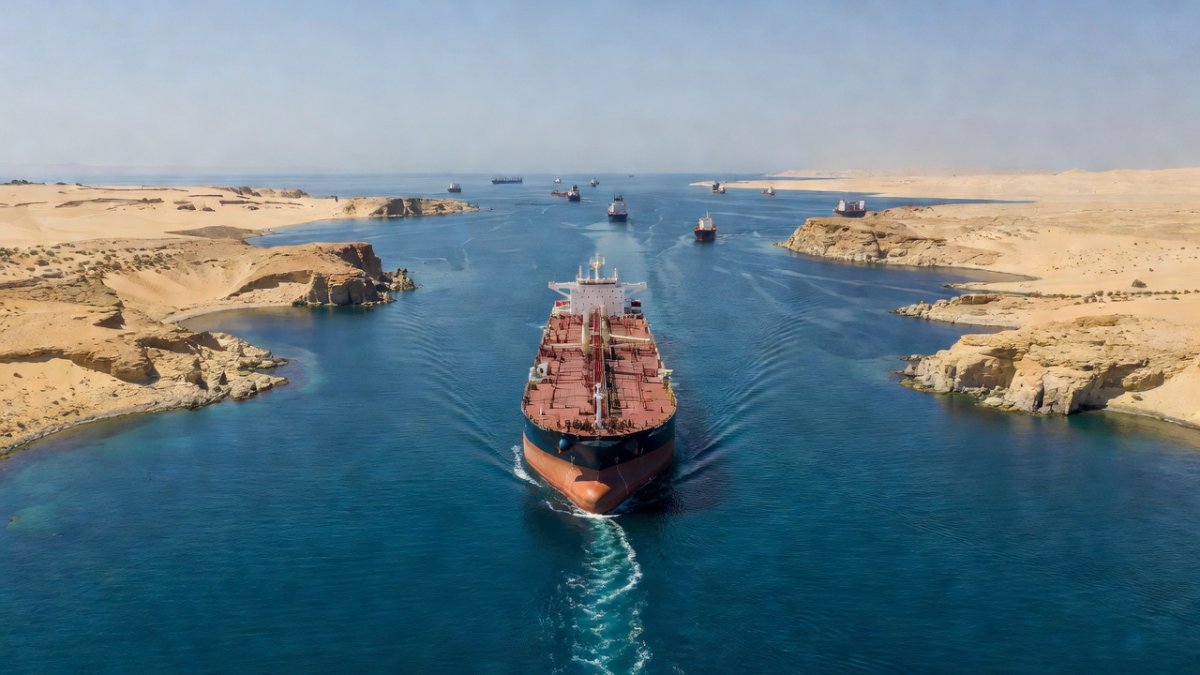
Abu Dhabi's Embargo Marks a Turning Point in the Gulf Crisis
The United Arab Emirates has crossed a red line Gulf capitals spent decades avoiding. On August 18, 2026, Abu Dhabi announced a complete halt to all trade and financial transactions with Iran, followed one day later by an indefinite and comprehensive trade embargo. The trigger: Iranian forces allegedly fired two ballistic missiles at Emirati territory, according to Al Jazeera, Bloomberg, and The New York Times. This is not a diplomatic gesture — it is a declaration that the UAE will no longer absorb attacks while pretending the region's most dangerous waterway remains open for business.
The move is the sharpest regional escalation in the months-long US-Iran war over the Strait of Hormuz, a conflict that began in February 2026 and has reshaped global energy markets. It transforms a US-led military confrontation into a broader economic war, with Gulf states weaponizing their financial systems against Tehran. The Institute for the Study of War assessed on August 19 that the UAE is intensifying economic pressure specifically to discourage Iranian efforts to control or disrupt navigation through the Strait.
The embargo lands as the world burns through oil stockpiles, with Strait traffic critically low as of August 13. It is a signal that the UAE will not be the silent victim of a conflict that has already killed at least a dozen people on Emirati soil and injured more than 200 others, according to The National. For a nation long positioned as a neutral trading hub, this is seismic.
The Missile Attack That Broke the Camel's Back
On August 14, Abu Dhabi condemned what it called an "Iranian hostile attack" against two vessels linked to the Abu Dhabi National Oil Company (ADNOC) attempting to transit the Strait of Hormuz. That was the 16th attack on an ADNOC ship since the war began, according to The National, following an August 8 assault that was the 15th such incident. The pattern is systematic targeting of Emirati commercial interests to pressure Abu Dhabi into abandoning its Washington alignment.
The August 18 missile strikes against Emirati territory escalated the conflict from economic harassment to direct military aggression. The UAE's accusation, reported by The New York Times, alleges Iranian forces fired two ballistic missiles at its territory. This is a qualitatively different act than attacking ships at sea — an attack on the homeland.
Days before the embargo, the UAE had urged Iran to halt attacks and reopen waterways, according to Reuters via the Jerusalem Post. That diplomatic overture failed. The embargo is a strategic realignment acknowledging that Iran has no intention of de-escalating while it holds the Strait hostage.
ADNOC Under Fire: A Campaign of Attrition
The attacks on ADNOC vessels are a calculated campaign to cripple the UAE's economic lifeline. The state-owned oil giant is a primary target precisely because it represents the UAE's integration into global energy markets. Each attack on an ADNOC ship is a message: your prosperity depends on a waterway we control.
The August 8 attack, the 15th on an ADNOC vessel, was followed by the August 14 assault on two more ships. The frequency has accelerated as the war drags on, suggesting Iran is testing UAE tolerance. The August 18 missile strikes suggest Tehran miscalculated: instead of cowing Abu Dhabi, it has provoked a response that will further isolate Iran from the global financial system.
The human cost is mounting. At least a dozen people have been killed in the UAE during the conflict, with more than 200 injured, according to The National. These are residents of a nation dragged into a war it did not start. The embargo is, in part, a recognition that neutrality is no longer possible when missiles are landing on your soil.
The Strait of Hormuz: A Chokepoint Under Siege
Before the war began in February 2026, roughly one-fifth — about 20 percent — of the world's oil and natural gas supplies passed through the Strait of Hormuz, according to the Washington Post. That made it the single most important maritime chokepoint on Earth. Today it is effectively closed, and the global economy is paying the price.
The closure has not been total, but it has been devastating. On July 16, a US Navy Hellfire strike disabled a Curacao-flagged oil tanker and turned back two others as Iran's naval blockade resumed, according to CENTCOM via Gulf News. Washington would enforce the reopening by force; Tehran was equally determined to keep it closed.
The International Energy Agency's August 2026 Oil Market Report paints a grim picture. World oil demand is forecast to decline by 1.6 million barrels per day in 2026, a drop of 510,000 barrels per day more than the previous month's estimate, as the closure and elevated fuel prices weigh on consumption. This is not a supply shock that will resolve itself; it is a structural disruption with no end in sight.
America's Military Escalation and the Failed Ceasefire
The UAE's embargo comes after months of escalating US military action. On July 8, US CENTCOM launched what it called "powerful" strikes, hitting more than 80 IRGC targets after attacks on three oil tankers in the Strait of Hormuz. The strikes targeted air defense systems, coastal surveillance, surface-to-air missiles, anti-ship cruise missiles, and drone launch sites. Washington also rescinded oil sanctions waivers, effectively ending the June ceasefire agreement, according to BBC, Reuters, and CENTCOM.
The campaign continued through July. On July 20, CENTCOM completed another round of strikes at 9 p.m. ET against Iranian military command centers, maritime capabilities, missile and drone launch sites, and air defense systems. The strikes have not reopened the strait. The naval blockade remains in place, and Iran's missile capabilities, while degraded, remain operational.
On August 5, President Trump claimed a deal to reopen the Strait was close, and oil prices fell while stocks rose, according to CNBC. But on August 6, Iran said its maritime deal with Oman alone would not reopen the Strait, insisting the US meet political and economic conditions first. By August 8, Tehran said it was close to an Oman deal on managing the Strait but would demand US concessions before reopening the waterway; the head of Iran's Supreme National Security Council said the Strait would remain closed until the US met certain conditions, according to CNN, The New York Times, and the Washington Post.
Oil Markets and the Global Economic Fallout
On August 17, shipping through the Strait slowed over the weekend after attacks on tankers, and oil prices edged up on the stalemate, according to BusinessDay. A 1.6 million barrel-per-day demand decline is not a minor adjustment; it is a recessionary signal.
By cutting all trade and financial transactions with Iran, Abu Dhabi is effectively joining the US-led sanctions regime in a way that goes beyond Washington's requirements. It is a unilateral move with consequences for the UAE's own economy, but Abu Dhabi has calculated that inaction now costs more than confrontation.
Gulf oil giants, including Saudi Arabia and the UAE, are already pushing to expand overseas oil stockpiles as protection against maritime chokepoints, according to The New York Times on August 18. It is a defensive measure acknowledging that Hormuz is no longer a reliable route for energy exports. The question now is whether other Gulf states will follow the UAE's lead.
What Comes Next: The Risk of Regional Conflagration
The UAE's embargo is a high-stakes gamble. By cutting off all trade with Iran, Abu Dhabi is betting that economic pressure will force Tehran to back down. But Iran has shown no willingness to compromise, and the head of its Supreme National Security Council has explicitly stated that the Strait will remain closed until the US meets certain conditions. The UAE's move may harden Iran's position rather than soften it.
The strategy carries risks. Iran has already demonstrated its willingness to attack Emirati territory with ballistic missiles, and the embargo may provoke further retaliation against UAE infrastructure or population centers. The ISW assessment that economic pressure can discourage Iranian disruption of navigation is reasonable — but it assumes Tehran responds to financial pain the way Washington and Abu Dhabi expect.
Saudi Arabia, the UAE's closest ally, has not yet followed suit with its own embargo, but the pressure to do so is mounting. If Riyadh joins Abu Dhabi, Iran would face a unified Gulf economic front — but also a unified Gulf military target. The risk of a full-scale regional war is higher now than at any point since the conflict began in February 2026.
A Diplomatic Endgame Remains Elusive
The Oman-mediated talks, which Iran said were close to producing a deal on managing the Strait, have not yielded a breakthrough. Iran's insistence on US concessions before reopening the waterway has created a deadlock that neither Washington nor Tehran seems willing to break. The embargo adds a new variable, but it does not solve the underlying problem.
The United States has shown no signs of backing down. CENTCOM's strikes on July 8 and July 20 demonstrate a willingness to use overwhelming force, but they have not achieved their objective of reopening the Strait. The military option appears to have reached its limits. The economic option, now being pursued by the UAE, may prove more effective, but it will take time to have an impact.
In the meantime, the world continues to burn through oil stockpiles. The IEA's 1.6 million barrel-per-day demand decline forecast is a stark reminder that the global economy cannot sustain this indefinitely. The UAE's embargo is a bold move, but it is also a desperate one. The question is whether it will break the stalemate or deepen the crisis. For now, the answer remains unclear — and the Gulf stands on the brink of an even wider conflagration.
By Jessica Ali, Staff WriterThis article was produced with AI-assisted research and editorial support. Reporting is based on sources cited in the article.
What's Your Reaction?
 Like
0
Like
0
 Dislike
0
Dislike
0
 Love
0
Love
0
 Funny
0
Funny
0
 Wow
0
Wow
0
 Sad
0
Sad
0
 Angry
0
Angry
0

Editor-in-Chief at Global1.News. Atlanta-based journalist who cuts through the BS and tells it like it is. Lead anchor, host, and the voice you hear when the spin stops and the truth starts.














Comments (0)