
Delta Flight 1334 Forced Back to Atlanta After Smoky Odor Reported Onboard – Second Smoke Incident in Six Days Rattles World’s Busiest Airport
Folks, let’s get one thing straight right now: if you are flying out of Hartsfield-Jackson this summer, you need to keep your head on a swivel.
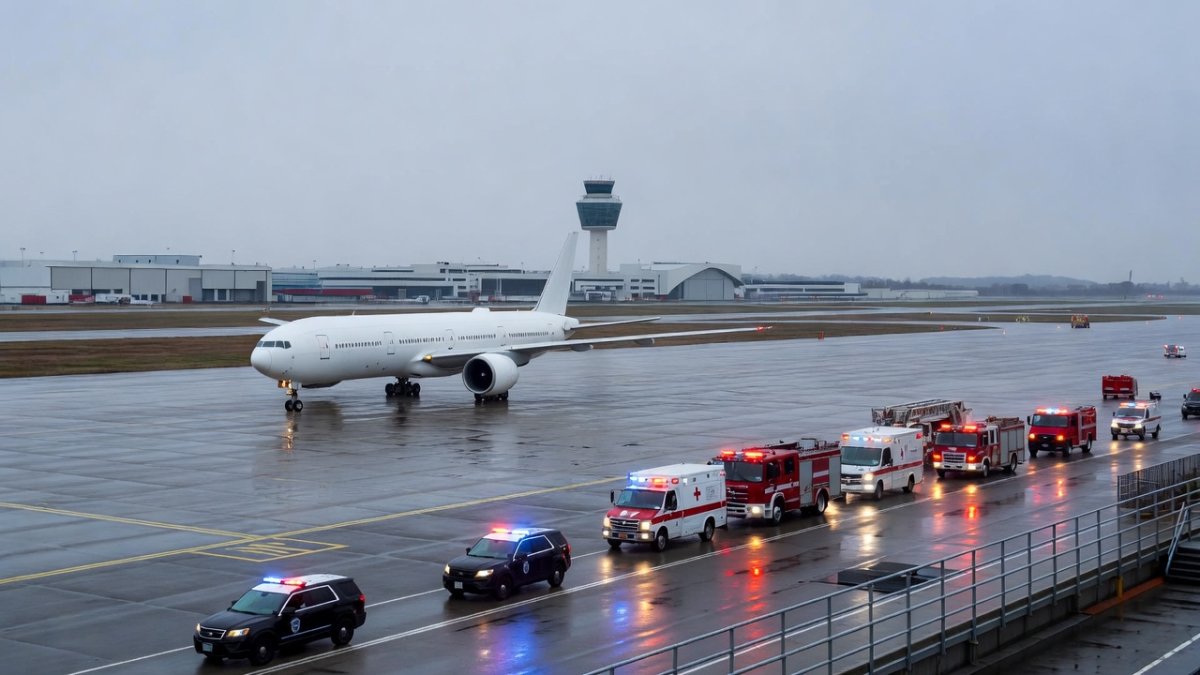
Folks, let’s get one thing straight right now: if you are flying out of Hartsfield-Jackson this summer, you need to keep your head on a swivel. Because for the second time in less than a week, a Delta Air Lines flight out of Atlanta has been forced to turn around and come back home due to reports of smoke or fumes. And this time, it happened on Thursday morning, August 13, 2026, aboard Delta Flight 1334.
Delta Flight 1334 Forced Back to Atlanta After Smoky Odor Reported Onboard – Second Smoke Incident in Six Days Rattles World’s Busiest Airport
Atlanta, Georgia - August 13, 2026 - The plane had barely left the runway. Delta Flight 1334, bound for sunny Fort Lauderdale-Hollywood International Airport, pushed back from the gate at Hartsfield-Jackson Atlanta International Airport right around that 7 a.m. scheduled departure time. Passengers were settling in, maybe grabbing a coffee, maybe already dreaming about the beach. Then, the reports started coming in: a smoky odor inside the aircraft. And according to air traffic control audio, things escalated quickly, with reports of smoke in the cockpit.
Let me be crystal clear with you, Atlanta. This is not a drill. This is not a minor inconvenience. This is the second major smoke or fume event involving Delta out of our city in just five days. And while Delta is calling this a precautionary return, the pattern is becoming impossible to ignore.
The Emergency Return: What We Know About Flight 1334
Here is the timeline, folks. Delta Flight 1334 departed Hartsfield-Jackson on Thursday morning, August 13, 2026, with a scheduled departure time around 7 a.m. The destination was Fort Lauderdale-Hollywood International Airport, a popular route for Atlanta families looking to escape the heat or catch a cruise. But the flight didn't get far.
Shortly after takeoff, passengers and crew members reported a distinct smoky odor inside the aircraft. This wasn't a burnt coffee smell or a weird snack aroma. This was the kind of odor that makes your stomach drop and your instincts kick in. Air traffic control audio captured the urgency, with reports indicating smoke in the cockpit. That is a serious escalation, folks. Cockpit smoke is not something you mess around with.
The flight crew did exactly what they were trained to do. They declared an emergency, turned that bird around, and brought it back to Hartsfield-Jackson. The aircraft landed safely and without incident. No injuries were reported. I want to repeat that for the folks in the back: no injuries. That is the good news. That is the part we hold onto.
Delta's official statement was quick and measured. They said, and I quote: "Delta flight 1334 safely returned to Atlanta shortly after departure out of an abundance of caution after a smoky odor was reported onboard. The flight crew followed established procedures, and the aircraft landed normally without incident."
That is the corporate line. But here is the reality, Atlanta: "abundance of caution" is doing a lot of heavy lifting in that sentence. Because when you look at what happened just five days earlier, you start to see a pattern that should concern every single person who steps foot on a Delta plane out of this airport.
Saturday's Scare: Flight 2204 and the Evacuation on the Taxiway
Let's rewind to Saturday, August 8, 2026. Delta Flight 2204 was heading from Atlanta to Orlando. A Boeing 757. A workhorse aircraft. About 36 minutes into the flight, the crew reported fumes in the flight deck. Again, fumes in the flight deck. That is not a passenger complaining about a weird smell in the lavatory. That is the people flying the plane saying something is wrong in their workspace.
That flight also turned around and came back to Atlanta. But here is where it gets truly alarming, folks. After landing, as the aircraft was on the taxiway, smoke was seen in the cabin. Actual smoke. Visible smoke. And that triggered a full emergency evacuation. We are talking about 205 passengers and crew members deploying inflatable slides and getting off that plane on the taxiway. Not at a gate. On the taxiway.
Social media videos from that day are burned into my memory. You could see smoke inside the cabin, thick enough to be visible on camera, as flight attendants shouted directions and passengers scrambled to the emergency exits. It was chaos. It was controlled chaos, thanks to the crew, but it was chaos nonetheless. And it happened right here in Atlanta, at the world's busiest airport, on Delta's home turf.
So when I tell you that Thursday's incident on Flight 1334 is part of a pattern, I am not being dramatic. I am being factual. Two flights. Two smoke or fume events. Six days apart. Both out of Atlanta. Both involving Delta. That is not a coincidence. That is a trend.
The Bigger Picture: A String of Headline-Making Incidents
Folks, I have been covering aviation for a long time. And I have to tell you, this year has been rough for Delta when it comes to smoke and fume events. This is not just about two flights in August. This is about a broader pattern that has been building for months. Delta has faced a string of headline-making incidents this year involving smoke or fume events. And while the airline has been quick to emphasize safety and precaution, the frequency of these events is starting to raise serious questions.
Let's be honest with each other. When you hear "smoke in the cockpit," your heart rate goes up. When you hear "fumes in the flight deck," you start to wonder what is going on with the maintenance protocols. When you see video of passengers evacuating down inflatable slides on a taxiway, you start to think twice about booking that next flight.
And here is the thing, Atlanta. Hartsfield-Jackson is not just any airport. It is the world's busiest airport. It is Delta's largest hub. This is where Delta flexes its muscle. This is where they move millions of passengers a year. And when incidents like this happen here, repeatedly, it doesn't just affect the people on those specific flights. It affects the confidence of every traveler who passes through those terminals.
Safety and Analysis: What Is Going On With Delta's Fleet?
Now, I am not an aviation mechanic, and I am not going to pretend to be one. But I have talked to enough experts over the years to know that smoke and fume events in aircraft are taken incredibly seriously. They can be caused by a variety of factors: hydraulic fluid leaks, electrical issues, engine seal problems, or even contamination in the air conditioning system. The fact that we are seeing multiple events out of Atlanta in such a short window suggests that there may be a systemic issue that needs to be addressed.
Delta has not provided specific details about the cause of the smoke on Flight 1334 or Flight 2204. And that is understandable. Investigations take time. The FAA and the NTSB will likely be involved. But here is what I want to say to Delta, and I am saying it directly: the flying public deserves transparency. We deserve to know what is causing these events. We deserve to know what steps are being taken to ensure this doesn't happen again.
Because, folks, "abundance of caution" is a nice phrase. But when you are sitting in a metal tube at 30,000 feet, and you smell smoke, you don't care about corporate messaging. You care about getting on the ground safely. And you care about knowing that the airline you trusted with your life is doing everything in its power to prevent that situation from ever occurring in the first place.
The good news is that the flight crews have been exemplary. In both incidents, the pilots and flight attendants followed established procedures to the letter. They got the planes on the ground. They got the passengers out safely. That is professionalism. That is training paying off. But the fact that they had to do it twice in six days is the problem.
Passenger Impact: Delays, Rebooking, and the Ripple Effect
Let's talk about the human impact, because that is what really matters here. On Thursday, the passengers on Flight 1334 were re-accommodated on other flights. The delay was about three hours. The flight was expected to touch down in Fort Lauderdale shortly before noon, putting passengers on the ground a few hours later than initially planned. No reported additional complications. That is the official story.
But let me tell you what that actually means for a traveler. It means you miss that connection. It means you sit in the terminal for hours, staring at the departure board, wondering if you are going to make it to your destination at all. It means you call your family and tell them you are delayed. It means you stress about the hotel you booked, the dinner reservation you made, the meeting you were supposed to attend. It means your day is thrown into chaos, not because of weather, not because of air traffic control, but because of a smoky odor on a plane.
And for the passengers on Flight 2204 on Saturday? That was even worse. They didn't just get delayed. They got evacuated. They slid down inflatable slides onto a taxiway. They stood on the tarmac, watching smoke come out of their aircraft, wondering what the hell was going on. That is a traumatic experience. That is not a minor inconvenience. That is a terrifying event that will stick with those passengers for a long time.
Delta has said they are taking care of the passengers. They are rebooking them, putting them on new flights, getting them to their destinations. That is what they are supposed to do. But the emotional toll, the anxiety, the fear? That is not something you can rebook. That is not something you can fix with a voucher.
Atlanta's Stake: Our Airport, Our Reputation
Here is the thing, Atlanta. This is personal for us. Hartsfield-Jackson is our airport. It is the economic engine of our city. It is the reason we are a global hub. It is the reason businesses want to locate here. It is the reason people from all over the world pass through our city every single day. And when something goes wrong at our airport, it reflects on all of us.
We are proud of our airport. We are proud of Delta. We are proud of the fact that we can get anywhere in the world from Atlanta. But pride doesn't mean we ignore problems. Pride means we hold our institutions to a higher standard. Pride means we demand answers when things go wrong. Pride means we say, "Hey, Delta, we love you, but you need to get your act together."
This is not about bashing Delta. This is not about fear-mongering. This is about accountability. This is about making sure that the world's busiest airport remains the world's safest airport. And that starts with getting to the bottom of these smoke and fume events.
What You Need to Do, Folks
So, what should you do if you are flying Delta out of Atlanta in the coming days? First, stay informed. Check your flight status before you head to the airport. Sign up for alerts. Give yourself extra time. Second, pay attention to the safety briefing. I know you have heard it a hundred times, but listen to it. Know where your nearest exit is. Know how to use the oxygen mask. Know what to do in an emergency. Third, if you see something, say something. If you smell something unusual on a plane, tell a flight attendant immediately. Don't wait. Don't assume it's nothing. Your vigilance could save lives.
And finally, hold Delta accountable. Ask questions. Demand transparency. If you are a frequent flyer, if you have status, if you are a loyal customer, use your voice. Let them know that you are watching. Let them know that you expect better. Because you deserve better. We all deserve better.
This is not the end of the story. This is the beginning. The FAA will investigate. Delta will conduct their own review. And we will be here, watching, reporting, and making sure you have the facts. Because that is my job. That is what Global 1 News is all about. We are not here to spin stories. We are here to tell you the truth, straight up, no chaser.
Stay safe out there, Atlanta. Keep your eyes open. And remember: when it comes to your safety, there is no such thing as being too cautious. If a pilot decides to turn a plane around because of a smoky odor, you thank that pilot. You don't complain about the delay. You don't grumble about missing your connection. You say, "Thank you for putting my life first." Because that is exactly what they did.
Delta Flight 1334 landed safely. Delta Flight 2204 landed safely. No one was hurt. That is the outcome we celebrate. But the questions remain. And we will keep asking them until we get answers.
By Jessica Ali, Staff Writer
This article was produced with AI-assisted research and editorial support. Sources: NY Post, CBS News Atlanta, FOX 5 Atlanta, Atlanta News First, Rolling Out, NewsNation.
What's Your Reaction?
 Like
0
Like
0
 Dislike
0
Dislike
0
 Love
0
Love
0
 Funny
0
Funny
0
 Wow
0
Wow
0
 Sad
0
Sad
0
 Angry
0
Angry
0

Editor-in-Chief at Global1.News. Atlanta-based journalist who cuts through the BS and tells it like it is. Lead anchor, host, and the voice you hear when the spin stops and the truth starts.













Comments (0)