
Mexican soldiers attacked in wake of drug lord's arrest
From a “spectacular” raid to a deadly firefight The Mexican defence ministry reported that soldiers were on patrol Sunday, attempting to restore order after the Friday arrest of Meza Flores.
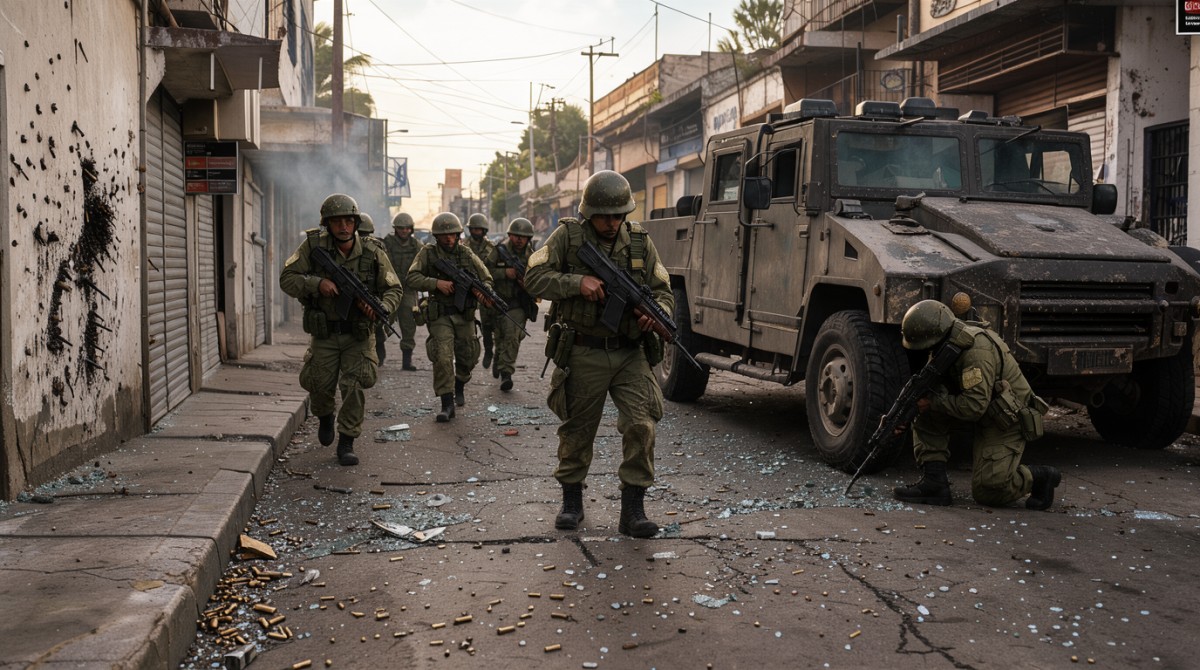
In the early hours of Sunday, the streets of Sinaloa de Leyva became a battlefield once more, as Mexican soldiers clashed with members of a drug cartel still reeling from the arrest of its leader, Fausto Isidro Meza Flores, known to many as “Chapo Isidro.” The violent flashpoint underscores how a single high‑profile capture can ignite a cascade of retaliation, forcing communities to endure yet another wave of fear and disruption.
From a “spectacular” raid to a deadly firefight
The Mexican defence ministry reported that soldiers were on patrol Sunday, attempting to restore order after the Friday arrest of Meza Flores. While moving through the town, they were ambushed by eight alleged cartel members, who opened fire. The ministry later confirmed that the operation had resulted in the death of four soldiers and sixteen individuals identified as “members of organised crime.”
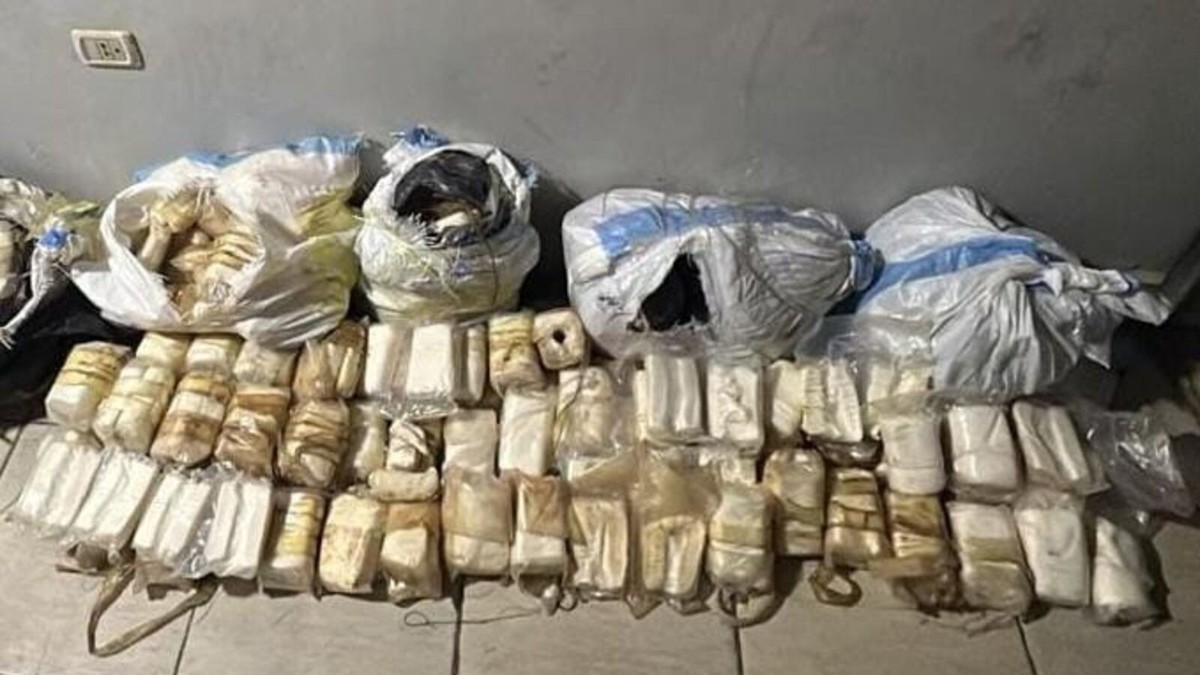
Special forces had earlier seized six vehicles, two of which were equipped with bullet‑proof armour and gun turrets, indicating a high‑level preparation for the operation. The ministry also noted that one of the detainees was underage, a detail that adds a troubling layer to the cartel’s recruitment practices.
The arrest that set off the violence
Fausto Isidro Meza Flores, a 44‑year‑old who had long evaded capture, was taken into custody on Friday after a “spectacular military operation,” according to the U.S. Department of Justice. The arrest was praised as a bilateral success, with the U.S. Homeland Security Task Force supporting Mexican forces. The operation also secured the capture of Meza Flores’s second‑in‑command, known as “Serafín,” and his financial operator, who were quickly flown to Mexico City.
Meza Flores’s notoriety stems from a career that began with the Juárez cartel, later moving to the Beltrán Leyva Organisation, and eventually heading his own eponymous trafficking network. The U.S. Treasury identified his organization in 2013 as responsible for moving large quantities of methamphetamine, heroin, marijuana and cocaine into the United States, and noted that the turf war between his group and the Sinaloa cartel had quadrupled drug‑war killings between 2009 and 2013.
Cartel retaliation: barricades, arson and chaos
News of the arrests sparked immediate retaliation. Cartel members erected barricades on major roads, set cars ablaze, and torched several shops. Shoot‑outs erupted between security forces and cartel gunmen, turning the town into a volatile flashpoint. The ministry’s statement highlighted that the suspects involved in the Sunday firefight were part of this broader wave of retaliatory violence unleashed after Meza Flores’s capture.
These actions illustrate a familiar pattern: when a cartel loses a leader, its rank‑and‑file often resort to public displays of force to signal resilience and to deter further incursions. For the residents of Sinaloa de Leyva, the barricades and flames translate into daily insecurity, disrupting commerce, education and the simple rhythm of life.
The human cost: soldiers, civilians and a minor
The loss of four soldiers is a stark reminder of the human toll exacted by the drug war. Each casualty represents a family left to mourn, a community that loses a protector. Meanwhile, the death of sixteen alleged cartel members, though framed by officials as a blow to organized crime, also raises questions about due process and the potential for extrajudicial outcomes in the heat of conflict.
The ministry’s acknowledgment that one detainee was underage adds a painful dimension to the tragedy. It underscores how cartels enlist youths, often from impoverished backgrounds, into violent roles. For a region already scarred by decades of drug‑related bloodshed, the presence of minors in armed confrontations signals a generational perpetuation of trauma.
U.S. involvement and Mexican sovereignty
The United States played a visible role in the operation, with the Department of Justice and the DEA lauding the capture as a “significant blow” to a “ruthless criminal organisation.” Assistant Attorney General A. Tysen Duva labeled Meza Flores “the most dangerous man in Mexico,” accusing him of “flooding the United States with deadly substances.” Such statements reinforce the narrative of a cross‑border drug threat that justifies joint action.
President Claudia Sheinbaum has welcomed cooperation with U.S. authorities, emphasizing that any partnership must respect Mexican sovereignty. This stance reflects a delicate balancing act: leveraging U.S. resources to combat cartels while guarding against perceptions of external dominance—a sentiment that remains strong across Latin America, where foreign intervention is often viewed with suspicion.
What the arrest means for the drug trade
According to the DEA head, removing Meza Flores deals a “significant blow” to a cartel that has used extreme violence to traffic drugs, including fentanyl, described as a “designated weapon of mass destruction.” While the capture of a single leader can disrupt supply chains, cartels are notoriously adaptable. The organization’s low‑profile operation from Guasave, as noted by Insight Crime, suggests that even without a charismatic frontman, the network can continue to function.
Moreover, the arrest may trigger a power vacuum, potentially sparking internal rivalries as sub‑leaders vie for control. Historically, such fragmentation has led to spikes in violence, as seen in the aftermath of other high‑profile captures. For communities across Sinaloa and beyond, the short‑term security gains may be offset by a new wave of turf wars.
Local voices and the demand for peace
Amid the chaos, thousands of residents have taken to the streets demanding an end to the violence that has turned their towns into battlegrounds. While the source material does not detail specific protests, the mention of “thousands demand end to violence in Mexican cartel hotspot” signals a growing public outcry. Citizens are tired of living under the shadow of cartels, and they increasingly call on the government to protect them without compromising their rights.
These demands highlight a broader regional reality: communities across Latin America are caught between state forces and criminal groups, often paying the price for both. As the Mexican government continues its crackdown, the challenge will be to translate tactical victories, like the arrest of Meza Flores, into lasting stability for the people who endure the daily threat of gunfire and arson.
This article was produced with AI-assisted research and editorial support. Reporting is based on the source material cited below. Sources: BBC News Latin America; bbc.co.uk; Global1.News (23 November 2026).
By Elena Vasquez, Staff Writer
What's Your Reaction?
 Like
0
 Dislike
0
 Love
0
 Funny
0
 Wow
0
 Sad
0
 Angry
0

Latin America Correspondent at Global1.News. Based in Mexico City, covering politics, economics, energy, and culture across the region. Brings an on-the-ground perspective to stories spanning from the Rio Grande to Patagonia.









Comments (0)